
Agents Turn Spending Into a Zero-Friction Operation
On October 3, 2026, developer Simon Willison published a call to action arguing that all metered, pay-as-you-go services must offer hard budget caps by default. Users who wish to consume resources without an upper limit should have to actively opt out by modifying their settings—Willison proposed explicit confirmation copy: “Remove the budget cap. My application will not be shut down if I exceed the configured budget limit, and I will be responsible for subsequent charges.”—and assume the financial liability themselves.
The widespread adoption of coding agents and personal AI assistants has lowered the barrier to invoking paid APIs, deploying hosted applications, and provisioning compute and storage. A user with virtually no prior cloud engineering experience can now spin up an entire full-stack architecture through a conversational interface.
Google Cloud underscored this shift on its official blog, noting that a simple prompt of just five words can trigger complex orchestrations and generate substantial cloud infrastructure costs. Runaway cloud bills are no longer caused primarily by junior engineers making syntax slips or infinite-loop blunders in deployment scripts. Instead, they increasingly stem from asynchronous pipelines granted broad default permissions—autonomous agents quietly burning credits and driving up unexpected costs in the background.
Email Alerts Cannot Stop Machines from Spending
For years, the public cloud industry’s default response to budget overruns has been soft email alerts. Users configure a dollar threshold inside the billing console; once spending crosses that line, the platform dispatches a standard advisory notification. Countless engineers know the sinking feeling of waking up to an email sent at 2 a.m., only to discover that the service has already racked up thousands of dollars in overages.
From an engineering perspective, a soft alert is functionally identical to no cap at all. When concurrent agent processes burn through massive resource quotas in a matter of dozens of minutes, human reaction times cannot match the speed of algorithmic execution. Worse still, notification fatigue often leads engineers to habitually overlook or defer checking these emails.
Telemetry lag inside billing pipelines magnifies the danger. Many cloud platforms experience delays of several hours before resource consumption is calculated, aggregated, and synchronized with billing dashboards. Long before a $100 budget alert hits an engineer’s inbox, actual incurred costs may have already blown past $1,000. A hard spending cap forces engineering teams to define deterministic resource boundaries right from the architectural drawing board.
Cloud Giants Move to Hard Cutoffs
Recently, both AWS and Google Cloud took direct steps toward enforcing hard spend ceilings. In mid-September, AWS introduced a monthly spending limit feature within its updated developer account experience. The AWS spend limit remains in limited release, accessible only to select accounts (with official documentation noting: “We’re currently releasing our new experience to a limited number of customers”). This ceiling is computed on pre-tax usage and excludes promotional credits. AWS positions spend limits primarily for experimentation, training, and sandbox environments, as well as production workloads capable of absorbing transient downtime. Once spending hits the configured dollar value, all project resources are automatically halted for the remainder of the calendar month.
AWS’s official documentation adds a floor to this mechanism: the minimum spend limit must be the greater of $20 or a conservative usage baseline calculated by the platform. This buffer of several dozen dollars reduces the risk of unintended false triggers. Google Cloud introduced a similar spend cap capability in late July.
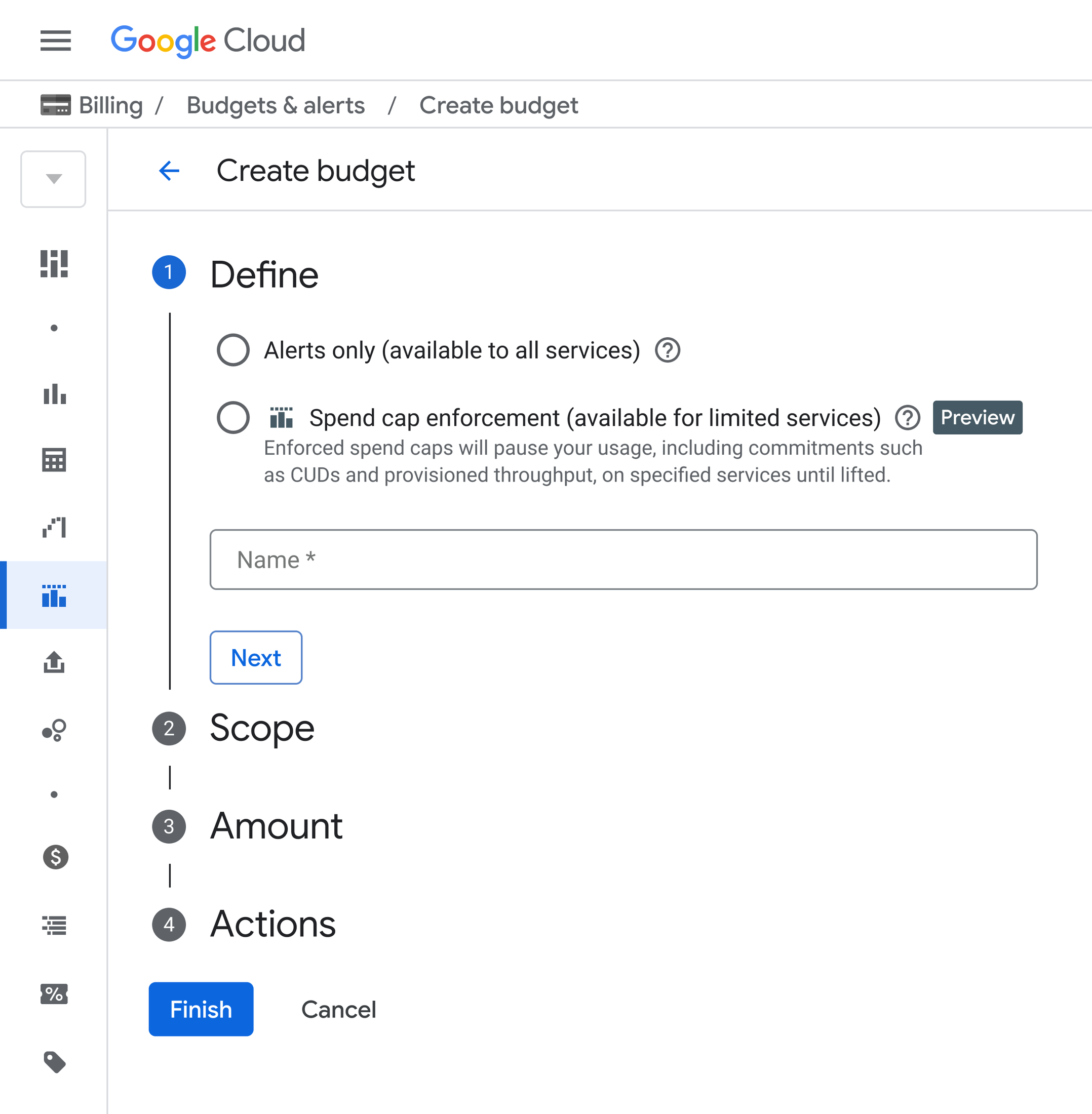 Figure: The spend cap creation interface in the Google Cloud Billing console. Source: Google Cloud Blog
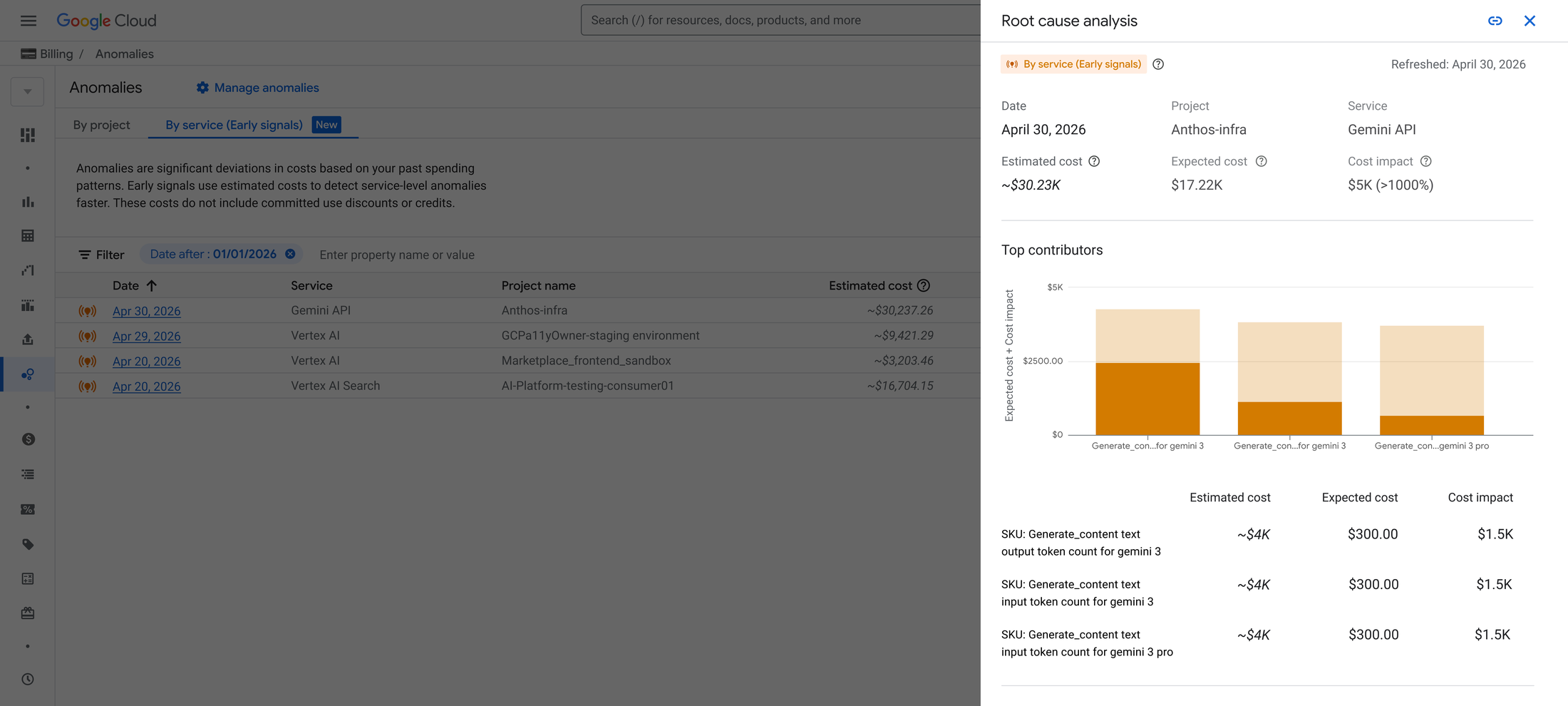 Figure: Google Cloud early anomaly alert and root-cause analysis (RCA) interface, detailing the SKUs driving unexpected cost spikes. Source: Google Cloud Blog
To detect runaway spend before monthly invoices close, Google Cloud also rolled out an early anomaly detection system. Leveraging dynamic baseline modeling, it automatically generates root-cause analyses in the opening hours of a spending surge, immediately flagging the top three services driving up infrastructure expenses.
Compute Hubs Can No Longer Absorb Forgiven Bills
The community debate around hard budget caps sparked over two hundred comments on Hacker News. Engineers with customer support backgrounds cautioned that hard cutoffs can easily trigger operational disasters. Forcibly terminating services during an unexpected burst of legitimate customer traffic can trigger user churn, an onslaught of urgent support tickets, and even contractual disputes.
Under the traditional SaaS and cloud business model, providers facing customers hit with accidental bill shock routinely chose to forgive and write off the charges. Software’s gross margins were high enough to absorb such one-off refunds, and maintaining customer trust and long-term goodwill was worth far more than a few thousand dollars.
That economic reality changes when data centers transition into raw compute hubs. Compute consumption is directly tethered to physical electricity, leaving far thinner profit margins to absorb unconditional chargebacks. Electric utility companies do not waive bills caused by a developer’s misconfigured script, and hyperscale compute clusters have no margin left to shoulder those losses on users’ behalf.
Redefining Cloud Billing Guardrails
AI agents have rewritten the rules of human-computer interaction, compressing the timeframe of resource consumption. As autonomous tooling makes it trivial to tap into metered cloud resources, infrastructure platforms are forced to build hard budget limits into the foundational layer.
Billing architectures that rely on retrospective email alerts can no longer rein in continuous spending by autonomous agents. By introducing automated cutoff mechanisms, cloud providers are taking control of systemic financial risk—ensuring that users who choose to remove the caps must explicitly take ownership of the bill.
Reference Links:
- We’re going to need default hard budget caps on pretty much everything
- Create a spend limit (AWS)
- New early anomalies and spend caps on Google Cloud budgets


