At the center of the exhibition hall stands a full-scale 1:1 replica of the Cray-1, faithfully recreating the iconic silhouette of the 1976 supercomputer. Powering this installation is a compute cluster built from thirty discarded Mac minis manufactured in 2012, delivering roughly 8,000 times the computational throughput of Seymour Cray’s original design.
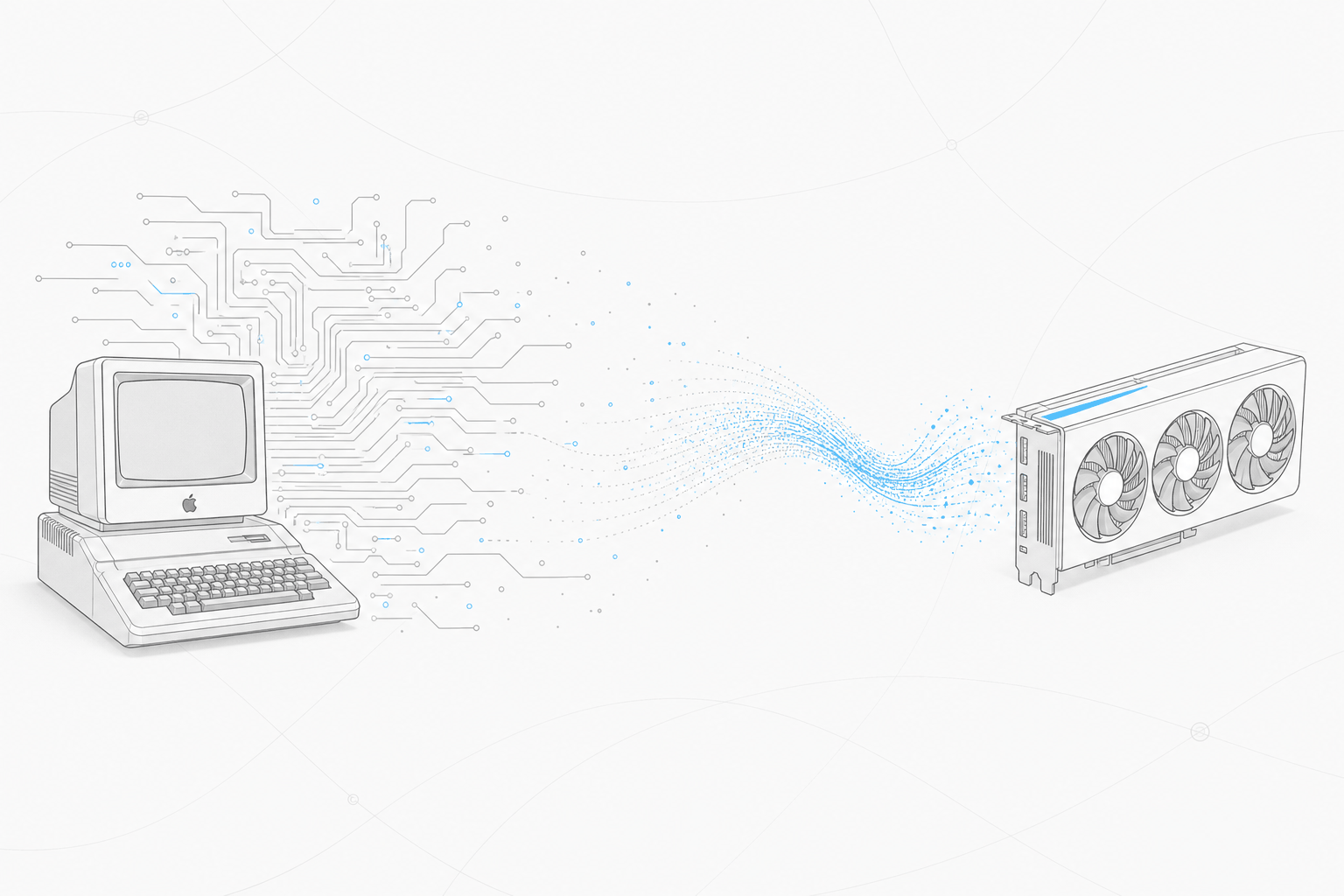
Consumer electronics markets routinely discard decade-old chips as obsolete e-waste. This replica demonstrates the exact opposite: the ultimate ceiling of computing power is defined not by individual components, but by how effectively disparate hardware is networked and coordinated.
Thirty Salvaged Mac Minis Inside a Half-Century-Old Icon
The original Cray-1 was delivered in 1976, the same year Apple was incorporated. To commemorate this historical coincidence, the Museo de Historia de la Computación spent 18 months assembling the replica: rebuilding the signature C-shaped column and surrounding the base with the classic padded bench—an enclosure design that famously incorporated seating into the supercomputer itself.
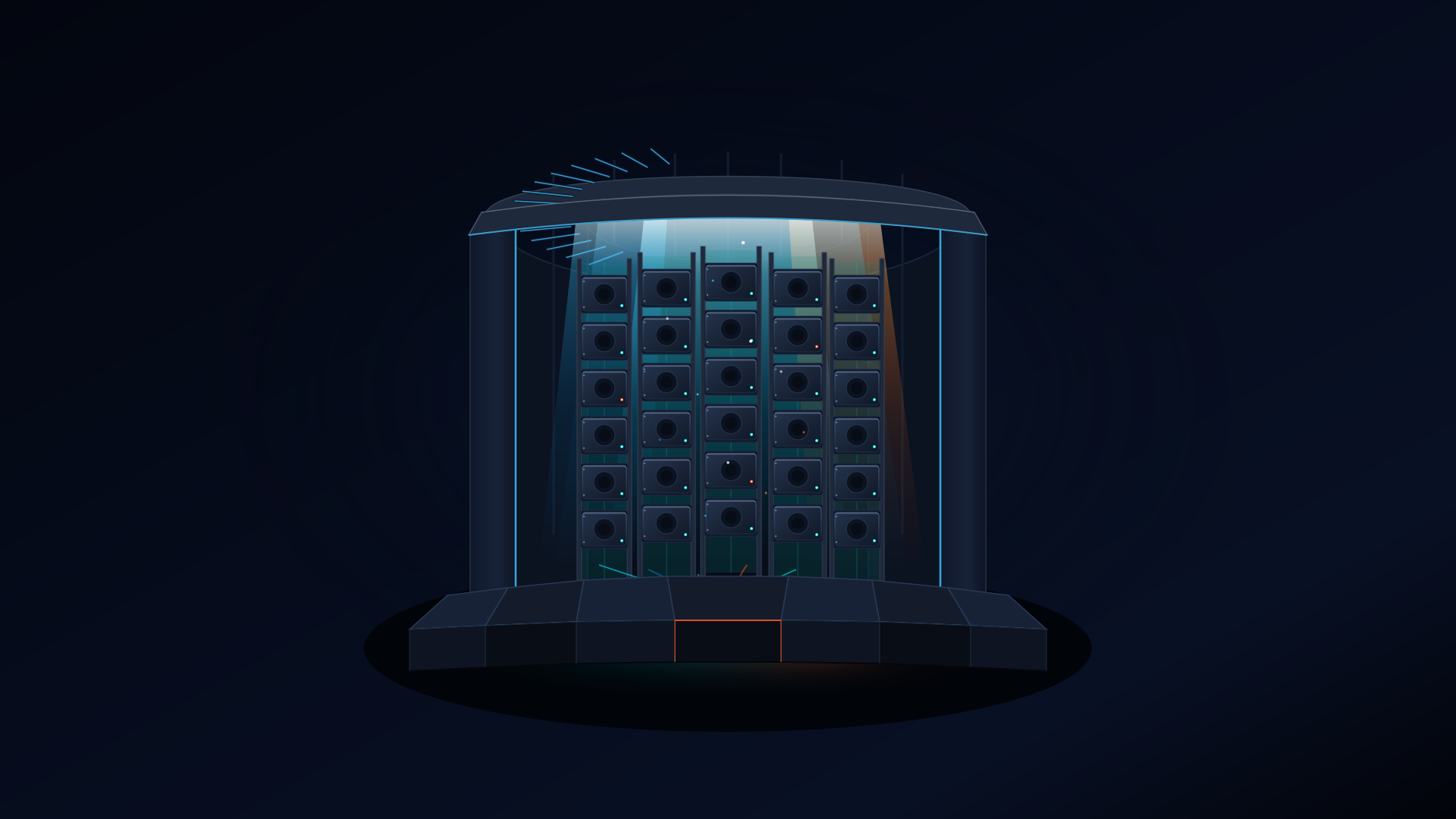
Inside the chassis, every compute node consists of salvaged hardware. The team gathered 30 used Mac minis, comprising 25 dual-core Intel Core i5 units and 5 quad-core Core i7 systems. Aside from two 2014 units, the remaining 28 machines date back to 2012. Together, these machines—rescued from the scrapyard—form an active 64-core compute cluster.
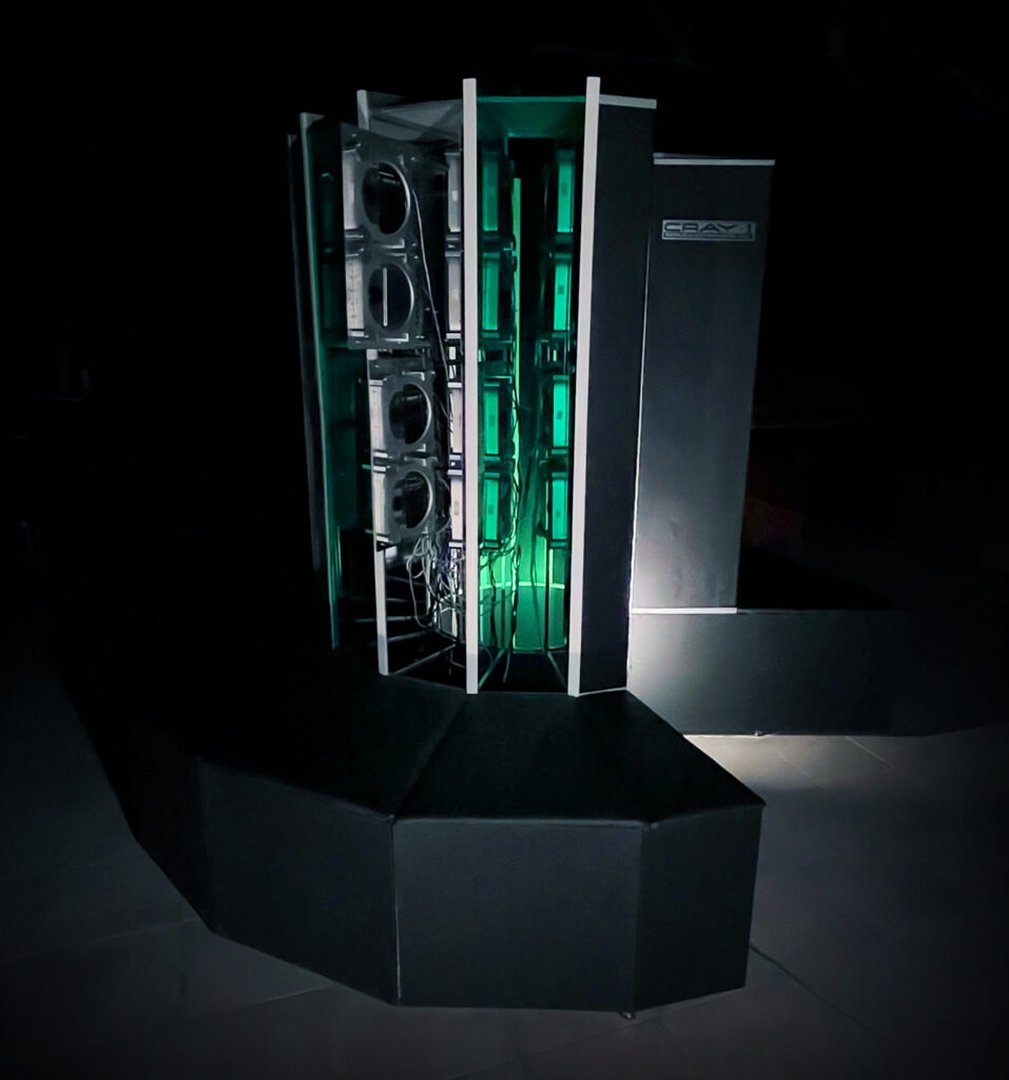 Figure: Full view of the replica featuring the iconic Cray-1 padded bench. Source: Museo de Historia de la Computación
General-Purpose Networking Replaces Bespoke Silicon for an 8,000x Leap
The performance contrast highlights the technological shift across five decades. The original Cray-1 relied on a custom vector processing architecture, applying single instructions across vector registers to achieve a peak throughput of approximately 160 megaflops.
The reconstructed cluster of refurbished hardware delivers a measured 1.3 teraflops, having previously peaked at 1.5 teraflops with all cores fully engaged. Even with a node currently offline, sustained throughput exceeds the 1976 supercomputer by more than 8,100 times. This sharp disparity illustrates how inexpensive distributed architectures have eclipsed monolithic, highly specialized designs.
The original Cray-1 pursued the absolute performance limits of a single machine, wagering heavily on bespoke, prohibitively expensive circuits. Once physical limits on monolithic chassis were reached, engineering costs scaled exponentially. Modern computing pivoted toward distributed horizontal scaling: interconnecting commodity silicon via standard networking protocols. The elastic scaling of distributed systems ultimately dismantled the technical moat of custom monolithic supercomputing.
Eliminating Mechanical Fans with a Silent Natural Thermal Chimney
Thermal dissipation was an inescapable physical constraint of 1970s supercomputing. The Cray-1 relied on liquid Freon cooling paired with bulky external refrigeration units ranging from 10 to 40 tons, as well as a 12-phase motor-generator set buffering the electrical grid. Because these massive subsystems were isolated outside the primary computer room, the Cray-1 chassis itself ran quietly—the noise came entirely from the cooling and power infrastructure behind the walls.
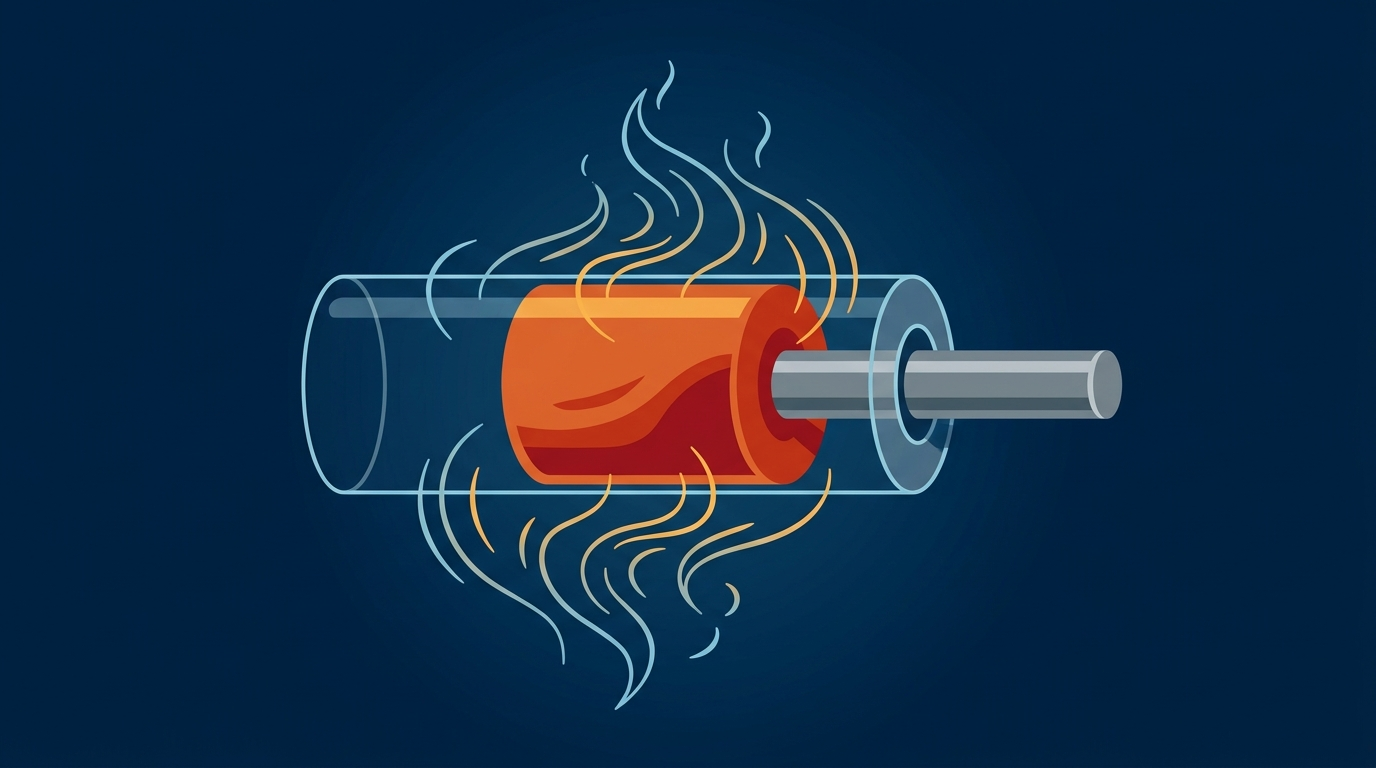
The restoration team engineered an elegant structural solution for cooling. By mounting custom steel frames and heat-dissipating aluminum trays, thirty computers sit vertically inside the circular column. The hollow cylindrical housing forms an unhindered vertical convection channel. Ambient air enters through the base, warms as it passes the aluminum trays, and exits naturally through the perforated top grille.
This thermal chimney design completely eliminates the need for supplementary mechanical fans. An individual Mac mini emits just 12 to 15 decibels at idle. Under full cluster load, the only perceptible sound is a subtle 30-decibel airflow generated by the networking switches at the base. Compared to the deafening roar of a modern enterprise datacenter, this micro-supercomputer operates as quietly as a piece of living-room furniture.
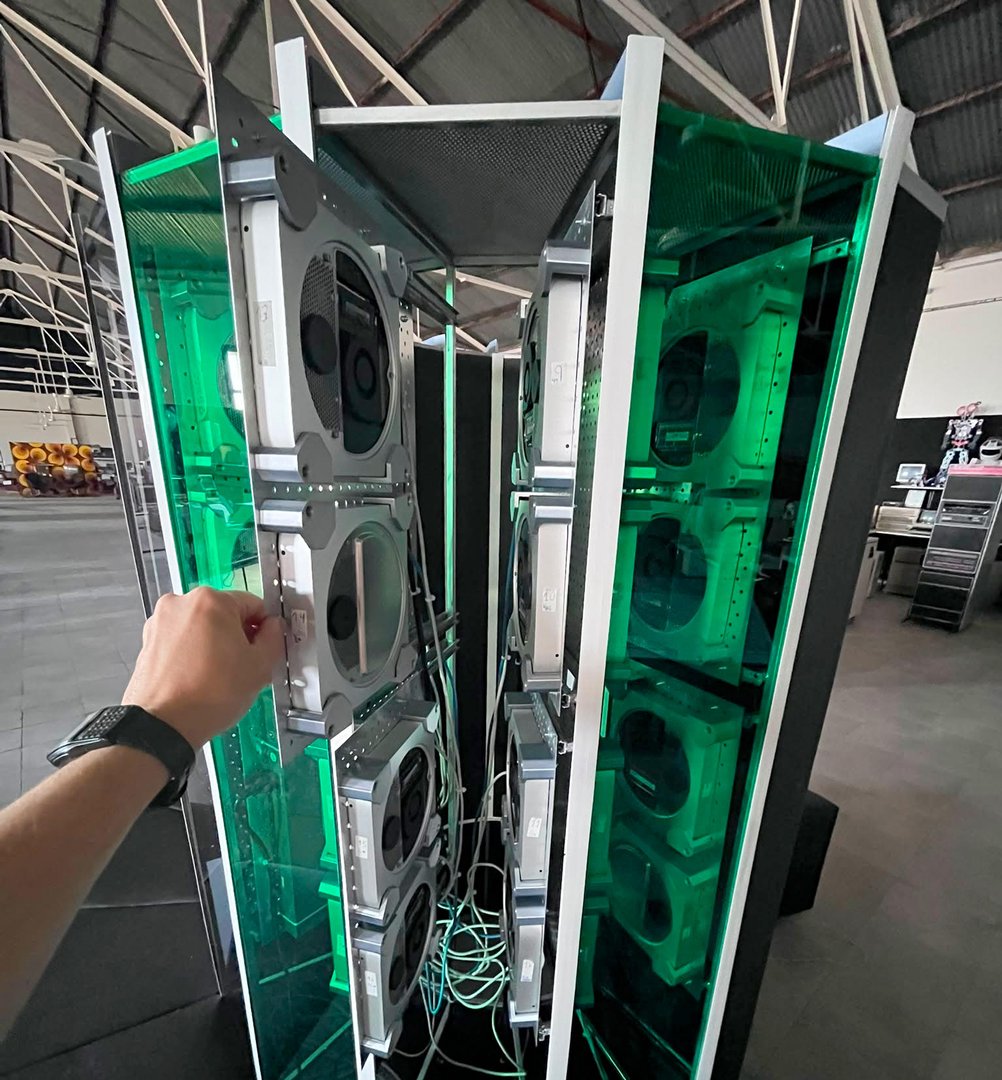 Figure: Mac minis mounted vertically in aluminum trays and steel frames to form a natural convection chimney. Source: Museo de Historia de la Computación
Driving 64 Cores from a Vintage Console for Real-Time Matrix Calculations
For the software stack, the museum bypassed conventional Linux distributions in favor of macOS Mojave across all nodes. The legacy OS includes native, turnkey support for Open MPI, allowing the master controller to distribute workloads across the local area network without complex configuration overhead.
The nerve center of the cluster is housed in a primary controller node paired with a custom operator terminal echoing the aesthetic of a 1970s DEC VT05. While the team initially explored authentic cathode-ray tubes (CRTs), they opted for a modern flat LCD display to ensure operational stability, while retaining a vintage keyboard housing and simulated floppy drive slots below the console desk.
Visitors at the museum can watch the parallel computing speedup in real time. The team created an interactive benchmark that executes large-scale matrix multiplication. When executed on a single CPU core, terminal output creeps forward slowly. When all 64 cores process chunks in parallel, the matrix solution renders almost instantaneously.
Silicon Depreciates with Age, but Collaborative Architecture Endures
The 30 recycled machines currently occupy only half of the internal tower volume. The museum has launched a crowdfunding campaign to install over 70 additional units powered by Apple Silicon M4 chips. Once fully populated, the installation could theoretically challenge entries on historical supercomputing benchmarks.
From Freon-chilled monolithic beasts of 1976 to silent distributed clusters today, the replica crystalizes fifty years of architectural paradigm shifts. Discarded consumer hardware retains potent computing capability when organized intentionally. With effective network coordination, fragmented compute elements coalesce into formidable engineering power.
The upper bound of computation has never been dictated solely by the manufacture date printed on a chip package. This physical replica encapsulates half a century of architectural evolution: when coordinated networking breaks the physical limits of individual nodes, second-hand hardware can unleash astonishing productivity.
Reference Links:
- Ars Technica: Museum builds Cray-1 replica out of 30 recycled Mac minis
- Museo de Historia de la Computación Project Overview
- Hacker News Discussion (item?id=50028264)