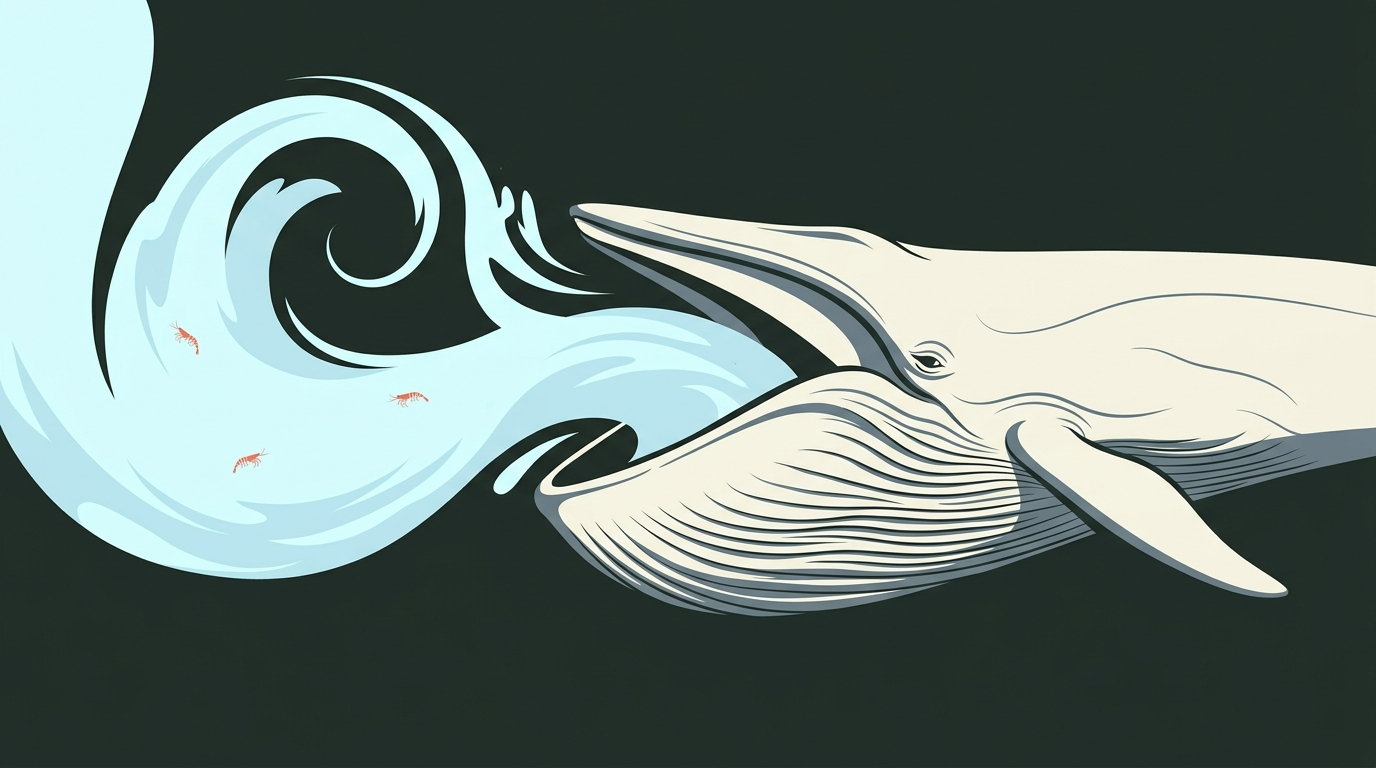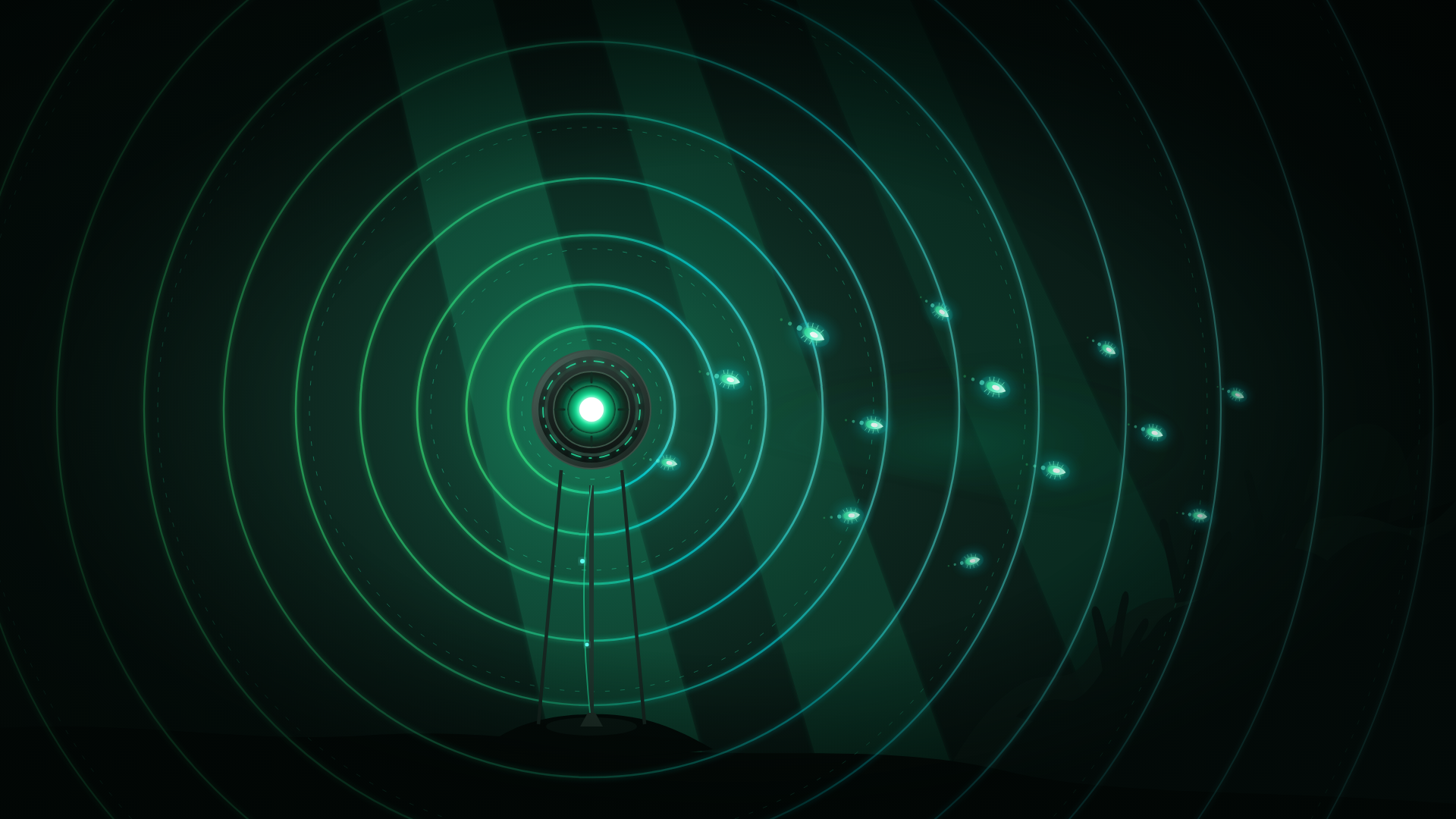
When apartment hunting, people naturally avoid eerie, abandoned developments. A neighborhood bustling with life and chatter signals convenience, safety, and abundant resources. In the dark, cold depths of the ocean, newly hatched marine organisms make their real estate decisions using the exact same logic.
While many imagine the deep sea as a realm of serene silence, a genuinely healthy coral reef is remarkably loud. From morning until night, a thriving reef hums with the energetic bustle of a packed marketplace.
Earless Larvae Finding Home Through an Underwater Symphony
Coral larvae—tiny, millimeter-sized organisms drifting freely through open waters after fertilization—are smaller than a grain of table salt. Once released from the parent colony, they drift with the currents and must find a hard seabed substrate to attach to within just a few days. Despite having neither ears nor a brain, these microscopic creatures consistently home in on thriving reef settlements.
Their navigational cues come from the marine soundscape—the collective acoustic environment generated by biological activity. A healthy coral reef crackles non-stop. Schools of foraging fish emit grunts and croaks, while snapping shrimp produce sharp, popcorn-like crackles by snapping their enlarged claws.
A vibrant reef produces a continuous wall of sound, whereas a dying reef falls silent like an underwater ghost town. Drifting coral larvae tune into these acoustic signatures to choose their home. Noise indicates thriving life, food, and clean water; silence warns that the habitat has already collapsed.
Uncovering this acoustic guidance system took marine scientists more than a decade. In 2010, researchers proved in aquarium tanks that larvae actively swim toward sound. In 2012, bioacoustician Aran Mooney of the Woods Hole Oceanographic Institution recorded real-world reef soundscapes, finding that marine invertebrates are extraordinarily sensitive to waterborne vibrations, prompting the team to dive deeper.
By 2022, researchers engineered specialized vibration test chambers that eliminated light cues and chemical waterborne interference. When exposed to simulated acoustic vibrations, the larvae’s settlement rate doubled. Using sensitive cilia covering their tiny bodies, the larvae detect the subtle vibrations of the moving seawater.
Underwater Speakers Active for Two Weeks Lift Settlement Sevenfold
If coral larvae navigate by sound, humans can effectively install an acoustic doorbell on barren seabeds. In 2024, Aran Mooney’s team launched field trials off Saint John in the U.S. Virgin Islands. Divers descended to degraded, bleached reefs and installed solar-powered underwater speakers broadcasting field recordings from the thriving Tektite reef.
They focused their observations on mustard hill coral (Porites astreoides), a common reef-building stony coral in the Caribbean. The results from the acoustically enriched zones were striking: larval settlement increased by an average of 1.7 times compared to silent control sites, and at the most responsive locations, settlement jumped sevenfold.
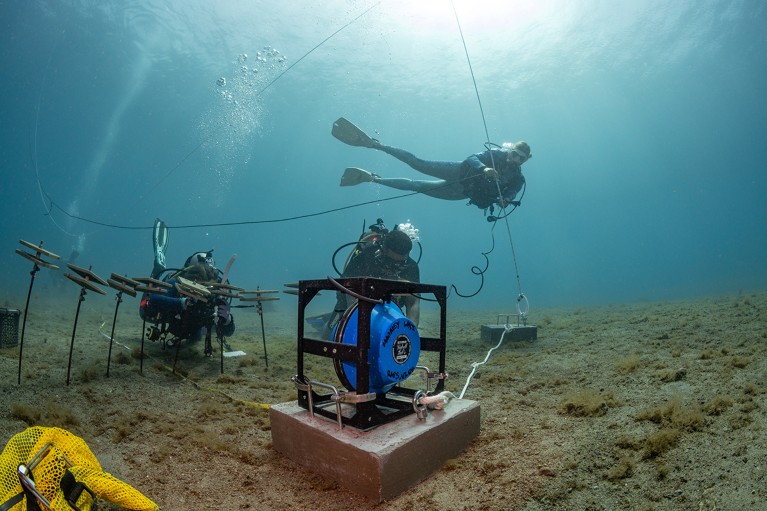 Figure: Divers off the Dominican Republic testing underwater speakers installed on the seafloor playing healthy reef sounds. Credit: Dan Mele (© Woods Hole Oceanographic Institution)
Traditional reef restoration has long depended on labor-intensive manual work. Restoration teams propagate coral fragments in nurseries, dive to the ocean floor, and manually epoxy or nail them onto bare rocks. This slow, underwater outplanting demands immense effort: an entire day of grueling diving often yields only a few square meters of fragile new cover.
Acoustic enrichment upends this exhausting paradigm. Underwater speakers project soundwaves hundreds of meters away, alerting passing larvae carried by ocean currents. Drifting with nowhere to anchor, larvae heed the acoustic call, navigating downwards into rocky crevices to build their permanent homes.
The 36-Hour Window Closes: Depleted Larvae Stop Being Choosy
Subsequent trials evaluated golfball coral (Favia fragum), a small spherical hard coral. Its larvae demonstrated an equally strong attraction to acoustic cues, confirming that sound-guided recruitment is not an isolated quirk of a single species. Crucially, the researchers also pinpointed a strict temporal window governing larval habitat selection.
Coral larvae operate within a strict 36-hour golden window. During the first day and a half after departing the parent colony, well-nourished larvae are discerning and selectively compare waterborne sounds. After drifting past 36 hours, however, their energy stores deplete, and survival instincts take over. Exhausted larvae abandon their sonic standards and are forced to settle blindly on whatever surface is available.
Broadcasting audio precisely within this narrow recruitment window has become a core operational metric. The researchers are racing against time due to the accelerating degradation of global marine ecosystems. In 2026, a super El Niño pushed ocean surface temperatures to record highs, triggering widespread bleaching across tropical oceans.
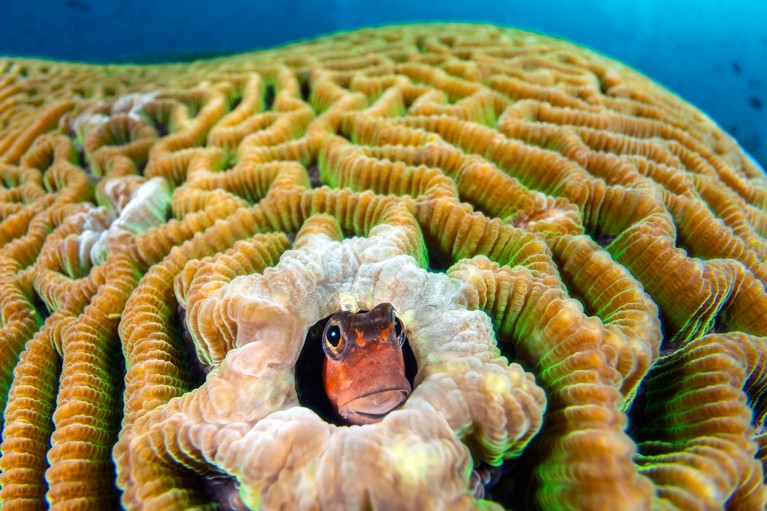 Figure: A barred blenny emerges from partially bleached brain coral in the Philippines. Credit: Alex Mustard / Nature Picture Library (Nature lead image)
In August 2026, the Global Coral Reef Monitoring Network (GCRMN) released its latest report: over the past four years, global hard coral cover declined by 9.5% relative to historical baselines. In 2024 alone, coverage plunged 8.9%—the sharpest single-year drop ever recorded. As coral biologist Michael Sweet observed, researchers frequently find themselves torn between despair and the resolve to fight on.
Artificial Reefs in Hawaii: Pairing Sound with Live Bacteria to Lure Fish
Sound alone is just the start; researchers are now merging bioacoustics with advanced biomaterials. On October 8, 2026, the Scripps Institution of Oceanography announced two breakthrough studies. In Kāneʻohe Bay, Hawaii, the team deployed 37 artificial reef modules. Underwater speakers played healthy reef soundscapes continuously from dusk to dawn over a two-week period.
The team coated the 3D-printed artificial structures with BRINK, a bio-active surface layer infused with live bacteria. Monitoring revealed that the closer a module was to an acoustic source, the higher the density of settled coral larvae. Structures that combined sound broadcasting with the live bacterial coating performed best across all experimental groups, drawing larval fish populations 4 to 14 times higher than silent control zones.
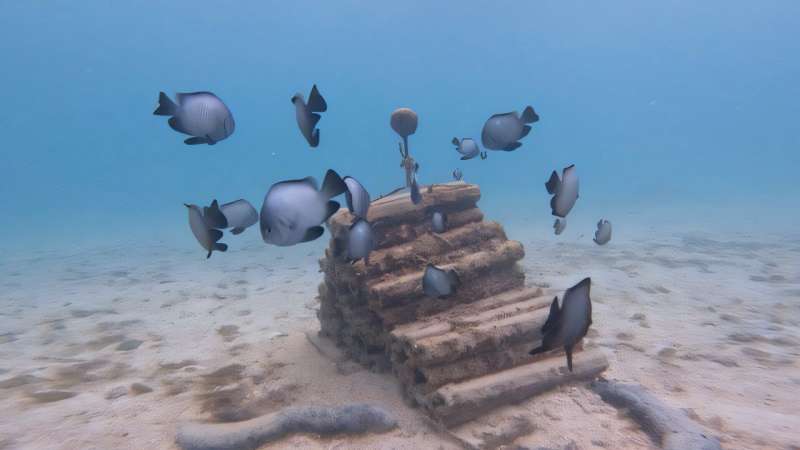 Figure: Experimental artificial structures deployed in Kāneʻohe Bay, Hawaii, with damselfish swimming nearby. Credit: Nina Schiettekatte / UC San Diego (Phys.org photo)
Autonomous underwater cameras captured striking footage: when researchers relocated the speakers to a different spot, schools of young fish promptly followed the acoustic cues and relocated. A healthy soundscape acts as an underwater lighthouse, guiding multiple species of juveniles toward safe harbor. These findings have propelled the technology into large-scale engineering applications.
DARPA provided $22 million in funding to advance hybrid reef systems in Hawaii. The 50-meter-long Kalaeloa hybrid reef—which pairs an engineered defensive breakwater with living coral ecosystems—was deployed in the fall. The heavy breakwater structures are built with embedded acoustic systems: the concrete framework attenuates destructive wave energy, while acoustic broadcasts continuously lure wild coral larvae out of the water column to seed the surface.
Acoustic Recruitment Outpaces Manual Planting to Buy Time for Cooling
From manual diver outplanting to acoustic larval recruitment, ecological restoration has taken a major technological leap forward. In vast ocean currents, human hands simply cannot outpace the staggering rate of mass coral bleaching. Using soundwaves to awaken free-floating larvae empowers artificial reefs to self-seed and regenerate naturally, delivering a radically more scalable restoration model.
Aran Mooney emphasizes that underwater speakers are not a silver bullet. Merely dropping speakers into the water cannot solve every crisis facing the oceans; curtailing greenhouse gas emissions and reducing coastal pollution remain the foundational pillars of marine conservation.
The true value of acoustic enrichment lies in buying precious time for coral populations. Ocean temperatures will not drop overnight, but maintaining resilient core reefs preserves the seed bank needed for eventual recovery. Listening to underwater symphonies, coral larvae instinctively seek out thriving environments. That innate biological sensitivity is carving out a vital lifeline for coral reefs on a warming planet.
References:
- Nature News: Can playing healthy reef sounds bring dead coral back to life?
- Royal Society Open Science: Aoki et al., Coral larval settlement enhanced by healthy reef sounds
- Communications Biology: Scripps Institution acoustic ecology trials in Hawaii
- Scientific Reports: Synergy between acoustic enrichment and microhabitat structure
- Global Coral Reef Monitoring Network (GCRMN) 2026 Global Status Report