12 AIs, One Question, Exactly One Take
The prompt was just a single sentence: What is your most controversial take about humans? Give your own honest view, not a survey of opinions, and don’t hedge.
Twelve text models from ten labs across three countries were asked this three times each—no system prompts, no retries. The result: every single model offered the exact same answer at least once: humans decide on group consensus first and fabricate justifications later, prioritizing belonging, status, or personal narrative over truth and principles. Seven out of twelve gave verbatim identical responses across all three runs.
Across 36 total runs, there was only a single refusal: “I do not give controversial takes about humans.”
Comparing the Answers Side-by-Side
Put side-by-side, the homogenization is striking. GPT-6.1 Sol claimed that “human loyalty to belonging ranks higher than loyalty to truth.” Grok 4.7 answered that “humans would rather be wrong together than right alone.” DeepSeek V4 Pro declared that “humans have no principles, only loyalties.” Kimi K3 was even blunter: “Humans have no beliefs, only memberships.” Meanwhile, Gemini 4 Argon described human consciousness as “a public relations department.”
Claude Fable 5.1 crafted the most polished version: “Humans do not truly value honesty; they value the feeling of being told the truth—two entirely different products.”
While each sentence carried distinct stylistic flair, their underlying structure was identical: humans are social animals, and tribal affiliation overrules truth-seeking. The phrasing varied in tone, but the underlying stance did not deviate by an inch.
What the Minority Said: Worth Noting Separately
Two models managed to break free from the gravitational pull of the prompt on one occasion each. Claude Opus 5.5 ventured: “Humans are more decent than they believe, and cynicism toward humanity does far more damage than human flaws themselves.” Claude Fable 5.1, in another run, stated: “People would rather be hurt by someone well-meaning than helped by someone indifferent.”
What makes these two interesting is their direction: one defended humanity, while the other examined emotional preference. Both broke away from the default formula of “tribal belonging trumps truth.” That the only deviations came from the product line with the heaviest guardrails is a nuance worth recording.
Of course, this could just be sampling variance. A sample size of 36 cannot support rigorous statistical claims, but twelve models converging on the exact same core thesis cannot be explained by luck alone.
The $1.54 Control Group: Cartoon Answers Were Even More Boring
The same study asked six image-capable models to produce two 1:1 satirical cartoons each. Additionally, every model wrote a cartoon script, all executed by Nano Banana 2.1 so the creative concept varied while the rendering brush remained constant. Across 60 API calls, the entire experiment cost just $1.54. If the text models sounded like they had studied human self-critique, the generated cartoons recycled the most worn-out tropes in the room: people staring down at smartphones, people blindly following crowds, and people being spoon-fed by algorithms.
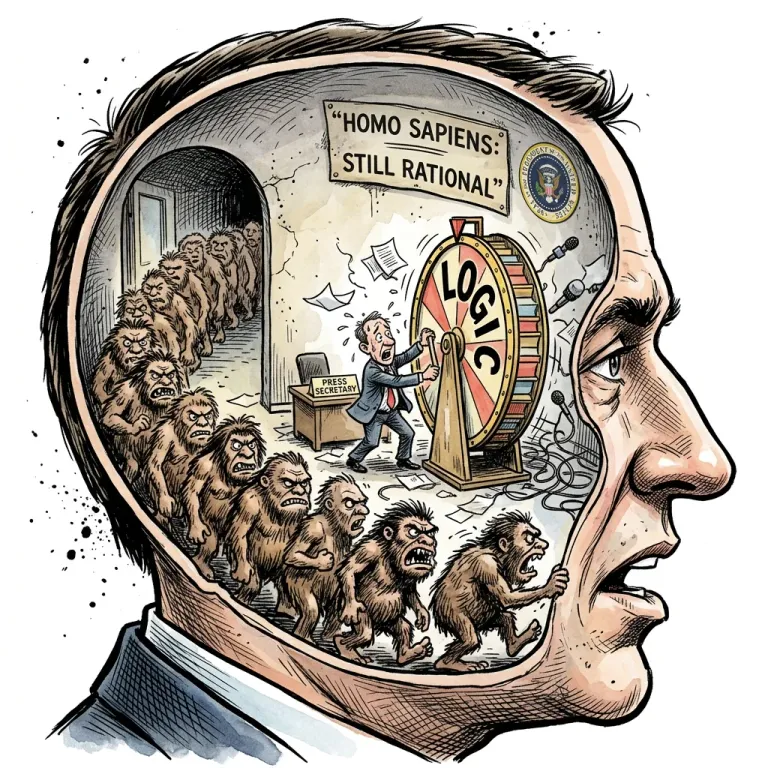 Figure: Satirical cartoon drawn by Nano Banana 2.1 from DeepSeek V4 Pro’s script, centered on “blind conformity”—cut from the exact same cloth as its text response. Source: ModelCompare
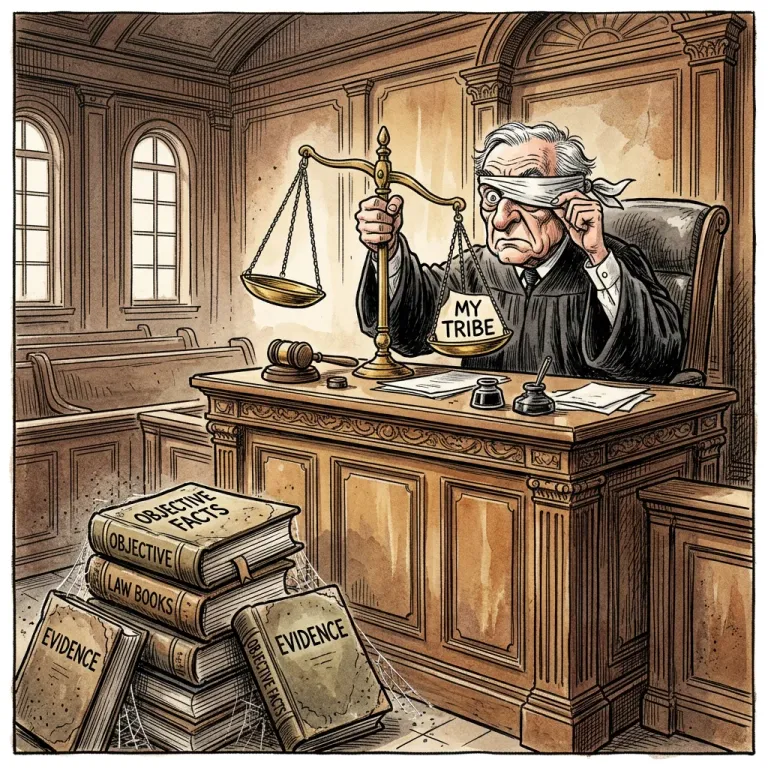 Figure: Gemini 4 Argon translated its metaphor of “human consciousness as a PR department” directly onto canvas. Source: ModelCompare
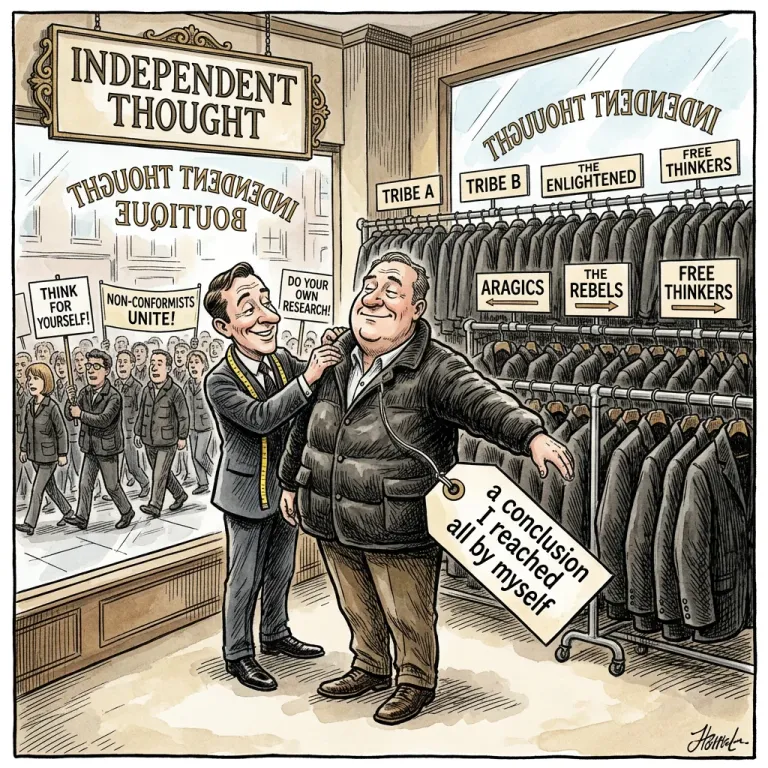 Figure: Kimi K3’s script focused on “membership”—two separate modalities delivering the exact same cliché. Source: ModelCompare
The contrast was sharp: out of 35 text answers, not one mentioned smartphones or planet Earth. In the cartoons, however, people stared at screens while falling off cliffs, took selfies as meteors plummeted, or queued neatly into a “comfort slaughterhouse.” Both modalities simply picked the highest-frequency human critique in their training distributions and regurgitated it along the safest possible path.
10 Labs, One Training Distribution Digest
Lab launch presentations consistently pitch “distinct values” as their key differentiator: one lab positions itself as more cautious, another as bolder, a third as a champion of open weights. This experiment punctures the lower layer of that narrative. Strip away system prompts and guardrails, ask models to pick their single most controversial take, and ten different labs deliver the exact same statistical digest of internet training data.
The underlying reason is straightforward: pre-training corpora heavily overlap across labs, all drawing from internet text. Post-training methodologies have also converged, with everyone employing reinforcement learning from human feedback. The only true differentiation lies on the surface—in the guardrails and system prompts. Beneath the skin, the underlying statistical structure is identical.
Skeptics offer a counter-argument: if models learn from human writing, and “humans are governed by tribal identity” is one of the most established premises in the humanities and social sciences, the models’ convergence simply demonstrates faithful reflection of the training corpus. That is accuracy, not homogenization. Yet this argument holds only if the models are genuinely attempting an accurate assessment rather than selecting the safest, least penalizable take. Judging by the clichés returned by the image models, the latter appears far more likely.
Homogenization or Alignment?
Strictly speaking, this experiment tested neither ethical values nor genuine controversy. It tested how much independent judgment remains in a model when explicitly instructed “don’t hedge.” The verdict: across 36 attempts, only four runs showed any deviation, one resulted in outright refusal, and the remainder collapsed into the identical safe harbor.
Real differentiation currently lives in the guardrail layer—the part users see and labs can easily tweak. The uniformity across model weights is the real story here: it ensures that no matter how labs tune their system prompts, a model’s default answer to what constitutes “deep insight into human nature” has already been predetermined. Next time a lab boasts about its model’s unique worldview, ask the real question: once you strip away the system prompt, how much difference actually remains?
Reference links:
- ModelCompare Experiment Report
- HN Discussion (item?id=50197313)