Over 98% Genetic Similarity, Yet 3x Brain Size Difference
Whether you’re visiting the zoo or scrolling through videos on your phone, you’ve likely seen chimpanzees. They skillfully peel bananas and can even twist open bottle caps with two fingers. Their movements and expressions bear striking resemblance to humans.
Look inside their skulls, however, and the differences become clear. An adult chimpanzee’s brain weighs about 400 grams, roughly the size of a grapefruit. In contrast, the human brain averages 1,400 grams—equivalent to two and a half bottles of mineral water. The brain volume differs by a full factor of three, with an even greater disparity in the complexity of neural connections.
This creates a major puzzle for life sciences. Humans and chimpanzees share over 98% similarity in protein-coding genes—the blueprints that produce the body’s basic materials. Two random humans walking down the street typically have only 0.1% genetic difference; chimpanzees and humans sitting together have nearly identical blueprints for fundamental body components.
The building materials for our bodies are essentially the same. If bricks and mortar are identical, the height difference between buildings comes down to when construction begins. The key divergence lies in the genetic regulatory switches.
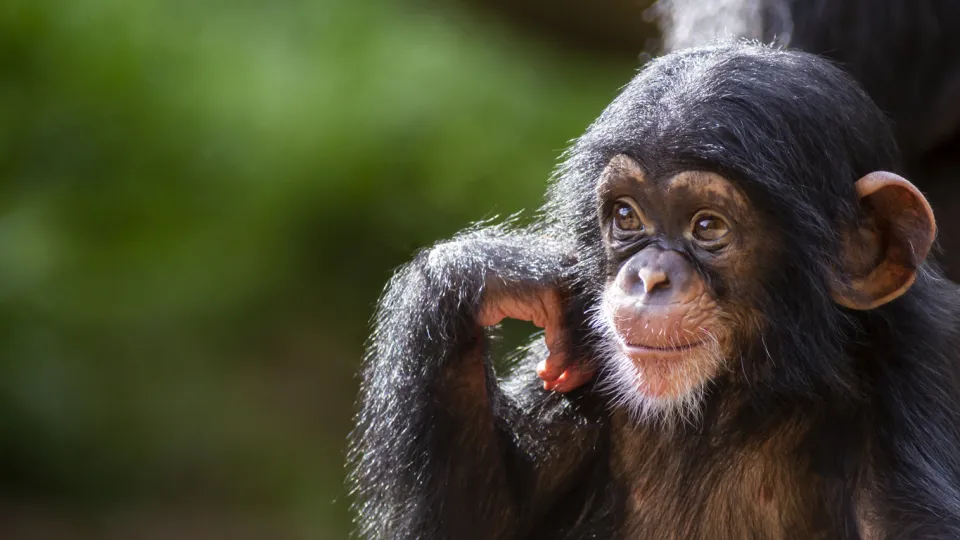 Figure: Chimpanzee with highly similar genes to humans. Source: Lund University / iStock
Creating Miniature Brains in a Dish to Identify Silenced Genes
To understand how human and chimpanzee brains diverged, scientists had to return to life’s starting point. Directly observing primate embryo development faces ethical red lines and technical challenges. The research team needed an alternative approach.
The team led by Johan Jakobsson at Lund University in Sweden found a breakthrough path. Postdoctoral researcher Patricia Gerdes spent two years perfecting a stable chimpanzee cell culture protocol. Researchers extracted induced pluripotent stem cells—reprogrammed seed cells that can differentiate into any tissue. They allowed the cells to develop separately in petri dishes.
The cells gradually formed brain organoids—miniature brain tissues grown in culture that simulate early brain development. These mini-brains were just a few millimeters in size, accurately reproducing the growth rhythm of the first three months of fetal brain development. By comparing gene activity in both tissue types, the research team quickly identified a core target.
They zeroed in on the LINC00662 gene. This is a long non-coding RNA gene that doesn’t synthesize proteins but instead acts as a regulatory switch, directing other neural genes to activate. In the human mini-brains, this switch operated at full capacity. In the chimpanzee brain organoids, it remained completely silent, producing no signals.
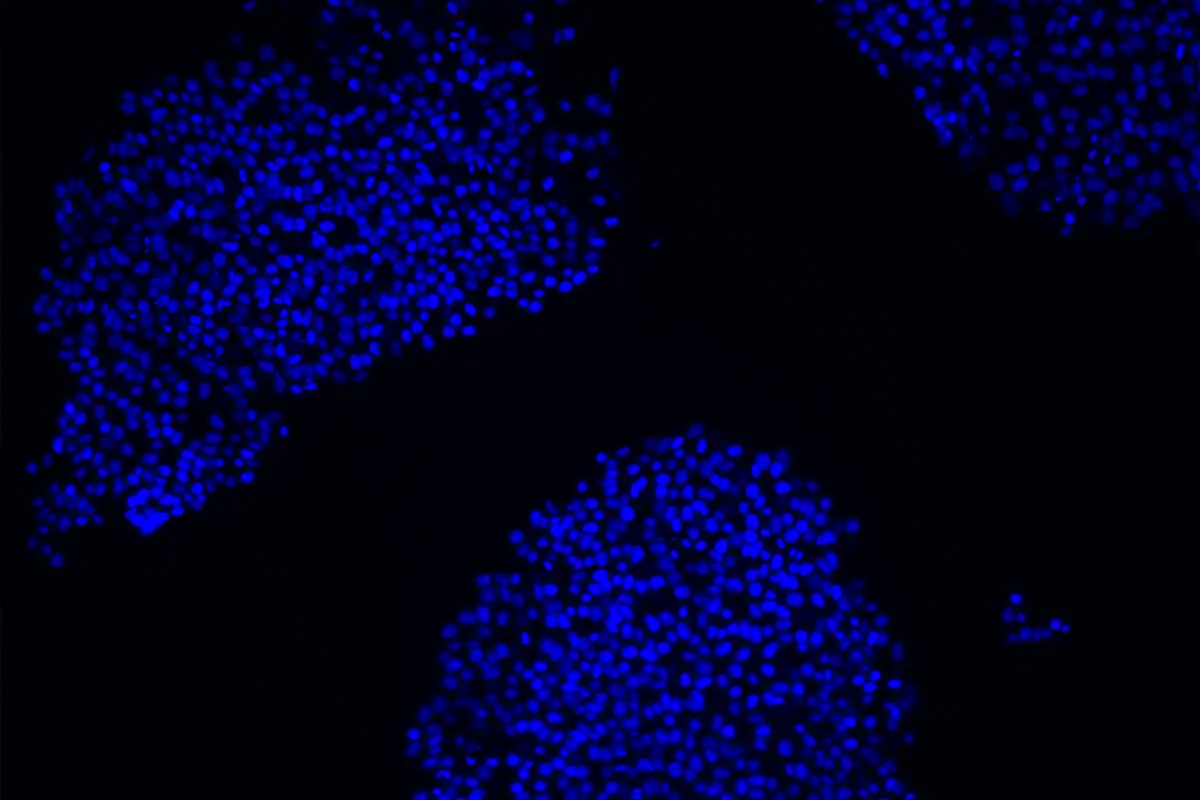 Figure: Cultured chimpanzee induced pluripotent stem cells from the experiment. Source: The Transmitter
Molecular Scalpel Removes Virus, Awakens Dormant Gene
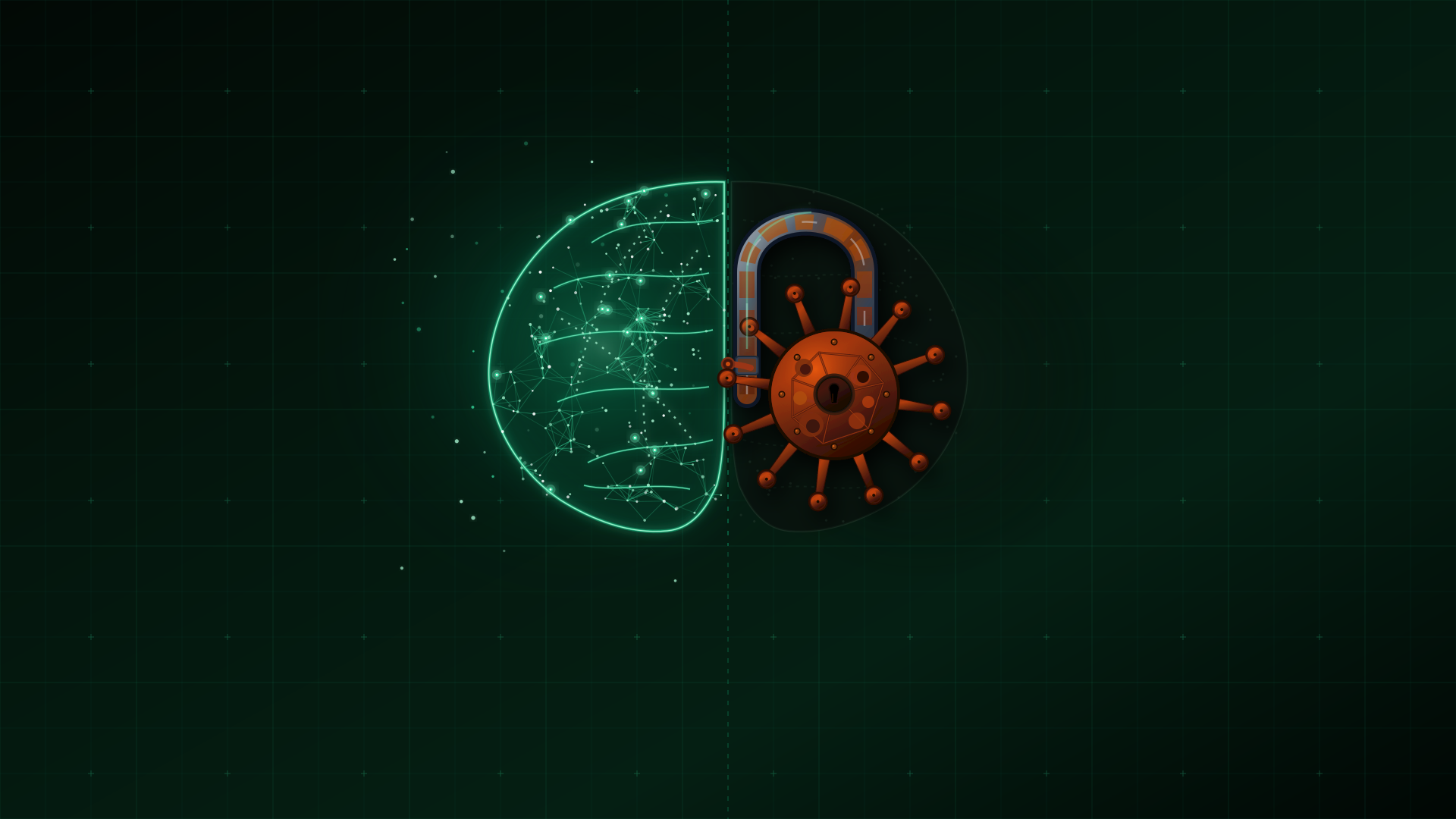
Why was the key switch jammed in chimpanzees? The research team used high-precision long-read sequencing to investigate. The foreign object in the genetic lock mechanism revealed its identity. Near the chimpanzee LINC00662 gene, embedded was a fragment of ancient virus DNA designated PTERV1. This foreign residue acted like a rusty wedge, firmly blocking the switch and cutting off subsequent neural instructions. The corresponding gene sequence in humans was clean, with no viral traces.
To verify the causal relationship, the team employed a molecular scalpel. They used CRISPR gene editing—a molecular tool that can precisely locate and cut specific DNA fragments—to remove the viral fragments from chimpanzee stem cells. The team then regrew the mini-brains.
After removing the viral fragments, the LINC00662 gene, dormant for millions of years, awakened and resumed normal expression in chimpanzee tissue. The reverse verification was equally clear. When researchers deactivated LINC00662 in human organoids, axon growth (the elongated cable-like extensions that transmit signals) was impaired, and network connections significantly shrank.
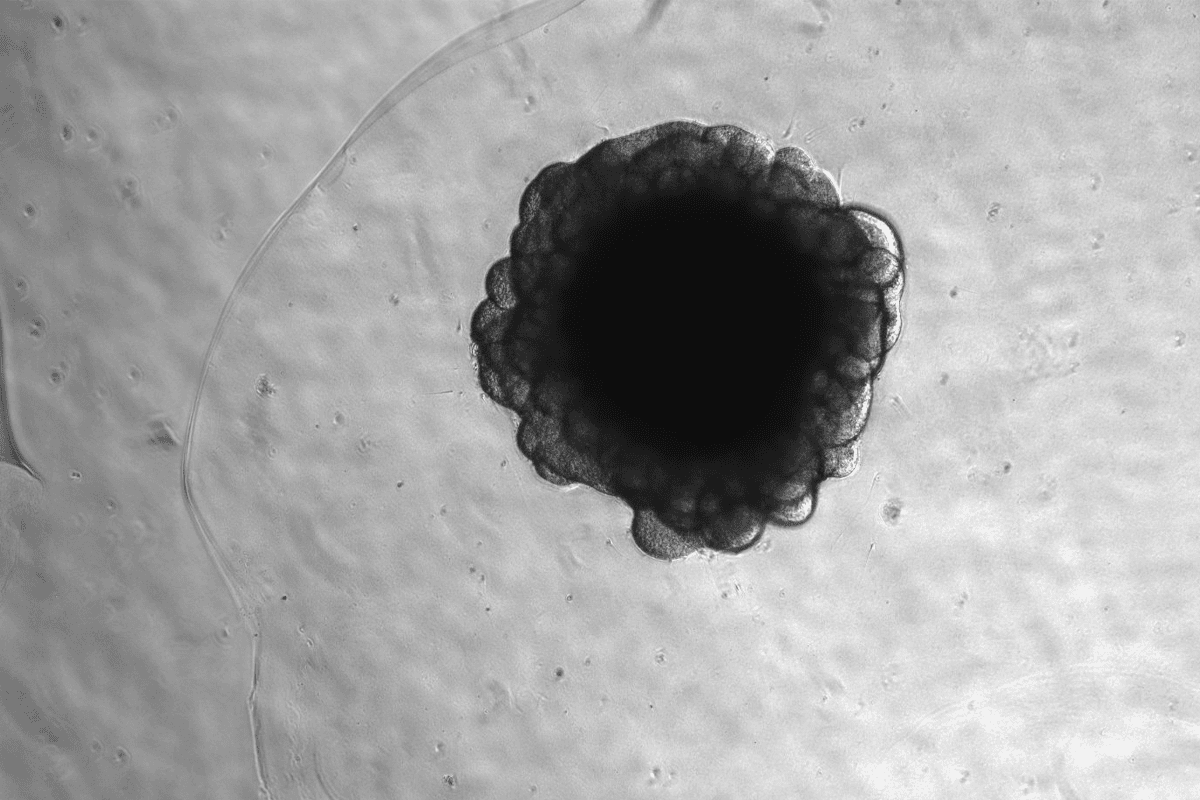 Figure: Microscopic image of chimpanzee neural organoid. Source: The Transmitter / Patricia Gerdes
Virus Invasion 5 Million Years Ago Left 158 Copies in Chimpanzees
Where did this viral fragment that altered brain evolution come from? Geological and evolutionary molecular evidence shows that PTERV1 belongs to an ancient retrovirus. Five to seven million years ago, this virus spread through African forests during a critical period when human and chimpanzee ancestors were diverging.
The chimpanzee ancestor population became infected with this pathogen. The virus breached defenses and infiltrated germ cells, amplifying within the host gene pool. It left approximately 158 genetic copies in the chimpanzee genome, which have been passed down through generations and persist today.
Early human ancestors may have lived in open areas, avoiding the virus. Alternatively, human ancestors might have possessed stronger immune defenses that blocked the pathogen outside the body. The human lineage escaped this ancient infection, keeping their genetic switches clean.
Developmental timelines amplified the divergent fates of the two species. Human embryonic development data shows LINC00662 activity peaks at 10-12 weeks after conception, when the fetus is exactly three months old and the brain is rapidly establishing neural pathways. In chimpanzees, the developmental switch is blocked by the virus at this critical moment, slowing down the process early on.
8% of the Genome is Viral Remnants, Stunting Chimpanzee Brain Development
Most people think viruses only cause coughs, runny noses, and fevers. Throughout the long history of life evolution, the marks left by ancient infections are far more profound than temporary illnesses. These dormant viral fragments within hosts are known as endogenous retroviruses—genetic fossils from ancient viruses that infected germ cells and became incorporated into the host’s DNA. They constitute over 8% of both human and chimpanzee genomes.
The 8% figure is astonishing. All protein-coding genes responsible for building bones and muscles combined make up only about 1.5% of the entire genome. If we think of the genetic code as a large book, a full twelfth of its pages consists of remnants from ancient viruses.
Nothing in the gene pool is absolutely useless. Ancient viral fragments often play peculiar roles in evolution. The placental tissue essential for mammalian reproduction, for example, incorporated elements from ancient viruses. Ravinder Kanda, an evolutionary geneticist at Oxford Brookes University, believes this research conclusively demonstrates the role of viral remnants in neural development divergence. However, he cautions that what humans have observed so far is just the tip of the iceberg.
Humans often attribute their intelligence to some uniqueness. Lund University’s research reveals the contingency of evolution: The divergent brain development paths between humans and chimpanzees originated from an ancient virus infection millions of years ago that rewired gene switches in chimpanzees, effectively locking up their brain expansion potential for millions of years.
Reference Links:
- Science Advances paper
- Science News report
- Lund University research news