While walking at night, you might occasionally catch a brilliant meteor streak across the sky. By the time you fumble for your phone and open the camera app, the darkness has already reclaimed the heavens.
The most extreme cataclysms in deep space behave much the same way. When massive stars collapse billions of light-years away, they unleash violent blasts of high-energy radiation. Some of these bursts last only tens of milliseconds; others persist for a few minutes. Hesitate for even a moment, and they vanish forever into the cosmic sea. To capture them, humanity had to station an ultra-fast snapshot machine in orbit.
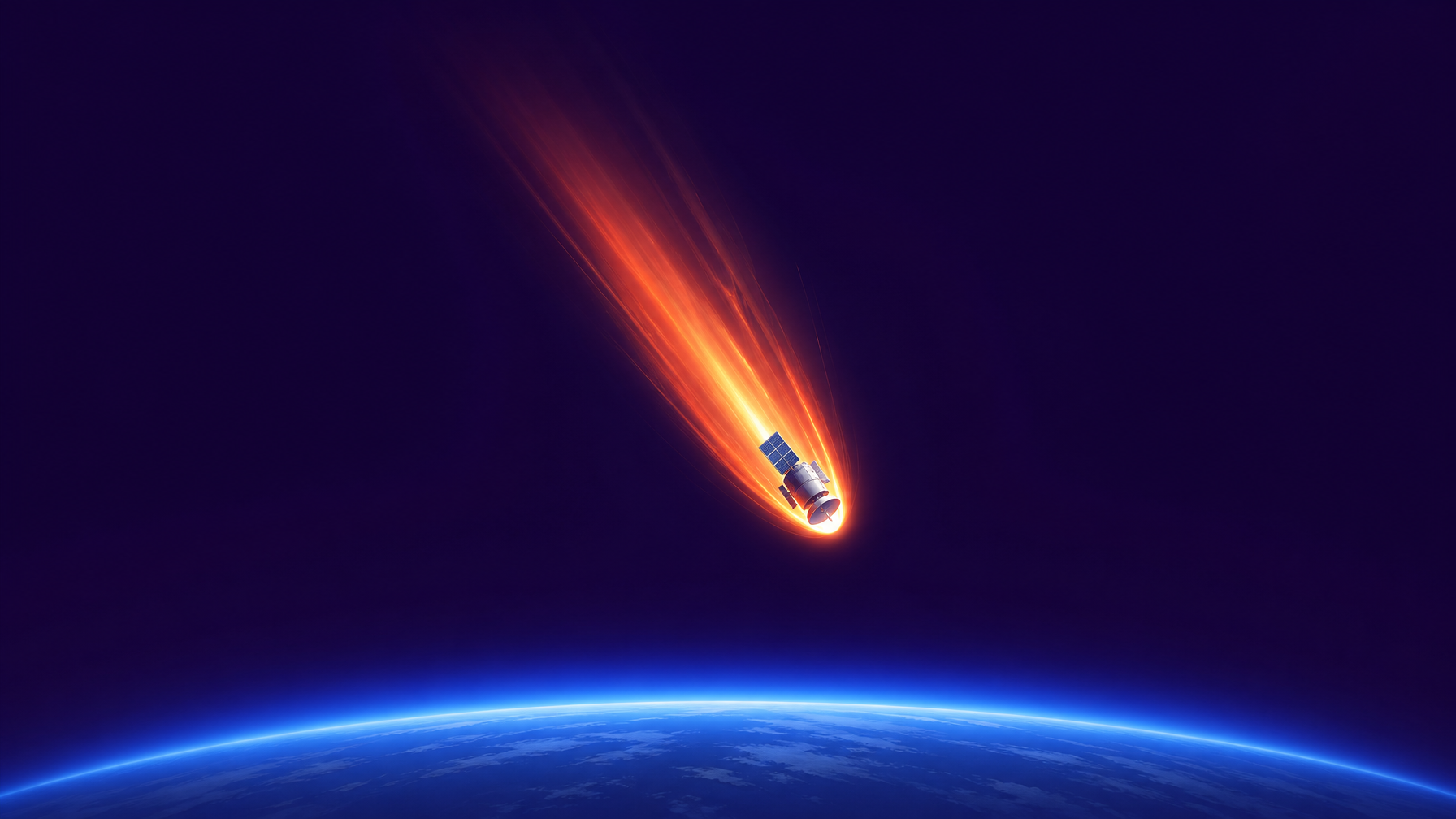
On October 23, 2026, NASA issued a somber farewell. After 22 years of storied service, the Neil Gehrels Swift Observatory (commonly known as the Swift telescope) saw its mission brought to a formal close. With orbital decay now irreversible following a thwarted rescue mission, the spacecraft is slated to plunge into Earth’s atmosphere and burn up within days. The sharpest pair of eyes in high-energy astronomy has taken its final curtain call.
Built for Two Years, Thrived for 22: Upper Atmospheric Drag Takes Its Toll
Swift launched in November 2004 with a baseline design lifetime of merely two years. NASA astrophysicist Brad Cenko recalled that the science team had quietly hoped the spacecraft might soldier on into the 2030s. Unfortunately, friction from Earth’s upper atmosphere dashed those ambitions.
Orbits above 500 kilometers are universally deemed space, yet our atmosphere possesses no hard outer boundary; trace amounts of rarefied gas molecules linger even at high altitudes. Orbital decay—the gradual loss of altitude caused by subtle atmospheric drag—acts like a slow-motion braking maneuver. In Swift’s case, this relentless braking spanned 22 full years. Over 110,000 orbits around the planet, the telescope quietly bled away half of its initial altitude.
Compounding the problem, the Sun reached the peak of its solar activity cycle in recent years. Intense solar ultraviolet and X-ray radiation heated and inflated Earth’s upper atmosphere, significantly increasing gas density at orbital altitudes. The resulting aerodynamic drag on the satellite multiplied, precipitous descent accelerating year over year.
In a bid to salvage the historic mission, NASA contracted a commercial servicing spacecraft that launched in early July 2026. The objective was to rendezvous with Swift, grapple the observatory, and boost it into a higher, stable orbit. However, in late August, the rescue vehicle suffered critical propulsion system failures, forcing NASA to scrub the salvage effort. With no remaining avenue for re-boosting, mission controllers officially decommissioned the telescope on October 23.
Slewing at the First Alarm: How a 1.5-Ton Satellite Became an Agile Cosmic Hound
The observatory was christened “Swift” after the aerial bird renowned for pivoting and darting mid-flight with astonishing agility. As Northwestern University astronomer Wen-fai Fong noted, Swift was an utterly unique observatory whose defining superpower was the ability to point multiple onboard instruments at transient phenomena on a moment’s notice.
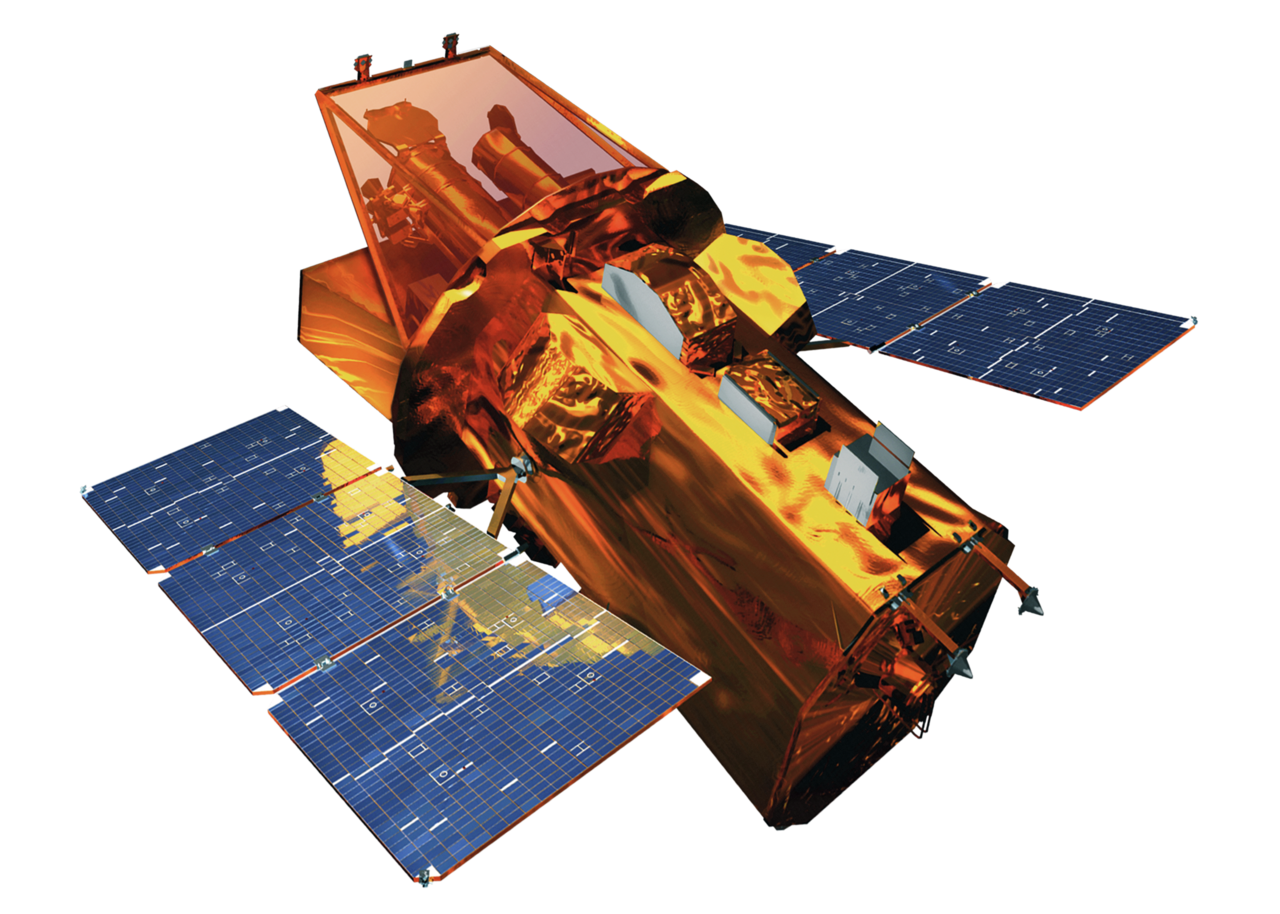 Figure: Operational orbital model of the Swift space telescope. Credit: Wikimedia Commons / NASA
Large flagship observatories like Hubble can take dozens of minutes to reorient their fields of view. By the time a giant mirror sluggishly settles on target, fleeting cosmic flares have long since gone dark. Swift sidestepped such bulkiness from day one, deploying a trio of complementary instruments:
- Burst Alert Telescope (BAT): A wide-field coded-mask detector scanning roughly a sixth of the entire sky at any given moment.
- X-ray Telescope (XRT): A grazing-incidence optic that pinpoints energetic targets with arcsecond precision.
- Ultraviolet/Optical Telescope (UVOT): A high-resolution imaging camera designed to capture faint fading afterglows.
Whenever BAT detected an abrupt spike in gamma radiation, the spacecraft’s flight computer immediately took autonomous command. Internal reaction wheels spun up, rotating the entire 1.5-ton satellite through sweeping angles within 60 to 90 seconds. It was the orbital equivalent of a pickup truck drifting smoothly on a dime, locking two narrow-field high-magnification lenses onto the flashpoint before the initial blast subsided.
This rapid-slewing synergy transformed our understanding of Gamma-Ray Bursts (GRBs)—the most powerful electromagnetic explosions in the universe, ignited by collapsing stars or colliding compact remnants, which can unleash more energy in seconds than our Sun will radiate in its entire 10-billion-year lifetime. From nascent birth to fading embers, multi-wavelength portraits were cleanly archived within minutes.
Snapping the Cosmos’s Most Violent Flash: Rewriting Physics Textbooks
In December 2004, just one month into orbital commissioning, Swift snagged a record-shattering explosion. Its data confirmed that magnetars—ultramagnetized neutron stars with magnetic fields strong enough to wipe a credit card from hundreds of miles away—could unleash catastrophic high-energy flares.
Prior to Swift, textbooks divided gamma-ray bursts neatly into two distinct bins: “long bursts” lasting over two seconds, sparked by massive star collapses, and “short bursts” under two seconds, produced by binary neutron star mergers. Across its 22-year tenure, Swift methodically upended that tidy dichotomy. It captured oddball events showing that certain short bursts could also synthesize heavy elements, compelling theoretical astrophysicists to rewrite stellar evolution models.
Swift was also an unparalleled record-breaker. In 2022, it spearheaded observations of GRB 221009A, popularly dubbed the “BOAT” (Brightest Of All Time). The explosion’s ferocious wavefront delivered such an immense jolt of energy that it physically perturbed Earth’s upper ionosphere. The telescope also intercepted bursts from the deep cosmological past, offering astronomers fleeting glimpses of dying stars that perished when the universe was only a few hundred million years old.
Perhaps Swift’s most enduring legacy lies in how it democratized observational data. Pioneering a “zero-wait” dissemination philosophy, Swift beamed out precise burst coordinates to the global astronomical community within minutes of detection. Many astronomers were jolted awake in bed by automated phone alerts, promptly commanding ground-based facilities worldwide to follow up in relay fashion.
Docking Failure Seals Its Fate: Chasing Comets Down to the Final Week
As the hardware aged gracefully, Swift evolved into deep space’s premier emergency response triage unit. Fielding 5 to 10 target-of-opportunity requests daily, the satellite executed hundreds of autonomous slews each year.
In 2017, the scientific world crossed a monumental threshold with multi-messenger astronomy. When gravitational-wave detectors registered the collision of two neutron stars (rippling spacetime itself), Swift snapped its reaction wheels into action, uncovering crucial ultraviolet counterparts. Later that year, when the IceCube neutrino observatory at the South Pole flagged a high-energy cosmic neutrino, Swift swiftly swung into position once again to help identify the blazar source.
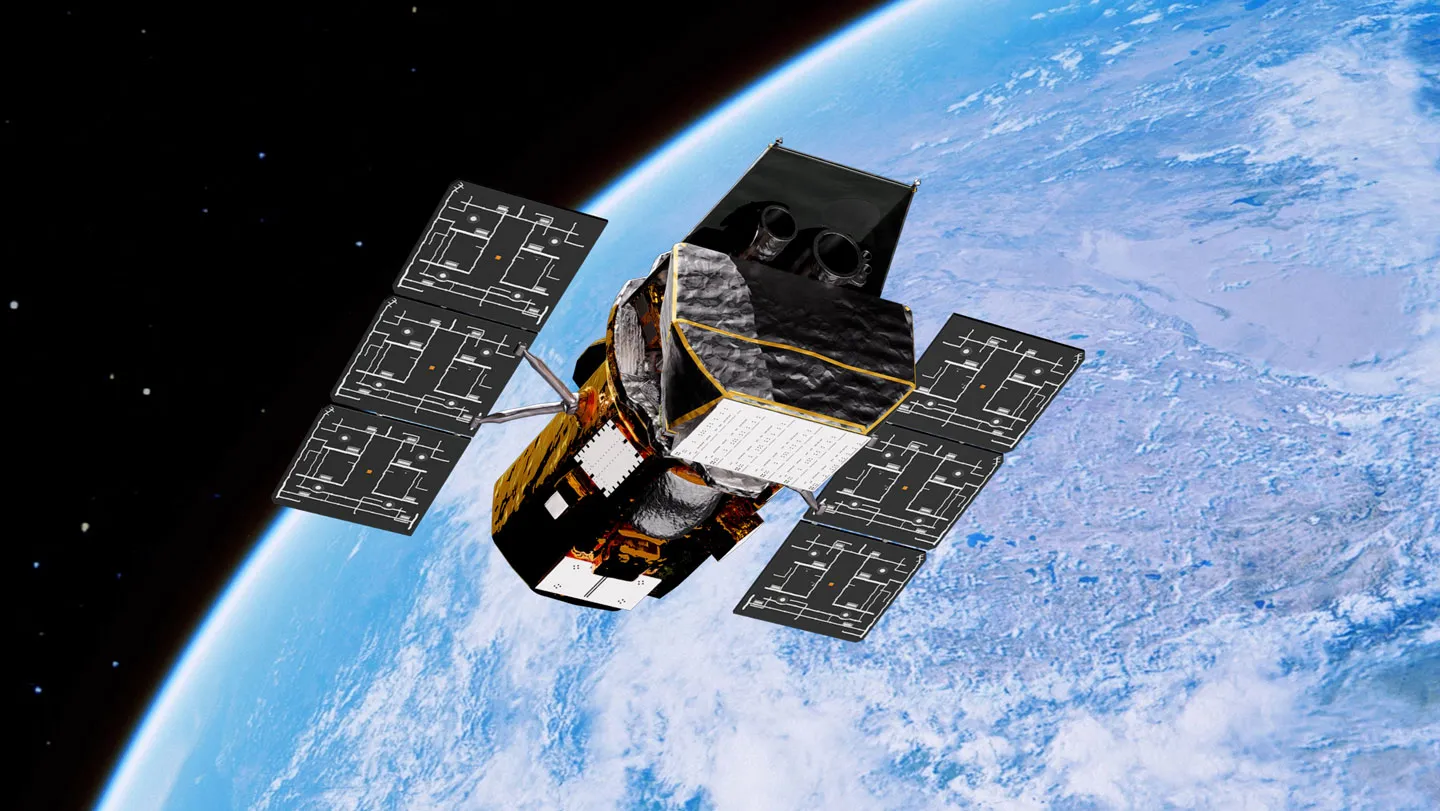 Figure: Artistic visualization of the Swift observatory concluding its tenure in low Earth orbit. Credit: Science News
To clear the way for this past summer’s commercial rendezvous attempt, ground controllers had placed Swift into a protective hibernation for several months. Upon learning that the docking and orbit-raising mission had fallen through, engineers powered the instruments back on, determined to squeeze every last drop of science from the spacecraft. Even during its penultimate week of life, Swift slewed its optics to track an interstellar-visiting comet slicing through the solar system.
In late September, it captured one last bright GRB blazing across ten billion light-years of spacetime. As Deputy Project Scientist Judith Racusin reflected, it was Swift’s poignant swan song.
An Irreplaceable Sentinel: Rare Cosmic Blasts May Now Slip Away
Swift’s imminent atmospheric cremation marks the end of an extraordinary epoch in high-energy time-domain astrophysics. Originally budgeted for just 700 days, the craft persevered for over two decades, charting an indispensable coordinate system across dynamic cosmic phenomena.
Today, there is no direct successor waiting in the wings. While the Fermi Gamma-ray Space Telescope excels at broad all-sky monitoring, it lacks narrow-field instruments capable of pivoting in seconds. The flagship James Webb Space Telescope boasts breathtaking infrared sensitivity, but its massive, sunshield-bound frame cannot execute rapid, wide-angle maneuvers on demand. Meanwhile, ground-based facilities remain forever hostage to daylight cycles and atmospheric distortion.
As Racusin pointed out, without Swift, astronomers will inevitably miss a multitude of rare, anomalous transients—the very outliers that tend to harbor breakthrough physical laws. The mechanical bird that circled overhead for 22 years will ultimately disintegrate into glowing embers over Earth’s upper skies. Until a new sentinel takes flight, the window for rapid-response cosmic monitoring will remain conspicuously dim.
Reference Links:
- Science News Coverage
- NASA Official Swift Mission Blog
- Space.com Report