
In November 2026, the University of Minnesota reported a set of striking early clinical observations. Three patients with locally advanced pancreatic cancer received direct intratumoral injections of an engineered oncolytic virus. Following treatment, tumor growth came to a complete halt across all three patients. Crucially, the dose administered by the clinical team was merely one-tenth of the planned target dose.
In conventional Phase I clinical trials, the primary objective is assessing safety and defining the maximum tolerated dose. Research teams typically initiate dosing at trace quantities, tracking toxicity markers rather than expecting dramatic therapeutic responses. Halting disease progression at only ten percent of the target dose caught the research team by surprise and defied conventional pharmacokinetic expectations.
Halting Progression at Just One-Tenth of the Target Dose
The clinical trial was led by Masato Yamamoto, MD, PhD, whose laboratory has dedicated years to engineering natural viruses to selectively hunt and destroy cancer cells. All three patients enrolled in this cohort had locally advanced pancreatic cancer: the primary tumors had invaded neighboring vascular and connective structures in the pancreas, but had not yet metastasized to distant organs.
Periodic follow-up imaging revealed that all three patients achieved verified “stable disease.” For pancreatic cancer—a notoriously aggressive and rapidly fatal malignancy—disease stabilization is itself a demanding clinical benchmark, indicating that cancer cells ceased encroaching on vital surrounding tissue during the observation period.
Yamamoto was candid when speaking to New Scientist: “We only injected one-tenth of the target dose. The results were better than I expected, especially in pancreatic cancer.” Trace drug levels rarely surmount the biological concentration threshold required for clinical response. This rare early finding immediately drew keen attention from the global oncology community.
A Dense Fibrous Fortress: Locking Chemotherapy and T Cells Out
Among all solid tumors, pancreatic adenocarcinoma is often labeled the “king of cancers.” Its five-year survival rate has stubbornly hovered around 10% for decades. While countless compounds exhibit dramatic efficacy in cell culture dishes, they routinely falter once introduced into human patients. The central bottleneck stems from the exceptionally dense, hostile microenvironment of pancreatic tumors.
Ordinary solid tumors develop erratic blood vessel networks through which therapeutics can diffuse via the bloodstream. Pancreatic tumors present a starkly different landscape: malignant cells stimulate adjacent stromal fibroblasts to churn out massive volumes of collagen and extracellular matrix. This dense stroma weaves a rigid fibrous envelope around the neoplastic nests.
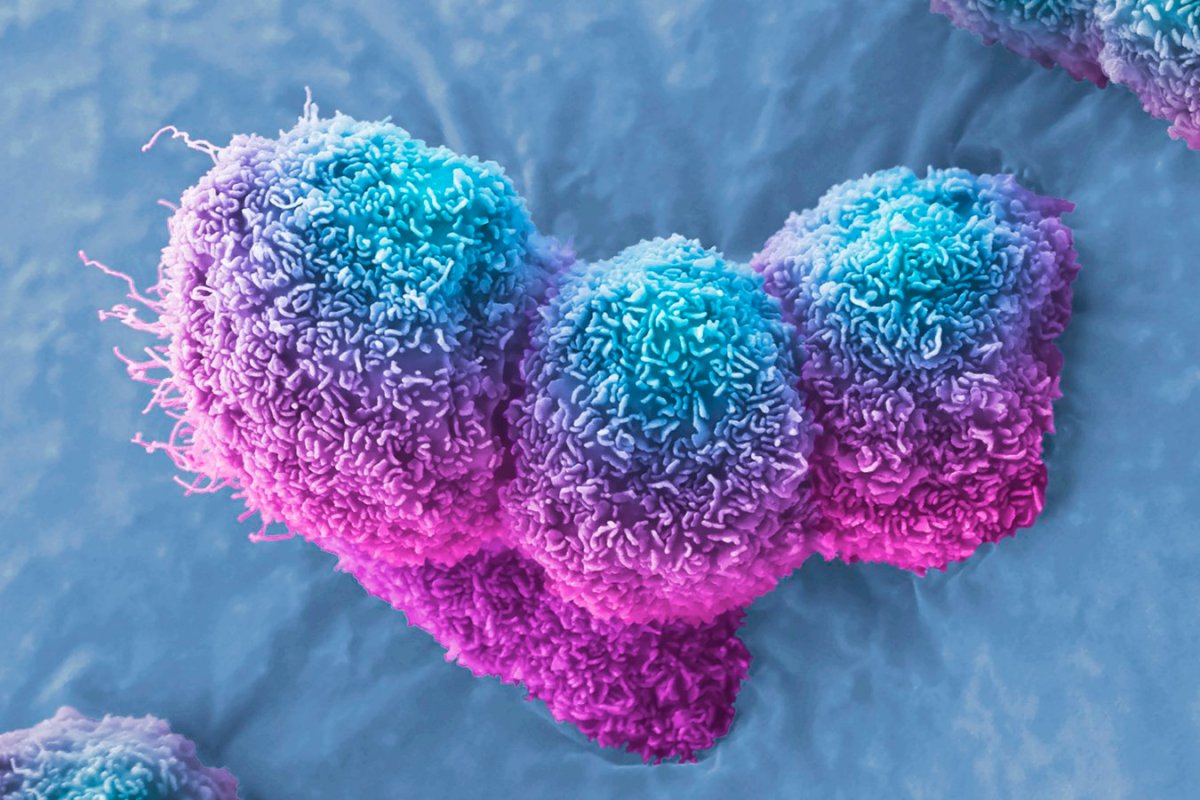 Photo: Scanning electron micrograph of pancreatic cancer cells. Credit: Anne Weston / Francis Crick Institute, Science Photo Library
Electron microscopy highlights the unyielding density of this stromal barrier. The compacted matrix generates extreme interstitial fluid pressure within the tumor, collapsing delicate capillaries and preventing intravenous chemotherapy from penetrating the tumor core. Simultaneously, the body’s own immune defenses—including cytotoxic T cells—are physically barred from penetrating the lesion.
Escalating systemic chemotherapy dosages against this physical barricade typically backfires. High concentrations circulating through peripheral blood damage renal and hepatic functions before sufficient molecules ever reach the cancer core. To break this impasse, researchers must bypass peripheral blood circulation entirely and dismantle the tumor from within.
Infiltrating the Cancer Core: On-Site Lysis Meets Immune Recruitment
The therapeutic candidate advanced by Yamamoto’s team is an engineered oncolytic adenovirus. Unlike traditional small-molecule drugs or antibodies, an oncolytic virus replicates inside host cells. The team bypassed systemic intravenous infusion, relying instead on high-resolution imaging to guide a fine needle directly into the tumor center.
Natural adenoviruses readily infect healthy epithelial cells, triggering common respiratory symptoms. To enforce safety, researchers deleted key regulatory genes required for replication inside normal tissues. The modified viral vector can only exploit the aberrantly activated metabolic pathways unique to malignant cells, rendering it incapable of initiating replication inside healthy host cells.
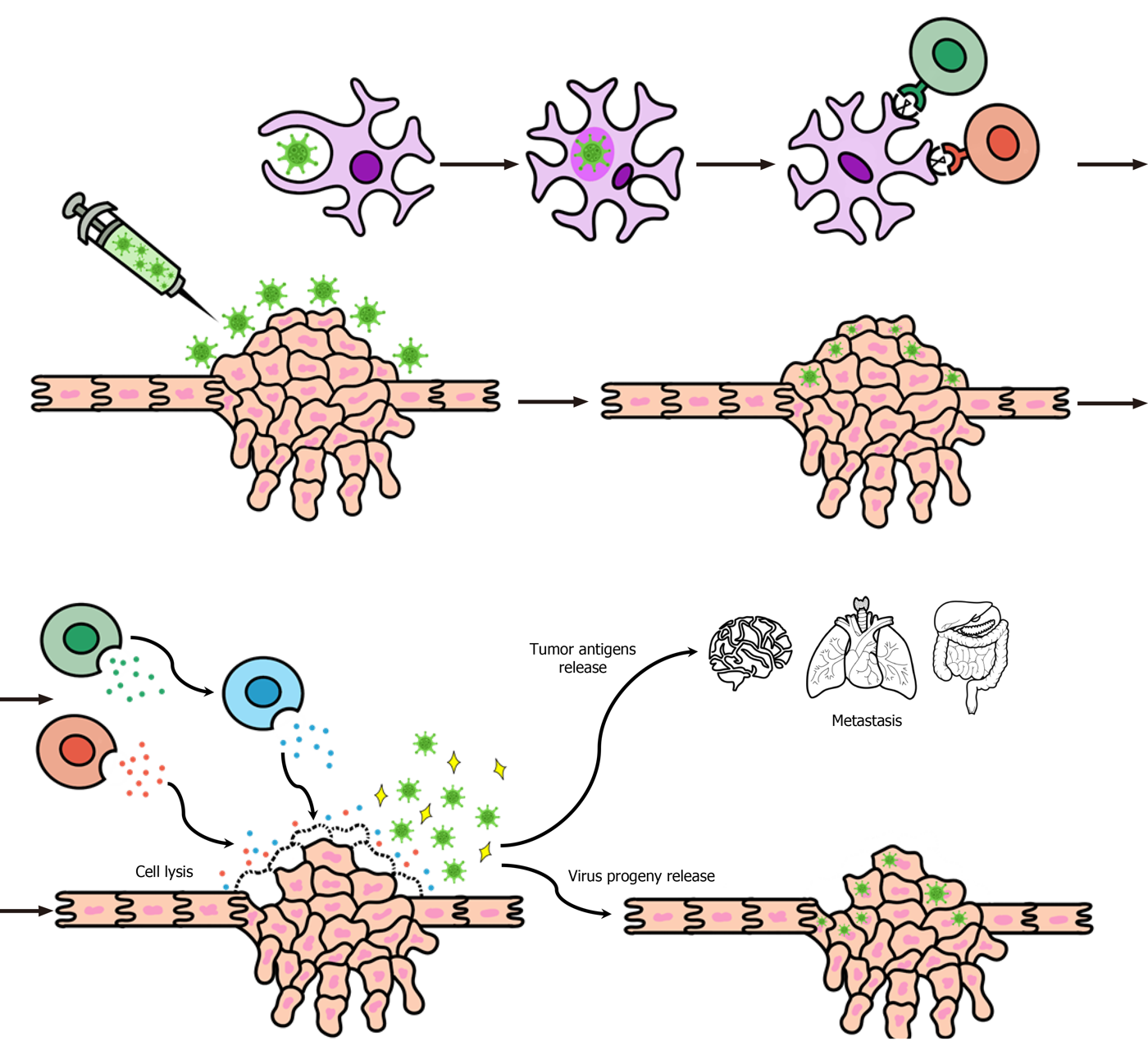 Diagram: Schematic of an oncolytic virus entering tumor cells and inducing lysis. Credit: Wikimedia Commons
Once inside a pancreatic cancer cell, the virus commandeers host cellular machinery to assemble thousands of viral progeny until the cell membrane bursts. As the malignant cells lyse, tumor-specific neoantigens buried deep inside the fibrous stroma are violently dispersed into the surrounding microenvironment, igniting a powerful localized immune alarm.
This destruction mechanism features a self-amplifying cascade: newly released viral particles infect neighboring malignant cells, while the unleashed antigens and cytokine cascades summon dormant immune patrols. Circulating T lymphocytes, previously stymied by the stromal barrier, converge on the site to mount a targeted clearance of residual neoplastic cells.
Striking Early Signals, But Three Hurdles Ahead of Clinical Approval
Following presentations at medical conferences, the study rapidly attracted worldwide attention. Nevertheless, evaluating early-phase medical milestones demands rigorous objectivity. Current reporting details only the three responding patients without disclosing the total cohort size enrolled in this specific dose tier.
Statistical validity hinges on knowing both the numerator and the denominator. If three out of three enrolled patients stabilized, the response rate is remarkable; if three responders were culled from thirty patients, the efficacy profile looks very different. Furthermore, some researchers searching clinical trial registries noted the absence of an identifiable public trial identifier in initial reports.
Beyond cohort transparency, systemic host immunity presents a formidable obstacle. Adenoviruses circulate widely in human populations, and most adults carry high titers of pre-existing neutralizing antibodies. While an initial local injection can bypass blood-borne neutralization, repeated administration risks triggering an escalating systemic humoral response that clears incoming viral particles before they can infect target cells.
Navigating the path from Phase I to regulatory approval typically spans many years. Phase II trials must demonstrate consistent efficacy across broader, diverse cohorts, and Phase III trials require rigorous double-blind comparisons against current standards of care. Stable disease in three patients offers a compelling scientific starting point, but an early clinical signal is not yet an approved medicine.
Late Detection Demands Faster Therapeutic Breakthroughs
The pancreas resides deep in the retroperitoneal cavity, an anatomically concealed location. In the early stages of oncogenesis, tumors rarely trigger localized pain. Patients experiencing vague epigastric discomfort or mild acid reflux are frequently treated for gastritis, delaying crucial contrast-enhanced abdominal CT scans.
By the time jaundice, unexplained weight loss, or intractable back pain manifest, tumors have typically encrusted neighboring mesenteric vessels. Clinical data show that over 80% of pancreatic cancer patients are diagnosed at unresectable stages. For these advanced patients, life expectancy is often measured in months, leaving a razor-thin window to explore experimental options.
Across technical forums and patient advocacy discussions, families frequently recount prolonged diagnostic odysseys. Advanced pancreatic cancer offers limited survival horizons; any intervention capable of arresting tumor expansion represents a lifeline. This acute clinical urgency underscores why laboratory breakthroughs must be translated into validated clinical pipelines with maximum speed.
Arresting tumor progression at one-tenth of the target dose demonstrates genuine mechanistic potential for direct oncolytic lysis and in situ immune awakening. Yet facing this stubborn biological fortress, the oncology field must maintain measured discipline.
Full enrollment figures and long-term follow-up data will be essential as the team advances. Conquering the king of cancers remains an arduous, protracted struggle, but every crack opened in its defenses provides humanity with another weapon to dismantle the barrier.
References:
- New Scientist Report
- University of Minnesota Clinical Affairs News
- Hacker News Discussion