At 15:38 on October 12, 2026, a Dutch owner of an Asus ROG Zephyrus G14 unboxed their laptop returning from an authorized service center. Booting up and hitting the hotkey into the BIOS (Basic Input/Output System) to verify hardware status, right in the center of the “BIOS Utility - EZ Mode (Version 318)” dashboard was a glaring surprise: Total Memory: 16384 MB. The flagship laptop—powered by an AMD Ryzen 9 7940HS and an Nvidia GeForce RTX 4090 Mobile GPU—had been sent in for warranty service due to a motherboard failure. Following the official RMA (Return Merchandise Authorization) process, the machine arrived back with half of its factory-configured memory completely missing.
The owner dug up the original purchase receipt clearly listing 32GB of RAM and reached out to Asus customer support, only to face weeks of pushback. A factory top-tier configuration equipped out of the box with 32GB was inexplicably downgraded to 16GB following an extended warranty motherboard swap, with no component tracking record anywhere in the RMA ticketing logs. For slim gaming notebooks engineered with a hybrid “soldered plus SO-DIMM socket” memory layout, the lack of intake and handoff verification during motherboard replacements lays bare ongoing quality control blind spots in Asus customer service.
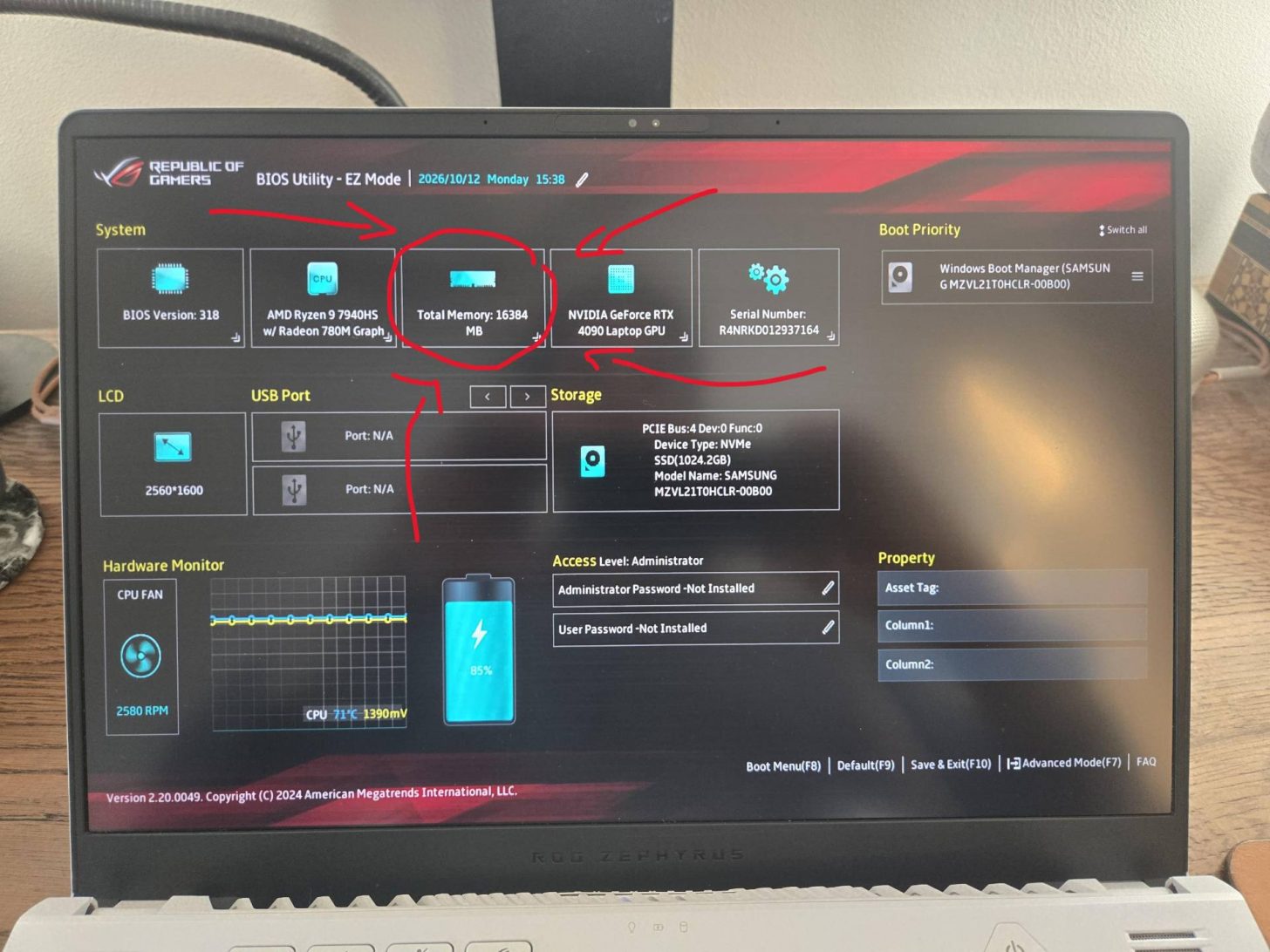 Figure: The owner’s photo of the post-RMA BIOS screen; the red circle indicates total memory reading just 16384 MB (16GB), alongside an RTX 4090 Mobile GPU and serial number R4NRKD012937164. Source: Reddit (u/Thriceinabluemoon).
16GB Soldered Plus 16GB Socket: How Swapping a Board Dropped Half the RAM
Reddit user u/Thriceinabluemoon, who brought the incident to light, owns a flagship 2023 Asus ROG Zephyrus G14 (model GA402XY). As seen on the BIOS monitor screen, the system pairs an AMD Ryzen 9 7940HS processor with an Nvidia GeForce RTX 4090 Laptop GPU, driving a 2560×1600 panel alongside a 1024.2GB Samsung NVMe SSD (MZVL21T0HCLR-00B00). Following an unexpected motherboard failure, the owner leveraged Asus’s official extended warranty service and dispatched the laptop to an authorized Asus repair facility in the Netherlands for a board replacement.
Tracing where that 16GB of memory went requires understanding the internal packaging of the 2023 ROG Zephyrus G14. To accommodate a vapor chamber and an RTX 4090 discrete GPU within a compact 14-inch chassis, Asus stepped away from a conventional dual-slot layout. According to official Asus ROG tech specs for the GA402XY, the machine implements a hybrid architecture: “16GB DDR5 on-board memory + 16GB DDR5-4800 SO-DIMM slot memory,” topping out at a maximum official capacity of 32GB.
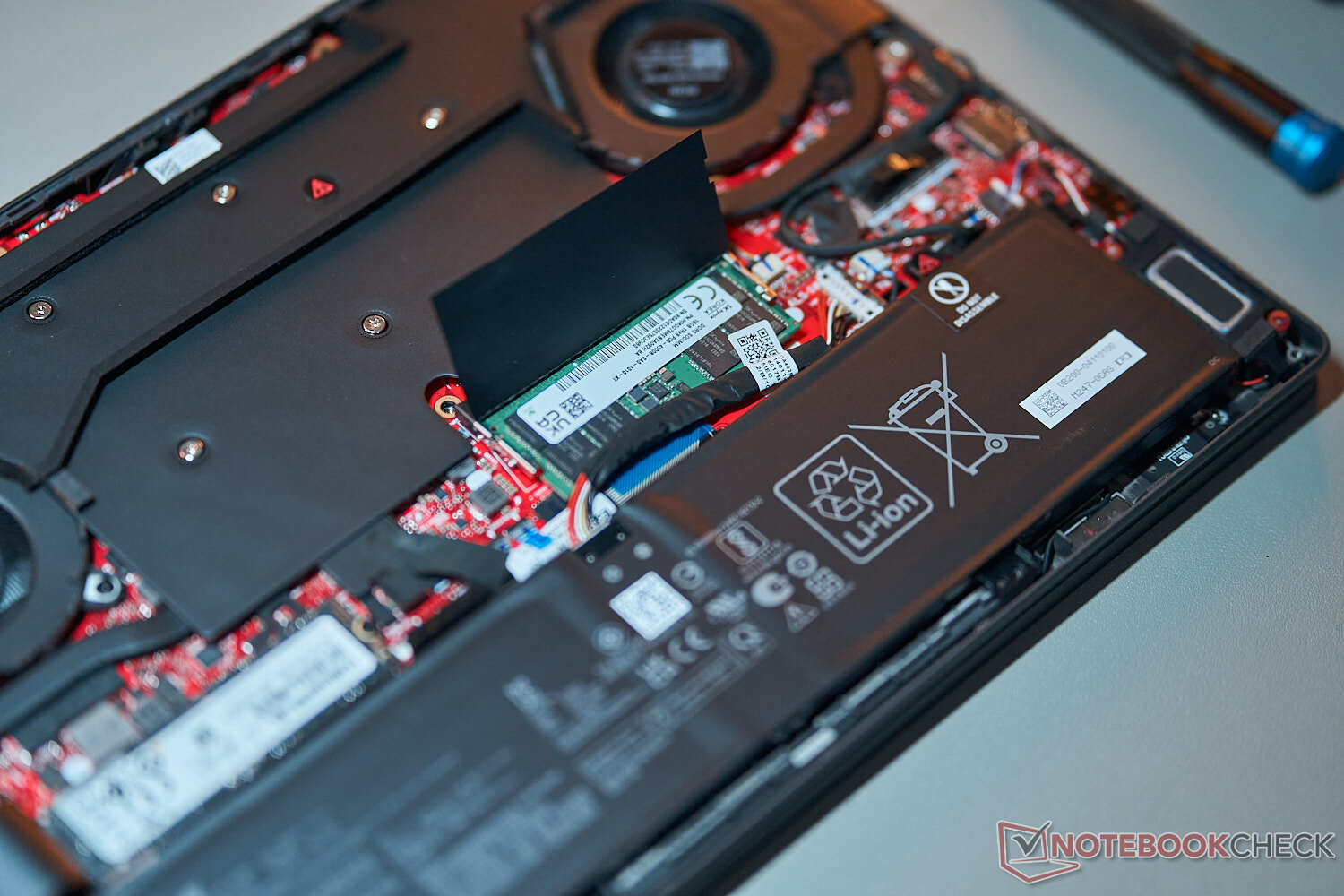 Figure: Teardown photo of the 2023 ROG Zephyrus G14 (GA402XY); beneath the black protective shield sits a removable SK hynix 16GB DDR5-4800 SO-DIMM module, while the other 16GB is soldered directly to the PCB. Source: Notebookcheck (AKAZIE).
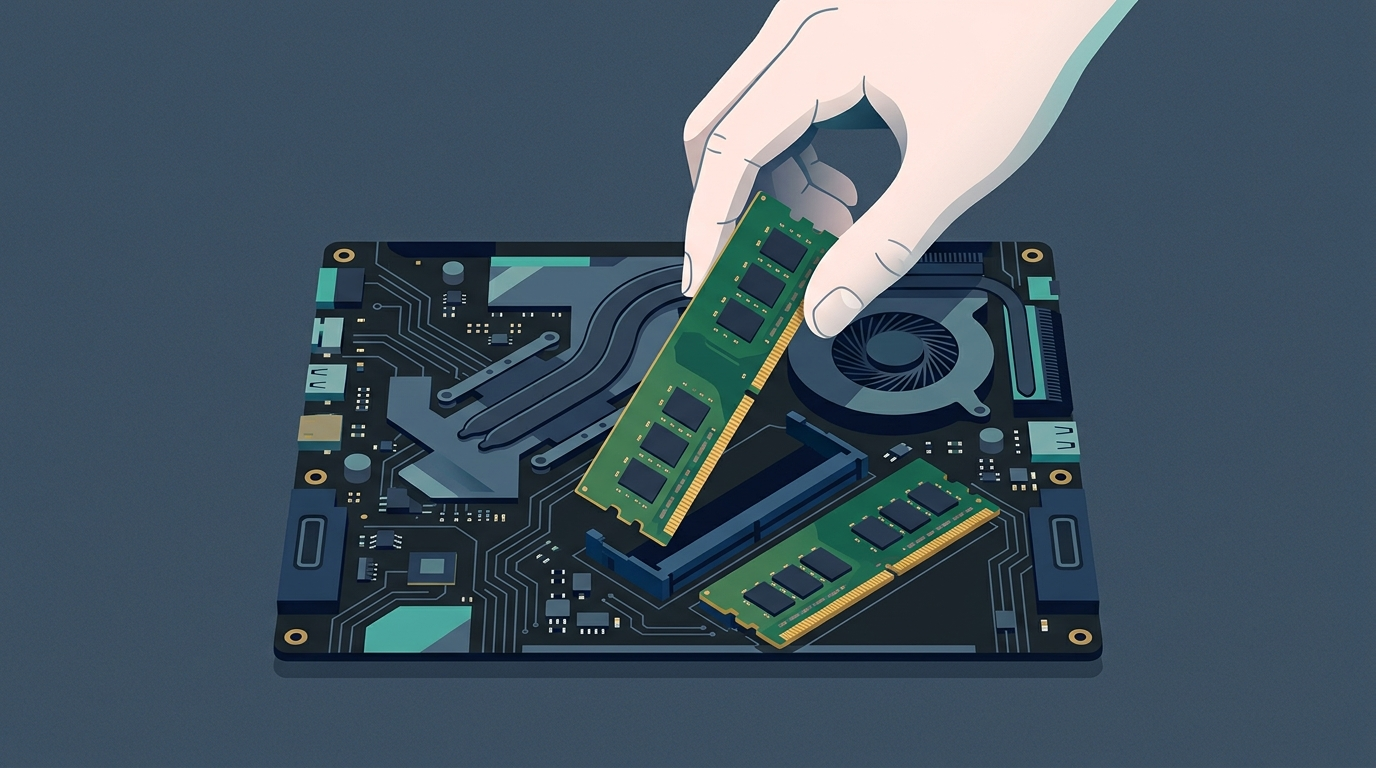
This semi-soldered, semi-modular configuration fundamentally alters the workflow of a motherboard swap. Replacement motherboards kept in service inventory only ship with the 16GB soldered DDR5 chips pre-attached; the modular SO-DIMM slot arrives empty. Standard operating procedure requires the repair technician to lift the black anti-static shielding on the defective board, extract the pre-installed 16GB SO-DIMM stick, and transplant it onto the new replacement board. A hybrid memory architecture turns a motherboard swap into two discrete operations—board replacement and module migration. If a bench technician skips transplanting the stick, a 32GB flagship is instantly downgraded into a 16GB half-measure.
Support Dismisses Purchase Receipts: The Burden of Proof Without Unboxing Video
Had this merely been an oversight by a hurried bench technician, customer service could have easily checked the factory Bill of Materials (BOM) linked to the device serial number and mailed a replacement 16GB DDR5 module to resolve the issue. Instead, what sparked widespread outrage across Reddit communities—including r/ASUS, r/ZephyrusG14, and r/GamersNexus—was weeks of steadfast denial from Asus customer support.
According to u/Thriceinabluemoon, upon noticing the missing RAM, they immediately provided Asus with the original invoice explicitly verifying that the machine was purchased as a 32GB model. Throughout several weeks of back-and-forth communication, Asus support refused to take responsibility, insisting there was no proof the extra 16GB module was installed when the laptop arrived at the repair facility. Frustrated by the lack of resolution and suspecting the module had been pocketed or misplaced in transit, the owner posted a public warning to European users: “A warning regarding RMAs: take out the RAM!”
| Point of Dispute & Verification | Owner (u/Thriceinabluemoon) Evidence & Claims | Asus Support Position & Evidentiary Bottlenecks |
|---|---|---|
| Factory & Purchase Configuration | Possesses valid retail invoice proving GA402XY factory 32GB memory spec | Support refuses to acknowledge the RMA unit arrived with the supplemental 16GB slot module |
| Post-RMA Hardware Status | BIOS 318 snapshot confirms Total Memory: 16384 MB | Only documents post-service state; cannot verify slot status immediately prior to intake |
| Pre-RMA Logging & Evidence | No continuous video recorded showing BIOS boot or internal inspection before boxing | Lacks independent visual proof prior to sealing package; theft allegations cannot be definitively proven |
| Suspected Root Cause | Suspects repair center personnel misplaced or pocketed the removable DDR5 stick | Bench technician failed to transplant the SO-DIMM module from the defective board during swap |
Weighing whether the RAM was stolen or simply forgotten highlights a common dilemma in consumer hardware servicing. From a strict evidentiary standpoint, the customer held only the original purchase receipt and post-RMA BIOS photos. Because the SO-DIMM slot is end-user accessible, the owner had not recorded a continuous video verifying the RAM in BIOS or under the bottom cover before packing the laptop. Once support took the stance that “the slot was empty upon receipt,” the consumer was caught in a classic catch-22. By failing to cross-check factory BOMs against serial numbers or log intake components during unboxing, service centers shift operational accountability entirely onto the customer.
Best Buy Once Stripped Lenovo RAM, But the Underlying Causes Differ
A gaming laptop shedding half its memory during warranty service has bizarrely occurred twice in under two months. In mid-August 2026, Notebookcheck reported another case where a machine lost half its RAM during RMA. Reddit user GRINZ_DOCTOR purchased a Lenovo Legion 5 (15IRX10) from Best Buy featuring an Intel Core i9-14900HX, 64GB DDR5 RAM, and a 2TB SSD. After eight months of normal use, it went into Best Buy for warranty repair and returned with only 32GB of RAM.
Comparing the two incidents side by side reveals the stark difference between bureaucratic rule compliance and an uncontrolled internal repair process.
| Comparison Dimension | Asus ROG Zephyrus G14 RMA Incident (October 2026) | Best Buy Lenovo Legion 5 RMA Incident (August 2026) |
|---|---|---|
| Device & Core Specs | 2023 ROG Zephyrus G14 GA402XY (Ryzen 9 7940HS + RTX 4090) | Lenovo Legion 5 15IRX10 (Core i9-14900HX + 2TB SSD) |
| Pre- vs. Post-RMA RAM | 32GB DDR5 (16GB on-board + 16GB slot) → Cut to 16GB | 64GB DDR5 (dual 32GB SO-DIMM slots) → Cut to 32GB |
| OEM Max Spec Ceiling | Asus spec sheet lists GA402XY factory spec as 32GB (max 32GB) | Lenovo PSREF spec sheet caps model support at 32GB DDR5-4800/5600 |
| RAM Origin & Legitimacy | Factory pre-installed 16GB DDR5-4800 SO-DIMM module from Asus | Third-party seller PC Heaven unboxed and upgraded system to 64GB |
| Service Handling & Outcome | Zero documentation, missing RAM unaccounted for, support denies existence | Geek Squad paperwork noted restoration to OEM spec; pulled 32GB stick returned in bag |
In the Best Buy case, while the Core i9-14900HX processor natively supports up to 192GB of RAM, Lenovo’s official Product Specifications Reference (PSREF) caps the 15IRX10 at 32GB. The 64GB configuration purchased by the buyer was upgraded by a third-party marketplace seller (PC Heaven). Geek Squad technicians strictly adhered to Lenovo’s OEM service manual, determining that out-of-spec memory could cause instability. Technicians removed one 32GB stick, bagged and returned it alongside the laptop, and noted the exact justification on the service sheet.
In Asus’s case, however, the 32GB configuration was factory standard straight from the OEM spec sheet. There was no third-party modding or out-of-spec compatibility concern. The repair facility neither noted the memory discrepancy on the repair manifest nor returned the removed module, and customer support proceeded to deny its very existence. Best Buy sparked backlash by rigidly enforcing OEM manuals at the expense of third-party retail listings; Asus lost a factory-installed module in its own authorized facility with zero audit trail.
Skipping the BIOS Outtake Check: A Customer Trust Crisis Unresolved
With global DDR5 RAM and NAND flash pricing remaining elevated, replacing a high-speed 16GB DDR5 laptop module is not an insignificant expense. The fierce backlash across hardware media and enthusiast communities is magnified by Asus’s recent history of RMA controversies. Following Gamers Nexus’s investigative reports uncovering aggressive repair billing practices—where service centers billed exorbitant fees for minor cosmetic scratches on in-warranty devices—public outcry pushed executive management to promise sweeping global RMA overhauls.
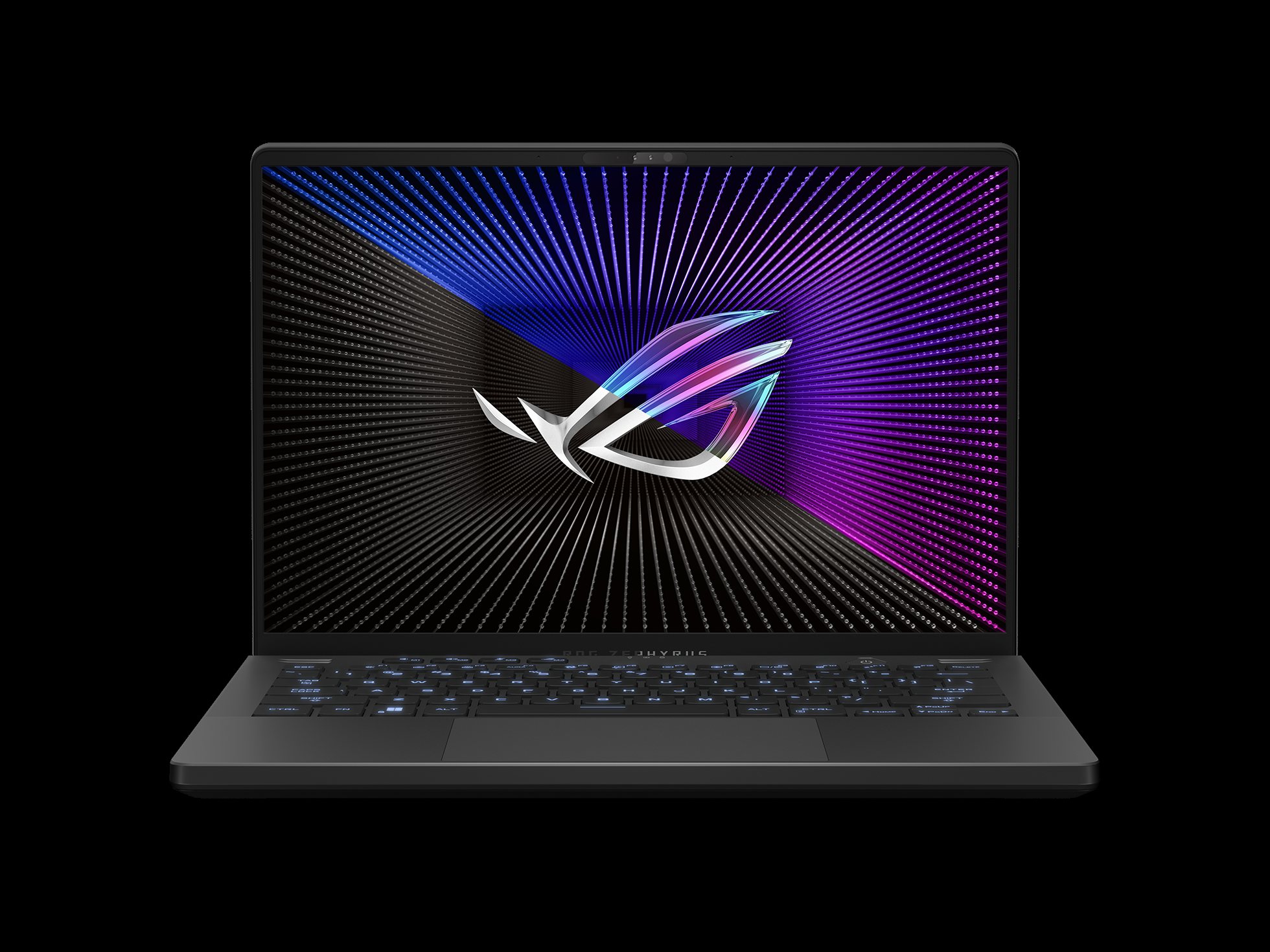 Figure: The Asus ROG Zephyrus G14; its compact engineering divides RAM between soldered chips and a modular socket, creating stricter handoff demands during motherboard replacements. Source: Notebookcheck (Asus).
The Dutch customer’s ordeal shows that repair SOPs continue to break down at the bench level. In a competent laptop service workflow, preventing this mishap requires just two routine checkpoints. The first is intake logging: scanning serial number R4NRKD012937164 to pull up the factory 32GB BOM and verifying the internal presence of the 16GB SO-DIMM module upon opening the chassis. The second is outtake power-on verification: turning the laptop on after the motherboard swap, where a technician entering the BIOS 318 utility would immediately spot Total Memory: 16384 MB clashing with the factory 32768 MB baseline.
Failing both checkpoints—which take less than three minutes combined—allowed a 16GB-deficient RTX 4090 flagship to be certified and shipped back to an unsuspecting customer. Today, enthusiasts feel compelled to open their chassis with screwdrivers to salvage RAM and secondary drives before sending machines in, or record uncut unboxing and BIOS verification videos just to defend against authorized repair centers. Premium brand equity earned through industrial design cannot withstand repeated service failures. Whether that missing 16GB stick was left on a discarded motherboard or pocketed, skipping basic BIOS memory verification during final outbound inspection is the true vulnerability driving Asus’s persistent customer trust deficit.
Reference links:
- Notebookcheck: Asus ROG Zephyrus G14 reportedly returns from RMA with 16 GB RAM missing
- Reddit r/ASUS: A warning regarding RMAs: take out the RAM
- Asus ROG Official Specs: ROG Zephyrus G14 (2023) GA402XY Tech Specs
- Notebookcheck: Best Buy reportedly ‘fixes’ 64 GB gaming laptop by removing half its RAM
- Wccftech: Zephyrus G14 Owner Claims ASUS Removed One Of The 16GB RAM Sticks When Gaming Laptop Was Sent For An RMA