A Free Keyboard in the Box: Hitting the Remote Learning Sweet Spot at $120
On November 18, 2026, Transsion’s value-focused brand itel launched its entry-level VistaTab 12 in the Philippines. The 3GB RAM configuration is priced at 7,599 Philippine pesos (approximately $120), while the 4GB variant retails for 8,299 pesos. While budget sub-$150 tablets almost universally ship as bare slate devices, itel surprised the market by including a tailored magnetic keyboard cover directly inside the retail package.
Packing a physical keyboard into a $120 hardware bundle exemplifies how Chinese consumer tech brands scale abroad. Across Southeast Asia and Africa, the tablet market has long suffered from steep polarization: premium flagship devices remain out of reach for ordinary consumers, while ultra-cheap white-label alternatives suffer from poor build quality. Rather than participating in an empty specs race or benchmark chasing, itel directed its bill of materials (BOM) squarely toward the pain points of student households and micro-merchants.
In mature Western markets, tablets generally function as a third screen for casual media consumption between smartphones and PCs. An official Apple Magic Keyboard costs enough on its own to buy a complete entry-level Android tablet. Consumer demographics across emerging regions, however, look fundamentally different. Millions of households have never owned a traditional PC or laptop; a portable connected screen with a physical typing surface often serves as a family’s sole general-purpose computing hub.
Online education has become an enduring reality across island nations like the Philippines and Indonesia. When students type out assignments on glass touchscreens, typos and finger fatigue are constant headaches. Sourcing a separate Bluetooth keyboard typically adds $15 to $30 to the checkout bill—a meaningful expense that often comes with frustrating pairing delays. By shipping a magnetic keyboard folio as standard equipment, itel eliminated the barrier to entry for peripheral gear entirely.
Bundling a physical keyboard also reframes the purchase in family budgeting discussions. For cost-conscious parents, buying an “educational learning workstation” for their children is vastly easier to approve than purchasing an “entertainment tablet.” This pragmatic hardware combination directly reflects the grassroots consumer insights Transsion has honed across emerging markets over the feature phone and entry-level smartphone eras.
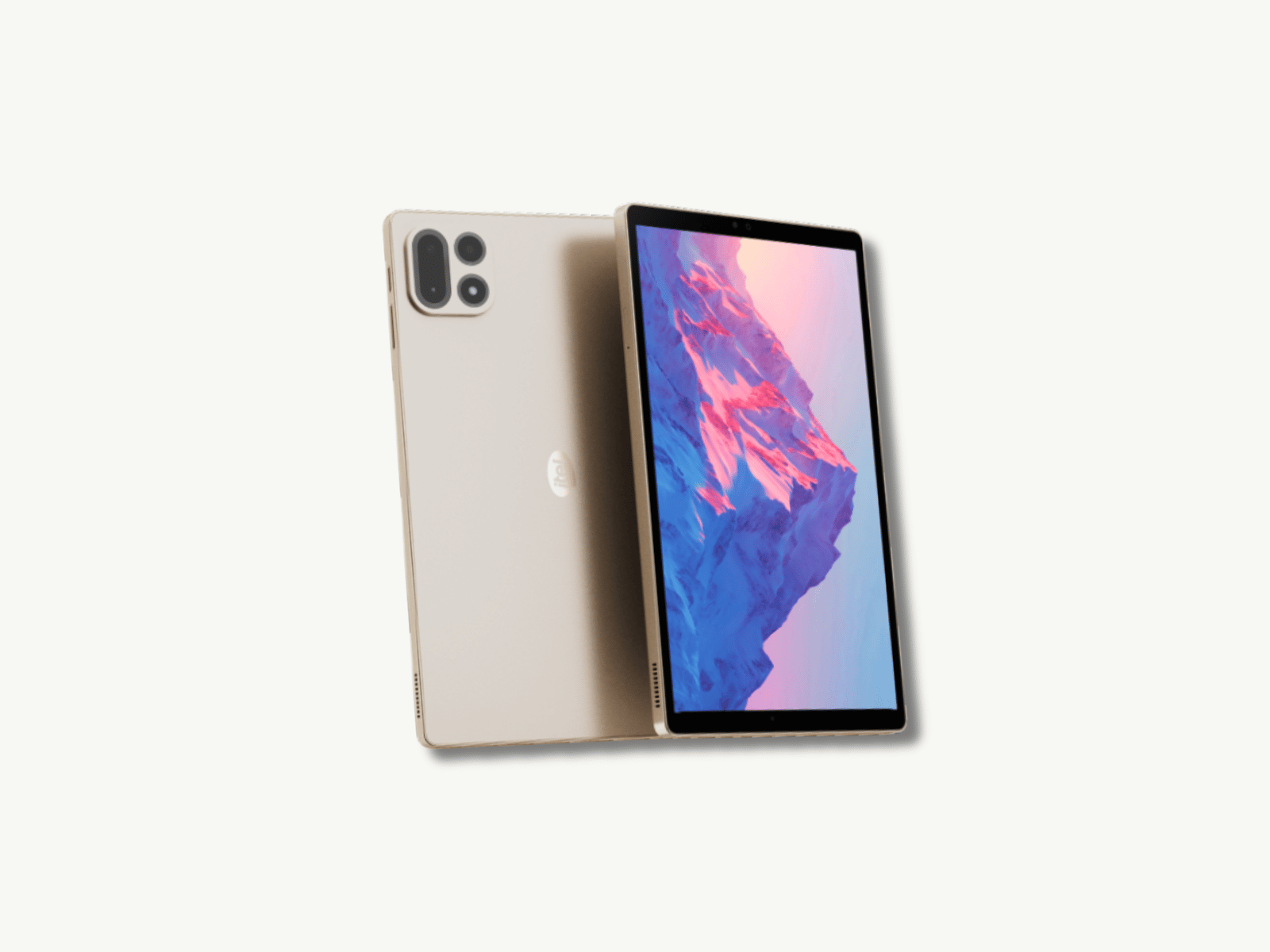 Figure: The itel VistaTab 12 comes bundled with a physical keyboard folio and supports stylus input. Source: itel official product images via Notebookcheck.
Trading Display Resolution for Battery Endurance: 7,000mAh Over Redundant Specs
An analysis of the VistaTab 12 component manifest reveals a disciplined cost-allocation strategy. The 10.1-inch IPS panel tops out at 1280x800 resolution, resulting in a modest pixel density of around 149 PPI and standard peak brightness of 400 nits. At a time when mainstream mid-range slates have standardized on 2K displays, itel opted for a pragmatic 720p-class screen that focuses strictly on functional utility.
Every dollar trimmed from the display panel went directly toward battery capacity and local storage. The tablet packs a generous 7,000mAh battery alongside 128GB of base flash storage. Across rural archipelago communities where electrical grid reliability can fluctuate and daily commutes stretch long, an oversized battery paired with an energy-efficient 12nm MediaTek Helio G85 chipset ensures the device lasts through a full day away from wall chargers.
Generous local storage addresses local connectivity realities. Combining 128GB of onboard storage with microSD expansion up to 2TB allows students to batch-download weeks of learning modules whenever they have access to campus or public Wi-Fi. In markets where cellular data bundles remain a recurring expense, reliable local offline storage delivers far greater practical value than a high-refresh-rate display ever could.
The chassis weighs 420 grams and measures 7.9mm thick. Camera hardware has been streamlined to a basic 5MP front-facing sensor and an 8MP rear shooter, omitting redundant depth or macro sensors altogether. This photographic setup handles classroom check-ins, Zoom lectures, and photographing printed worksheets—keeping hardware expenses tightly aligned with core educational duties.
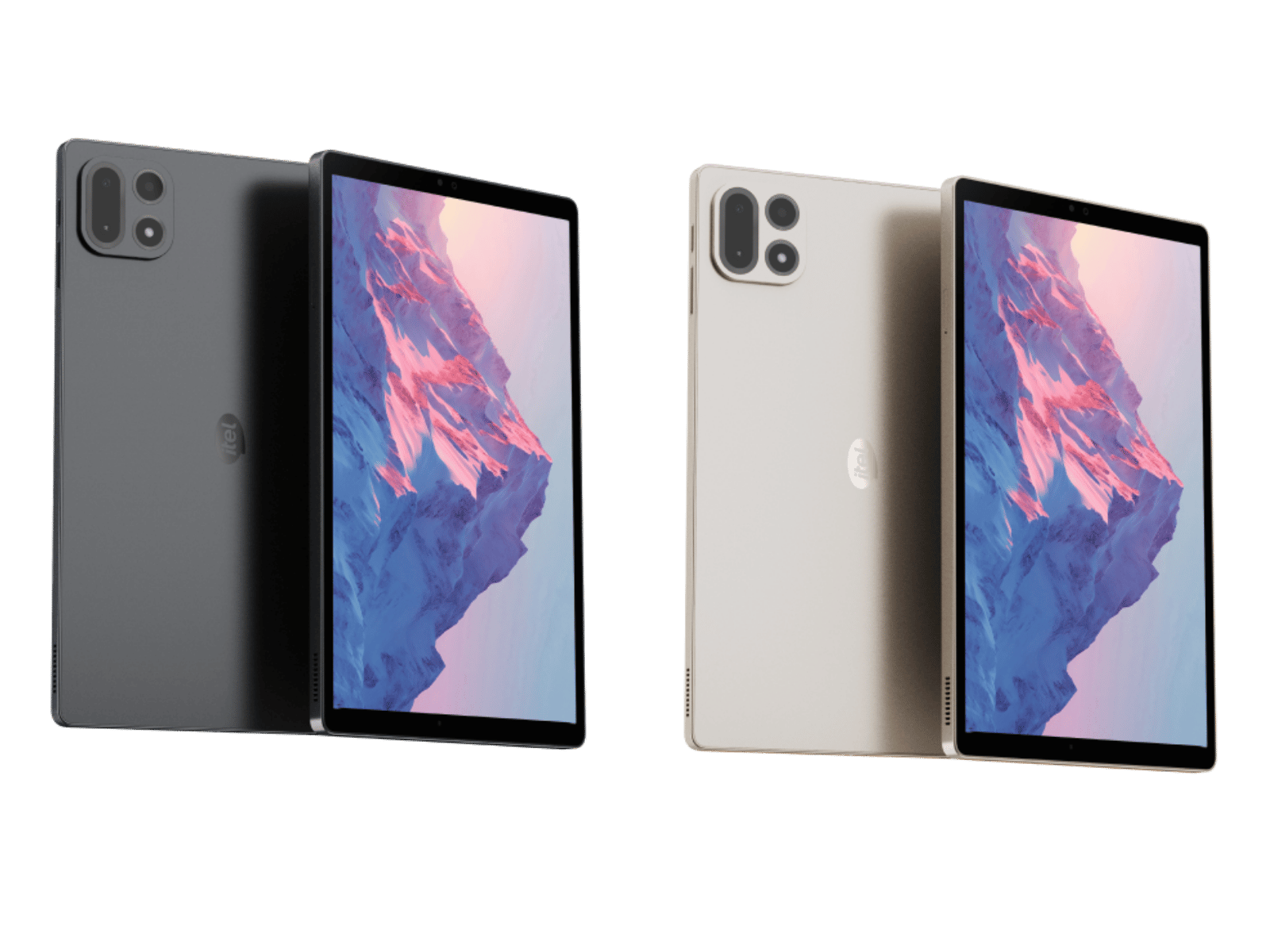 Figure: The VistaTab 12 comes in Space Grey and Titanium Gold finishes, featuring an 8MP rear camera. Source: itel official press materials via Notebookcheck.
Exporting the Pearl River Delta Supply Chain into Overseas Budget Tablets
The economic engine behind the VistaTab 12’s $120 price point is Transsion’s mastery over the Pearl River Delta electronics supply chain. MediaTek’s Helio G85 SoC debuted back in 2020, having amortized its engineering and wafer masking expenses across hundreds of millions of low-cost smartphones. Relying on a mature, legacy silicon platform avoids prohibitive tape-out fees while guaranteeing reliable production yields.
Inside the chassis, itel integrated stereo dual speakers and built-in 4G LTE cellular connectivity. Dual speakers improve vocal clarity during lectures in bustling households, while 4G connectivity liberates island residents from the constraints of fixed-line broadband infrastructure. These standardized components—originally perfected for sub-$100 handsets—were slotted into a 10.1-inch form factor. Leveraging Transsion’s massive purchasing scale, the bill of materials was driven down to levels unbranded white-label workshops cannot match.
Brick-and-mortar customer support forms another crucial competitive moat. Southeast Asian e-commerce storefronts are flooded with nameless knockoff tablets, but purchasers frequently face dead ends when dealing with shipping damage, battery failures, or broken screens. Transsion deploys its extensive Carlcare warranty network across the Philippines, Indonesia, and surrounding regions. Authorized warranty coverage and accessible spare parts dispel long-standing consumer doubts regarding hardware longevity.
The 3GB RAM Debate: Productivity Gateway or Latency Bottleneck?
Even with calculated trade-offs, the entry-level specifications of the VistaTab 12 have stirred debate among tech observers. A baseline of 3GB physical RAM feels undeniably tight within the modern Android landscape. While itel offers virtual RAM memory expansion via zRAM, slow flash storage swap speeds cannot replicate the responsiveness of actual physical memory.
Heavy multitasking can push 3GB of RAM to its limits, resulting in aggressive background app closures. If a student attempts to juggle a live video classroom session while simultaneously reviewing heavily formatted PDF course packs, frame drops and interface sluggishness become noticeable. Several reviewers also noted that while the tablet launches running Android 16, future operating system updates may strain minimal memory configurations over multi-year ownership.
Real-world feedback from tier-two and rural markets tells an entirely different story. Prior to this release, many students were forced to complete online classes on cramped 6-inch phone screens or basic mobile handsets. Upgrading to a 10.1-inch canvas paired with a dedicated keyboard provides an immediate productivity leap for typing reports and formatting documents. As long as users refrain from running demanding 3D games or resource-heavy design tools, standard educational workloads run reliably. Lowering the hardware acquisition barrier takes precedence over luxury performance.
Beyond the Flagship Giants: Emerging Brands Seize Micro-Productivity
Over recent years, leading global tablet manufacturers have chased higher profit margins by escalating hardware specifications. Tandem OLED panels, laptop-grade desktop silicon, and complex multi-device software ecosystems have steadily pushed retail prices upward. With mainstream brand attention centered above the $300 tier, sub-$150 budget computing was largely abandoned by top-tier vendors.
That retreat created an immense supply vacuum. Emerging markets feature expanding youth populations eager for digital educational tools, yet household budgets remain extremely sensitive to upfront costs. By porting its smartphone cost-optimization playbook to tablets, Transsion uses certified quality control and physical distribution networks to claim the overlooked micro-productivity segment.
Hardware success under tight budget ceilings ultimately comes down to ruthless prioritization. With the VistaTab 12, itel demonstrates that in vast developing markets, a durable, easily typable $120 learning tablet offers far more tangible value than an unaffordable flagship ever could.
References:
- Notebookcheck reporting
- itel official technical specifications
- Gizguide product review