Ending Manual Searches: Proactive Destination Alerts Before Departure
On November 19, 2026, tech outlet SamMobile uncovered hidden features in the earliest test firmware for Samsung’s One UI 9.5. Running on a test build for the Galaxy S26, the native Weather app now pushes destination forecasts before a user even embarks on their trip. This change fundamentally disrupts the passive, query-driven model that weather utilities have maintained for over a decade.
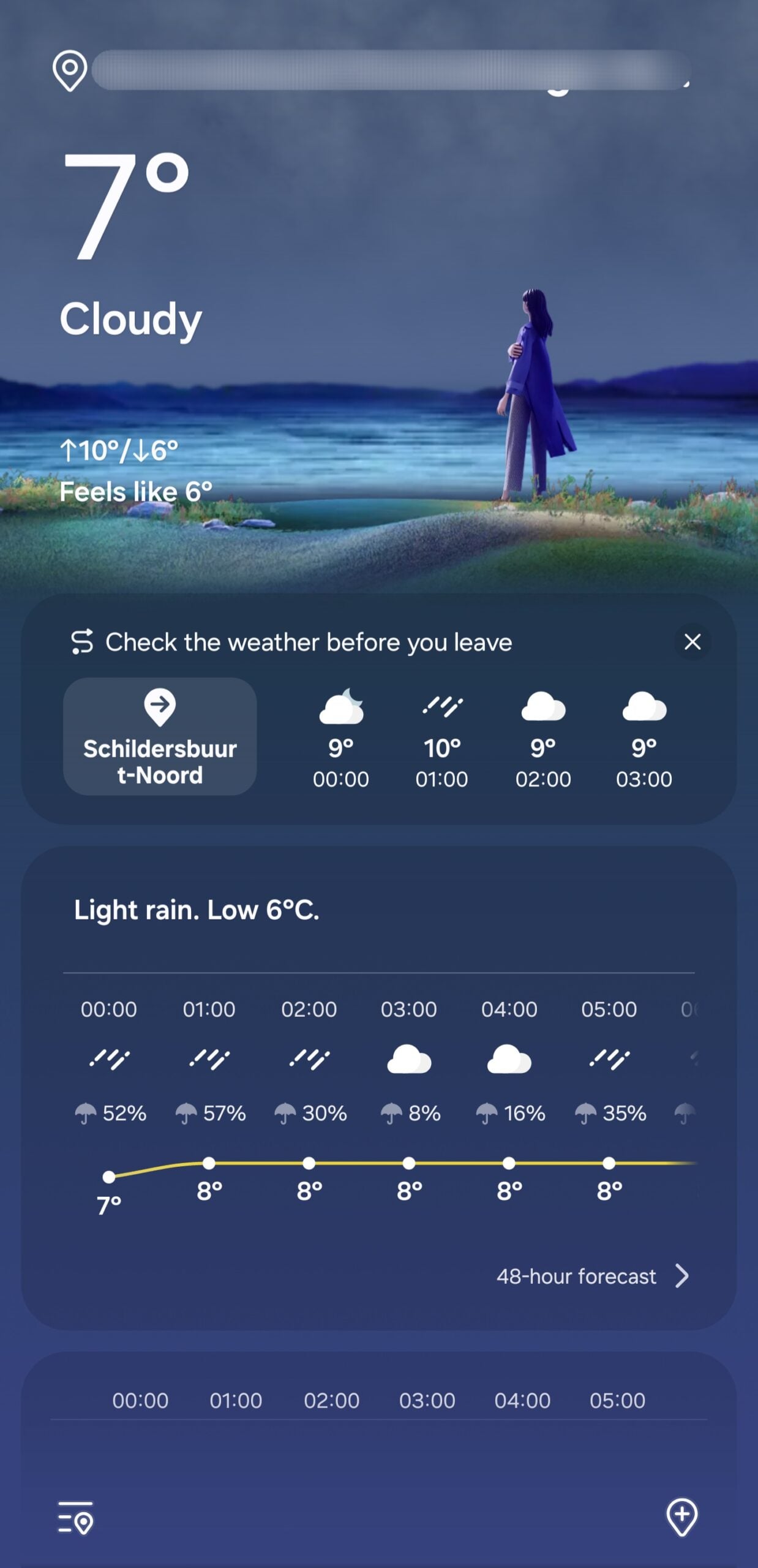
In the leaked test interface, the Weather app no longer just refreshes based on current GPS coordinates. When the system detects cross-city travel plans, an exclusive alert card is automatically generated at the very top of the app’s main screen. Prominently labeled “Check weather before you leave,” it invites users to tap a “Try it” button on the right to view a 24-hour temperature curve and precipitation probability for their destination.
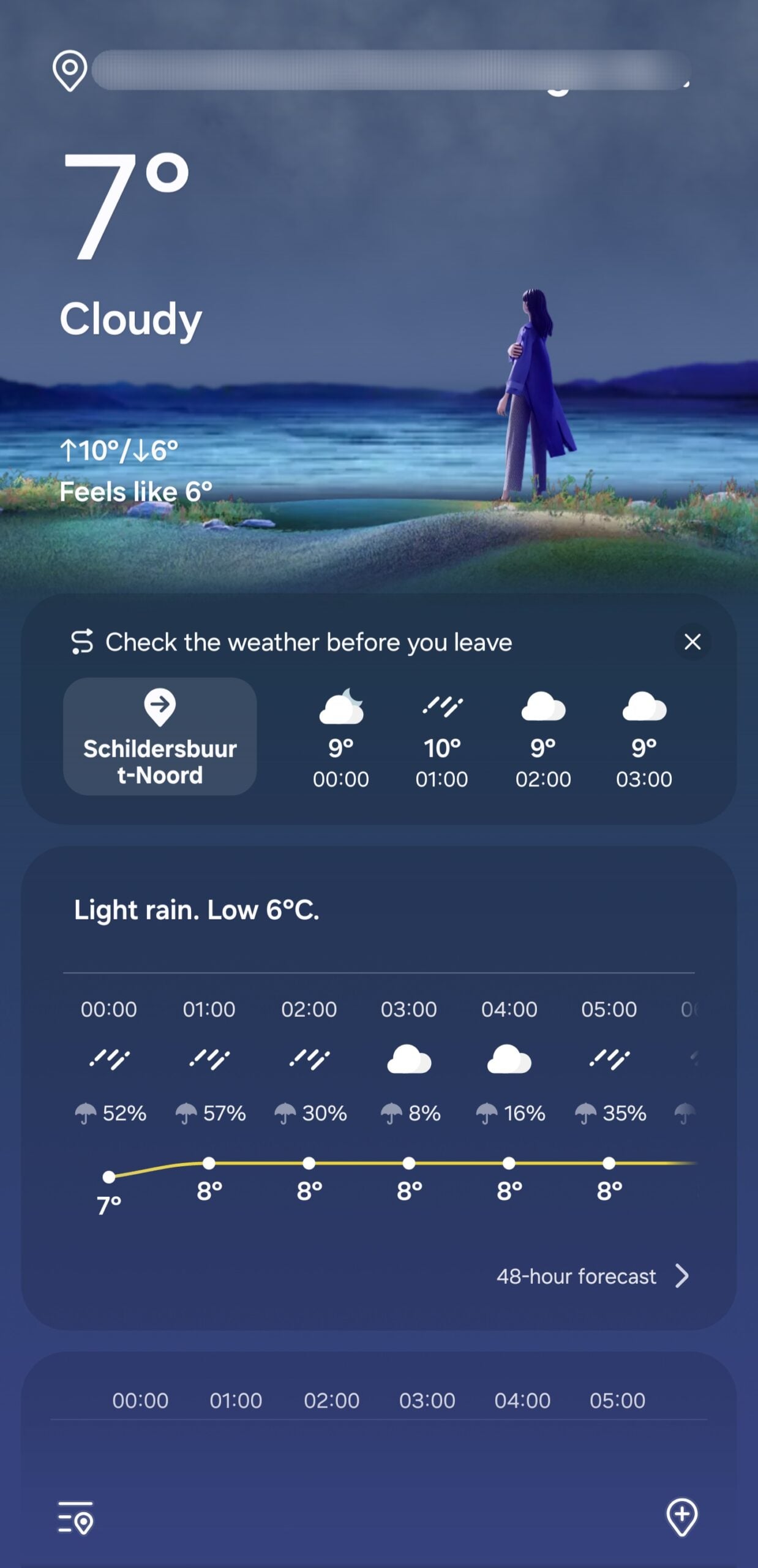 Figure: Pre-departure alert card shown in the Weather app after recognizing cross-city travel. Source: SamMobile.
The core objective of this feature is eliminating temperature and precipitation surprises in advance. The card directly contrasts temperature differences between the departure point and the destination. If a traveler is flying from a warm region into a chilly city, the card proactively recommends packing rain gear and dressing in warmer layers. This seamless flow eliminates the cumbersome navigation required by conventional weather applications.
For the past fifteen years, mobile weather apps have followed a rigid interaction model: relying on foreground GPS refreshes or waiting for users to manually search for target cities. This design demanded that users remain constantly vigilant about atmospheric shifts. Frequent travelers often stepped off an airplane into biting cold before remembering to check the local weather. By moving the alert trigger ahead of departure, Samsung bridges what was previously a broken service loop.
Breaking App Silos: Underlying PAC Extracts Live Itineraries
The warning card in the Weather app is far from a standalone weather API call. At its core, it relies on Samsung’s new Personal Agent Core (PAC), currently under active testing. Operating as a low-level background module, PAC serves as a cross-application context-awareness bus, dismantling data barriers between isolated applications.
Conventional tools cannot penetrate system boundaries to retrieve external calendar entries. PAC, however, integrates deeply with native and Google apps—including Samsung Calendar, Samsung Messages, Gmail, Call Recordings, and Notes. Whenever a user logs an out-of-town trip on their calendar or receives a flight confirmation email, PAC automatically extracts the destination, flight departure time, and trip duration.
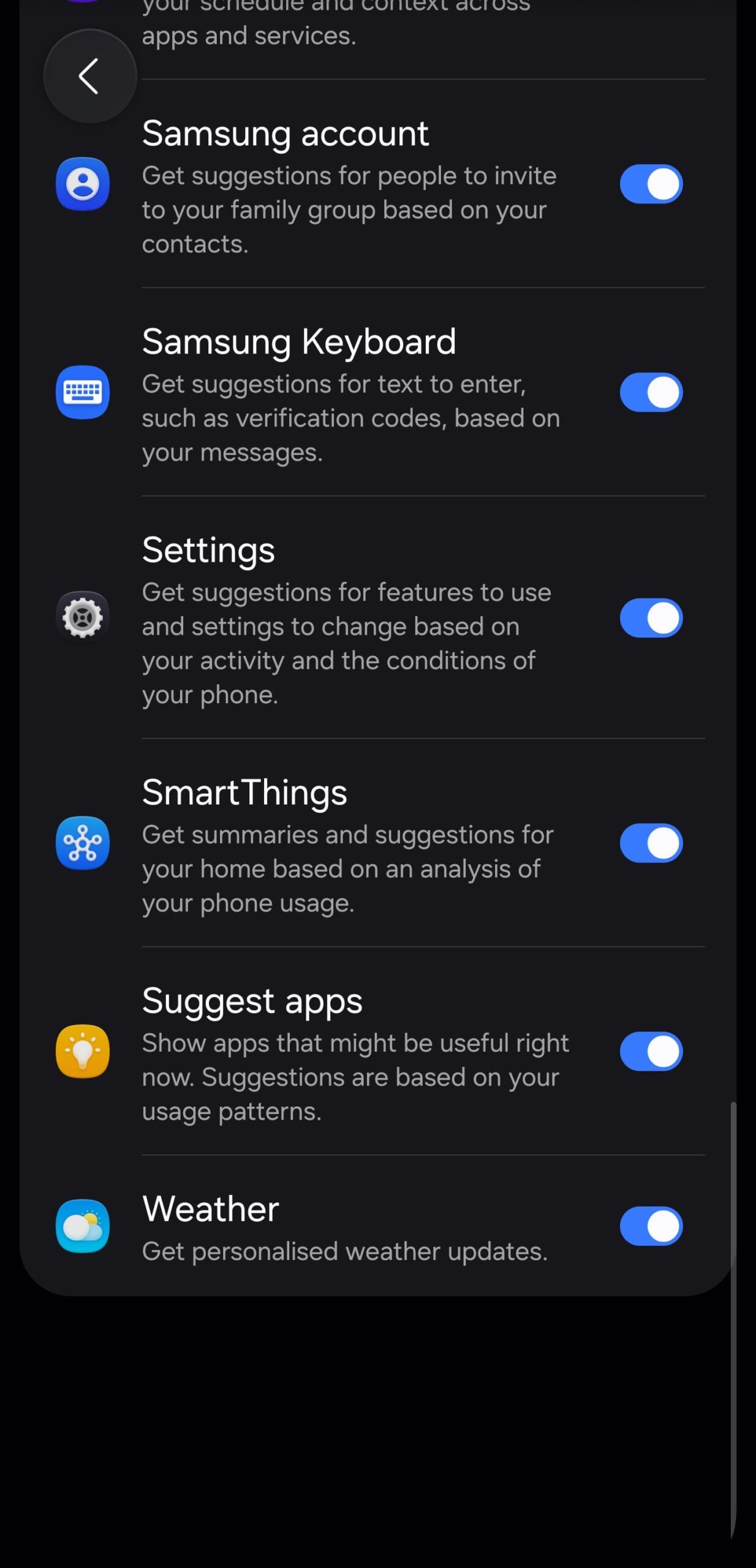 Figure: New Personalized Data Intelligence toggle introduced in One UI 9.5 Weather settings. Source: SamMobile.
Once extracted, this context is converted into structured event flags and passed directly to the Weather component, which preloads meteorological metrics for the target area in the background. By weaving fragmented app data into continuous contextual streams, single-purpose tools gain genuine awareness of the user’s external environment. Users are spared the tedious task of cross-referencing trip dates across multiple apps.
This synergy differs fundamentally from traditional homescreen widgets, which largely rely on cloud polling and static templates. PAC leverages compact on-device models to parse raw text locally. Because the system never needs to upload full email bodies to cloud servers, travel data is processed with both low latency and high privacy.
Utility Apps Step Back: On-Device Assistants Embrace Context Awareness
Mobile operating system paradigms are experiencing a major transition. Previously, smartphones championed the principle of functional segregation: opening the Weather app for forecasts, an airline app for flights, and a calendar app for schedules. Each application remained in its own silo, with on-device compute predominantly consumed by foreground UI rendering.
As on-device NPU performance surges, operating systems can continuously parse complex, interconnected events in the background. The fundamental human need behind opening a weather app is deciding what to wear or whether to bring an umbrella. When PAC synthesizes schedules with meteorological data, the Weather app fades into the background, operating primarily as a data provider.
This contextual intelligence is characterized by effortless, ambient interaction. Users no longer need to manage an extensive list of tracked cities or juggle multiple apps before leaving home. Services flow dynamically as cards and system notifications when needed. The operating system shifts from passively waiting for instructions to proactively anticipating intent.
In traditional graphical user interfaces, apps served as containers for buttons and feature sets. In the era of agentic operating systems, utility apps are deconstructed into on-demand services. Mobile operating systems are transforming standalone tools into proactive, context-aware on-device assistants. This shift stitches fragmented lifestyle services back into a coherent, uninterrupted journey.
Local Privacy and Premium Compute Draw a Commercial Line
For proactive agents to work effectively, they require continuous awareness of user routines, analyzing emails, messages, and schedules in the background. Inevitably, this brushes against personal data privacy boundaries.
Samsung introduces clear defensive mechanisms in One UI 9.5. In the Weather settings menu, a dedicated toggle named “Personalized Data Intelligence” gives users explicit control over whether PAC data is shared with the Weather service. Turning this toggle off immediately severs external data calls, reverting the app to a traditional static query tool. This strict permission boundary respects the user’s right to know and choose.
On-device sandboxing provides a crucial security buffer. Parsing sensitive travel information is confined entirely to the secure enclave of on-device chips. External services only receive anonymized city names and time windows, with no ability to reverse-engineer original message contents. This isolation significantly mitigates the risk of personal schedules being tracked by third parties.
The commercial model also faces scrutiny. SamMobile’s firmware teardown suggests that advanced PAC agent tasks might eventually be gated behind a Galaxy AI Premium subscription. Such paywalls could hinder widespread adoption; if contextual awareness requires paid tiers, expanding the active user base will be challenging. A clear distinction must be drawn between lightweight local inference and cloud-powered premium services.
The End of Passive Interaction: Redefining the OS Service Portal
Integrating PAC into the Weather app signals a pragmatic pivot in Samsung’s Galaxy AI roadmap. Instead of focusing solely on demo-friendly features like object erasers, Samsung is revamping high-frequency utility tools that impact daily life.
System-level agents fundamentally alter service distribution across mobile ecosystems. In the past, internet platforms battled for user screen time inside standalone applications. As on-device assistants take charge of intent recognition, services become granular and atomic. While user time spent staring at specific app interfaces diminishes, the speed and accuracy of decision-making improve drastically.
The battleground for mobile operating systems is shifting away from surface-level UI animations. The new benchmark of system intelligence is whether a device is prepared before the user even asks. Passive clicking and searching can no longer satisfy consumer expectations for ambient smart living. When a phone proactively alerts you to destination rain before you leave the house, the operating system proves its true value as an indispensable personal assistant.
Reference Links:
- SamMobile Report
- SamMobile Exclusive Analysis