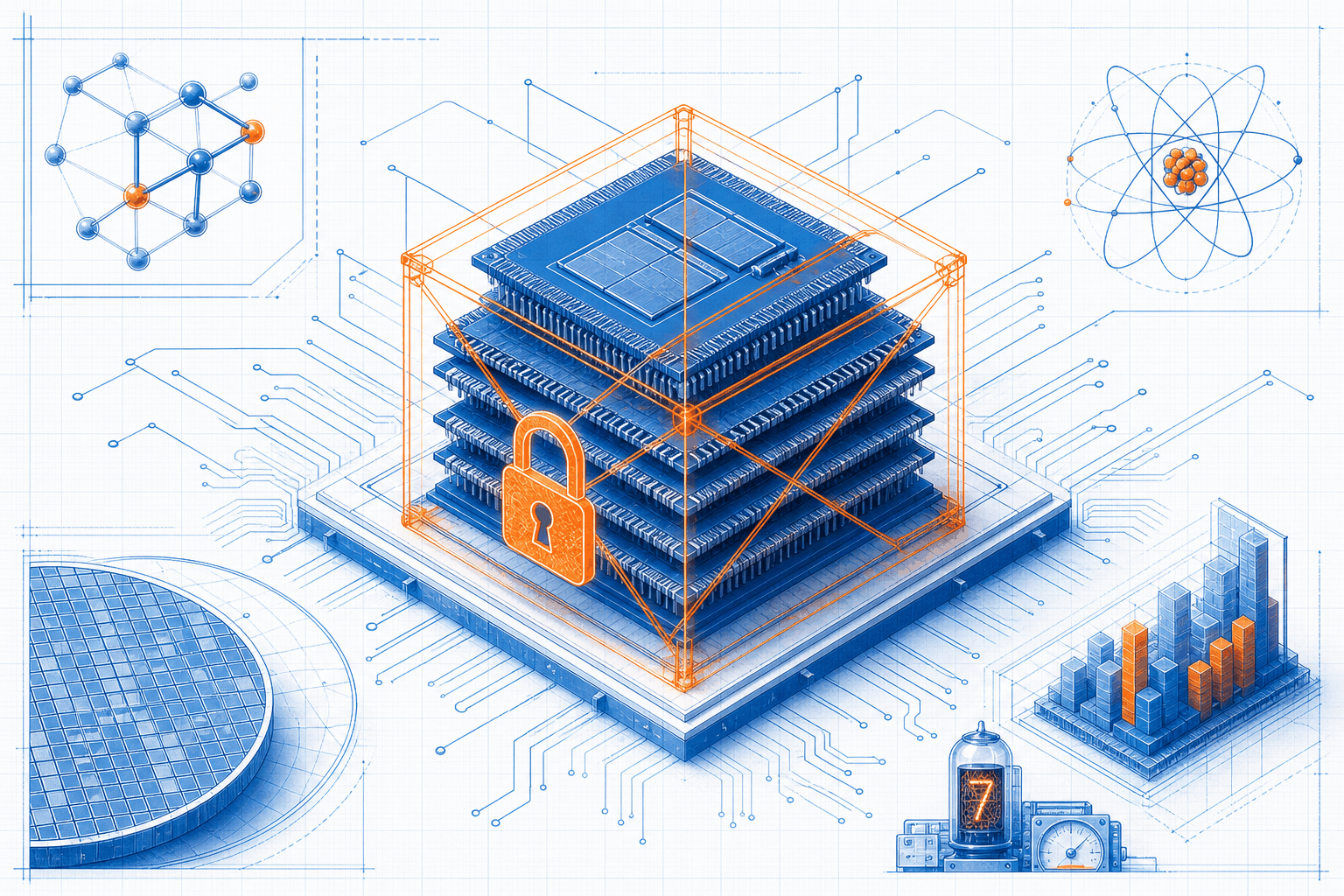
Every phone you buy, every laptop you own — a portion of what you paid may have been silently extracted by three companies you’ve probably never thought about.
Those three companies are Samsung Electronics, SK hynix, and Micron Technology. On June 25, 2026, seventeen American consumers filed a class-action lawsuit in California federal court, accusing the three of conspiring since 2022 to restrict memory chip output and artificially inflate global DRAM prices. The complaint uses a weighty phrase: “oligopolists colluding.”
On the same day, South Korean President Lee Jae-myung appeared on television to announce a $1 trillion super-investment plan: Samsung and SK hynix will build four new chip plants in southwestern South Korea, aiming to double DRAM production capacity within five years — plus AI data centers and humanoid robot assembly lines.
One side is being dragged into court. The other is getting showered with government money to expand. These two stories are far more interesting when read together than either is alone.
What Is DRAM — Your Phone’s “Short-Term Memory”
Let’s skip the jargon. Think of DRAM as your phone’s short-term memory.
When you open WhatsApp, scroll through TikTok, or switch between apps, your phone needs a temporary workspace — something that can read and write fast, and be wiped clean instantly. That workspace is DRAM. It’s different from the “long-term memory” (flash storage) where your photos and files live — DRAM only works while the device is powered on. Cut the power and it’s gone.
Every smartphone has DRAM. Every laptop has DRAM. Every tablet, gaming console, smart TV, and car infotainment screen — all of them. It’s the tap water of modern electronics. You never notice it until the pressure drops, and then the whole plumbing system feels it.
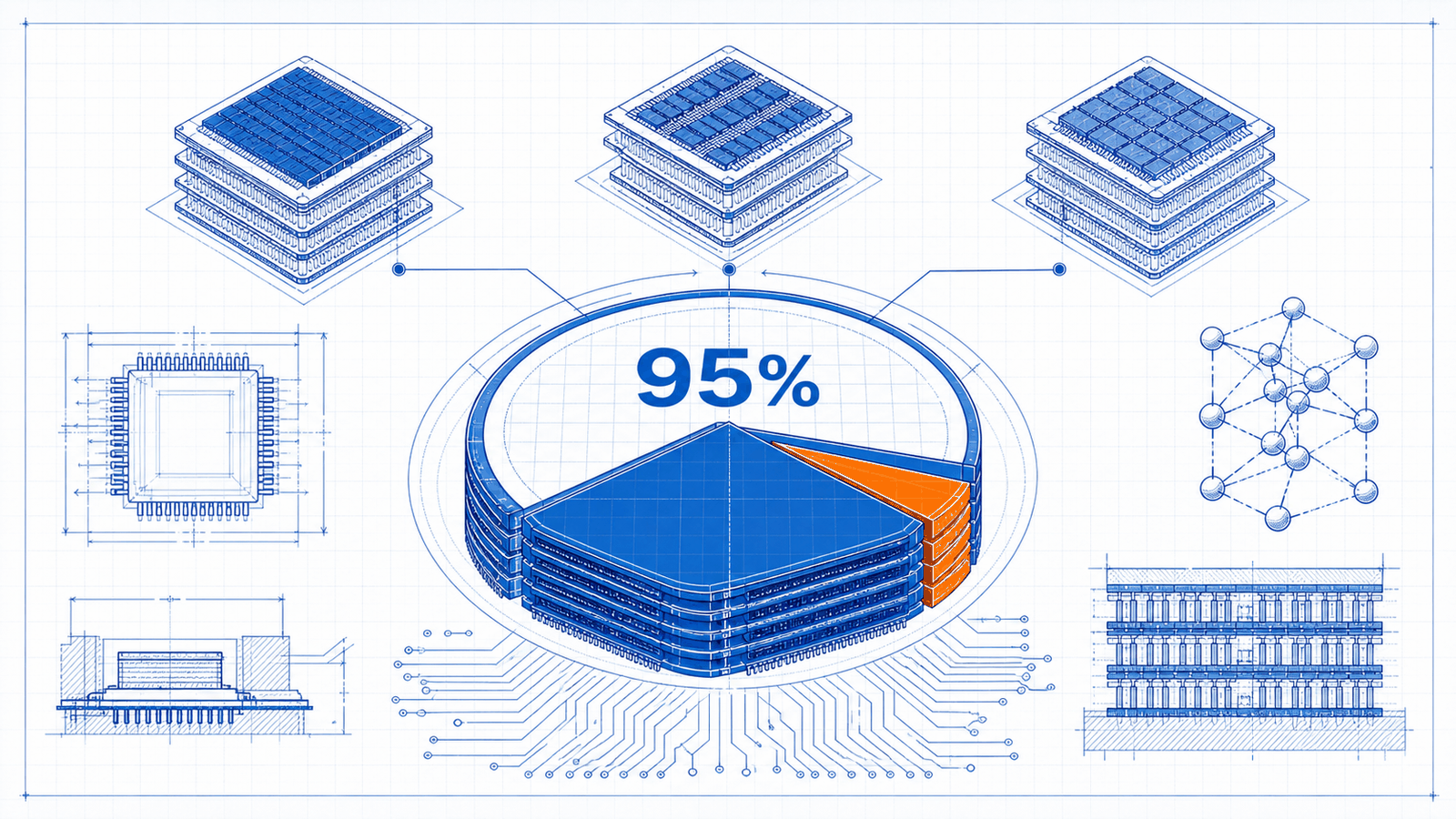
And 95% of the world’s DRAM supply is controlled by three companies.
Three Companies, One Market — A Textbook Oligopoly
Samsung holds roughly 38% market share, SK hynix about 29%, and Micron about 22%. Add them up and you’re close to 90%. Narrow the lens to specific product categories — like the DDR3 and DDR4 chips at the center of this lawsuit — and the concentration is even higher.
In economics, the rule of thumb is: when the top five firms in an industry control more than 60% of the market, you’ve got an oligopoly. The DRAM market blows past that threshold — three firms control nine-tenths of it.
Here’s the subtle thing about oligopolies: the players don’t need to sit in a room together, they don’t need secret meetings, they don’t need emails saying “let’s all raise prices.” They just need to watch what their competitors are doing and do the same thing — because it’s individually rational for each of them.
Example: if Samsung announces “we’re converting DDR4 production lines to make high-end memory for AI chips,” what do SK hynix and Micron do? They follow. Because if you’re the only one still cranking out cheap commodity memory, your margins collapse and your market share might not even grow. But if everyone follows — collectively producing less, tightening supply — prices rise on their own. Each company ships 10% fewer units but at 30% higher prices. Total revenue goes up.
Economists call this “tacit collusion.” The maddening thing about it: from the outside, every firm’s behavior looks independent and perfectly rational in market terms. No paper trail. No recorded agreement. To convict, a court needs to prove you actually coordinated.
Why Tacit Collusion Is So Hard to Prove — The 2022 Precedent
This isn’t the first time consumers have tried to sue these three.
In 2018, the law firm Hagens Berman filed a class action against Samsung, SK hynix, and Micron on behalf of consumers, accusing them of conspiring to raise prices between 2016 and 2017. At the time, DRAM prices had nearly tripled in 18 months.
The case went to the Ninth Circuit Court of Appeals. In March 2022, the court dismissed it — ruling that the plaintiffs hadn’t provided “sufficiently plausible evidence” of an actual agreement among the three. The judge’s reasoning: the companies’ parallel behavior was “more likely explained by lawful, non-collusive free-market behavior.”
Translation for the rest of us: you’ve shown they all did the same thing. You haven’t shown they talked to each other before doing it.
How high is that bar? Look at how the plaintiffs in this 2026 lawsuit prepared their case.
The complaint lays out eight major arguments: the three firms have been synchronizing DDR3 and DDR4 production cuts since 2022, all using the same public rationale of “shifting to high-end AI memory”; there are contradictions between their chip inventory data and their public production claims; commodity memory prices have risen roughly 700% over the past four years; their earnings-call language is strikingly similar, with all three emphasizing “supply discipline” and “rational pricing.” One HN commenter noted: “The plaintiffs’ arguments are very powerful. The problem is, powerful enough that a layperson thinks ‘well, duh’ — but legally, that might still not be enough.”
And let’s not forget: Samsung and SK hynix’s predecessors pleaded guilty to DRAM price-fixing with the U.S. Department of Justice in 2005. Samsung paid a $300 million fine. Hynix paid $185 million. Micron got immunity by turning whistleblower. All three have priors.
But a prior isn’t evidence. In antitrust law, parallel price increases aren’t illegal on their own. The illegal act is “reaching and executing an agreement to manipulate prices.” In an oligopolistic market, firms naturally observe each other and make similar business decisions. You can’t cleanly separate “everyone is making rational decisions” from “everyone colluded” — and that was the logic the Ninth Circuit used to dismiss the case in 2022.
South Korea’s $1 Trillion — The Other Hand of Government
On June 29, the same day the lawsuit was spreading through global news, South Korean President Lee Jae-myung appeared on television. His words: “We must master the core elements of AI faster than any other nation. Semiconductors, physical AI, and data centers are the three axes of a leap forward.”
The centerpiece of the announcement: the South Korean government will coordinate Samsung and SK hynix to invest roughly $585 billion in new chip fabrication plants, aiming to double DRAM production capacity within five years. Simultaneously, it will coordinate SK Group, GS Group, and Naver to invest approximately $357 billion in AI data centers in outlying provinces.
Add in the humanoid robot production lines — Hyundai Motor’s Boston Dynamics plans to mass-produce 30,000 Atlas robots by 2028 — and the total investment crosses $1 trillion.
Here’s a question worth asking: in a market where three companies already control 95% of supply, and the government now pours $1 trillion into helping two of them expand, what happens to the competitive landscape?
The answer isn’t pretty. A single advanced chip fab costs tens of billions of dollars and takes a decade to build. SK hynix chairman Chey Tae-won himself noted that the company’s previous chip cluster in suburban Seoul took nine years. That means even if new fabs break ground immediately, global consumers won’t see lower memory prices until sometime after 2030. In the meantime, Samsung and SK hynix’s capacity advantage only widens.
South Korea’s opposition party has already raised questions: the new fab locations are in ruling-party strongholds, and the decision-making logic looks more like electoral politics than industrial strategy. Labor groups are protesting too — the government is throwing money at capital for expansion while simultaneously pushing humanoid robots to replace workers.
These domestic debates will likely grind on. But for global consumers, the more immediate reality is this: the same three companies are simultaneously defendants and beneficiaries. They’re being sued for manipulating prices while receiving government money to further entrench their monopoly position. They win twice.
When the Price Hike Lands on You
It’s too early to predict where this lawsuit will go. But the memory price surge has already traveled from the upstream supply chain straight into every consumer’s wallet.
In 2025, DRAM prices rose 172% over the year. On June 25, 2026, Apple announced nearly 20% price increases across the MacBook and iPad lines, stating it could “no longer absorb soaring memory costs on behalf of consumers.” Microsoft followed by raising Xbox prices. Dell’s COO told analysts: “We have never seen costs climb at the current rate.” Lenovo’s CFO said the company is stockpiling inventory at 150% of normal levels to hedge against further increases.
A few numbers to feel the intensity: a mainstream DDR5-5200 16GB×2 memory kit retailed for about $65 in July 2024. By December 2025, it was over $180. On a mid-range laptop, memory cost went from roughly 8% of total bill-of-materials to nearly 20%. Behind those price hikes: OpenAI alone is estimated to consume roughly 40% of global DRAM supply, almost entirely high-end models for AI data centers.
Samsung, SK hynix, and Micron’s narrative is consistent: the price increases are purely structural supply-demand imbalance driven by the AI boom. AI data center demand for memory is genuinely exploding, and high-end HBM memory commands prices and margins far above commodity DDR4/DDR5. From a purely rational business standpoint, any company would allocate capacity to higher-margin product lines first.
The question is: if all three do this simultaneously, and none chooses to stay in the commodity memory market to grab share — is that rational decision-making, or coordinated restraint? The difference may exist only in the phrasing of legal briefs, and not in the price tag of your next phone.
This article draws on publicly available information and community discussion. If you have deeper first-hand knowledge of this topic, corrections and additions are welcome.
Reference links:
- Samsung, SK hynix, Micron sued in US over memory price-fixing — Korea Economic Daily
- Hacker News discussion (339 points / 159 comments)
- South Korea to spend $1T on more memory chip production and humanoid robots — Ars Technica
- DRAM price fixing scandal — Wikipedia
- Samsung, SK hynix, Micron Face U.S. Class-Action Lawsuit Over Alleged DRAM Supply Manipulation — TrendForce
- South Korea announces more than $1 trillion AI, chip investment drive — Al Jazeera
- 2025–present global memory supply shortage — Wikipedia
- Apple raises iPad and MacBook prices, blaming cost of chips — The Guardian