On July 3, 2026, Valve did something that left a lot of people scratching their heads: they dumped the complete design files for the Steam Machine’s e-ink display onto GitLab, slapped an MIT open-source license on them, and essentially said: take it, mod it, sell it — we don’t care.
And this wasn’t the “fake open source” where you get the outer shell schematic and nothing else. They released everything: CAD mechanical design files, the bill of materials (with every screw spec listed out), the ESP32 firmware source code, STL files for 3D printing, and even an assembly video walking you through the build step by step. On Hacker News, 501 people upvoted the story. In 90 comments, someone exclaimed that “Valve is truly the conscience of the gaming industry.” A former reMarkable firmware engineer dropped in to explain the waveform physics of e-ink refresh. Others had already started modding their own.
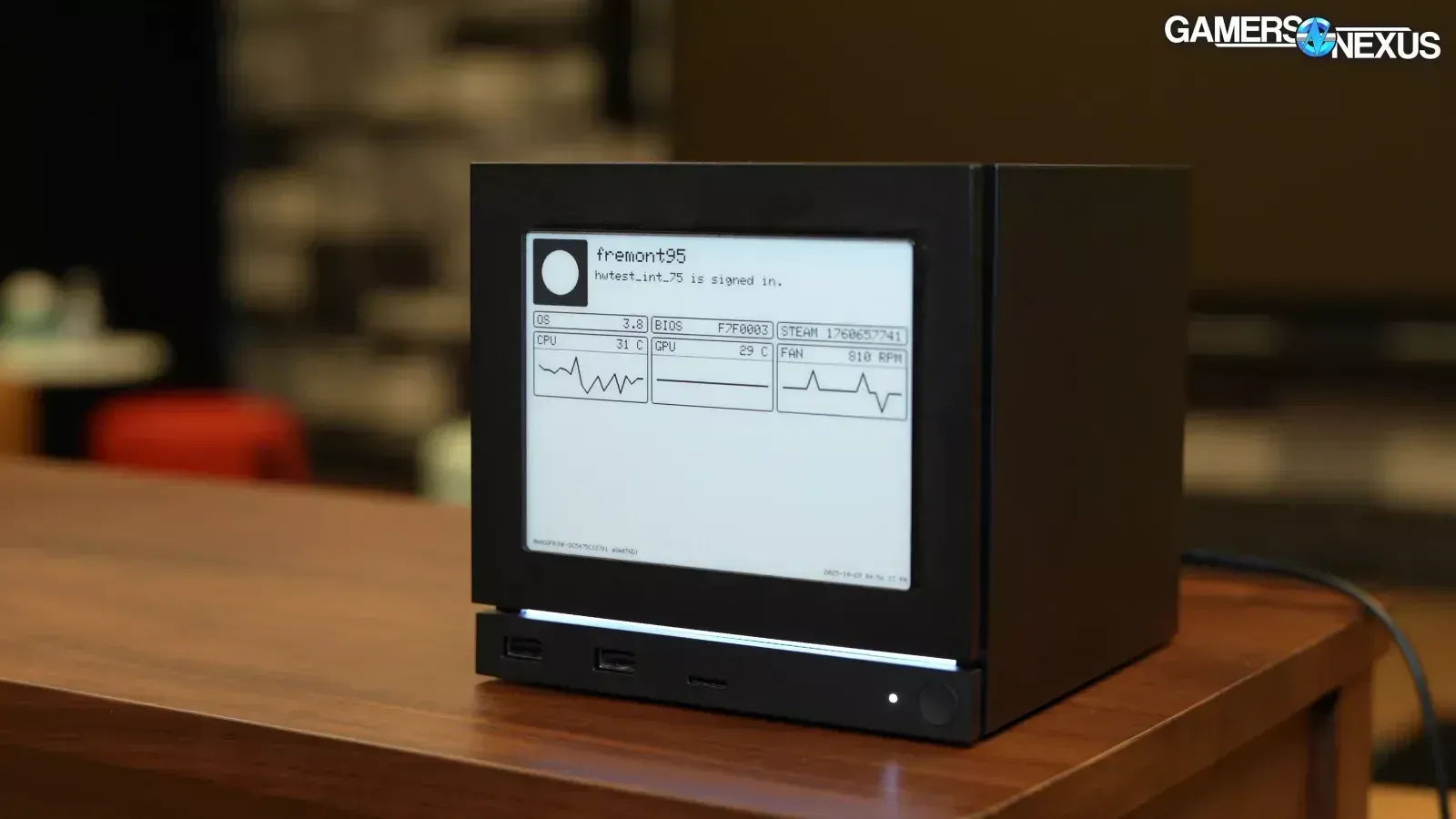 Steam Machine e-ink display panel rendering (Source: GamingOnLinux / Gamers Nexus)
But the question nobody could shake: why would Valve do this?
First, Let’s Understand What “Money Printer” Means
Valve is not a public company. It doesn’t answer to Wall Street’s quarterly earnings calls. Its biggest revenue stream is the Steam platform — for every game sold on Steam, Valve takes a 30% cut. In 2025, Steam’s annual revenue was estimated north of $10 billion.
In other words, this company owns a legal money printer.
And that makes a lot of its behavior counterintuitive. When a public company open-sources something, there are usually only two reasons: either it’s a marketing play to acquire users, or they’re open-sourcing something they’ve already abandoned. Valve fits neither category — Steam already has 130 million monthly active users and doesn’t need a display schematic to attract attention; and the Steam Machine launched less than two weeks before this announcement, right when accessory support matters most.
The conventional business logic is obvious: manufacture the display yourself, price it at $79, and sell it on the Steam store. With Valve’s brand pull, you’d move at least hundreds of thousands of units. That’s not pocket change.
Valve chose a different path: don’t sell it. Give it all away.
It’s Not That Valve Didn’t Want to Sell It — It’s That This Display Couldn’t Be Sold
To understand why Valve didn’t put this on the market, you first need to understand the physical limits of e-ink.
In the Hacker News discussion, a user who identified themselves as a former reMarkable firmware engineer (HN username: birdsongs) gave a masterclass in e-ink physics. Every pixel on an e-ink display is essentially a vertical tube filled with a viscous fluid, inside which charged black and white particles are suspended. By varying the voltage waveform applied across the pixel, you can make black particles rise to the top (displaying black) or white particles rise to the top (displaying white).
Simple in principle. But in practice, there are two brutal tradeoffs.
First: refresh speed versus display quality. To make the particles move faster, you crank up the voltage. But higher voltage causes the particles to overshoot, leaving ghosting — residual images from the previous frame that make the screen look dirty. To clear the ghosting, you need a full-screen refresh: flush all particles from one end to the other and back. That process takes about four seconds.
Four seconds. On a phone, four seconds is long enough to swipe through three short videos.
Is there a way to speed it up? Yes. By carefully tuning the voltage waveform — the “secret sauce,” as this engineer put it — you can achieve partial refresh rates above 30 frames per second. But the cost is…
Second: speed versus panel lifespan. Skipping full refreshes and running sustained high-speed waveforms causes ink particles to gradually stick to the glass walls of the tubes. In the short term, you won’t notice. In the long term, it produces permanent burn-in — regions of the screen whose color never changes back. The engineer used an apt analogy: it’s like a battery. You can fast-charge it, but fast-charge too often and the battery dies.
HN user mrheosuper added: “When pushing high refresh rates, you need higher voltage to make the droplets rise and fall faster. But sometimes those droplets get pushed too hard and get stuck forever. It’s a tradeoff.”
Reading through this discussion, I understood why Valve isn’t selling the display. An accessory that takes four seconds to refresh your game stats is a consumer disaster waiting to happen — returns, bad reviews, flooded support lines. But sell it only to DIY enthusiasts who know what they’re getting into? People who understand that the thing is slow, know they’ll occasionally need a full refresh to clear ghosting, and might even enjoy tweaking the waveforms?
The problem is: how many of those people exist? Probably not enough to sustain a production line.
So What Does Valve Get Out of This?
This is the real subject of this article. Behind Valve’s decision to open-source the display lies a deeper strategic logic.
Strategy 1: Replace the factory with the community. Valve doesn’t need to tool up, source materials, build a production line, and hire support staff. Open-source the design, and the community will produce makers who buy the parts, assemble the units, and sell them on Etsy or Taobao. Valve spends zero dollars, and third parties satisfy the niche market on their behalf.
Strategy 2: Use a $100 blueprint to tip the ecosystem. One HN commenter, BunsanSpace, put it sharply: “Valve’s fundamental goal is to build an ecosystem centered around Steam.” The display itself doesn’t matter. What matters is: someone buys a Steam Machine because of the display. Someone spends more time on their Steam Machine. Someone buys more games on Steam. Valve doesn’t make money from the display. It makes money from the 30% cut.
Strategy 3: Hedge against Microsoft. Microsoft’s ambitions in PC gaming have never gone away — the Windows Store, Xbox Game Pass, the DirectX closed ecosystem. Every one of these is an attempt to pull gamers away from Steam. Valve’s counter-strategy: build an ecosystem that’s more open than Windows. SteamOS is open source. Proton, the compatibility layer, is open source. Steam Deck CAD files are publicly available for download. And now, even accessory designs are open source. If Microsoft ever decides to close the Windows garden, developers can pick up everything and move to Linux — and Steam will be there, waiting for them.
Strategy 4: The time horizon of a private company. Valve co-founder Gabe Newell once said: “We don’t worry about quarterly earnings. We worry about what the industry looks like ten years from now.” It sounds like a PR line. But look at Valve’s behavior over the past decade — Steam Controller open-sourced, SteamVR tracking technology open-sourced, Steam Deck replacement parts sold openly — and the pattern is consistent. A company that has to report quarterly profits to shareholders cannot tolerate an unprofitable open-source project eating up engineering time. Valve can.
The Tug-of-War Between Closed and Open Hardware
I don’t want to canonize Valve. Just three months ago, Valve announced the Steam Machine’s price at $1,049 — a figure more than a few community members called “not exactly accessible.” One HN commenter snarked: “If they’d included this screen in the base model, the pricing might actually make sense.”
But in fairness, Valve chose the harder path. Sony and Microsoft sell you a locked box — you can’t open it, can’t modify it, and swapping a hard drive risks voiding your warranty. Valve’s approach: sell you the machine, let you buy replacement parts individually, give you the chassis schematics, and now hand you the accessory design files too.
This echoes the two extremes of the smartphone industry: on one side, Apple’s walled garden, where changing a battery means a bureaucratic knife fight with official support. On the other, the Framework laptop, where you can upgrade the motherboard yourself. In the games console category — traditionally the most locked-down hardware segment in consumer tech — Valve chose the second path.
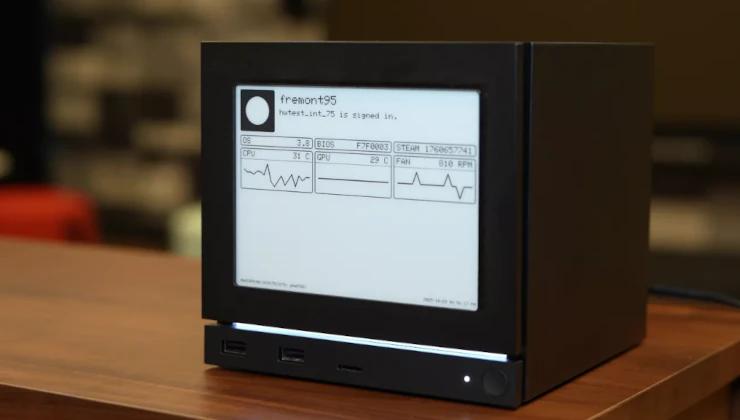 Steam Machine console (Source: GamingOnLinux)
The Real Signal
Let’s zoom back in on the display itself. Its bill of materials comes to roughly $100: a 5.83-inch monochrome e-ink panel, an ESP32 controller, thirteen screws, and four magnets. At that price point, whether the accessory is open-source or not has zero impact on Valve’s financials.
But the signal is unmistakable: Valve doesn’t just want to sell you a machine. It wants you to have every freedom after you own that machine — to open it, modify it, bolt on an e-ink display, and then share your mod with the world. Because every time you tinker, you deepen your bond with the Steam ecosystem.
A hundred dollars’ worth of blueprints, buying the future of an ecosystem. Valve has done the math.
Reference links: