On July 21, 2026, Nikkei Asia dropped a bombshell investigation. The finding: five of America’s largest tech companies — Google, Microsoft, Amazon, Meta, and Oracle — have hidden $1.65 trillion in off-balance-sheet debt. That’s more than the $1.35 trillion in debt they openly acknowledge.
In other words, these companies actually owe far more than their books show.
When I first saw that number, I had to count the zeros. $1.65 trillion. To put it in perspective, China’s entire 2025 GDP was about $18 trillion. The hidden debt of five companies is roughly a tenth of that.
Even more chilling: Meta alone has hidden roughly $420 billion — nearly three times its publicly acknowledged debt. If that number feels abstract, consider this: it’s larger than the GDP of most countries on Earth.
 Meta’s data center in Georgia. The company has hidden roughly $420 billion in off-balance-sheet debt — nearly three times its on-book debt. © AP
Enron 2.0: The Trillion-Dollar Debt Hidden in Plain Sight
When I read the Nikkei report, my first thought was: this is exactly what Enron did.
In 2001, the US energy giant Enron collapsed spectacularly. One of its core tactics was using Special Purpose Vehicles (SPVs) — parking debt in subsidiaries and joint ventures so it wouldn’t appear on the parent company’s balance sheet. After Enron went under, countless employees lost their life savings. Pensions vanished overnight.
Now, AI companies are using the same structure.
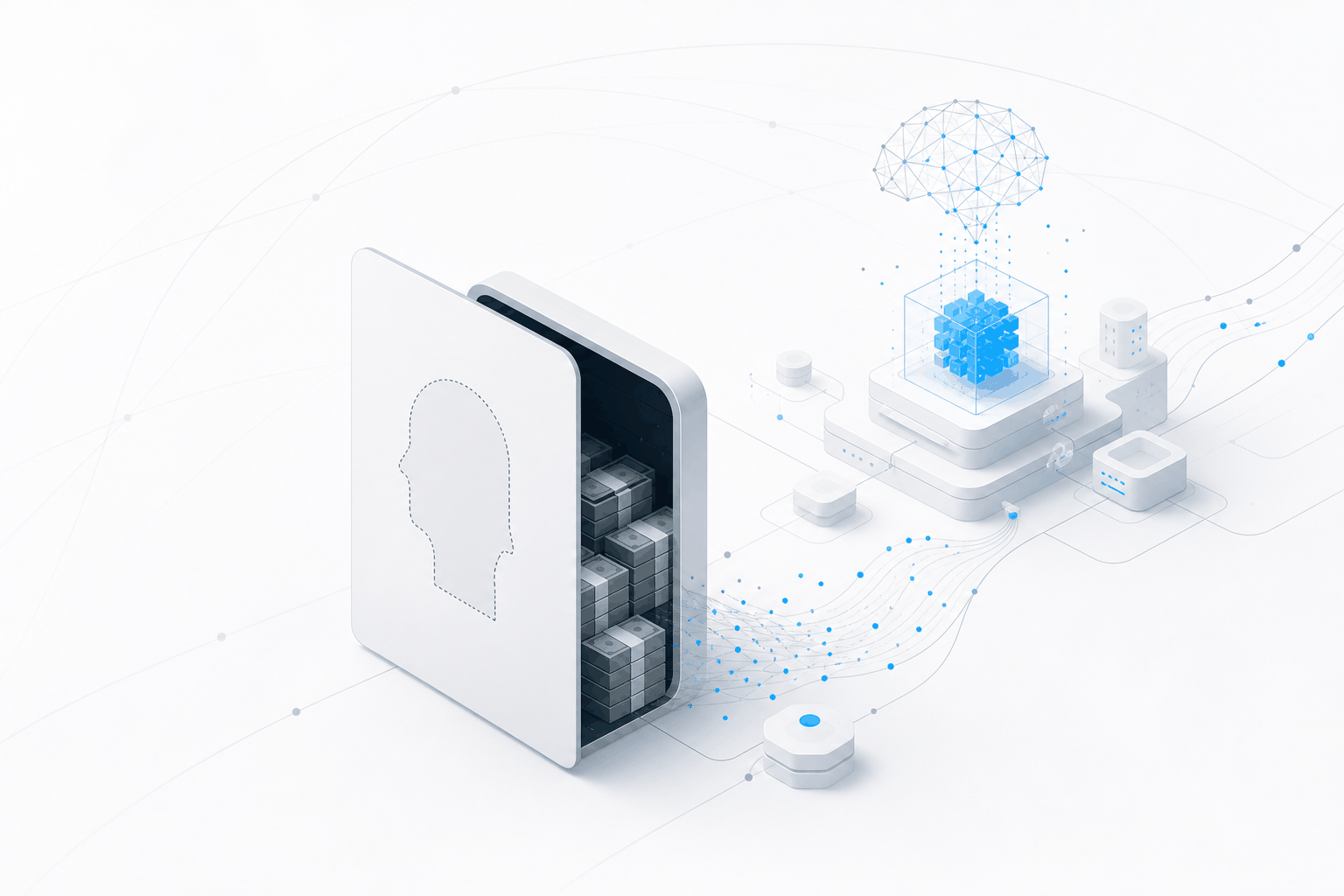
An SPV, stripped down to basics, works like this: create a separate legal entity, have it borrow money to build data centers, buy GPUs, and fund infrastructure — then the parent company “leases” the assets back from that entity. The borrowing stays on the subsidiary’s books. The parent’s financial statements stay clean.
Tom Selling, a technical accounting advisor, told Bloomberg something that stuck with me: “This accounting treatment is very fashionable right now. But if one of these companies is a house of cards that’s being held up entirely by this accounting maneuver, that’s where the real risk lies.”
Why AI Companies Need to Hide Their Debt
You might be wondering: if it’s not illegal, why hide it? Why not just borrow openly?
The answer is simple: they can’t afford to.
The AI arms race is burning cash at an uncontrollable rate. Meta alone is projected to spend $75 billion on AI capital expenditures in 2026. SoftBank’s Masayoshi Son has gone even further, claiming the AI boom requires $5 trillion per year in investment.
If all that debt showed up on the balance sheet, it would immediately crush several key metrics:
- Debt-to-equity ratio soars → credit rating downgraded → cost of borrowing goes up
- Leverage ratio looks bad → institutional investors sell → stock price drops
- Stock drops → equity financing gets harder → borrow more at higher rates → death spiral
So CEOs chose the elegant solution: spend the money, don’t acknowledge the debt. Move liabilities off the balance sheet, keep the financials healthy, keep investors happy, keep the stock climbing.
A Carefully Designed Game of Hide-and-Seek
Let’s break down how this actually works, using one of the most typical structures.
Take Meta’s Hyperion data center project in Louisiana. The hyperscale development costs over $50 billion. Meta put up only 20% (roughly $10 billion). The remaining 80% came from institutional investors — Blue Owl Capital and Pimco — through an SPV.
Once built, Meta uses the data center under an “operating lease,” paying annual rent. Because Meta doesn’t hold a controlling stake in the SPV, this debt never enters Meta’s consolidated financial statements.
But here’s the kicker: Meta signed a 16-year residual value guarantee — if the project goes under, Meta is on the hook for the full amount.
It’s like co-signing a car loan for a friend: the car’s in their name, the debt’s not on your credit report, but if they stop paying, the bank comes to you.
 GPU clusters inside an AI data center. Each H100 GPU carries a price tag of $25,000-$30,000; a 100,000-GPU cluster costs over $3 billion in hardware alone.
Data centers aren’t the only story. Meta also structured a $30 billion deal with Morgan Stanley — the largest private capital transaction in history. Morgan Stanley designed an SPV structure, Blue Owl provided the funds, and the entire debt sits off the books.
Oracle’s situation is even more extreme. In four years, its off-balance-sheet debt ballooned from under $10 billion to $273.3 billion — a 30-fold increase. Most of that money flowed into the Stargate project, the AI data center joint venture with OpenAI and SoftBank.
How Nikkei Asia Crunched the Numbers
You might wonder: if it’s “hidden” debt, how did Nikkei find it?
The answer: it’s hidden in plain sight in the footnotes of these companies’ financial statements. Most people just don’t read that far.
Under GAAP (Generally Accepted Accounting Principles), companies are required to disclose long-term lease obligations, non-cancelable purchase commitments, joint venture guarantees, and similar off-balance-sheet items. But these numbers are typically buried in 100+ page appendices to annual reports — not on the income statement or balance sheet where investors actually look.
Nikkei’s analysis team went line by line through the latest financial reports of all five companies, adding up every lease liability, purchase commitment, and guarantee obligation. The result: $1.65 trillion.
In other words, it’s a publicly available secret — like shoving your trash under the bed. Guests won’t see it, but it’s absolutely there.
Your Pension Is Bankrolling This Bet
Now let’s get to the question that matters most: what does this have to do with you?
You might not own Google stock. You might not use ChatGPT for your homework. But your pension, your insurance premiums, your social security contributions — a large portion of them is invested in “private credit markets.” And those markets are the main buyers of AI’s hidden debt.
Here’s how the money chain works:
- AI companies borrow through SPVs to build data centers
- Private credit funds (Blue Owl, Pimco, BlackRock) provide these loans, collecting high interest
- Insurance companies and pension funds are the biggest clients of these private credit funds — they hand over premiums and retirement savings
- The funds take your money and lend it to AI companies’ off-balance-sheet SPVs
If the AI bubble doesn’t burst, everything’s fine. But if AI demand doesn’t explode the way everyone expects — like the dot-com bubble bursting in 2000 — those hundreds of billions in data centers become piles of steel, concrete, and obsolete GPUs. When the debt can’t be repaid, the risk travels back up the chain: from SPV to private credit fund to insurance company to your pension.
This is exactly the warning the Bank for International Settlements (BIS) issued in March 2026. The BIS research paper argued that AI infrastructure financing has become a systemic risk — and the parallels to the CDO chain before the 2008 subprime crisis are striking.
How did the 2008 crisis happen? Banks lent money to people who couldn’t afford mortgages, packaged those loans into bonds, and sold them to investors. Risk was layered and transferred repeatedly. When the bubble popped, the entire global financial system seized up.
Now: AI companies pile up debt off their books. Private funds package that debt as “quality assets” and sell it to pensions. Risk is being layered and transferred the same way.
The 2008 lesson: When risk is hidden, it doesn’t disappear. It just waits until the moment you least expect it.
Who’s to Blame?
You might be wondering who’s responsible. In my view, there’s no single villain — it’s a collective dance:
AI company executives — to maintain stock prices and credit ratings, they chose off-balance-sheet debt to dress up their financials. They walk away with massive options and compensation; the risk is shifted to investors and society.
Wall Street bankers — Morgan Stanley, Goldman Sachs, and others designed these SPV structures, collecting hefty underwriting and advisory fees. Win or lose, their commissions are already banked.
Rating agencies and regulators — current accounting rules permit this because it’s technically “compliant.” But “compliant” doesn’t mean “right.”
And the biggest loser might be: you, a regular working person. Your pension is in this game, but you don’t even know the rules.
How Serious Is This?
I read through the Hacker News thread — 567 upvotes, 274 comments — and opinions are sharply divided:
The pessimists say: “If banks are owed $1.65 trillion and can’t collect, it becomes the taxpayer’s problem.” One user directly called it “2008 all over again, just with Washington Mutual replaced by AI data centers.”
The optimists counter: “These companies have combined annual cash flow north of $400 billion. Even if all $1.65 trillion turned into liabilities, they could handle it.” Others note that institutional investors are fully aware of these numbers — it’s retail investors who might be in the dark.
I’m not an economist and I can’t predict whether this debt will trigger a crisis. But one thing is clear: every time in history when large-scale off-balance-sheet liabilities have accumulated, some form of reckoning followed.
The 1980s junk bonds. Enron in 2001. Subprime in 2008. WeWork in 2019. Every time, people said “this time is different.”
Final Thoughts
The headline of this article is “Big Tech’s $1.65 Trillion Hidden Debt,” but I should be fair: this debt isn’t necessarily “bad.” If AI truly transforms the world the way the industry expects, today’s investments could become tomorrow’s profits.
The problem: nobody knows how much real value AI will actually create. Will it change everything like the internet, or crash like the metaverse? Nobody has the answer.
And in this high-stakes bet, the biggest wager is hiding in the $1.65 trillion you can’t see on the balance sheet.
Author’s note: This article is based on publicly available reports and community discussions. If you have deeper insight into AI financing, corrections are welcome.
References:
- Nikkei Asia: Five US tech giants’ hidden debts soar to $1.65tn on opaque AI funding
- Futurism: AI Companies Are Trying to Hide a Staggering Amount of Debt
- HN Discussion (item?id=49020999)
- Bloomberg: AI Hyperscalers’ Off-Balance Sheet Debt Raises Private Credit Risks
- BIS Quarterly Review March 2026: Financing the AI infrastructure boom
- TechStartups: The hidden debt behind the AI boom — How Meta and xAI are quietly raising billions
- FT: Tech groups shift $120bn of AI data centre debt off balance sheets