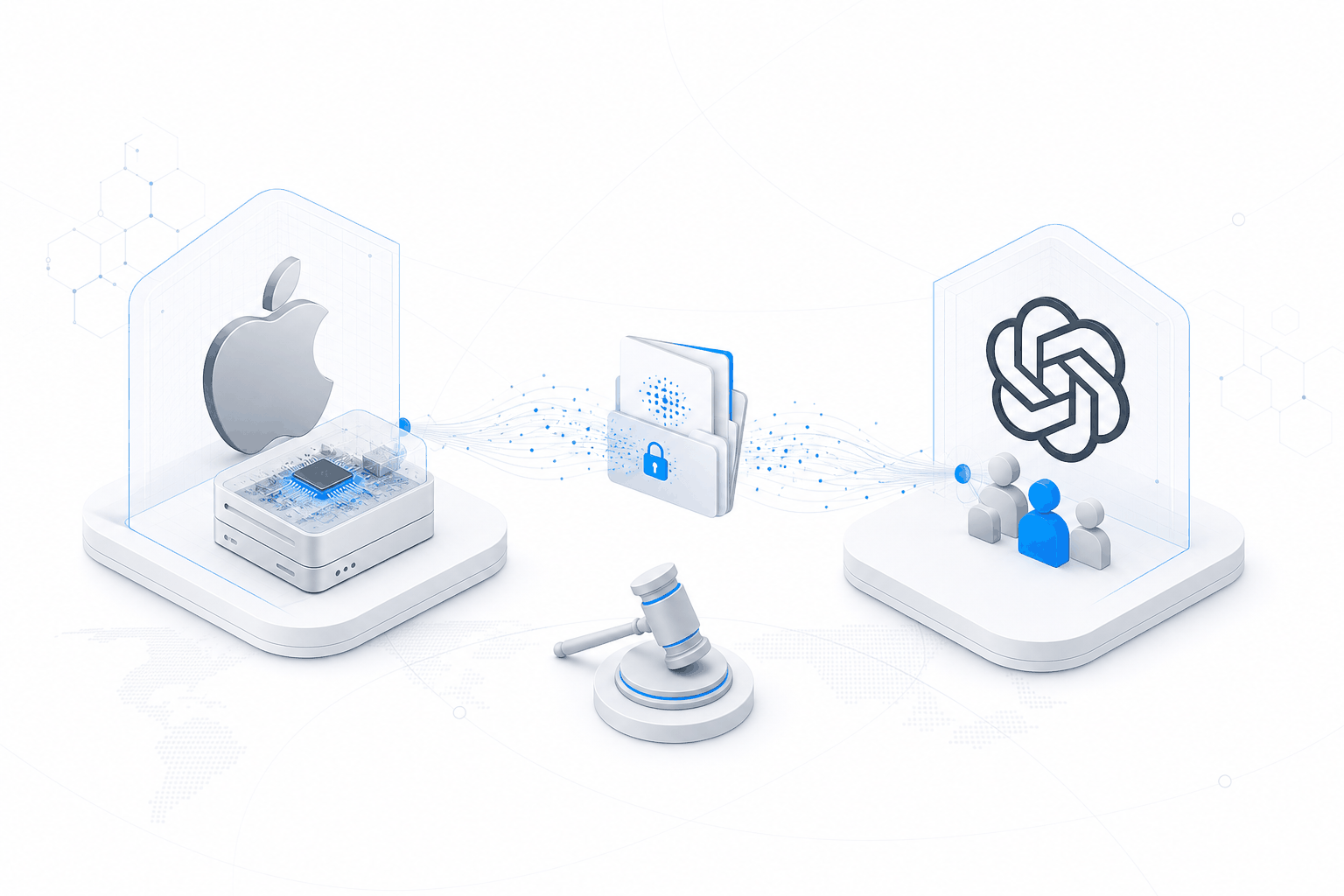
On July 10, Apple filed a lawsuit against OpenAI, alleging that two former employees walked away with corporate trade secrets. On August 4, Apple submitted new court filings expanding the probe: investigators uncovered 11 additional ex-employees. Some were accused of capturing internal Apple documents before interviewing at OpenAI, while others allegedly discussed unreleased products during meetings with co-conspirators. What began as a dispute over departing employees is escalating into a Valley-wide legal war.
Here is a detailed breakdown of the case based on public filings and community discussions.
What Apple Is Seeking
Apple requested two major forms of court relief. First, a preliminary injunction to bar OpenAI from developing AI devices based on Apple’s proprietary technology. Second, “expedited discovery”—arguing that standard litigation timelines are too slow and risk evidence destruction. Apple also expanded the defendant list beyond individual engineers to include OpenAI itself, its nonprofit foundation, and “io”—the hardware startup co-founded by legendary former Apple Chief Design Officer Jony Ive.
This escalation suggests Apple holds far more investigative evidence than what was initially disclosed in the first complaint.
The Allegations: Laptops, Leaks, and Physical Hardware at Interviews
The specific allegations target two key figures.
Chang Liu, a former Apple engineer, is accused of retaining an Apple-issued laptop after leaving the company and exploiting an authentication flaw to re-enter Apple’s internal network to download “dozens of confidential hardware files.” Even more central is Tang Yew Tan—formerly a Vice President at Apple and now Chief Hardware Officer at OpenAI. The complaint alleges Tan instructed job candidates who were still employed at Apple to bring physical hardware components directly into OpenAI interview rooms for live demonstrations and explanations. In Apple’s own words, OpenAI’s hardware effort is “corrupted to its core.”
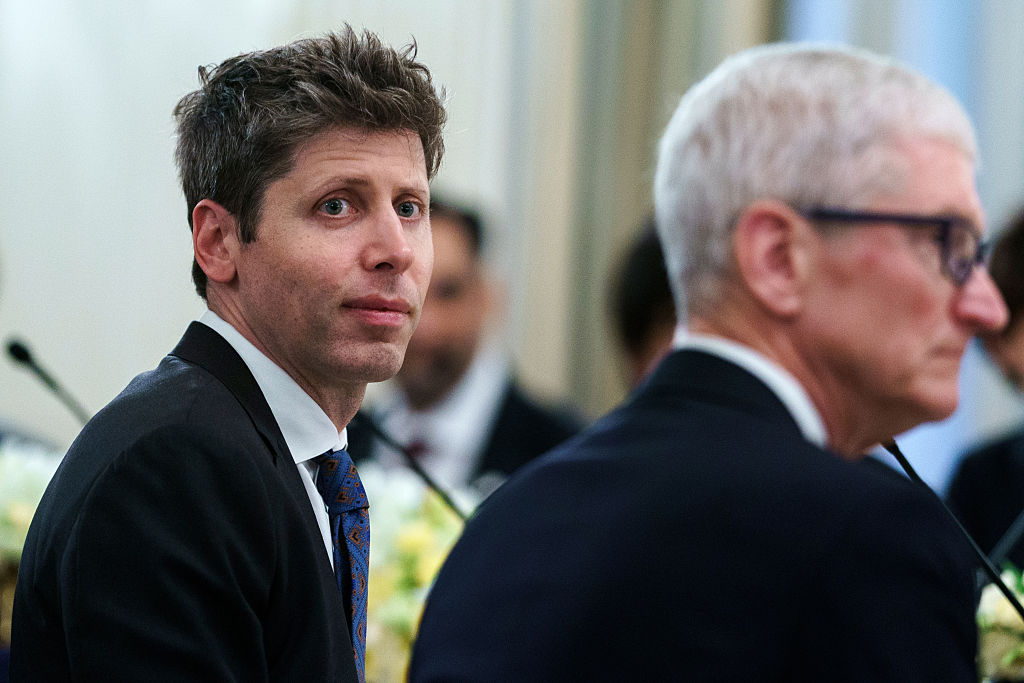 Image: Sam Altman (left) and Tim Cook (right) pictured together at a 2025 dinner; two years later, their companies face off in court. Source: techcrunch.com
OpenAI’s Response: “Your Doors Were Unlocked”
OpenAI hit back in a public blog post, calling Apple’s request for an injunction “based on false information and entirely unnecessary,” maintaining that “we do not have, nor do we want, any of Apple’s trade secrets.” OpenAI pointed out several embarrassing missteps by Apple, including confusing two employees with similar surnames, sending misdirected emails, claiming to have held conversations with OpenAI’s General Counsel that never took place, and leaving security loopholes that allowed former employees to log into Apple systems post-resignation.
It creates a striking contrast: Apple claims theft, while OpenAI claims Apple left its doors unlocked. As is often the case, the truth likely lies somewhere in the middle. But is this fight worth it for Apple? Absolutely—and here is why.
Why Apple Is So Anxious
Apple’s anxiety stems from clear competitive pressure. Last year, OpenAI spent $6.4 billion to acquire the hardware company co-founded by Jony Ive—the design mind behind the iPhone and a central pillar of Apple’s secretive culture. Now, a software-first AI titan equipped with massive capital and Apple’s most trusted former design chief is marching directly into hardware. In Apple’s view, $6.4 billion proves OpenAI is playing for keeps.
The timing is equally strategic. Apple raised concerns with OpenAI as early as February this year. Receiving no response, Apple filed suit in July. Commenters on Hacker News noted that filing during peak rumors of OpenAI’s upcoming IPO gives Apple maximum negotiation leverage. While unconfirmed, the timing is undeniably calculated.
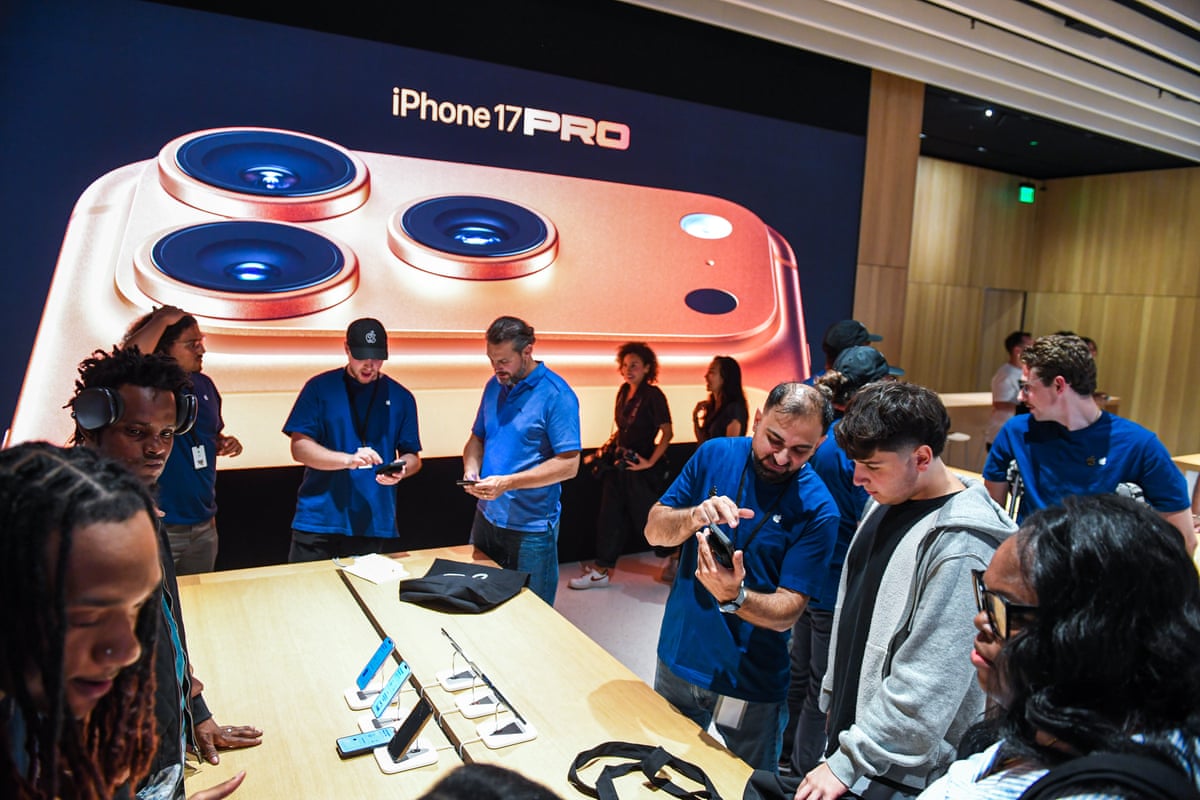 Image: Inside an Apple Store. At stake in this lawsuit are trade secrets regarding unreleased products. Source: theguardian.com
Where to Draw the Line: Mobility vs. Trade Secrets
The case brings us back to a fundamental question: When tech employees switch jobs, what are they allowed to take with them?
Consider a simple metaphor: The knowledge in an employee’s head is like luggage, but the employer argues part of it is merely “rented” and must be left behind upon departure. That “lease agreement” takes the form of an NDA signed upon hiring. Tech giants in Silicon Valley cannot restrict career movement through non-competes—California law strictly prohibits non-competes under Section 16600 of the Business and Professions Code, and 2024 legislation made even asking employees to sign one illegal. Unable to lock in employees directly, companies must rely entirely on NDAs and trade secret law.
Under trade secret law, the legal threshold is straightforward: if a company takes “reasonable measures” to maintain confidentiality (such as requiring an NDA), unauthorized taking of documents is illegal. “Leaving the door unlocked” is not a valid legal defense. As one engineer noted on Hacker News: “If your front door is unlocked and someone hires a person to walk in and photocopy your files, it’s still burglary.” Yet others countered: “If you don’t even lock your own door, how can you expect people to self-regulate?” Both sides have compelling points.
The Tale of the “Father of the iPod”
One of the most widely cited commentaries in this debate came from Tony Fadell, the “Father of the iPod.” Writing on Stratechery, Fadell noted that aggressive litigation is a classic Apple tactic to intimidate employees—both past and present. He recalled a story from his days founding Nest, when Steve Jobs called to threaten legal action over Nest poaching 80 to 100 Apple engineers. When Jobs yelled over the phone, Fadell responded bluntly: “Retaining talent is Apple’s job, not mine.” Jobs paused, and the two pivoted to discussing family and holidays. Nest kept hiring.
Fadell’s story mirrors today’s legal battle almost perfectly. What was a verbal threat then is a formal lawsuit today; what was Nest then is OpenAI now. Fadell’s stance remains clear: employees should have the freedom to move, and companies must earn their retention.
Apple’s Own Anti-Poaching History
Many in the tech community brought up Apple’s own past missteps. In the 2010s, Apple, Google, Intel, and Adobe entered into informal non-solicitation “no-poach” agreements, prompting a U.S. Department of Justice antitrust investigation and a class-action lawsuit from affected employees. In 2015, the four tech giants settled for $415 million. DOJ documents revealed that Steve Jobs personally wrote to Palm’s CEO, warning: “If you hire even one of our people, it means war.”
Engineers on HN recalled receiving settlement checks after the lawsuit, with some getting as little as $5,000—a fraction of the suppressed wages over those years. A company that once conspired to stop others from hiring its employees is now suing others for recruiting. Talent is a tech company’s greatest asset, but also its hardest to lock down—a reality Apple knows better than anyone.
Merit on Both Sides
Proponents of Apple’s case emphasize that the evidence consists of screenshots, downloaded documents, and physical hardware components—not abstract “knowledge in an engineer’s mind.” Having system access permissions does not equate to authorization to take internal files. Conversely, defenders of departing employees point out that Apple’s compensation often lags behind other Valley giants, making OpenAI’s equity packages hard to pass up. Furthermore, critics argue Apple’s vague statements about what was actually taken look more like using litigation as a substitute for competitive retention pay.
Looking across community discussions, most observers refrain from taking a black-and-white stance. Ultimately, the outcome of this lawsuit will hinge on hard empirical evidence, not public sentiment.
Apple hopes to use this lawsuit to carve out the boundary between career mobility and corporate theft. California law and Silicon Valley culture stand firmly behind employee mobility, while trade secret law protects corporate IP. The legal line lies somewhere in between. As for who “owns” the knowledge inside an engineer’s mind—that is a question no court can truly settle. One thing is certain: the war for AI talent has moved into the courtroom, and this will not be the last battle.
Reference Links:
- TechCrunch: Apple says more ex-employees may have taken confidential data to OpenAI
- HN Discussion (item?id=49170479)
- The Guardian: Apple sues OpenAI, alleging artificial intelligence company stole trade secrets
- BBC: Google and Apple in $415m ‘non-poaching’ settlement
- Ogletree: Governor Newsom Signs Bill Reinforcing California’s Ban on Noncompete Agreements