Why Midlife Fitness Drops Off a Cliff
Many people past forty notice a sudden decline in their physical stamina. A five-kilometer run that felt easy last month suddenly becomes strenuous; a regular sleep schedule yields to frequent early awakenings. Society usually attributes these changes to random wear and tear of organ parts, assuming the body is like an old car where aging components naturally malfunction over time.
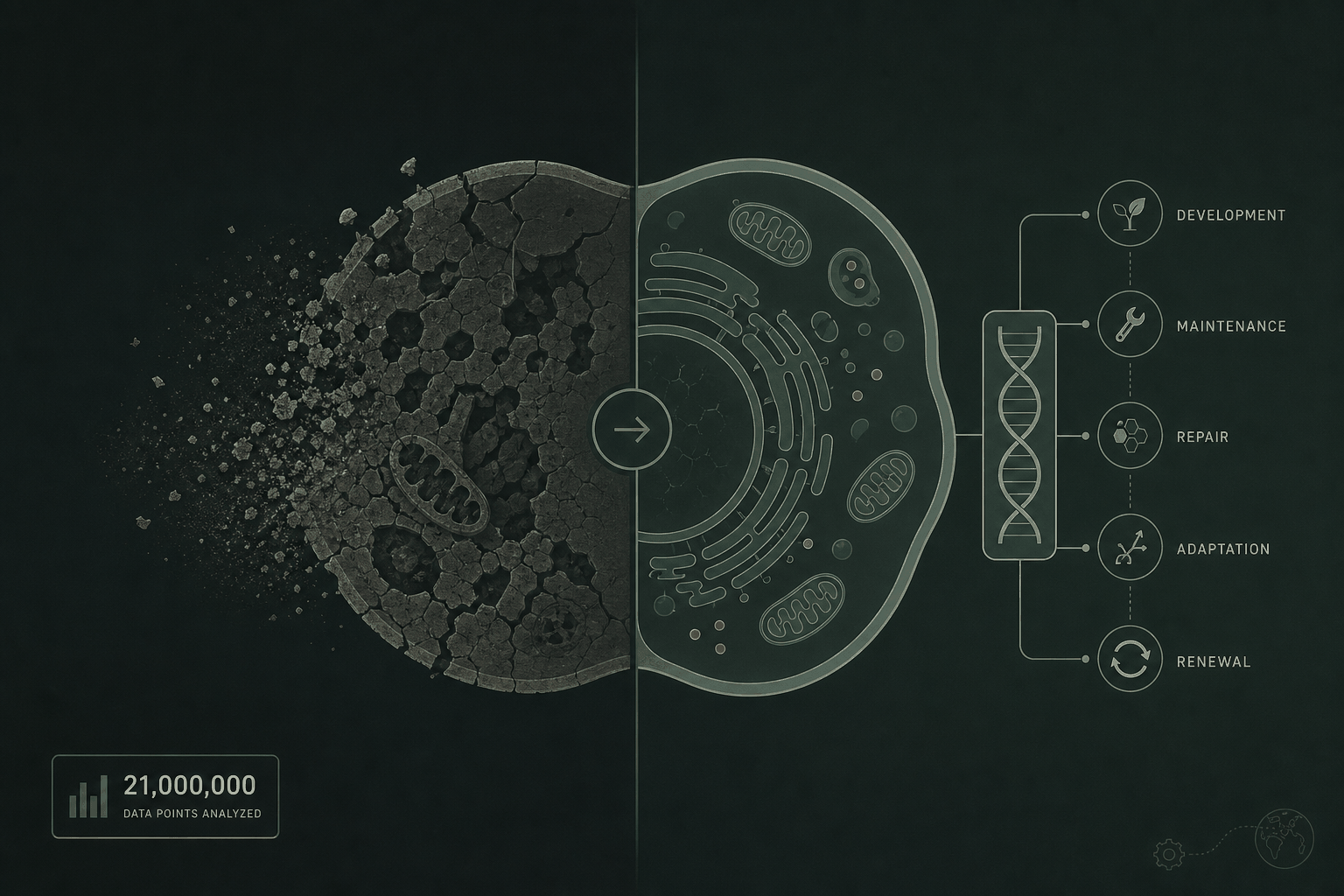
A team led by Junyue Cao, head of the Single-Cell Genomics and Population Dynamics Laboratory at Rockefeller University, overturned this perception through an unprecedented study. Tracking roughly 50 mice across different age milestones across 14 major organs and tissues, the researchers profiled gene expression in more than 21 million individual cells. Twenty-one million cells is a colossal figure—if each cell’s data were printed on a single sheet of paper, the stack would tower above a 70-story skyscraper.
The five mouse age milestones studied correspond to human ages of roughly 20, 30, 50, 60, and 75. Data analysis revealed that protein signatures in human blood undergo dramatic jumps between ages 40 and 50, matching mouse cellular dynamics remarkably well. The body’s aging process follows distinct temporal boundaries, dismantling the traditional assumption of uniform, gradual wear and tear.
 Figure: Junyue Cao sitting on a blue sofa looking out the window. Source: Quanta Magazine / Karen Dias
Three Temporal Milestones in Cellular Society Remodeling
Among the 536 main cell types and 1,828 cell subtypes analyzed, only about one-quarter underwent dramatic changes during aging, while the remaining three-quarters stayed stable. This selective change indicates that the body issues remodeling directives only to specific cell types at specific times. The first milestone opens quietly in young adulthood, corresponding to human ages 20 to 30. Adipocytes, muscle cells, and two types of immature brain cells capable of regenerating brain tissue undergo rapid decline first, indicating that the body’s self-repair reserves begin shrinking before age thirty.
Entering the second stage, corresponding to human ages 30 to 40, foundational cells responsible for maintaining tissue architecture deplete significantly. Tenocytes—specialized cells that maintain tendon toughness and connect bone to muscle—and pericytes—guard cells wrapping microvessel walls to maintain vascular stability and permeability—drop sharply in number. Colon smooth muscle cells and toxin-filtering renal epithelial cells decrease synchronously. This explains why many people in their thirties begin experiencing joint stiffness, slower digestion, and delayed recovery after exercise.
Past the milestone corresponding to human age 50, the direction of cellular change shifts fundamentally from cell loss to cell expansion. Beyond the equivalent of age 55, a specific type of aging-associated immune cell proliferates wildly. Cao describes them as “selfish and out-of-control cells,” whose massive accumulation directly correlates with heightened risks of heart disease, arthritis, cancer, and chronic respiratory illnesses.
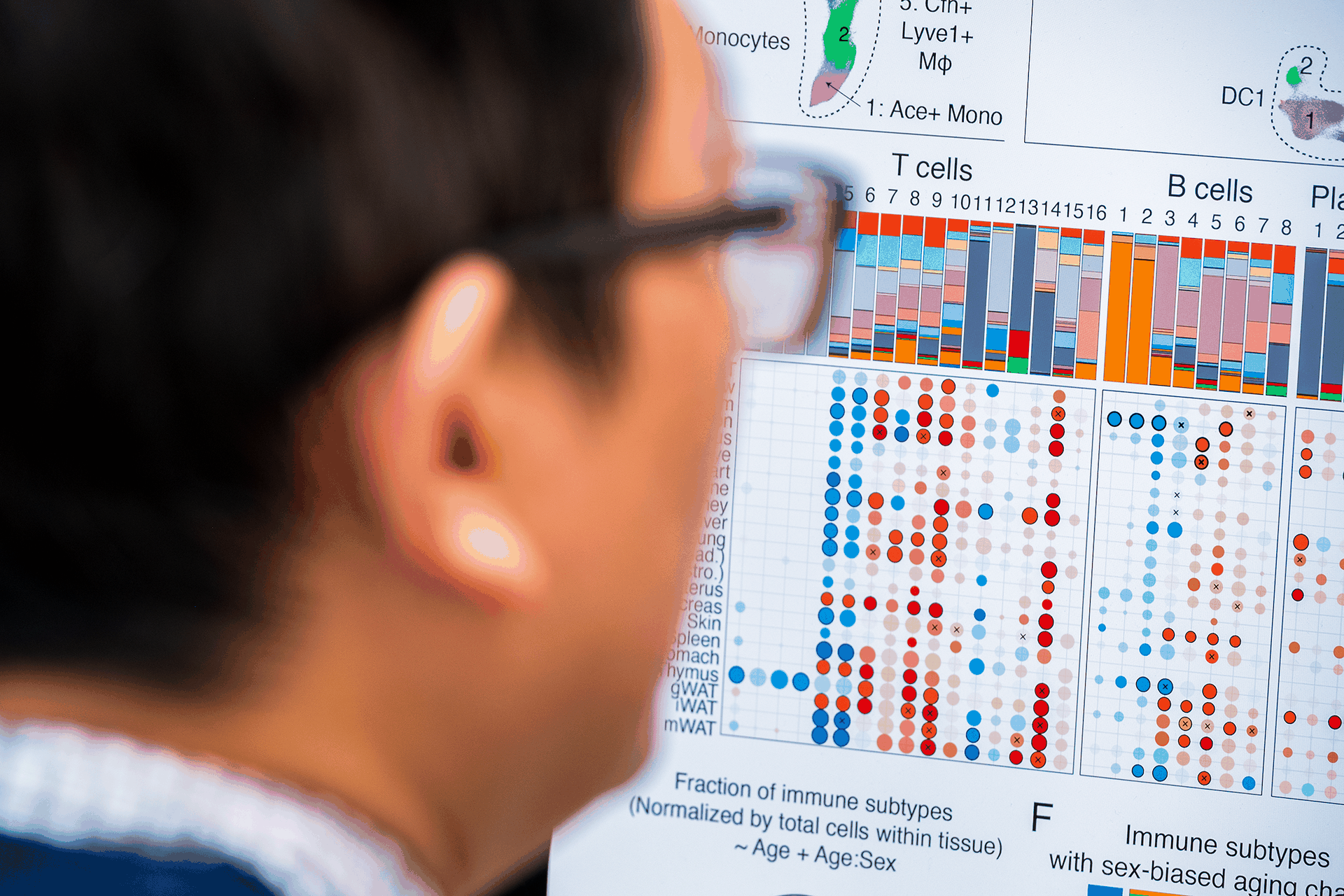 Figure: Junyue Cao presenting single-cell analysis in front of data screens. Source: Quanta Magazine / Karen Dias
Leaves Don’t Fall Slowly and Randomly
If aging were merely the result of accumulated random damage, genomic changes across individuals over time would be disorganized and chaotic. However, when measuring the epigenome—a system of chemical tags attached to DNA that instructs when genes turn on or off—the research team found that 280,000 genomic regions displayed highly repeatable opening and closing states during mouse aging. In every test, mice of the same age group unlocked the exact same switch instructions at identical genomic regions.
Cao uses the falling of autumn leaves to illustrate this precise programmatic control. Leaves drop heavily within a concentrated two-week window transitioning summer to autumn, remaining stable throughout the long summer beforehand. Decreasing daylight triggers internal molecular signals, initiating the leaf-drop system. Similarly, the body relies on internal molecular programs and secreted cytokines—chemical messengers that relay instructions between cells—to drive the scheduled reorganization of cellular society.
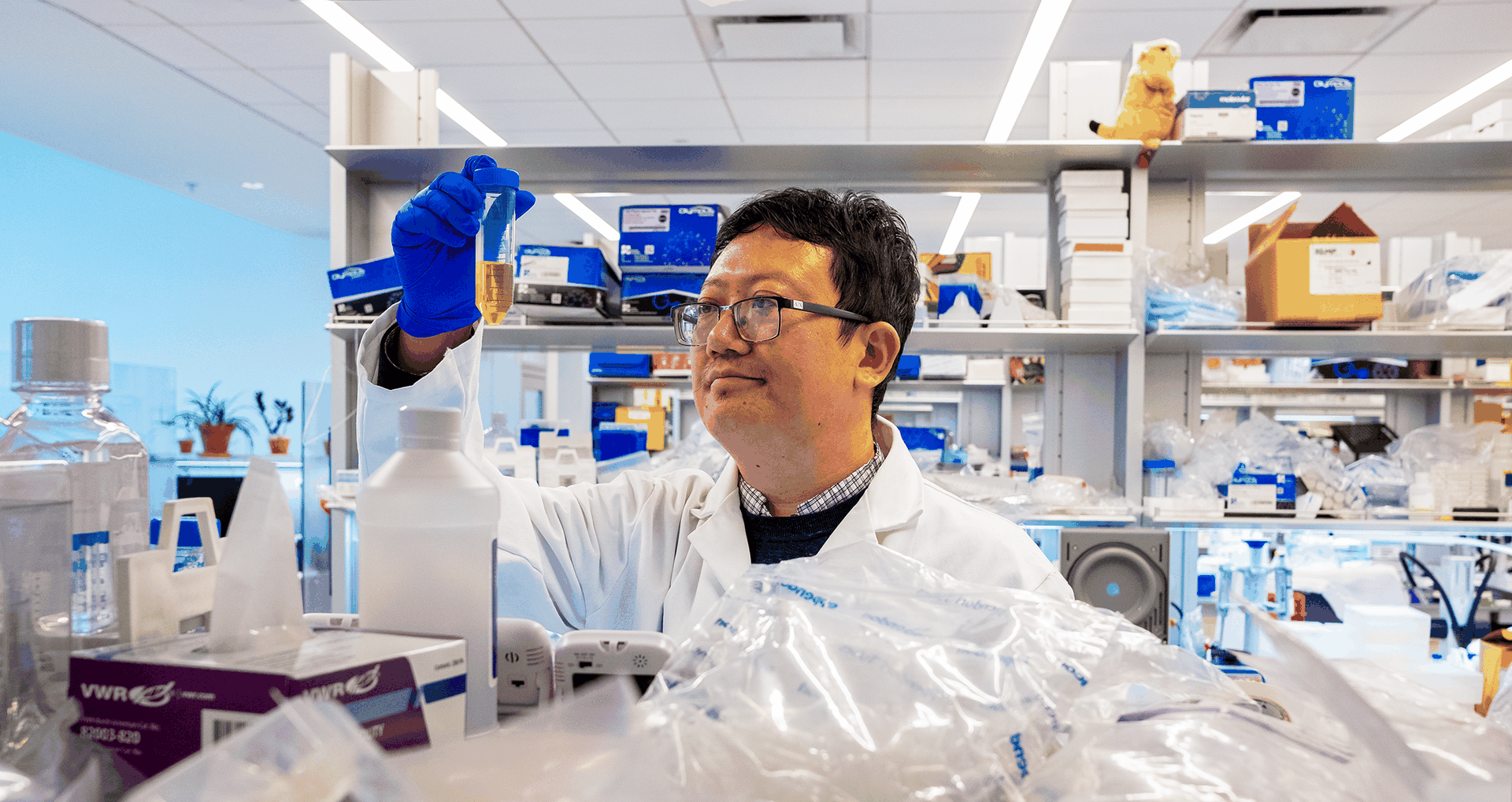 Figure: Laboratory photo at Rockefeller University’s Single-Cell Genomics and Population Dynamics Lab. Source: Quanta Magazine / Karen Dias
The Golden Window for Anti-Aging Interventions Is Earlier Than Thought
Revealing this mechanism changes how we view the timing for health interventions. The public has long assumed that starting intervention in one’s sixties or seventies, when obvious signs of aging appear, is early enough. But cell remodeling data demonstrates that key cells maintaining tissue regeneration begin declining before age thirty—the preset program of body degradation initiates much earlier than expected.
As Cao pointed out in his analysis, “If you want to rescue aging, you should start early.” After age 50, rogue immune cells have already expanded on a massive scale, making late interventions far less effective. Shifting the intervention window forward to the cell-loss phase between ages 30 and 40—preserving cornerstone cell populations before rogue cells proliferate—offers a far more targeted path to slowing aging.
Rethinking the Milestones of Aging
Deep profiling of 21 million cells confirms a fundamental truth: aging means the body restructures cellular society in distinct, scheduled phases according to a preset program. This transformation displays coordinated evolution akin to embryonic development, precisely driven by molecular programs. When individuals encounter midlife physical fluctuations again, they should recognize this as internal oversight mechanisms executing pre-scheduled biological programs on time.
Reference Links:
- Quanta Magazine Report
- Science Paper “Organism-wide cellular dynamics and epigenomic remodeling in mammalian aging”