On August 6, 2026, at a special session of the International Conference on High Energy Physics (ICHEP 2026) in Brazil, the team behind the Beijing Electron-Positron Collider experiment (BES III), led by Chinese scientists, announced a historic breakthrough that resolves a half-century-old puzzle: physicists have obtained a complete chain of evidence confirming the existence of “glueballs”—physical particles condensed entirely out of fundamental force.
In everyday physics, the observable universe is built from tangible matter particles like electrons and quarks, while forces act merely as abstract mediators passing interactions between them. However, within the framework of Quantum Chromodynamics (QCD)—the theory describing the strong nuclear force—the force-carrying gluons possess a unique property: they themselves carry color charge. Consequently, gluons can attract and bind to one another, forming pure “force particles” completely devoid of quarks.
The discovery was confirmed through precise measurements of extremely rare decay channels by a team co-led by Professor Jin Shan from Nanjing University and Researcher Huang Yanping from the Institute of High Energy Physics (IHEP) of the Chinese Academy of Sciences. Huang vividly illustrated the breakthrough: “In the past, the physics community believed only that messengers were delivering messages. Today, we have finally confirmed that the messengers themselves can aggregate into physical sculptures.” This discovery, achieved via a major Chinese scientific facility, subjects strong interaction theory to its most stringent empirical test since its inception 50 years ago.
A 50-Year Cold Case: Searching for Pure Force Particles Free of Quarks
In the Standard Model of particle physics, the electromagnetic force is mediated by photons. However, because photons carry no electric charge, two flashlight beams crossing in space simply pass through each other without binding. Gluons are fundamentally different. As the gauge bosons of the strong interaction, gluons carry strong color charges themselves, enabling intense gluon-gluon self-interactions.
Theoretically, this “gluon-binds-gluon” mechanism must give rise to an exotic state of matter consisting solely of force carriers. Since QCD first predicted glueballs in the 1970s, physicists worldwide have spent nearly 50 years searching for them. However, experimental efforts long remained trapped in a maze where ordinary quark states and pure gluon states mixed together.
Ordinary mesons consist of a quark and an antiquark, and their masses and decay profiles closely mimic those predicted for glueballs. Given limited experimental precision, a glueball behaves like a chameleon hidden among ordinary particles—the slightest disturbance causes its signal to be overwhelmed by quark backgrounds. Without confirming whether a particle contains quark components, physicists could not rule out ordinary matter disguises—the central bottleneck preventing glueball confirmation for half a century.
Billions of Collisions Deep Underground: Catching the Invisible Messenger in Extreme Events
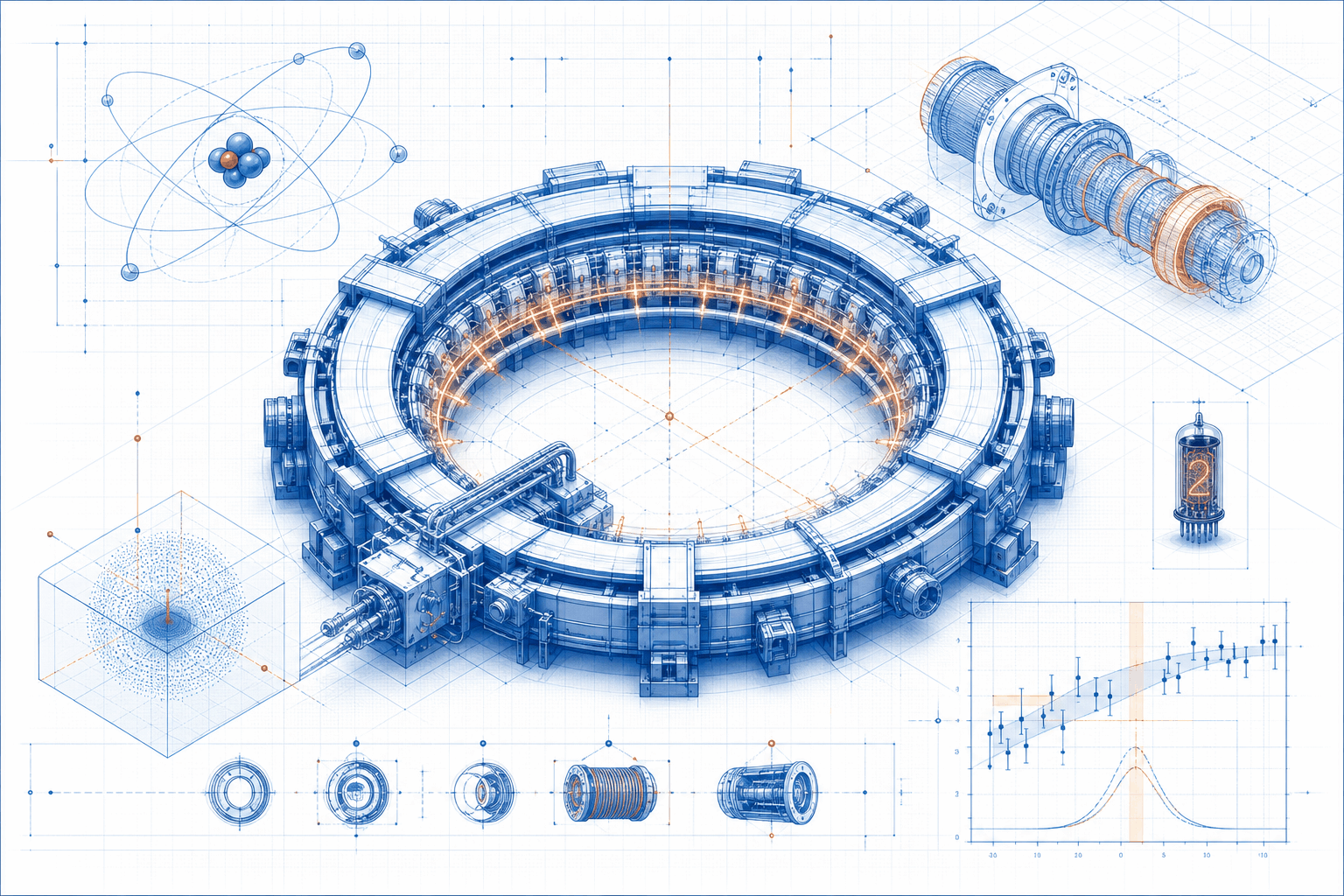
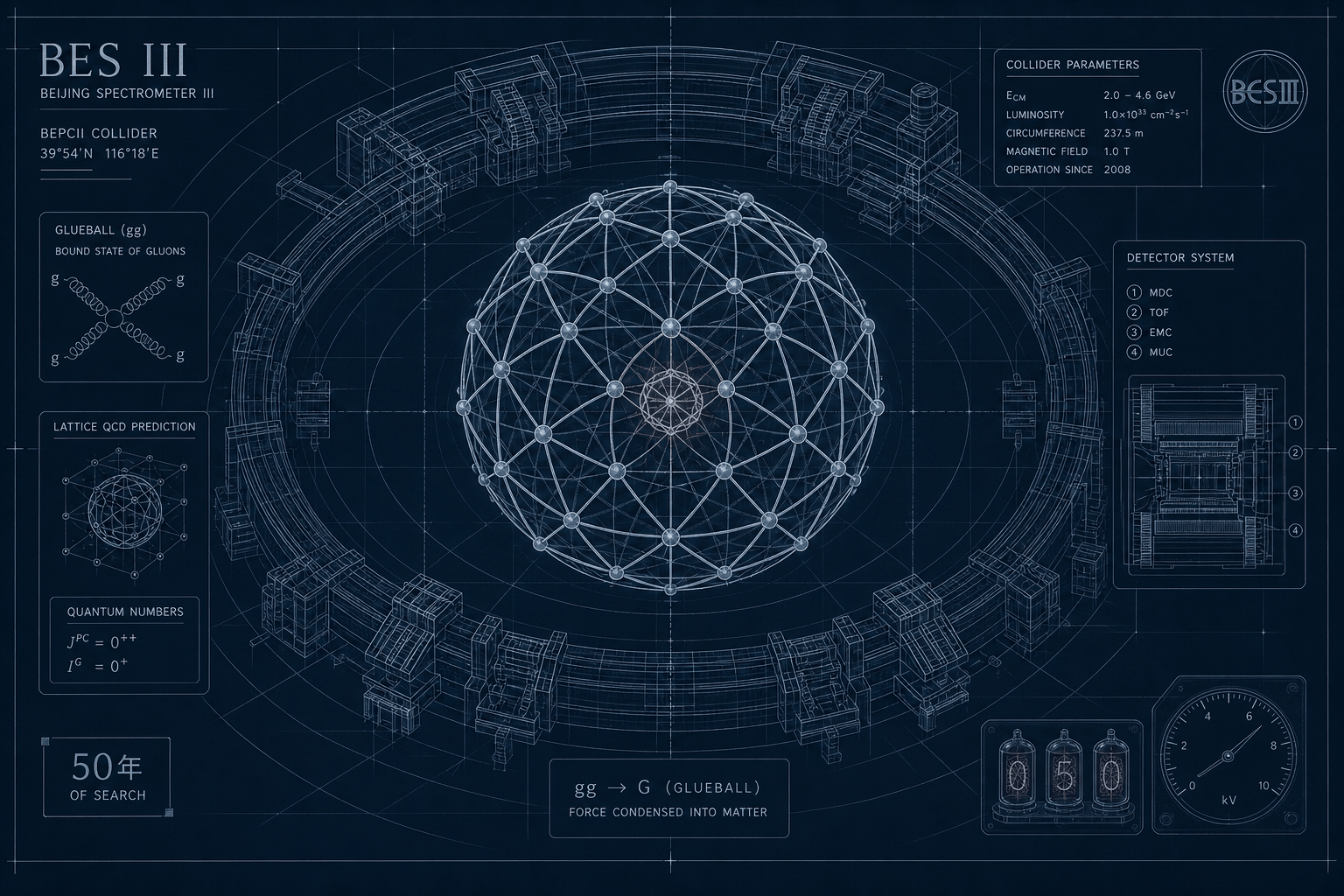
Unmasking glueballs required creating an exceptionally clean physical experiment environment backed by enormous datasets. The Beijing Electron-Positron Collider (BEPCII), buried deep underground at IHEP in Beijing, was designed specifically for such frontier research. Within BEPCII, positrons and electrons are accelerated to near the speed of light before colliding head-on, while the Beijing Spectrometer III (BESIII) detector records the resulting particle fragments in real time.
Following a major engineering upgrade completed in 2008, BEPCII’s data acquisition capabilities and collision luminosity reached top global ranks in its energy region. The experiment team chose the radiative decay of J/ψ mesons as their primary breakthrough point, as this decay process produces a physical environment exceptionally rich in gluon states, providing an ideal crucible for trapping glueballs.
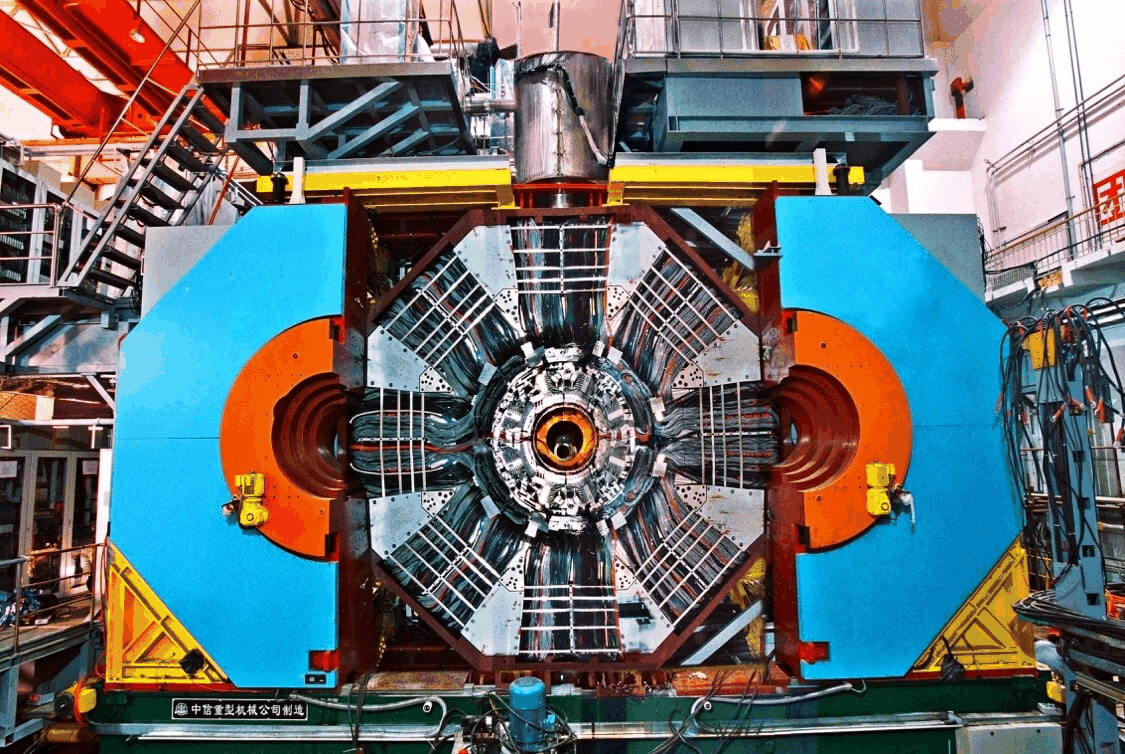 Figure: The Beijing Spectrometer III (BESIII) detector. Source: ScienceAlert / BESIII-IHEP
By 2024, the BES III collaboration had collected and analyzed over 10 billion J/ψ decay events. This massive dataset of 10 billion events established a solid foundation for sifting out weak glueball signals from overwhelming background noise. Deep within this sea of collision data, candidate particle X(2370)—first spotted in 2011—gradually revealed physical signatures inconsistent with standard matter.
Pinpointing X(2370): The Evidence Chain Behind Flavor-Singlet Determination
Identifying a candidate particle was only the first step; the ultimate challenge lay in proving that X(2370) contained no quark “flavor” inside. Under the quark model, quarks possess distinct flavor quantum numbers (up, down, strange, charm, etc.), and ordinary mesons inevitably carry these flavor footprints.
In 2024, the BES III team published results in Physical Review Letters, measuring the mass, spin, and parity of X(2370) with unprecedented precision, finding them in close agreement with theoretical QCD predictions for a scalar glueball. At ICHEP 2026, the team delivered the final proof: they completely measured the “flavor singlet” property of X(2370), confirming that its internal quantum state is entirely independent of any quark flavor.
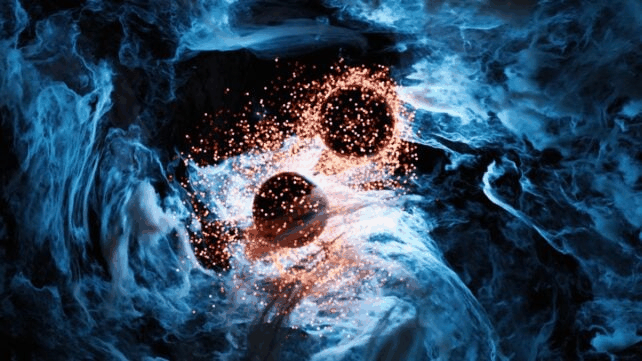 Figure: Schematic diagram of gluon and particle interactions. Source: ScienceAlert / Getty Images
Professor Jin Shan noted that force condensing independently into physical particles reveals a previously unknown state of matter. The experimentally measured flavor-singlet characteristics matched theoretical calculations perfectly, marking the first time physics has established a complete evidence chain proving glueball existence. This 15-year experimental quest definitively rules out any ordinary quark-state disguise.
Reshaping Mass Origins: How Strong Interactions Define States of Matter
The confirmation of glueballs directly challenges common public perceptions of where mass comes from. Popular science often portrays the Higgs mechanism as the sole origin of mass in the universe. In reality, the Higgs field accounts for only a tiny fraction of rest mass in quarks; over 99% of the macroscopic mass humans experience daily originates from field energy generated when the strong nuclear force binds quarks inside protons and neutrons.
Glueballs prove that strong interaction field energy does not require quarks as carriers at all—the non-linear field dynamics alone are capable of condensing out physical matter with specific mass and spin. This novel state of matter allows theoretical physicists to observe the condensation mechanism of strong fields directly in a pristine environment free of quark interference.
Within the scientific community, discussions around glueballs remain rigorously cautious. Due to quantum mechanical state-mixing effects, whether X(2370) contains trace mixtures of ordinary mesons at extreme microscopic scales will require further validation from future experiments at higher energies and precision. Maintaining scientific rigor regarding theoretical boundaries and measurement uncertainties forms the bedrock of advancing microscopic physics from isolated breakthroughs to comprehensive understanding.
From Theoretical Prediction to Physical Reality: Breaking the Boundary Between Force and Matter
The discovery of glueballs reshapes human understanding of the boundary between force and matter. Half a century ago, Quantum Chromodynamics derived the startling prediction that force carriers could condense into particles; half a century later, a major Chinese scientific facility transformed that prediction into solid experimental fact through tens of billions of particle collisions.
It demonstrates that under extreme conditions in the microscopic realm, forces not only mediate interactions, but also possess the physical capacity to condense independently into physical particles. With the complete flavor-singlet determination of X(2370), strong interaction theory has passed its most rigorous test to date. Force has condensed into matter, opening a new door to exploring unknown forms of physical reality.
Reference Links:
- ICHEP 2026 Special Report: Discovery of Glueballs by the BES III Collaboration
- Physical Review Letters: Measurement of X(2370) Mass, Spin, and Parity
- Institute of High Energy Physics, CAS: Experimental Progress of the BES III Collaboration
- HN Discussion: Half-Century Quest for Quantum Chromodynamics and Glueballs (item?id=41178239)