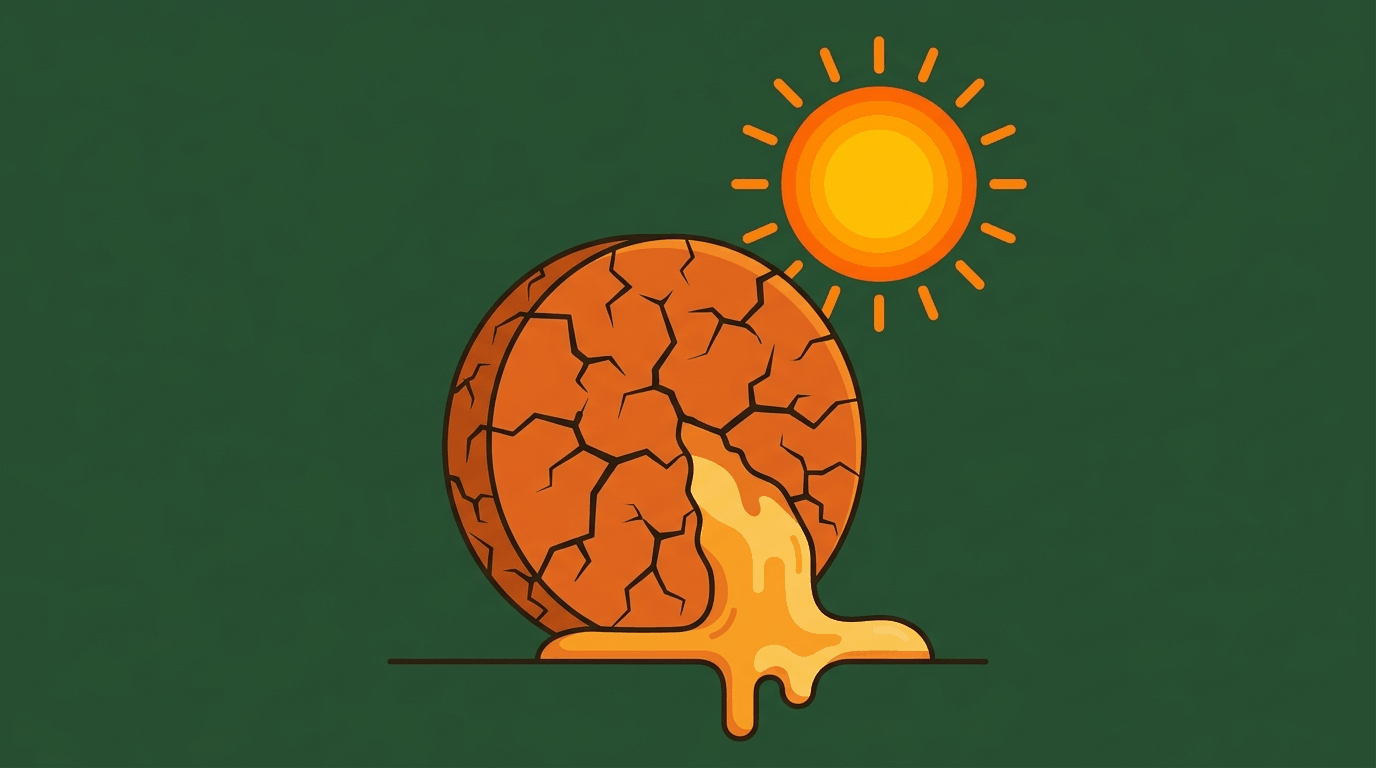
Pastures Turn to Dust, a Century-Old Dining Rule Broken
Beyond the rich milky aroma, the hard cheeses bought from the alpine valleys of France also embody a century-old authentic flavor strictly protected by French law. But in the summer of 2026, consumers buying these same cheeses would hardly guess that the milk inside no longer complies with these century-old national protection rules. A sudden, severe drought is forcing France’s extremely strict food laws to bow to reality.
On August 26, 2026, the French National Institute of Origin and Quality (INAO, the official body responsible for setting and overseeing food geographical indications) issued a temporary decree allowing dairy farmers in the eastern mountainous regions to break century-old rules. According to the original standards, for top-tier cheeses like Abondance, the cows’ daily diet had to consist of at least 50% fresh grass from local pastures. Under the new decree, this strict ratio has been slashed directly to 15%, and dairy farmers are also permitted to buy fodder from outside the region to feed their herds.
This sharp drop in the ratio means a drastic change in what the cows are eating. In the past, out of every ten mouthfuls of grass, five were fresh alpine grass; now, less than two out of ten mouthfuls are local fresh grass, with the rest relying entirely on hay brought in from outside. This shift alters the cows’ daily diet and marks a rare concession of this century-old rule in the face of reality.
What is AOP, and Why Dictate What Cows Eat?
In Europe, the packaging of top-tier cheeses often bears the AOP (Appellation d’Origine Protégée, the EU’s protected designation of origin certification, which is essentially a “geographical ID card” for traditional foods). The core of this certification lies in protecting a food’s Terroir (the unique ecological environment consisting of a region’s soil, water quality, climate, and microbiology). The French firmly believe that only cows grazing on specific flowers and grasses in specific alpine valleys can produce high-quality milk with a distinctive flavor.
To maintain the authority of this geographical ID card, the legal provisions are extremely stringent. Dairy farmers cannot buy cheap hay from a neighboring region to save costs, nor can they arbitrarily add synthetic feed for their cows; all sources of flavor must be locked to this specific local land. This strict binding makes consumers willing to pay higher prices for a piece of pure local tradition.
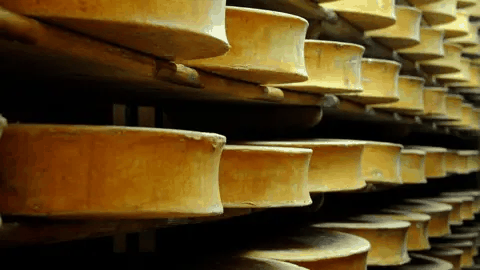 Image: Beaufort cheese wheels stored in a cellar in eastern France. Source: AFP via Getty Images / BBC
High Mountain Pastures Turn to Kindling Under 40°C Heat
However, the drought of summer 2026 shattered this idealized production model. French officials described the drought as “historic,” with the entire dry spell peaking in July. At that time, about 95% of mainland France was enveloped by the shadow of drought, and soil moisture levels plummeted to extremely low levels.
An affected area of 95% means that, apart from a few narrow coastal strips, almost the entire country turned into a hard wooden board baked dry by the high temperatures. The sun beat down continuously for weeks, and the once lush alpine pastures at the foot of the Alps quickly withered and yellowed; you couldn’t even find a decent green leaf in the fields. Unable to find fresh grass on the bare hillsides, the cows’ milk production began to plummet.
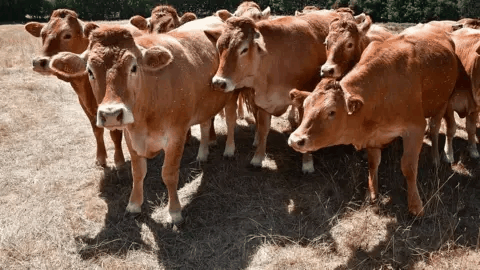 Image: Cows grazing on withered yellow pastures in central France in July 2026. Source: AFP via Getty Images / BBC
In the desperate absence of rain, dairy farmers found themselves in a dilemma. If they didn’t bring in large quantities of hay and fodder from outside, the herds would starve or even die; but if they used fodder from outside the region, they would directly violate the protected designation of origin laws. Faced with the threat of production halts and bankruptcy, officials had to trigger an emergency firefighting mechanism, tearing an opening in the regulations for the dairy farmers.
Behind the Temporary Exemptions, Increasingly Frequent Exceptions
It wasn’t just Abondance cheese that was forced to break the rules. World-renowned hard cheeses like Beaufort, Comté, and Cantal, as well as Rocamadour goat cheese, were all swept up in this wave of exemptions. From the ratio of fresh grass for cows to the sourcing regions for sheep fodder, a series of rules that were originally seen as bottom lines have been successively suspended.
The impact of this drought has even extended beyond the dairy industry. Cider producers in Normandy, sparkling wine estates in Alsace, and sheep farmers in Poitou-Charentes have all successively received similar temporary permissions. High temperatures and drought are rippling along the agricultural supply chain, pulling one traditional geographical indication after another into an anomalous state.
In fact, this isn’t the first time France has bowed to extreme weather. During the rare heatwave of 2022, officials previously invoked the “extreme weather exception clause” in EU law. However, by 2026, this special exception, which was supposed to be a first-aid measure, is evolving from a once-in-a-few-years accident into a normalized contingency measure.
When the Environment Changes, the Geographical Protection System Hits a Physical Wall
This series of temporary exemptions exposes the vulnerability of the geographical protection system in the face of climate change. A geographical ID card can bring a higher premium to agricultural products, but its establishment is based on an invisible premise: that the local climate and environment remain fundamentally stable over a century. When rainfall and temperature shift dramatically, the old rules become shackles that lock down the industry.
If climate warming completely alters the local soil, water, and vegetation growth patterns, the traditional concept of terroir is stretched to its physical limits in reality. When the valleys no longer grow the flowers and grasses of the past, blindly adhering to the local feeding ratios of a century ago not only fails to preserve traditional flavors but instead drives centuries-old traditional workshops into a dead end.
Legal provisions can be revised in a short time by issuing notices, but rainfall and temperatures will never reverse themselves just because of a few official documents. The severe drought of summer 2026 shows that even France’s proud protected designation of origin system has to temporarily yield to climate change. As the natural foundation of terroir is reshaped, how people should define a truly authentic cheese is turning into a new conundrum with no standard answer.
References:
- BBC Report: France’s severe drought causes temporary relaxation of rules of origin for some top cheeses
- Official announcement from the French National Institute of Origin and Quality (INAO)