A Summer Student’s Failed Experiment Overturned the Textbooks
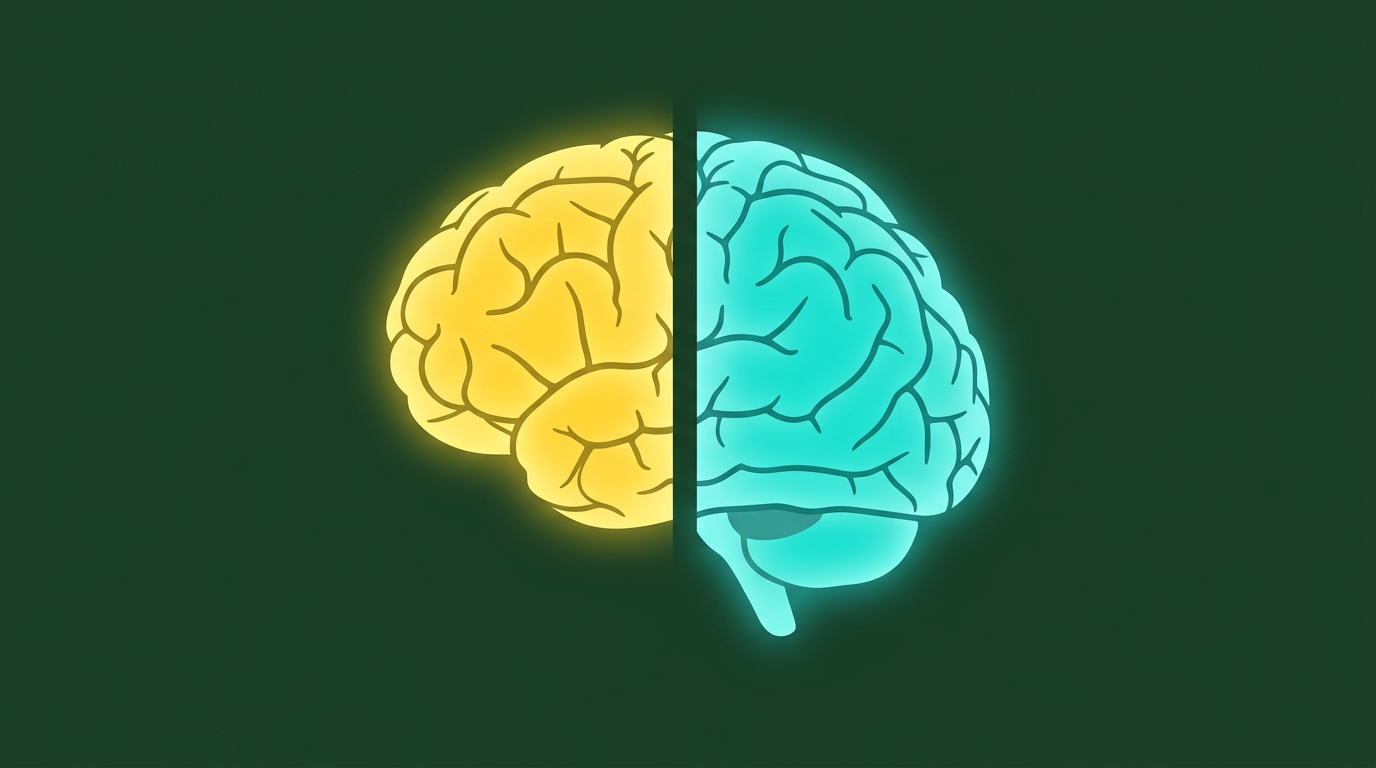
A summer undergraduate working in Kyle Loh’s developmental biology laboratory at Stanford University botched a routine experiment: attempting to generate hindbrain neurons in a petri dish, only to produce nothing at all. The failed culture was not discarded into the waste bin. Instead, Loh’s team investigated the anomaly, eventually publishing a landmark discovery in Nature Neuroscience: the front and the back of the mammalian brain originate from two completely different progenitor cell populations. From the earliest stages of embryonic development, your forebrain and your hindbrain follow fundamentally separate developmental tracks.
The overturned consensus is remarkably concrete. For decades, neurobiologists operated under the default assumption that all neurons across the central nervous system diverge from a single, uniform pool of neural ectoderm progenitors. Researchers applied identical protocols when attempting to differentiate stem cells into forebrain or hindbrain neurons; forebrain neurons grew reliably, while hindbrain attempts continually failed. Almost nobody paused to consider that they were starting with the wrong cells altogether.
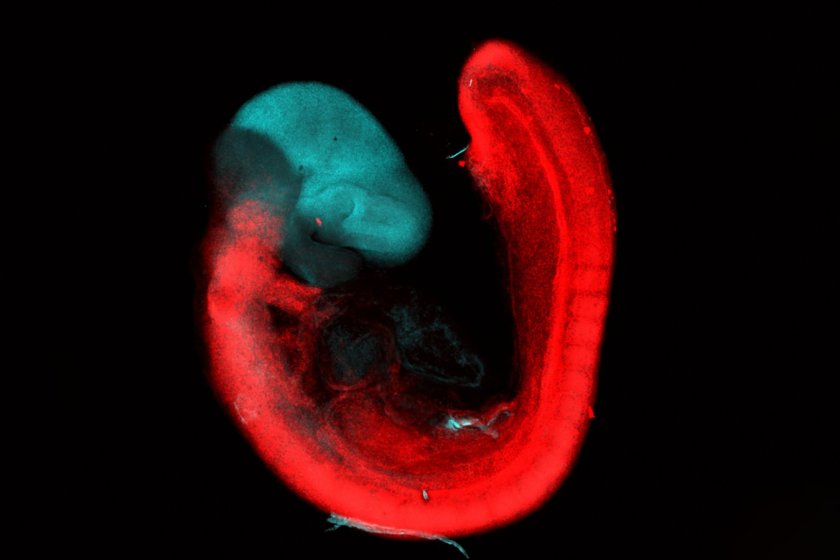
Figure: A 9.5-day-old mouse embryo, with the forebrain and midbrain stained in blue, and the hindbrain and spinal cord stained in red. Source: Loh Laboratory, Stanford Medicine
Two Cell Types, Two Developmental Trajectories
The Stanford researchers uncovered the answer in early-stage mouse embryos (day 9.5). The brain develops from two distinct lineages of early progenitors—proliferative precursor cells with limited self-renewal capacity. One group expresses the OTX2 transcription factor and is dedicated exclusively to forming the forebrain and midbrain; the other expresses the GBX2 transcription factor, giving rise strictly to the hindbrain. The two developmental programs diverge from day one.
In plain terms: the raw materials used to construct the forebrain and the hindbrain are entirely different building blocks. Trying to force forebrain precursors into becoming hindbrain structures is like trying to forge steel out of lumber—the tools and the substrate are mismatched at the molecular level. The team subsequently replicated the experiments using human stem cells, confirming that our brains obey the exact same developmental rule. As Loh noted: “We’ve shown for the first time that the front of the brain arises from a totally different progenitor cell than the back of the brain.”
An Evolutionary Stitch 550 Million Years in the Making
Had this been an idiosyncratic quirk of mice and humans, the finding would carry far less weight. But Loh’s team examined early embryos of chickens, zebrafish, and acorn worms, discovering that their nervous systems also emerge from two distinct progenitor pools. The acorn worm is a marine invertebrate whose last common ancestor with humans lived roughly 550 million years ago. The dual-origin blueprint was already firmly entrenched in the Cambrian seas.
An intriguing counterpoint is the jellyfish. Diverging from our ancestral lineage between 600 and 700 million years ago, jellyfish to this day retain two separate, physically disconnected nervous systems. Loh hypothesizes that in the ancient ancestors of bilaterians, these two distinct systems were brought together in close anatomical proximity and merged into a single organ, simply because spatial closeness dramatically accelerated communication. In his words: “It would probably be more efficient to make the brain into a single organ, but we rely on this primitive way of making the brain out of two separate pieces.” In other words, the human brain behaves like two vintage computers crammed into a single chassis: they share a system bus, but their motherboards were never unified.
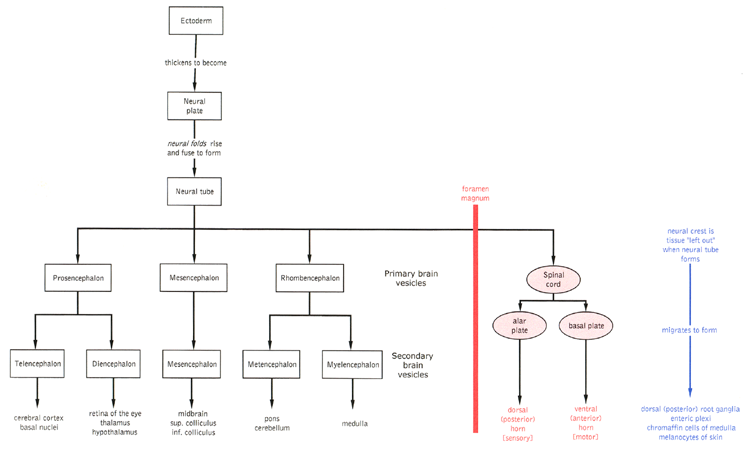
Figure: Schematic of early nervous system development. Source: Wikimedia Commons
The Hindbrain Keeps You Alive so the Forebrain Can Take Risks
Why did the two systems never merge into a single unified developmental program? Loh points to division of labor. The hindbrain regulates the autonomic vitals: breathing, cardiac rhythm, sleep cycles, and swallowing—foundational processes essential for immediate survival where the error tolerance is zero. A heart that pauses for seconds spells disaster; an erratic breathing pattern can prove fatal. Because the hindbrain quietly shoulders these non-negotiable life-support tasks, the forebrain gains a crucial evolutionary asset: room for trial and error.
As Loh suggests, evolution was free to “experiment and make mistakes in the forebrain, eventually producing fancier things like memory and creativity.” While Loh framed this as a cautious hypothesis, it opens a compelling window into cognitive evolution: the higher mental faculties human beings take pride in—complex language, abstract reasoning, artistic expression—could only emerge because they were granted the luxury of failure. The hindbrain handles everything that cannot fail, giving the forebrain license to take risks.
Choosing the Right Progenitor: Hindbrain Neurons Grow in a Dish for the First Time
Correcting the theoretical model immediately yielded a major methodological breakthrough. The long history of failure in cultivating hindbrain neurons in laboratories around the world is now fully explained: researchers had consistently used OTX2-expressing progenitors (genetically committed to forebrain and midbrain identities) while attempting to coax them into hindbrain fates. By switching to GBX2-expressing progenitors, Loh’s team succeeded for the first time in generating functional human hindbrain motor neurons in vitro.
The clinical implications are immediate. Neurodegenerative conditions like amyotrophic lateral sclerosis (ALS) and spinal muscular atrophy (SMA) cause severe difficulties with speech and swallowing, specifically targeting motor neurons residing in the hindbrain and brainstem. The persistent inability to culture these cells outside the human body meant researchers lacked the most elementary in vitro disease models. Another major beneficiary is research into GLP-1 receptor agonists. Scientists have recently shown that weight-loss medications such as semaglutide (Ozempic and Wegovy) suppress appetite predominantly by acting on neural circuits in the mouse hindbrain. Scalable culture of hindbrain neurons will allow researchers to pinpoint exactly which neuronal subtypes these metabolic drugs target, and through what biochemical pathways.
Evolution Never Yields an Optimal Design, Just a Working Hack
The findings from Loh’s laboratory dismantle a deeply ingrained assumption: that the brain is a harmoniously designed, monolithic organ. In reality, it is the product of two primitive nervous systems—separated for at least 550 million years—shoehorned into a single cranium. The seam remains visible to this day: forebrain and hindbrain employ different progenitors, follow non-overlapping developmental trajectories, and require completely disparate protocols for in vitro culture. Evolution does not seek optimal architecture; it settles for any cobbled-together hack that keeps an organism viable. That summer student’s failed experiment underscored a timeless truth: sometimes realizing you are on the wrong path is far more valuable than spending another decade marching down it.
References:
- Nature Neuroscience Original Paper
- New Scientist Report
- Hacker News Discussion