At 9:45 AM on September 21, 2026, a construction backhoe scooped into the dirt in New Jersey. Within minutes, inbound flights heading into New York’s three major hubs, Philadelphia, and Boston were brought to a sudden halt. The timing could hardly have been worse: it was the High-Level Week of the United Nations General Assembly, with roughly 130 world leaders and dozens of government ministers converging on Manhattan. The busiest airspace on the planet was hit with an eight-hour freeze. It was not a sophisticated nation-state cyberattack—just an ordinary telecom fiber line severed underground.
Backhoe Cuts the Trunk Line: Eight Hours of Gridlock Across East Coast Airspace
A localized physical failure cascaded into system-wide paralysis across the air traffic control network. A critical telecommunications circuit serving the Philadelphia Terminal Radar Approach Control (TRACON) abruptly went dark. The facility instantly lost its primary external communication links. TRACON is tasked with orchestrating departures and arrivals across a 10-to-50-mile radius around major airports. Stripped of reliable data feeds and voice links with adjacent tower cabs and high-altitude en-route centers, air traffic controllers could no longer track real-time aircraft positions. Dozens of inbound flights were forced into holding patterns or scrambled for alternate diversion fields.
According to FlightAware, roughly 7,000 flights nationwide were delayed or canceled, with over 1,400 disruptions concentrated directly across New York’s metropolitan triad. At Newark Liberty International Airport, a primary hub for United Airlines, more than half of all scheduled flights were scrubbed. Over 100 aircraft were forced to divert to alternative airports. Beyond New York, Philadelphia struggled through two consecutive ground stops before clawing back partial capacity. Reagan National (DCA) halted operations for more than an hour under mounting traffic backlogs, while Boston Logan was forced to temporarily embargo incoming traffic due to downstream congestion.
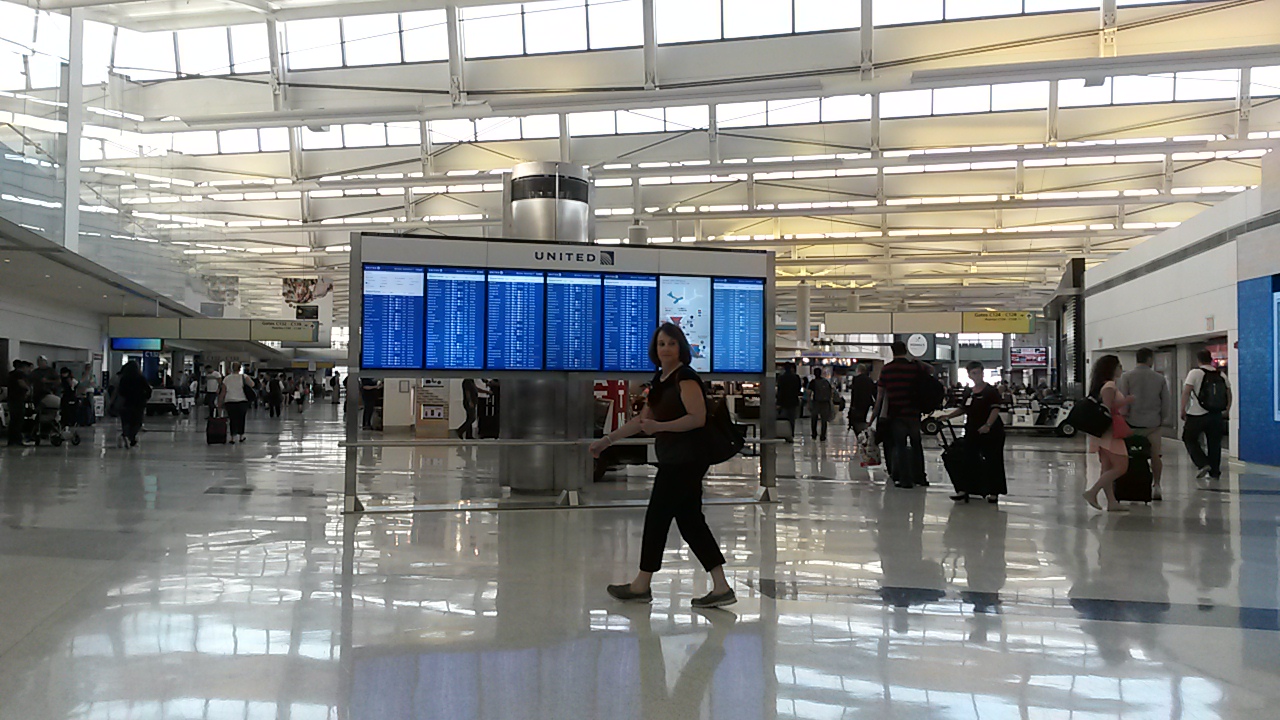 Figure: Flight information display board showing widespread delays and cancellations. Source: Wikimedia Commons
An eight-hour standstill stranded tens of thousands of passengers in terminal concourses. Across the entire Eastern Seaboard, business operations, freight logistics, and diplomatic schedules ground to a halt. In civil engineering, an accidental fiber strike is a routine, anticipated hazard. A mature mission-critical network architecture is expected to absorb that level of local physical damage without flinching.
Failover Fails: The Backup Fiber Was Already Dead
The incident unmasked a glaring architectural defect: the physical redundancy that the Federal Aviation Administration (FAA) had invested heavily in simply evaporated. Once the primary circuit was severed, network engineers initiated a failover to switch traffic to the secondary fiber route. To their dismay, they discovered that the backup line was already physically disconnected. Up until the exact moment of emergency cutover, nobody knew how long it had been broken. It could have been severed for days, weeks, or even months.
FAA Administrator Bryan Bedford later confirmed the breakdown: when switching to the redundant path, technicians discovered an existing, massive fiber break that would require an estimated 13 hours to splice and restore. In commercial aviation, a 13-hour recovery window is functionally indistinguishable from total system outage. Air traffic controllers had no choice but to wait while telecommunications carriers scrambled to string emergency bypass lines. Newark was unable to reopen to inbound arrivals until eight agonizing hours had elapsed.
This exposes the fundamental flaw of passive disaster recovery. In a system claiming high availability, finding out that your last line of defense has been offline only when you pull the emergency lever is unacceptable. Static standby lines are not genuine redundancy; they are paper placebos. The only redundancy that counts is the kind whose operational readiness is continuously verified under live conditions.
Shared Trenches: Why Two Cables in the Same Ditch Aren’t Redundant
Telecommunications engineers familiar with outside plant (OSP) infrastructure were hardly surprised by the dead backup line. In fact, it reflects an open secret across the utility industry. To minimize trenching costs, permitting overhead, and right-of-way leasing fees, contractors routinely bundle nominally “redundant” fiber paths inside the same protective sheath or bury them in the very same trench. When an excavator bucket digs into the earth, it severs the primary and backup links in a single strike. Physical diversity turns out to be a fiction.
On Hacker News, network engineers recounted similar horror stories from the field. One veteran recalled how a major transcontinental backbone carrier bundled its primary and secondary cables along the same side of a highway for two critical miles purely for convenience. Leasing dark fiber from third-party carriers further compounds the blind-box problem: a break in an obscure subcontractor’s cable can instantaneously take down multi-state air traffic communications. In engineering circles, there is an old running joke: if you ever get lost in the wilderness, bury a piece of fiber optic cable; within an hour, a backhoe will show up to dig it up, and you can hitch a ride home.
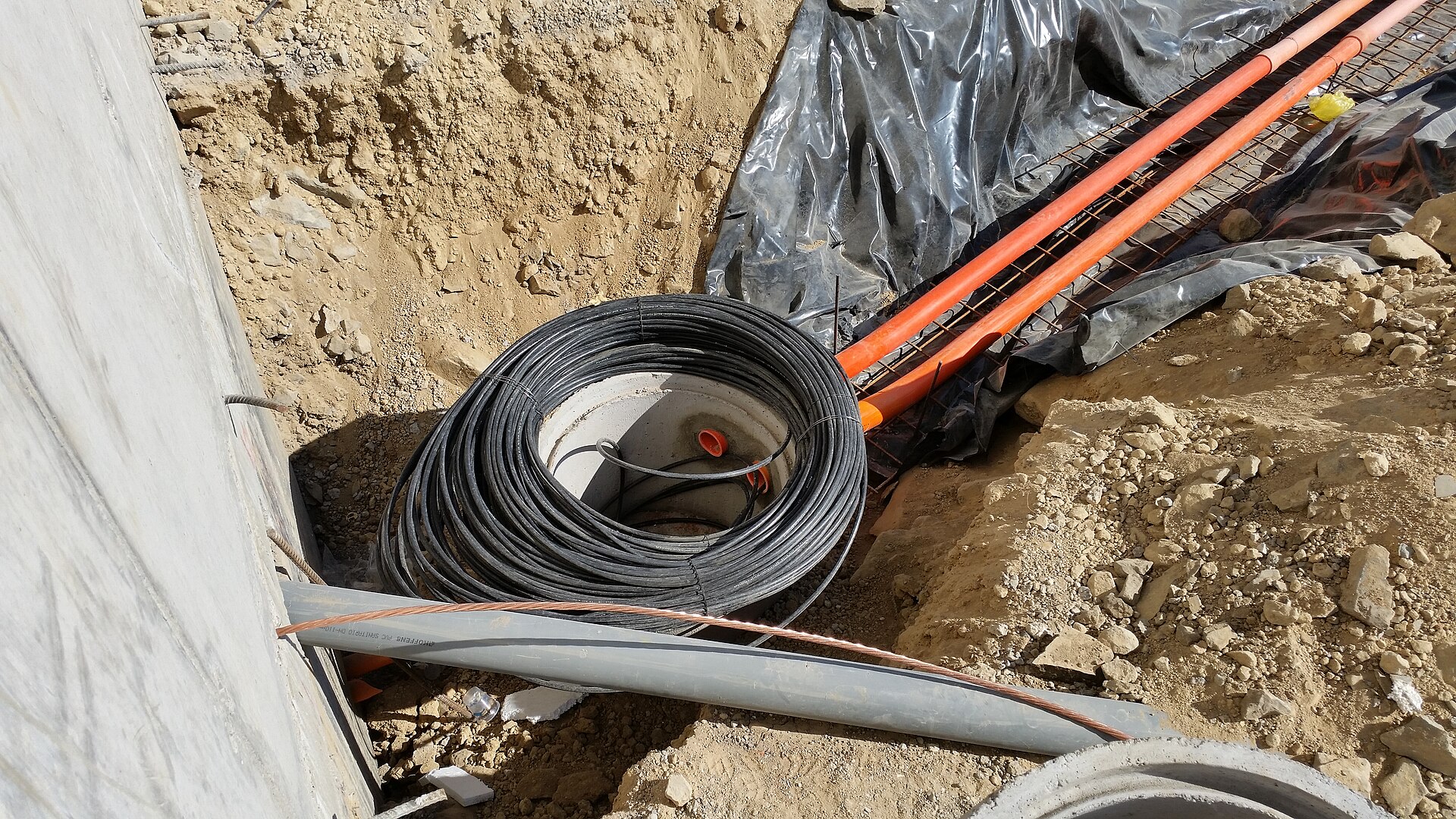 Figure: Optical fiber cable being laid in the field. A single bundle often carries mission-critical communication links. Source: Wikimedia Commons
Accountability remains a tangled mess. Transportation Secretary Sean Duffy initially pointed the finger at an Amtrak construction crew in New Jersey. Amtrak swiftly issued a firm denial. NJ Transit subsequently countered that its work crew was operating ten feet clear of the marked municipal utility lines, and launched an investigation into whether the spray-painted markings were incorrectly placed by Verizon or another utility contractor. In the physical world of civil excavation, a few feet of surveying discrepancy on a blueprint is all it takes to obliterate billions of dollars worth of high-availability defense lines.
$12.5 Billion Can’t Buy a Modern Architecture for ATC
Behind the excavation blunder lies a sobering reality: the communications infrastructure underpinning American air traffic control is decaying far faster than modern systems can tolerate. This was not the first time Philadelphia TRACON has gone dark due to telecommunications failures. In May 2025, the exact same facility suffered a crippling communications blackout under similar circumstances. The year before that, another telecom breakdown knocked its entire communications suite offline.
These recurring disruptions are the inevitable compound interest on decades of accumulated technical debt. To patch the aging network, Congress authorized $12.5 billion last year to overhaul air traffic control communications. Secretary Duffy stated bluntly that finishing the comprehensive upgrade will demand another $17.5 billion, calling the system’s current fragility unacceptable for the United States.
Yet capital injection alone cannot cure an obsolete engineering paradigm. Spending $12.5 billion on a system that still relies on unmonitored cold-standby architecture merely throws money into historical sinkholes. It cannot deliver the five-nines reliability that modern air traffic management demands. Billions of dollars must be redirected toward revamping operational principles, aligning them with the basic tenets of modern distributed systems.
Redundancy Must Continuously Prove It’s Alive
The eight-hour shutdown of the Eastern Seaboard delivered an unvarnished masterclass to infrastructure engineers everywhere. Verizon, rushing to splice severed glass strands, had no answer. The FAA, struggling to keep the skies safe, had no answer. Before the backhoe struck the primary conduit, who was actually monitoring the health of that secondary line?
In a true high-availability communications architecture, a backup node cannot remain completely dormant. It must either participate in continuous heartbeat telemetry or run in an active-active configuration carrying live production traffic. In modern systems engineering, cold standbys simply mask gradual bit rot and silent physical decay. The operational continuity of an entire national transportation grid cannot rest on a dark piece of glass that has seen zero packets for weeks. That false sense of security is itself the most lethal single point of failure.
Infrastructure architects must abandon the outdated notion that a redundant system is complete the moment installation sign-off occurs. An unverified backup link does not exist in the eyes of sound engineering. Day in and day out, automated mechanisms must relentlessly force the system to prove its own liveness. Otherwise, the next backhoe that bites into the dirt will once again bring the world’s most crowded skies to an ignominious halt.
References:
- Hacker News Discussion (item?id=49791509)
- Federal Aviation Administration Official Incident Report
- Statements from NJ Transit and Amtrak