When everyday skin inflammation flares up, a routine visit to the clinic usually ends with a prescription for antibiotics. For most people, a few days of medication resolves the issue entirely. But what happens if those standard treatments suddenly stop working? A minor scratch could quickly escalate into a life-threatening crisis.
Infections driven by antibiotic resistance already claim over one million lives each year directly. In 2021 alone, drug-resistant bacteria were linked to 4.71 million deaths worldwide—the demographic equivalent of erasing a major global metropolis from the map in twelve months. Epidemiological forecasts project that between 2025 and 2050, cumulative fatalities from resistant infections could approach 170 million, putting a population comparable to two large nations in mortal peril.
Faced with this escalating superbug crisis, researchers are turning to a millennium-old medical manuscript preserved at the British Library for unexpected answers.
Scientists Reconstruct a Millennium-Old Remedy from the British Library
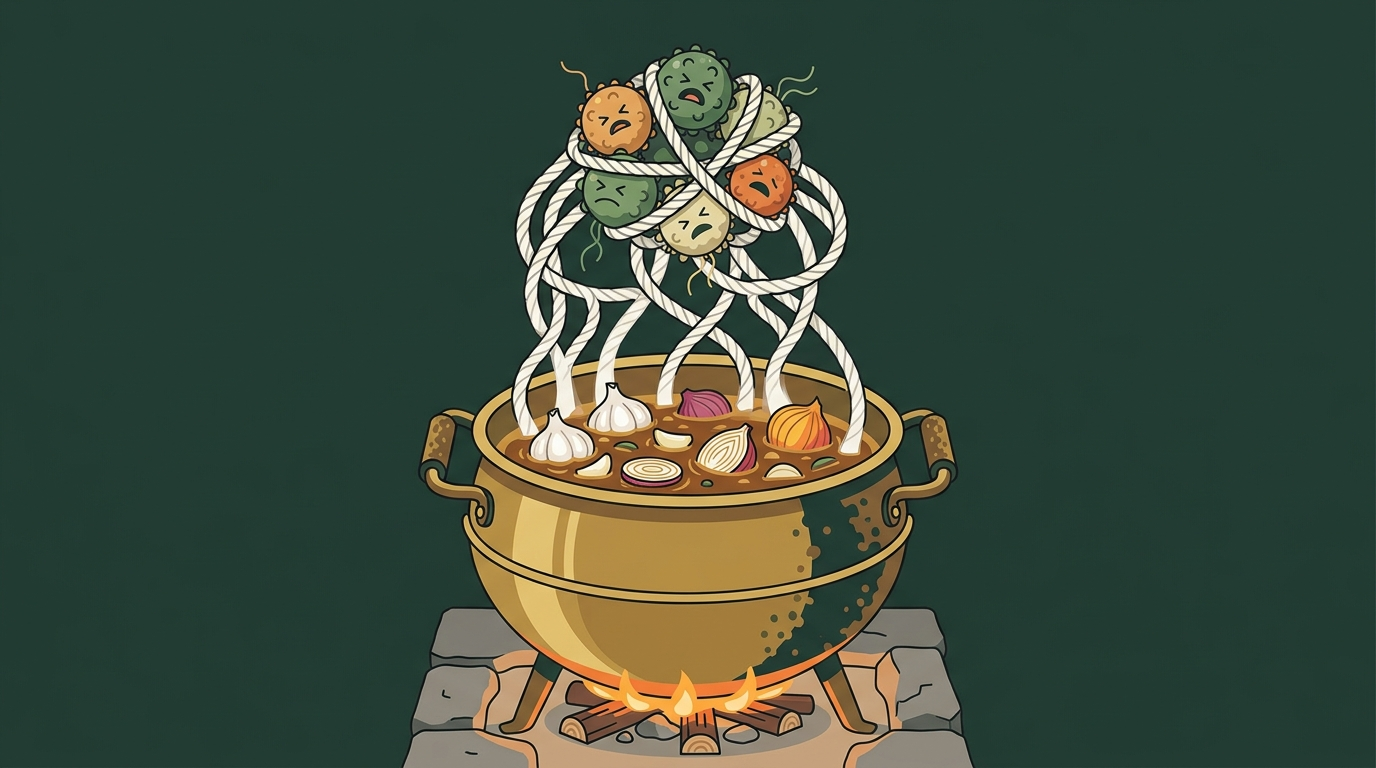
Deep in the archives of the British Library rests Bald’s Leechbook, a 10th-century Old English medical treatise inscribed on parchment. Among its remedies is a curious formula for treating eye infections: take equal parts garlic and allium (onion or leek), chop them finely, combine with wine and oxgall (bovine bile), and let the mixture steep in a brass vessel for nine days. That nine-day incubation period provides ample time for copper ions leached from the brass to catalyze complex chemical reactions among the natural ingredients.
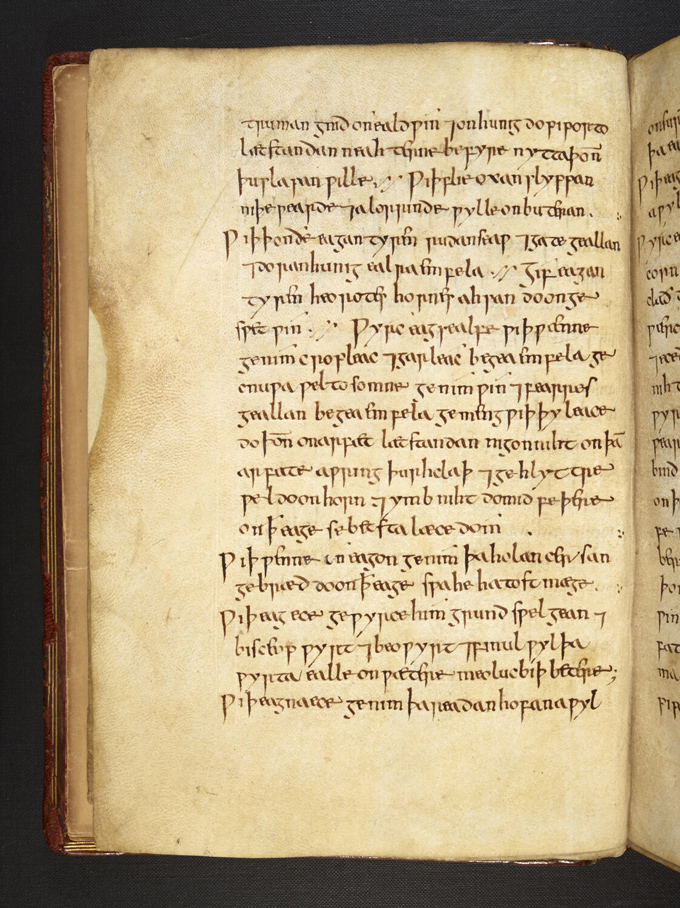 Figure: A page from Bald’s Leechbook, a 10th-century Old English medical text. Source: Science News / The British Library Board
Long dismissed as kitchen folklore or superstitious folk healing, the recipe went largely unstudied until microbiologist Freya Harrison and her team at the University of Warwick decided to put it to the test. Following the ancient instructions to the letter, they brewed the eye salve under rigorous laboratory conditions.
The researchers crushed fresh garlic and onions, blended them with wine and bile, and allowed the mixture to age in brass vessels. Nine days later, the resulting broth was pungent and foul-smelling. But when applied to bacterial cultures in Petri dishes, its antibacterial potency stunned the entire lab.
Garlic, Onion, and Oxgall Neutralize Top-Tier Superbugs
During initial laboratory screenings in 2015, the reconstructed salve demonstrated astonishing bactericidal strength. It effectively eradicated common Staphylococcus aureus, a frequent cause of skin and respiratory infections. More remarkably, it cleanly wiped out methicillin-resistant Staphylococcus aureus (MRSA)—the notorious superbug responsible for aggressive, hard-to-treat skin necrosis.
On September 3, 2026, Harrison’s team published new findings in the journal mSphere, pitting the medieval formulation against even more formidable clinical adversaries. These included Acinetobacter baumannii, an opportunistic pathogen notorious for causing devastating hospital-acquired infections in intensive care units, and Pseudomonas aeruginosa, a pathogen known for establishing intractable, suppurative wound infections.
All three organisms occupy the World Health Organization’s highest priority tier for antibiotic resistance. Yet against these notoriously recalcitrant pathogens, the medieval extract maintained exceptionally high kill rates.
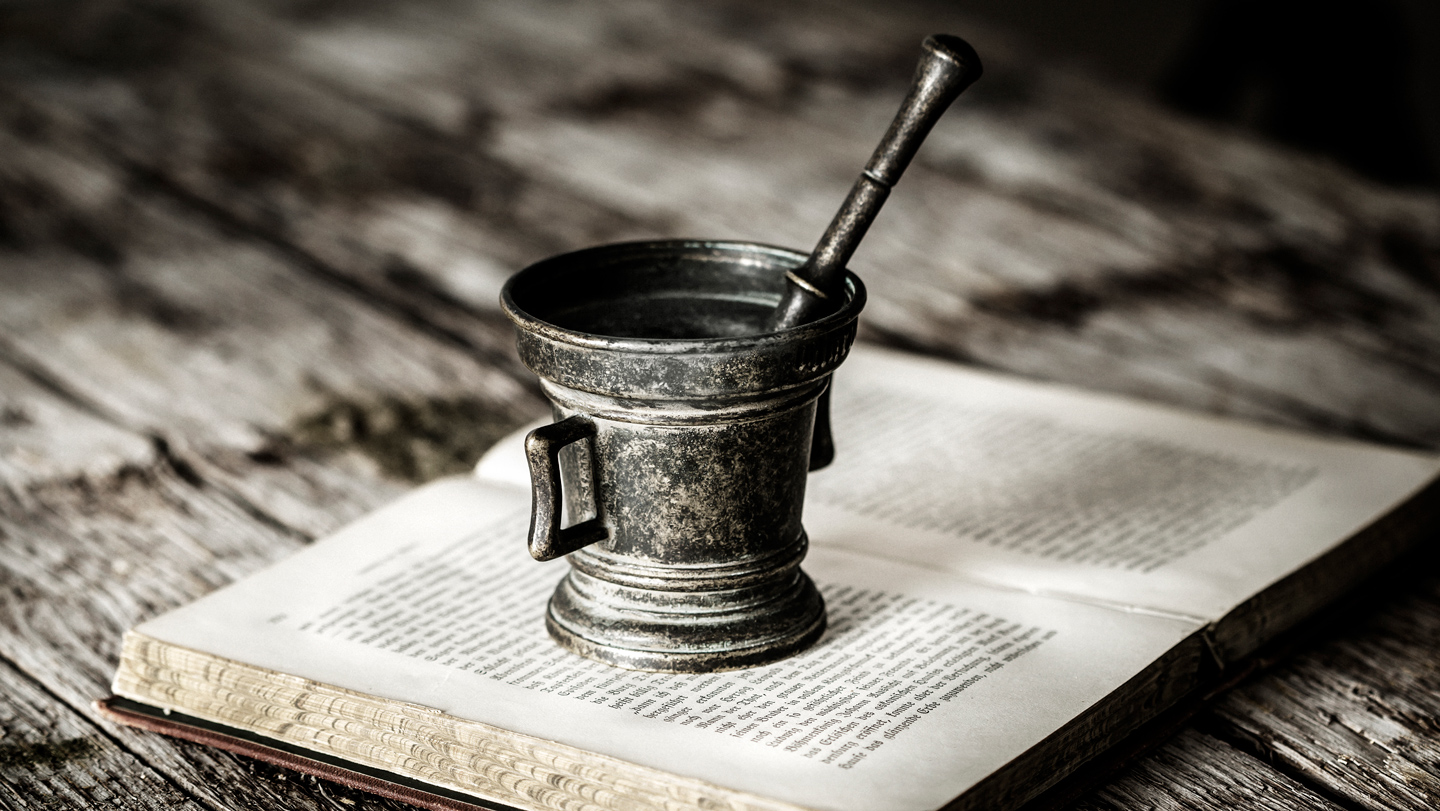 Figure: Modern reconstruction of the 10th-century salve: garlic, onion, oxgall, and wine brewed in a brass vessel for nine days. Source: Science News
Breaching Membranes and Silencing Signals: A Four-Pronged Attack on Bacteria
How could common culinary and biological ingredients unleash potency far exceeding that of any single constituent? Combining genomic sequencing with advanced cellular imaging, the team mapped out the recipe’s multi-pronged molecular assault:
First, active compounds in the salve breach the bacterial cell membrane—the protective lipid barrier safeguarding cellular integrity. Piercing this defensive perimeter triggers rapid leakage of internal cellular contents.
Second, the remedy rewires the expression of hundreds of bacterial genes. It suppresses the production of adhesins (surface proteins bacteria use as grappling hooks to latch onto human tissue) as well as virulence factors (toxins synthesized to damage host cells).
Third, the concoction paralyzes bacterial efflux pumps—the molecular transport machinery bacteria rely on to forcibly pump antibiotics out of their cells. Disabling this pump neutralizes one of their most effective defense strategies.
Finally, the ingredients sever quorum sensing, the chemical communication network bacteria use to coordinate group behavior and mount synchronized assaults. Deprived of signaling, bacteria cannot coordinate biofilm formation—the dense, protective matrix of slime and proteins that shields them from drugs and immune defenses. Stripped of their protective fortresses at very low concentrations, the pathogens are left completely exposed.
Two Weeks of Forced Evolution: Standard Antibiotics Falter, the Ancient Salve Holds
In antimicrobial development, killing bacteria in a culture dish is only half the battle; preventing the emergence of drug resistance is the ultimate test. To assess whether pathogens could adapt to the medieval salve, the researchers designed a two-week forced-evolution experiment.
Bacteria were continuously cultured in sub-lethal concentrations of antimicrobial agents, with dosages stepped up incrementally across successive generations. After two weeks, bacterial tolerance to conventional, single-target antibiotics surged eight to sixteen times above baseline levels.
Against the medieval eye salve, however, the bacteria hit a biological wall. Despite two weeks of sustained, escalating exposure, their susceptibility to the salve showed virtually no change. The pathogens were unable to establish an effective line of defense.
Omar El-Halfawy, a microbiologist at the University of Regina in Canada who was not involved in the study, noted that the disparity in evolutionary adaptation rates is striking. As Harrison explained, for a bacterium to survive the medieval formulation, it would need to acquire mutations across multiple independent physiological pathways simultaneously within a single reproductive cycle—a statistical probability so small as to be practically negligible.
From Single Magic Bullets to Molecular Cocktails: Cracking the Resistance Crisis
The researchers emphasize that these findings should not prompt anyone to concoct garlic and bile remedies at home. Harrison warned that homemade brews carry serious risks of chemical variability and microbial contamination, and must never be applied to open wounds.
Instead, the value of the experiment lies in the paradigm shift it offers modern pharmacology. For decades, the pharmaceutical industry has pursued the “magic bullet” model—seeking pure, single molecules targeted at an isolated cellular vulnerability. Yet bacteria need only a single genetic mutation to render such hard-won drugs obsolete.
The financial and human cost of antimicrobial resistance is staggering. In 2019, direct global healthcare expenditures tied to resistant infections reached $700 billion, coupled with $200 billion in lost productivity—an annual economic toll nearing one trillion dollars.
By orchestrating the synergy of multiple natural compounds across diverse targets, the 10th-century eye salve provides a compelling blueprint for the future. The researchers’ next objective is to purify and standardize each active component, assembling well-defined, multi-target molecular “cocktails” whose safety and efficacy can be validated in preclinical trials.
Rather than waiting indefinitely for a single wonder drug that superbugs will inevitably outsmart, pursuing multi-target combinations cuts off every escape route—giving humanity a decisive advantage in the fight against resistant infections.
References:
- Science News coverage
- Original paper in mSphere