
Fossil Species From 6,000 Years Ago Rediscovered in the Canopy
In zoological taxonomy, any species with no documented living record for 6,000 years is cataloged as extinct. In October 2026, a groundbreaking study published in the Records of the Australian Museum shattered that long-standing consensus. A joint expedition deep into the remote rainforests of West Papua, Indonesia, captured unequivocal footage of living specimens. Two marsupial lineages that vanished from the fossil record after prehistoric strata have reemerged in the high tree canopy.
The rediscovered creatures are the pygmy long-fingered possum (Dactylonax kambuayai) and a ringtail glider (Tous ayamaruensis). Until now, modern science knew them exclusively from subfossil skeletal fragments excavated from limestone cave deposits. A 60-century gap in scientific documentation had led researchers to conclude they died out millennia ago. Mammalogist Tim Flannery hailed their reappearance as an extraordinary discovery.
Biologists categorize this reappearance after an extensive stratigraphic gap as a “Lazarus taxon.” The leap from 6,000-year-old fossil beds directly into contemporary infrared lens frames demonstrates that textbook extinction assessments often rest on precarious data assumptions. Supposed prehistoric extinctions are frequently artifacts of blind spots in ground-level field surveys.
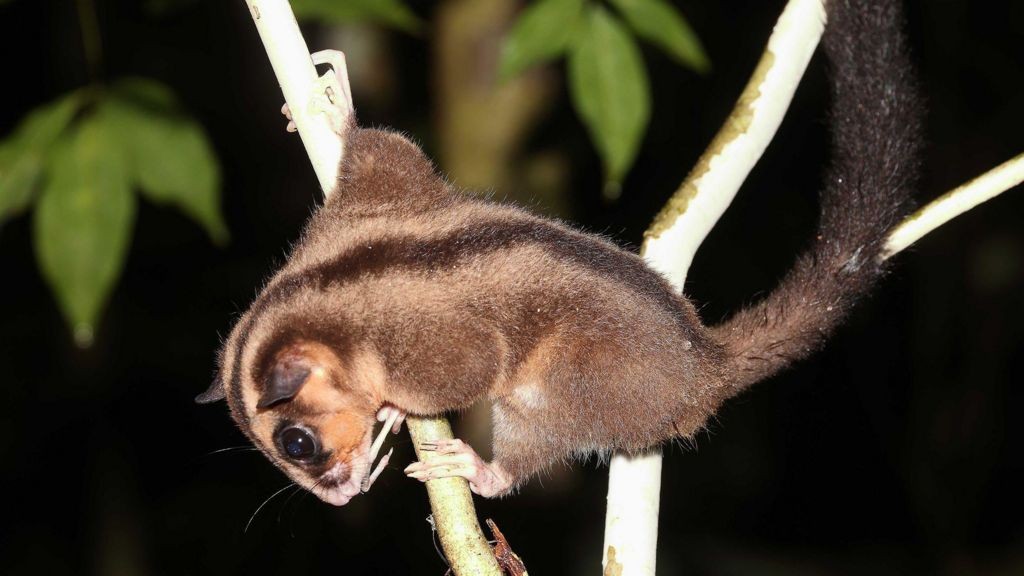 Figure: Pygmy long-fingered possum on a tree branch in the Tambrauw rainforest, West Papua. Credit: Carlos Bocos (via BBC).
Ground Surveys Could Not Reach 40-Meter Canopies
The survival of both species undetected by the scientific world for millennia is primarily a function of their extreme ecological niche. The Bird’s Head Peninsula (Vogelkop) features sheer karst terrain and steep montane gradients. Rainforest giants here routinely exceed 40 meters in height, creating intricate multi-tiered vertical habitats.
The pygmy long-fingered possum is roughly the size of a human hand. Its fourth anterior digit is dramatically elongated and specialized, functioning like a biological crochet hook. At night, the possum taps on tree bark, detects wood-boring larvae using acute hearing, and extracts them through small fissures with its elongated finger. Because its entire life cycle is restricted to the upper tiers of massive trees, zero physical traces ever reach the forest floor.
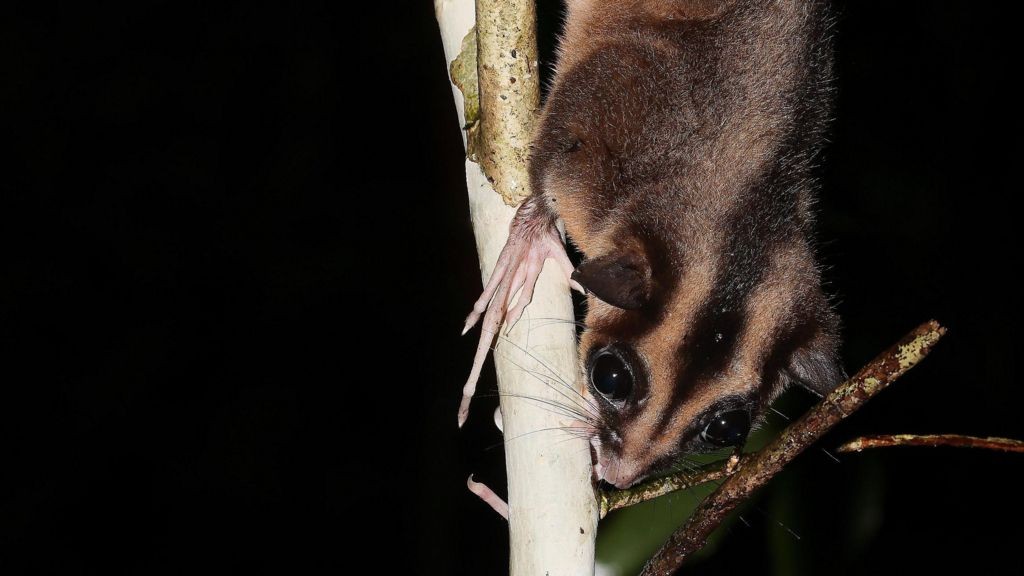 Figure: Close-up of the specialized elongated fourth digit of the pygmy long-fingered possum, adapted for probing wooden crevices to extract insect larvae. Credit: Carlos Bocos (via BBC).
The concurrently recorded ringtail glider exhibits even more elusive habits. Sized like a squirrel and equipped with gliding membranes and a prehensile tail, it represents an entirely new taxonomic genus (Tous). It nests exclusively in hollows of ancient trees more than 30 meters above the forest floor and virtually never descends to the ground. Combining high canopy tree-cavity living with nocturnal habits reduced ground-level detection probabilities to zero.
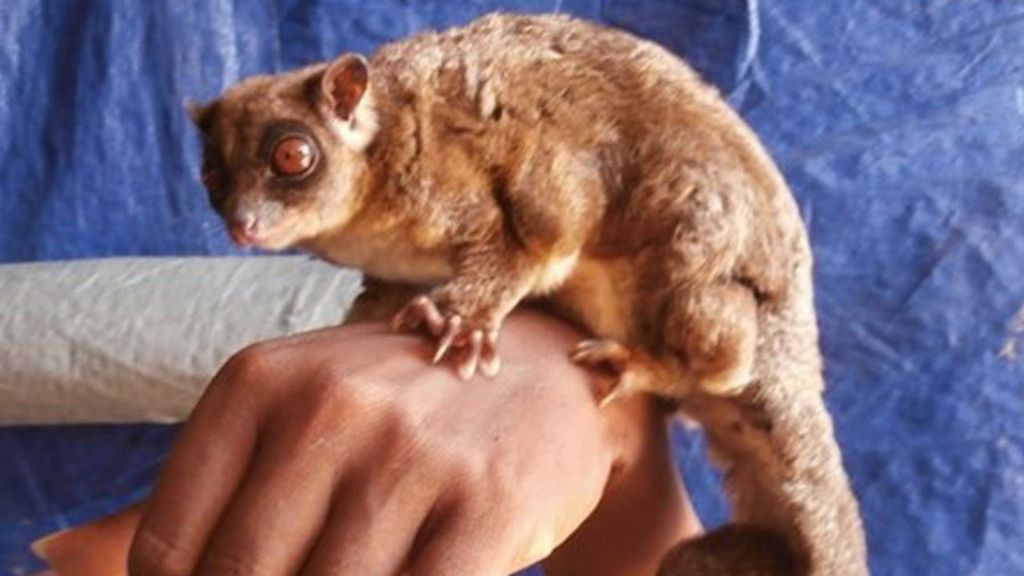 Figure: The newly described genus of ringtail glider lives in cavities dozens of meters up, gliding between canopy layers. Credit: Arman Muharmansyah (via BBC).
For over a century, scientific expeditions traversing New Guinea relied on terrestrial trekking routes and ground traps. The spatial mismatch between survey methodology and the actual vertical niche of these canopy specialists created a 6,000-year cognitive void. Naturalists on the ground could not pierce the mist dozens of meters overhead. Decades of silence were, in reality, a limitation of physical sampling reach.
Indigenous Oral History Overturns Paper Extinctions
While taxonomic databases declared them extinct for thousands of years, Indigenous forest communities had been living alongside them all along. In the oral traditions of the Tambrauw and Maybrat peoples, the ringtail glider has its own distinctive name and is regarded as a sacred animal handed down through generations. Local hunters patrolling the forests at night regularly heard its distinct calls and the sound of gliding overhead.
A systemic disconnect has long separated academic institutions from indigenous ecological knowledge. Western expeditions historically treated the collection of cataloged voucher specimens as the sole legitimate proof of a species’ existence. The rich empirical observations of forest-dwelling communities were often dismissed as folklore. This methodological bias effectively wiped two thriving animal populations off the scientific map for millennia.
The inclusion of Indonesian researcher Rika Korain marked a decisive turning point. The expedition interviewed village elders and cross-referenced traditional ecological reports with topographic elevation data. Listening to generational testimonies from ancestral forest stewards bridged modern taxonomy’s long-standing blind spot. Guided to specific ridges and old-growth trees, researchers mounted infrared camera traps at canopy level—and the targets missing for 6,000 years appeared right on schedule.
Erased From Extinction Lists, Confronted by Chainsaws
The celebration of retrieving these species from extinction lists is immediately tempered by looming reality. West Papua harbors some of the most extensive contiguous tracts of intact tropical rainforest remaining on Earth. In recent years, however, industrial expansion has steadily encroached upon these highlands. Logging concessions are advancing up the slopes, and heavy-haul roads increasingly fragment the contiguous forest canopy.
Conservation biologists quickly shifted the discussion toward urgent protective measures. The immediate threat is undeniable: if industrial logging expands unabated, species just recovered could face genuine physical obliteration within decades. The ringtail glider depends strictly on mature, large-diameter hollow trees formed over centuries for nesting—the exact trees prized by commercial timber operations. Felling a single ancient giant can wipe out an entire lineage of gliders.
The ecological isolation of montane habitats leaves canopy dwellers with no retreat; high-altitude forests act as isolated ecological islands. Once the upper canopy is clear-cut, obligate arboreal mammals cannot cross desiccated, open clearings in search of new territory. A paper extinction is merely an absence in scientific literature, but habitat fragmentation leads to irreversible biological annihilation. Without intervention, this rediscovery will merely chronicle their farewell.
Closing Survey Blind Spots Before the Bulldozers Arrive
This rediscovery serves as a wake-up call for global biodiversity assessments. Across the highlands of New Guinea and the deep Amazon basin, vast three-dimensional canopies remain virtually unexplored. Relying solely on ground-level sampling skews our understanding of ecosystem resilience and risks missing critical windows for establishing protected reserves.
Legally recognizing Indigenous customary forest tenure offers the most effective buffer against deforestation. Indonesia’s recognition of customary forests (hutan adat) demonstrates that when indigenous communities hold legal jurisdiction, deforestation rates drop markedly. For local guardians, the forest is identity and livelihood. Granting formal customary land rights erects a powerful cultural rampart against heavy machinery.
Modern field biology now pairs automated canopy camera traps with direct tree-climbing surveys. These sophisticated methods serve a singular objective: delineating ecological boundaries before chainsaws arrive. It took humanity 60 centuries to finally see these animals in the canopy. The policy and conservation decisions made right now will determine whether they stay there.
References:
- BBC News: Tiny possums thought extinct for 6,000 years found alive in remote West Papua forest.
- Records of the Australian Museum: Mammal surveys of the Vogelkop Peninsula, New Guinea (2026).
- Field briefings from the IUCN and Re:wild expedition partnerships.