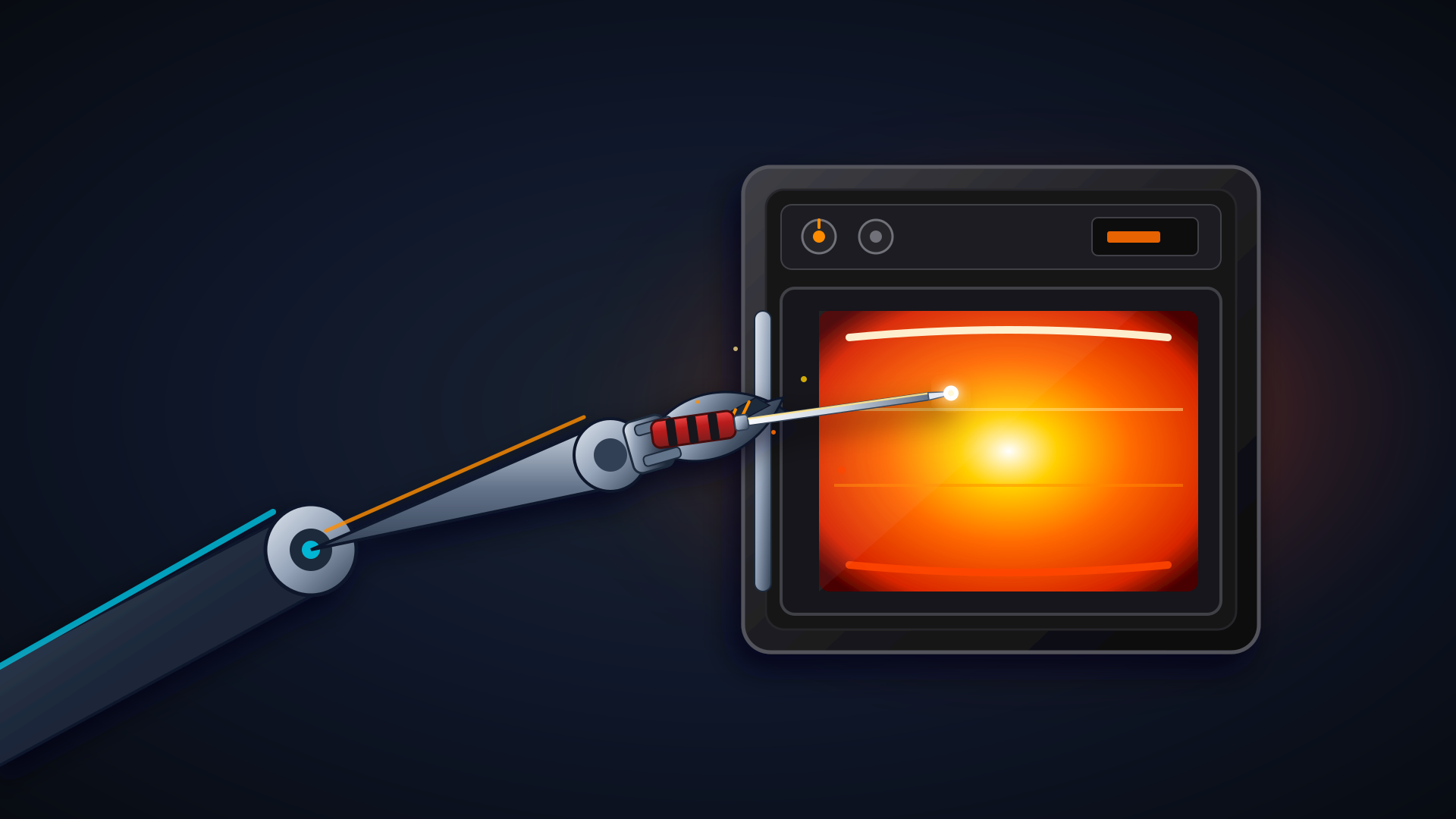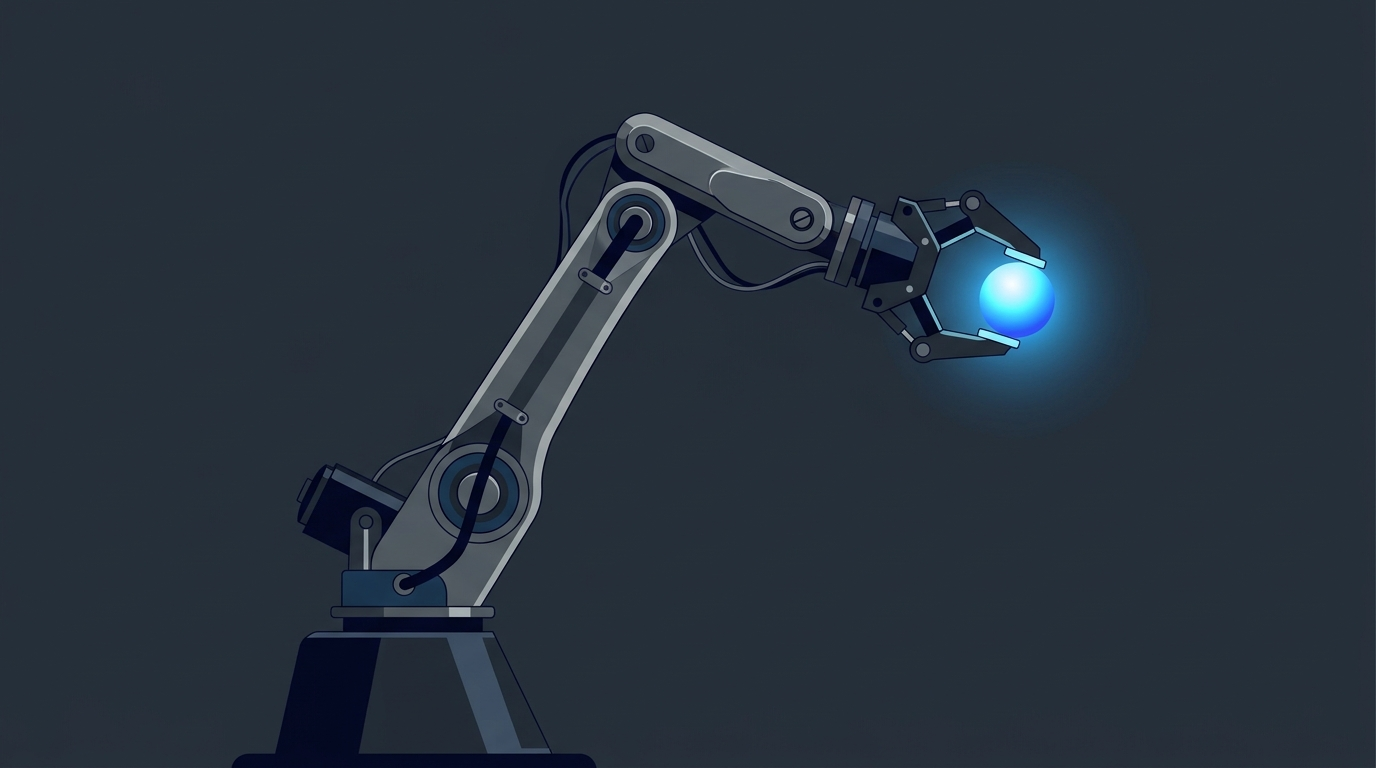
In a robotics laboratory, PR2—an 18-year-old dual-arm research platform—stood motionless. Yet the moment engineers plugged in the newly released Dream-1 API, its parallel grippers reached out, smoothly executing pick-and-place tasks. The engineering team possessed exactly zero training data for this antique hardware.
In October 2026, startup Dream Labs emerged from stealth with a $90 million seed round and opened its universal robot control model, Dream-1, to developers worldwide. The company’s core premise is decoupling the robot’s “brain” from its “body,” using a single generalist policy to command mechanical morphologies it has never seen before. Whoever can make a robot perform useful work on day one will unlock the ten-year bottleneck strangling embodied AI.
Day-One Work on an 18-Year-Old Relic with Zero Training Data
Traditional robot programming resembles coaching marionettes. Swap out a machine, and motor torques, arm lengths, and camera perspectives all change. Even switching between different mechanical arm brands historically required rewriting entire control stacks and rebuilding motion policies from scratch. Teaching an arm to grasp a water cup usually demands thousands of human teleoperation demonstrations on that exact hardware.
Dream-1 sidesteps this cumbersome pipeline entirely. The proposition is straightforward: connect any dual-arm robot equipped with parallel grippers to their API, and it begins executing actions immediately. The workflow eliminates model fine-tuning, hardware-specific demonstration data, and the need for in-house machine learning experts.
The PR2 trial provided the ultimate stress test. Designed nearly two decades ago, its bulky mechanical kinematics bear little resemblance to modern lightweight cobots. Dream Labs had never recorded a single trajectory from a PR2. Operating unseen legacy hardware with an off-the-shelf policy proves that robot control policies are finally uncoupling from specific physical embodiments.
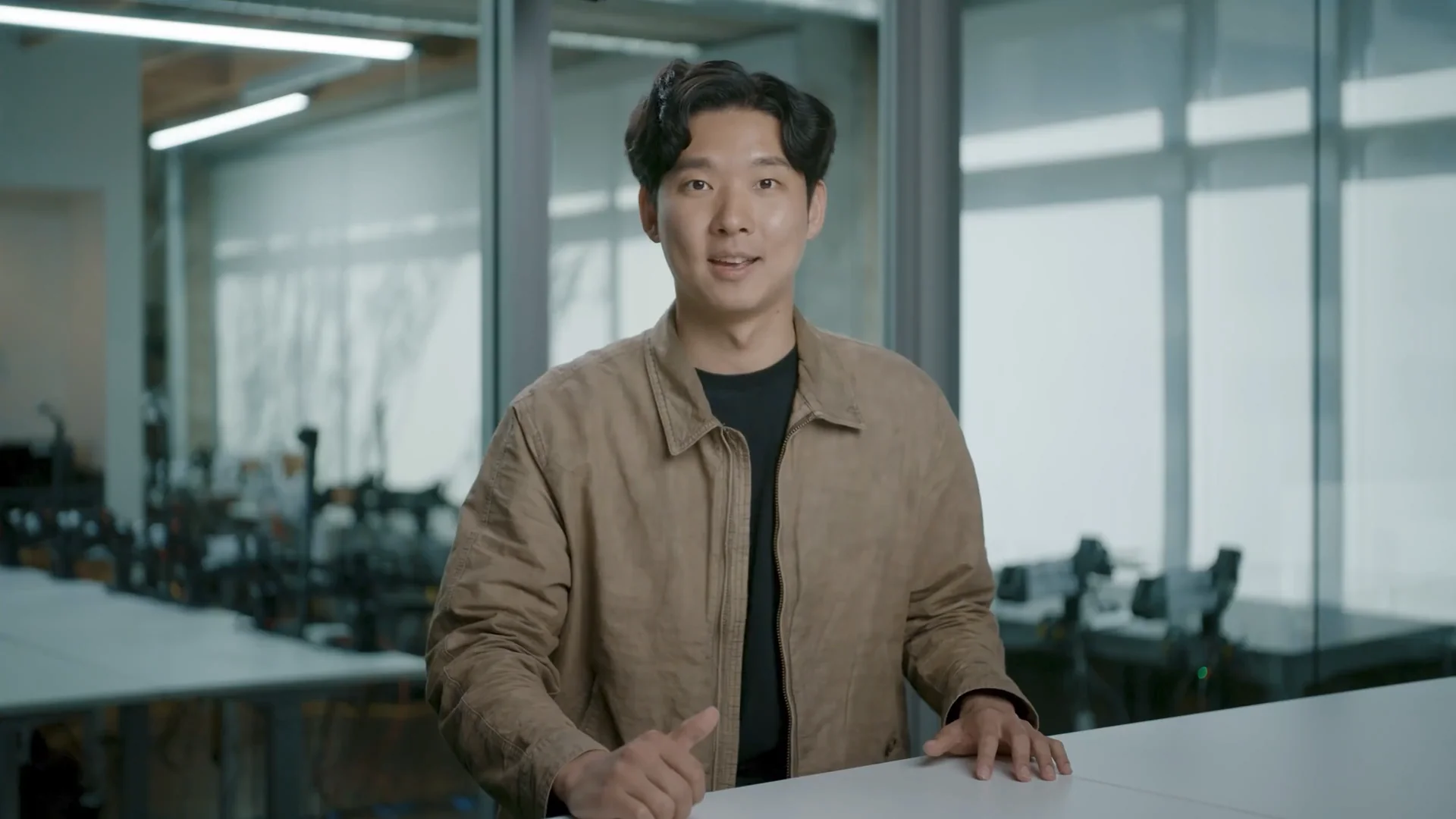 Figure: Dream-1 launch demonstration. Source: Dream Labs
Hardware Falls Below $2,000, Yet Robotics Remains Trapped in a Deadlock
Over the past two years, hardware costs plummeted faster than anyone anticipated. MakerMods drove the starting price of its Maker Arm dual-arm setup down to roughly $2,000, while at least seven semi-humanoid platforms breached the $15,000 threshold. On August 28, 2026, Hugging Face opened pre-orders for its $399 desktop robot Microduck; within four days, sales surpassed 10,000 units.
Affordable hardware is everywhere, but units capable of real-world labor remain exceedingly rare. The industry has long suffered from a classic chicken-and-egg dilemma: without real-world operational data, models remain clumsy; when robots are clumsy, customers refuse to deploy them; without deployed machines running in production, companies cannot collect operational data. No matter how cheap the motors and frames become, machines that idle on arrival remain expensive metal paperweights.
Autonomous driving hit this exact same wall years ago. The inflection point for driver-assistance systems arrived when cars could follow traffic and stay centered in lanes the day they rolled off the dealer lot. By getting vehicles onto public roads immediately, fleets funneled petabytes of driving telemetry back into compute clusters. The promise of a generalist policy lies in clearing this cold-start hurdle: shifting robotics from “collect data before working” to “work on day one, collect data while doing it.”
Learning Actions in 30 Minutes: A Generalist Brain Takes Center Stage
Why did earlier models turn into inanimate statues when swapped into unfamiliar bodies, while Dream-1 achieves plug-and-play control? The secret lies in its predecessor and visual-action representation design. In February 2026, the team introduced World Action Models (WAMs) through DreamZero. The model constructs an internal physical simulation sand table: it perceives that a cup needs to shift 10 centimeters to the left, calculating the required end-effector trajectory dynamically based on real-time gripper positions.
At the time, DreamZero required just 30 minutes of YAM robot demonstration data for post-training before achieving zero-shot generalization to novel tasks. Thirty minutes is barely enough time for an operator to drink a coffee and record a few basic motions; conventional reinforcement learning barely warms up its replay buffer in that window. Compressing post-training down to half an hour demonstrates that the underlying model has internalized fundamental physical interaction dynamics.
This technical stack incorporates three pivotal breakthroughs from academia. First is the Universal Manipulation Interface (UMI) gripper introduced at RSS 2024, which normalizes disparate robot endpoints into a standard camera-in-hand gripper perspective—essentially fitting wildly different mechanical hands with a uniform glove. Second is Latent Action Pretraining (LAP, arXiv 2602.10556), extracting morphology-agnostic action intent from internet-scale human video. Third is RoboCurve’s RoboDojo-RC Tier-1 benchmark, open-sourced on October 18, 2026 under CC BY 4.0, which established a standardized evaluation suite for cross-embodiment policies.
 Figure: Dream-1 research overview visual. Source: Dream Labs
Connecting 12 Global Testbeds: Calling Arms Like an API
To demonstrate real-world viability outside pristine company labs, Dream Labs coordinated a cross-continental field deployment. Beyond 18 internal test suites, they dispatched API access to 12 partner testing nodes worldwide. Asian locations included BitRobot in Shenzhen, AgiBot in Shanghai, KAIST in Seoul, Cortex in Singapore, Eastworld in Kuala Lumpur, and XDOF in Jakarta. Western nodes spanned Hugging Face in Paris, RoboCurve and Scale AI in San Francisco, Robo Inc. in Los Angeles, Mecka in New York, and Anvil Robotics in the Caribbean.
These 12 organizations fielded vastly divergent hardware, spanning different degrees of freedom, control frequencies, and camera mounting geometries. Deploying algorithms across this assortment previously required robotics researchers to spend months on site, calibrating kinematic parameters and collecting fresh datasets machine by machine. With Dream-1, each team initiated mechanical arm movements simply by issuing remote API calls.
This distribution model pulls embodied AI into the realm of modern software engineering. Just as cloud computing APIs abstracted away underlying server architectures decades ago, Dream-1 attempts to mask mechanical tolerances and kinematic variations behind an action API. Once cross-embodiment APIs establish commercial traction, hardware OEMs can save tens of millions of dollars in proprietary robotics algorithm R&D.
Flashy Demos Work, but Three Hurdles Remain Before Factory Mass Production
Behind the massive $90 million seed round and slick demonstrations, sober scrutiny is warranted. Every piece of evidence demonstrating Dream-1’s zero-shot cross-embodiment transfer currently originates from internal tests and selected partner nodes. The research paper establishes no definitive failure boundaries: when encountering reflective metals, transparent glassware, or deformable textiles, the community has yet to see published benchmark tables tracking task success degradation.
The independence of testing environments also invites questions. Among the 12 external partner locations, how many conducted blind trials in cluttered, unstructured daily workflows, and how many relied on curated tabletop staging with tailored lighting? Robotics has long suffered from systems that score perfect marks in controlled demos but flounder in production environments.
Moving from “it moves” to “it works reliably in factories” spans an engineering chasm. Industrial assembly lines and household assistance demand error-free execution across thousands of consecutive cycles. Network latency in cloud-tethered APIs, millimeter-level dual-arm coordination, and dynamic force-control compliance during unexpected collisions all present brutal engineering barriers.
Nonetheless, Dream-1 creates a vital breakthrough. It wrenches the robotics sector away from the trap of building custom brains for bespoke bodies, demonstrating that generalist policies can directly orchestrate unfamiliar machines. If low-cost robotic arms worldwide can manipulate objects on day one, the chronic “data famine” deadlock that has paralyzed embodied AI may finally begin to dissolve.
Reference Links:
- Dream Labs Official Launch and Research Page
- DreamZero: World Action Models Technical Report
- LAP: Latent Action Pretraining (arXiv 2602.10556)
- UMI: Universal Manipulation Interface (RSS 2024)
- RoboCurve RoboDojo-RC Tier-1 Benchmark Documentation