Tripled in Two Years: A Hobbyist Board Hits $385
At $385, a developer’s budget could easily purchase a complete eight-core mini PC equipped with 16GB of RAM and a 512GB NVMe SSD. Today, that exact same outlay buys only a single bare Raspberry Pi 5 board—palm-sized, devoid of an enclosure, and lacking even a power adapter.
When overseas developers convened to debate the adjustment, discussion threads were bluntly titled “When will it end?” When the 16GB Raspberry Pi 5 originally debuted, its official price tag was just $120. Following successive price hikes in April 2026 and recent weeks, the retail price soared to $385—more than triple its original launch figure. A micro-motherboard designed for mass education has unequivocally departed the realm of accessible hobbyist hardware.
The pricing squeeze quickly rippled across industrial modules as well. Compute Module 5 (CM5), tailored for industrial applications, saw an across-the-board increase of $40. The Lite version without Wi-Fi now starts at $375, with on-board eMMC variants climbing in lockstep. The flagship 16GB RAM with 64GB flash model reached $415—an unprecedented price parity with the 32GB tier.
Across the entire product line, the sole model retaining its launch price is the keyboard-integrated Raspberry Pi 500+, steady at $410. Yet that anomaly does little to relieve the escalating cost of standalone boards. School labs that once procured dozens of boards in a single purchase order are now confronting strict budget freezes. The barrier to entry for single-board computing has been fundamentally rewritten.
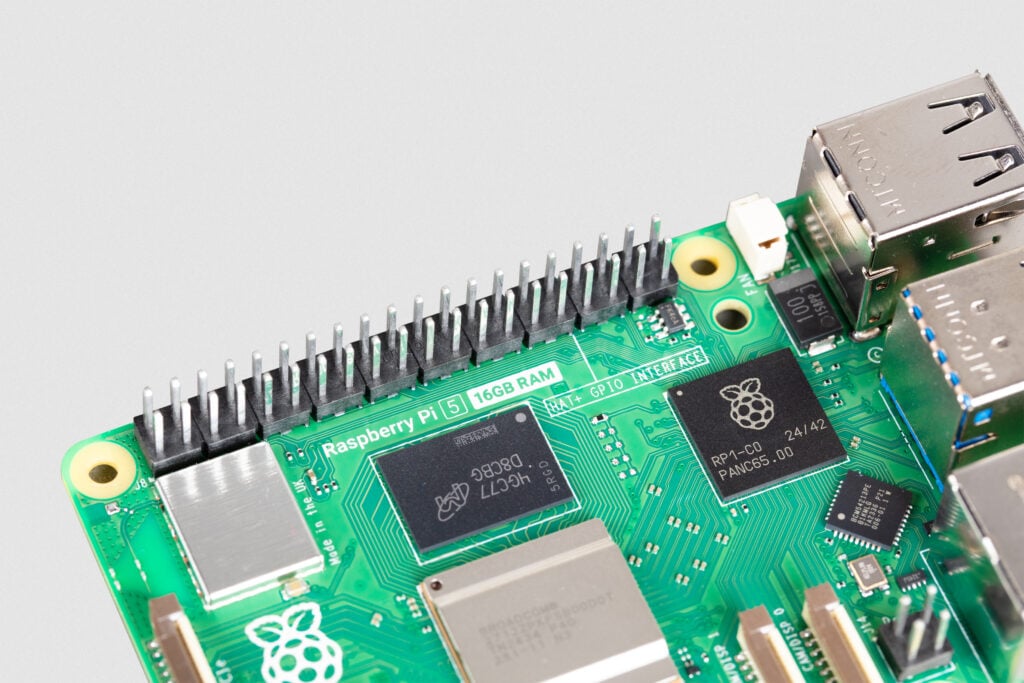 Figure: The 16GB Raspberry Pi Compute Module 5. Source: Raspberry Pi.
AI Data Centers Gobble Up Capacity, Leaving Edge Hardware Behind
Raspberry Pi does not operate semiconductor fabs. The system-on-chip is engineered by Broadcom, while the largest single footprint component—the high-density memory chip—must be sourced directly from global silicon fabricators. As a hardware integrator, Raspberry Pi commands zero pricing leverage over memory components.
The underlying force behind these runaway component costs is the fierce global race for data center AI compute. Training frontier foundation models demands staggering volumes of specialized accelerators paired with high-bandwidth memory (HBM). The dominant trifecta—Micron, Samsung, and SK Hynix—has reallocated advanced cleanrooms and packaging test lines to high-margin hyperscaler contracts. Lucrative enterprise orders now monopolize vital fab capacity.
Wafer fabrication is constrained by strict physical scaling limits, where expanding production lines requires years of lead time. To satisfy soaring data center delivery commitments, chipmakers actively deprioritized output schedules for standard consumer-grade and industrial DRAM.
Consequently, high-density 16GB LPDDR memory dies essential for edge boards turned into rare commodities overnight. Spot market trading mutated into auction-style bidding wars, with suppliers revising quote sheets on a weekly basis. Against hyperscale clients whose procurement scale dwarfs them by orders of magnitude, single-board computer makers hold no bargaining power. Skyrocketing bill-of-materials costs are inevitably passed straight down to end users.
From NVIDIA to SBCs: The Hardware Ecosystem Pays the Price
Raspberry Pi’s dilemma is hardly an isolated event. Since spring 2026, edge computing hardware across the board has buckled under severe supply strain. From industrial carrier boards to student experiment kits, the entire maker ecosystem is weathering an identical wave of inflation.
On April 1, 2026, Raspberry Pi enacted initial price revisions on models with 4GB RAM and above. On July 22, NVIDIA adjusted pricing across its Jetson edge compute modules and developer kits, with flagship tiers spiking as much as 101%. On October 1, Raspberry Pi followed with increases on entry-level 2GB units. By October 19, open-source hardware pioneer Arduino raised the price of its VENTUNO Q development board from $299 up to $399.
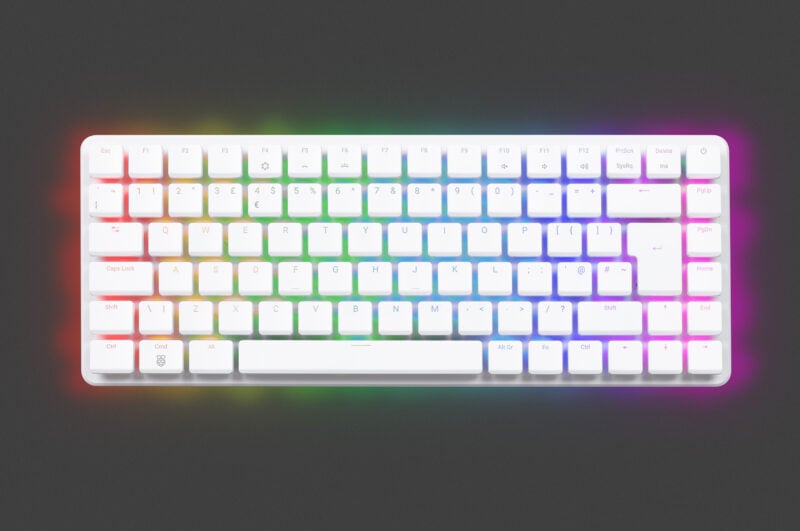 Figure: The Raspberry Pi 500+ keyboard-integrated computer, one of the rare models spared in this round of increases. Source: Raspberry Pi.
Officials offered no formal explanation for how the Raspberry Pi 500+ managed to hold the line at $410. What remains evident is that raw DRAM constitutes the lion’s share of a bare board’s bill of materials—and 16GB happens to sit at the absolute epicenter of this component surge.
Within the community, some suggested stepping down to 2GB or 4GB configurations to protect modest budgets. In practical engineering deployments, however, 16GB represents an uncompromising baseline. Whether deploying local computer vision inference or orchestrating multi-node Robot Operating System (ROS) pipelines, running modern edge stacks requires ample headroom. Downgrading memory often prevents critical software workloads from functioning altogether.
Downsizing Memory or Buying Mini PCs: Developers Crunch the Numbers
Surging hardware costs are forcing engineers to fundamentally re-evaluate system architectures. Sticking with top-tier Raspberry Pi hardware—once paired with an aluminum case, active cooler, and dedicated power supply—pushes total system expenditure close to $450. At that price point, single-board computers surrender their cost-performance advantage in commercial projects.
Many development teams are pivoting toward low-power x86 mini PCs. Mini PCs powered by chips like the Intel N100 retail for under $200 while offering robust multi-core processing and dependable NVMe storage throughput. For general-purpose computation, they shine. Their primary trade-offs lie in the lack of exposed native GPIO pins and an idle draw that sits several watts higher than an ARM single-board computer.
Another emerging design pattern decouples system architecture into tiered components. Developers deploy $5 microcontrollers to interface directly with physical sensors while offloading compute-heavy tasks over local networks to repurposed PCs. While this split architecture introduces communication overhead and debugging complexity, it successfully circumvents the premium levied on high-end boards.
Industrial system integrators face even fewer palatable options. Industrial baseboards and chassis enclosures are custom-tooled around specific board dimensions and pin layouts; swapping compute modules on short notice is practically impossible. Confronted with surging component bills, solution providers can only renegotiate supplier agreements. The ballooning hardware overhead is ultimately absorbed by downstream manufacturing clients.
Fab Giants Warn Shortages Could Last Until 2030: Cheap Compute Pauses
Even more sobering signals emerge from supply chain forecasting timelines. Micron’s latest investor guidance indicates tight memory supplies will persist at least through 2028. SK Hynix paints an even grimmer picture, projecting data center absorption of advanced fabrication nodes could stretch well into 2030.
Sky-high component costs are solidifying into a long-term reality. Over the past decade, the global maker renaissance flourished on the back of smartphone-driven supply chain abundance. Cheap, ubiquitous silicon and sub-dollar components empowered educational microcomputers to democratize computing. Today, that silicon surplus has been aggressively absorbed by enterprise AI.
Vast capital allocations are fundamentally rewriting the distribution rules of silicon manufacturing. Compute is once again becoming a costly capital expenditure, bringing a definitive close to the carefree era of grabbing cheap development boards off the shelf. Every hardware deployment must now be rigorously budgeted before the first schematic is drawn.
The $385 Raspberry Pi 5 marks a definitive turning point. As fundamental component pricing settles at historic highs, the myth of friction-free, ultra-cheap innovation must confront unforgiving commercial realities.
References:
- Raspberry Pi official price adjustment notifications.
- Hacker News community discussions (item 50428801).
- Micron Technology quarterly earnings guidance and market analysis.
- SK Hynix advanced node capacity and server memory roadmap.
- NVIDIA Jetson and Arduino official product price adjustment notices.