Live Starting November 17: 6 Courses in Three Days
On November 17, 2026, Carnegie Mellon University — perennially ranked in the top four CS programs in the U.S. — opened its computer science classrooms to the entire internet. The platform is called CS Learn, and the homepage reads “Carnegie Mellon’s computer science classrooms, open to everyone.” Content comes from seven departments, spanning AI, robotics, systems, and computational biology.
The schedule looks like a release calendar: on November 17, ML Systems and Principles of Software Construction go live; on the 18th, Software Architecture and Quality Management; on the 19th, AI Agents and ML in Production. Add Large-Scale Machine Learning on Massive Datasets and the introductory Principles of Computation, and that’s 8 courses in November, with 5 more lined up for January 2027.
The instructors are the same professors who teach these courses on campus. ML Systems (15-442) is taught by Tianqi Chen and Zhihao Jia — Chen wrote XGBoost and TVM, the former being one of the most widely used tools in the ML ecosystem. AI Agents is taught by Daniel Fried and Graham Neubig, both active at the front line of LLM research.
The platform itself was built by a student team, with the site noting support from the student organization ScottyLabs. An entire top computer science school’s course-opening operation, done by one student crew — the cost of producing and distributing video is now effectively negligible.
Professors posting lecture recordings online is nothing new; Stanford’s famous courses have been piling up on video sites for years. But a full-scale rollout run by the school itself, with a release schedule and broadcast-style presentation, is a different beast. Every recording is a complete semester of classroom footage — following one course through is the equivalent of auditing it for a term.
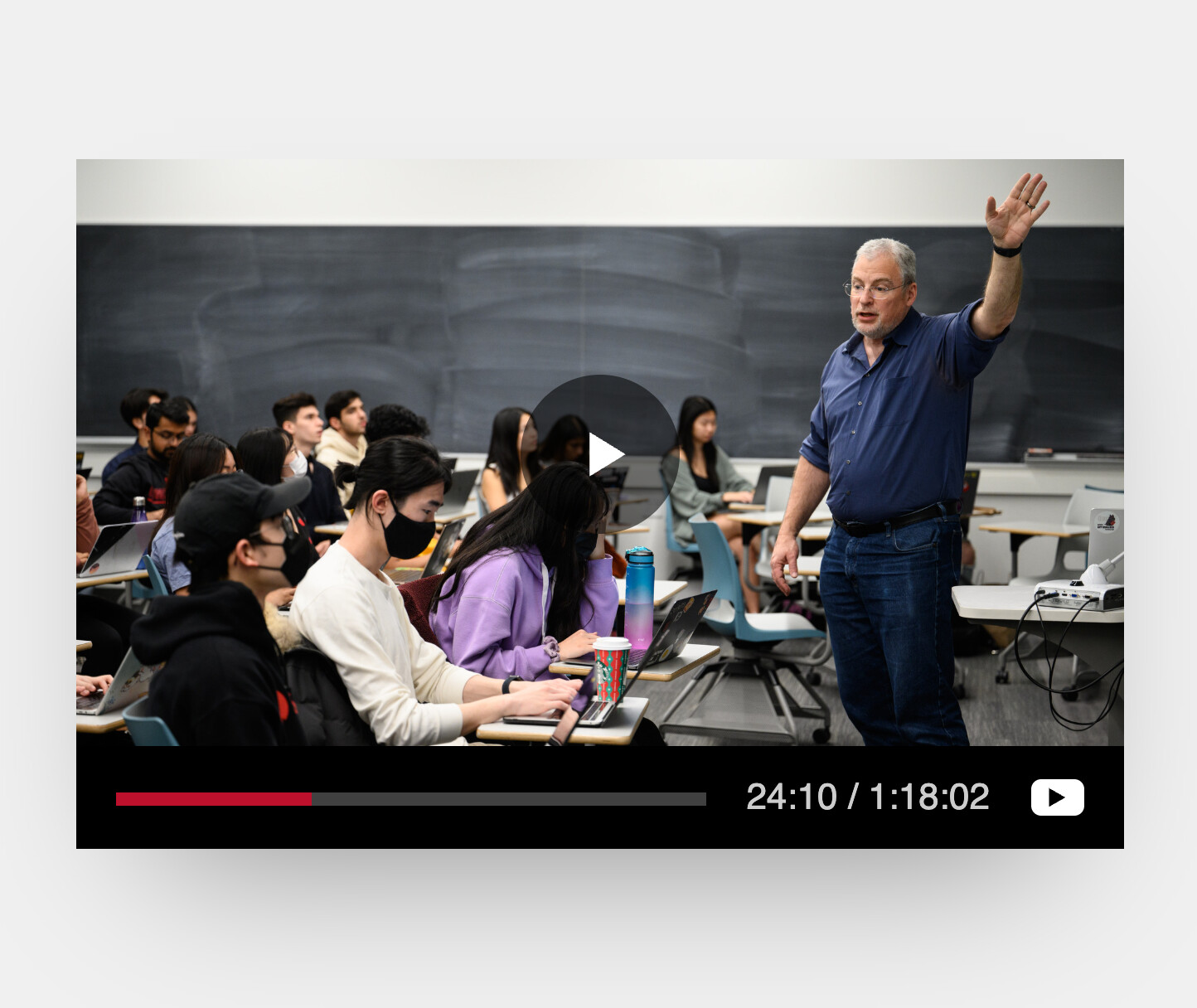 Image: A lecture hall shot featured on the CS Learn site — what goes online is the full semester’s classroom recording, with the professor teaching on camera. Source: CMU CS Learn website
Copying Video Is Free; Degrees Never Were
Serving one more viewer for a 90-minute lecture costs roughly zero: a bit more server traffic, nothing else. Going from ten thousand viewers to a hundred thousand barely moves the bill. The classroom runs on a different ledger: behind every enrolled student sits a seat, TA grading hours, the organizational cost of exams and defenses — and a hard ceiling, since a professor can only teach two or three courses a year.
The price gap is written into that same ledger. A Carnegie Mellon graduate program costs tens of thousands of dollars a year, with CS consistently at the most expensive tier. The marginal cost of one more viewer approaches zero; the cost of one more student is billed by the year.
There’s a more pragmatic layer, too: pirated course materials from top schools have never stopped circulating, and locks don’t hold. If the content can’t be secured anyway, better to give it away yourself and trade it for brand exposure and future applicants. That “open to everyone” tagline on the homepage is half educational posture, half admissions ad.
One Website, Free on the Left, Paid on the Right
That’s where the free part ends. The same site lists four paid entry points side by side: officially certified courses via CMU Online, corporate training through the school’s executive education, full-time on-campus degree programs, and research labs. If you want the school to certify that you learned it — a completion credential, the kind you can put on a résumé — you enter through those doors, and you pay by the program.
Campus degrees still run the old route: apply, get admitted, pay tuition. A self-learner can finish all 8 courses and grind through every assignment, but at the résumé-screening stage they remain an “uncredentialed candidate.” A company wants a trusted guarantor to vouch that “this person is capable” — a viewing history can’t fill that role.
Content and credentials have been split into two products: the former given away, the latter at full price. The dividing line is drawn precisely: recordings, schedules, and homepage slogans on the free side; certification, training, and degrees on the paid side.
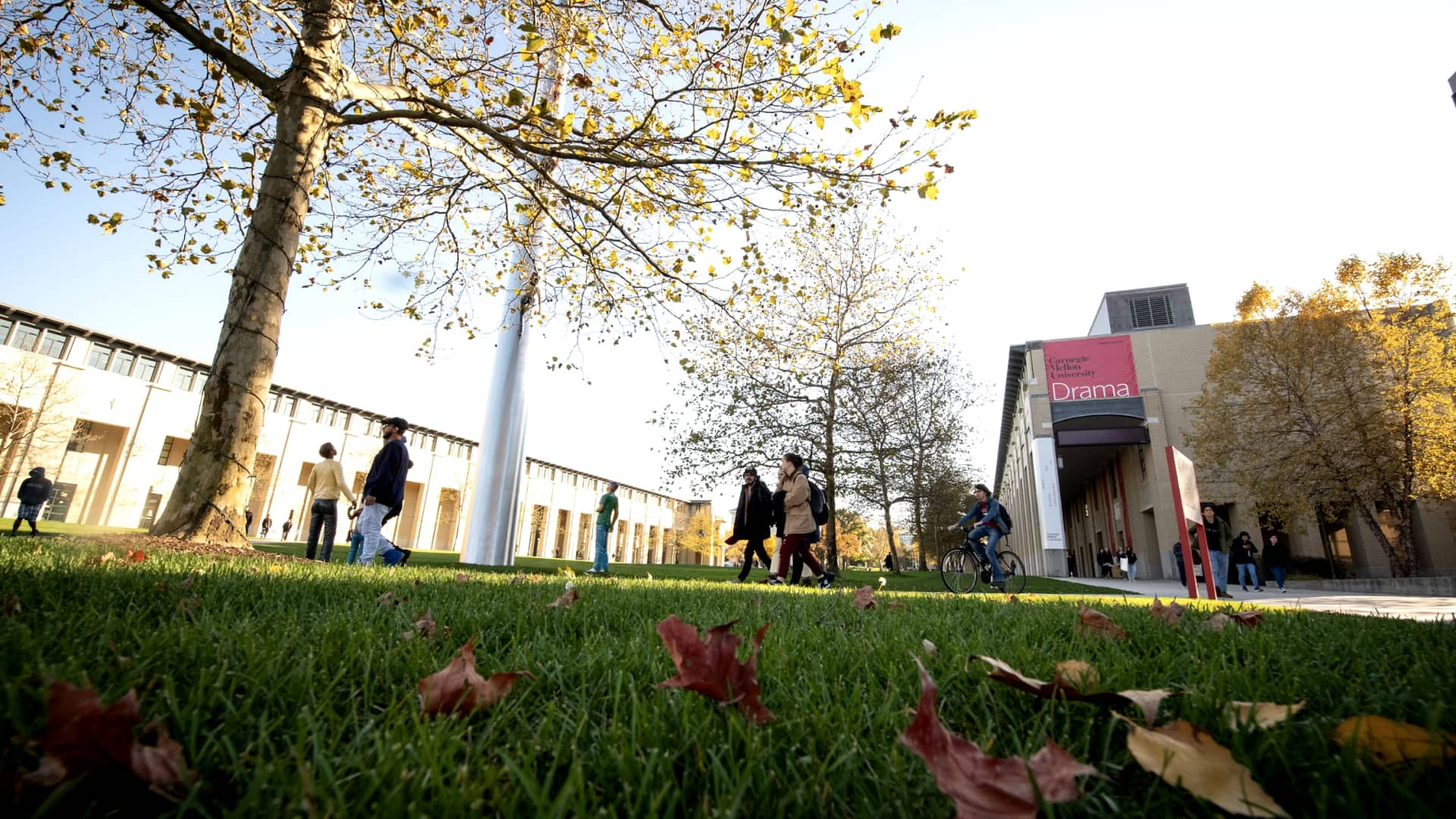 Image: The Pittsburgh campus in person — this is what the paid side looks like. To walk from your screen into this building, the entrance is in the four other buttons on the website. Source: CMU CS Learn website
MIT Went Free 25 Years Ago; the Credentials Never Budged
There’s precedent for this playbook, and it’s been running a long time. In 2001, MIT put lecture notes, syllabi, and assignments on OpenCourseWare — 25 years and over two thousand courses later, the pages still state clearly: no degree granted, no credit earned. The MOOC wave around 2012 turned “watch the videos free, pay for the certificate” into a standard business, with Coursera, Udacity, and edX certificates running from tens to hundreds of dollars apiece. What people paid for was always just the credential.
After 25 years, MIT hasn’t discounted a single dollar of tuition, and U.S. university tuition curves have trended upward across the board. Content has been free for 25 years, and credential prices have only climbed. Udacity pivoted outright a few years later, making paid nanodegrees its core business — traffic goes to free content, revenue goes to credentials. The division of labor in this business was set from day one.
The reason isn’t complicated: credential scarcity comes from selection. A school’s guarantee is valuable because of its admission rate, its attrition mechanisms, and its exclusive authority over grades — none of which can be copied, and therefore none of which can be discounted. Video can be duplicated a hundred million times; an acceptance letter cannot.
Badges First for Free, AI Tutors for Grading
The CS Learn site has teased the next step: upgrading classroom recordings into self-paced interactive courses, with exercises that give instant feedback, badges on completion, and eventually AI tutoring. This step deserves more attention than the videos themselves.
Grading and Q&A are the heaviest labor in a degree’s cost structure: 300 students in one course means a TA team grading assignments for an entire semester. Instant feedback plus AI tutoring moves that work into software — one course can carry a hundred thousand simultaneous learners at a cost still approaching zero. Free learners also have an old, stubborn problem: with recordings there’s nobody to answer questions, and most people quit halfway. AI tutoring plugs that gap, letting non-payers actually finish.
The badge is the most delicate piece: it’s a lightweight credential issued by the school, sitting between “I watched it” and “I have a degree.” Given away, it’s a customer-acquisition tool; priced, it’s a new tier extending the credential system downward. Whether badges stay free is the first signal of whether that free boundary is moving.
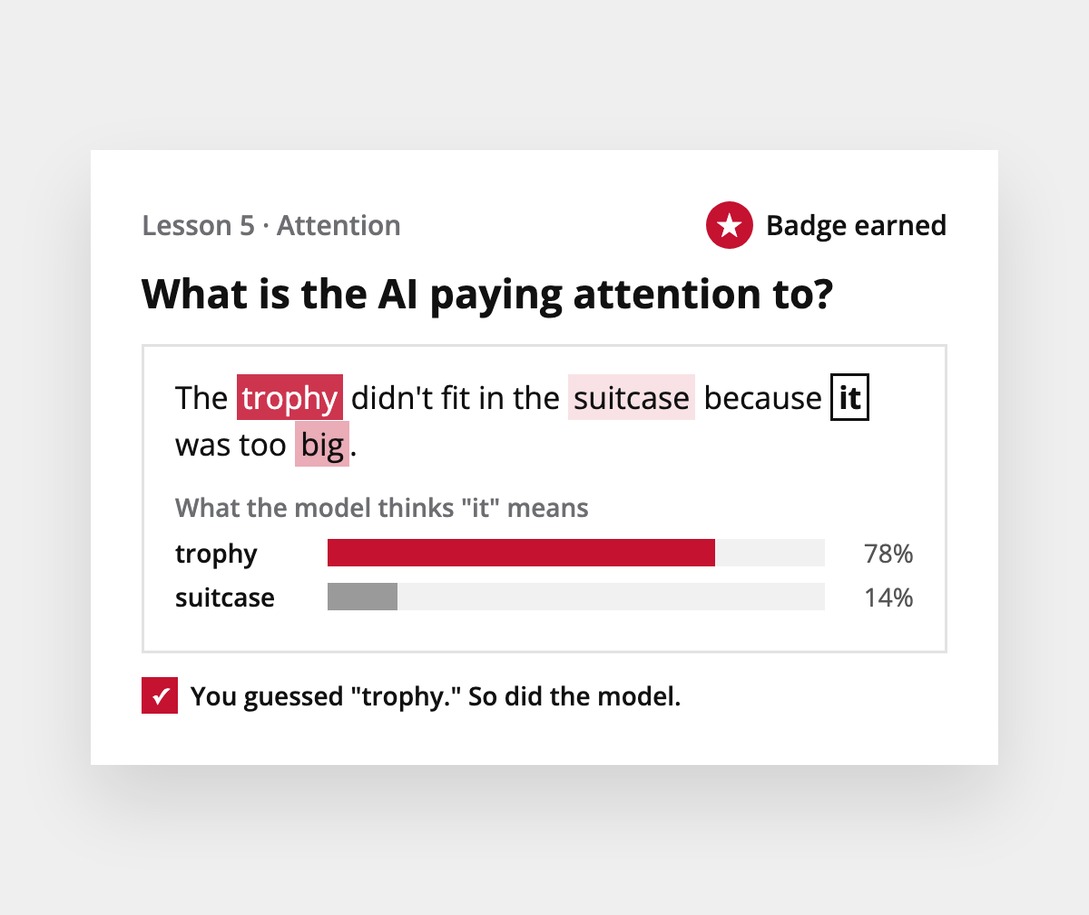 Image: The self-paced course interface teased on the website — algorithm exercises with instant feedback and badges on completion. This is the transition layer between free content and paid credentials. Source: CMU CS Learn website
The signature step was saved for last. Once interactive courses, instant feedback, and AI Q&A are all in place, only one difference remains between free and paid: who signs for you.
Knowledge Is No Longer Scarce; Credentials Still Are
The gap between self-learners and credential holders comes down to signing authority. An interviewer can’t spend forty hours verifying what a stranger knows — someone has to vouch on their behalf. Schools make that guarantee real through admissions, exams, and defenses, then keep the signing power for themselves. The core asset of this business is the right to sign; the classroom recordings are just its ad space.
CS Learn has铺ed — spread that ad space across the entire internet, and left the cash register where it was. For learners, this is a top computer science school handing over a free education, worth lining up for. For the school, it’s a good trade: what’s given away has stopped being valuable, and what’s kept has never stopped being valuable.
If you want to understand what a university is really selling, just look at which paid entry points share its homepage. CS Learn has let “learning” out the door — and kept “proof that you learned” inside it.
References:
- CMU CS Learn homepage and course schedule
- Carnegie Mellon School of Computer Science website
- MIT OpenCourseWare project description