An Hour Before the Talk, the Machine Died — No Error, No Anything
On September 7, 2007, Mike Masnick was rushing out the door for a talk when he found his two-month-old ThinkPad z61t refusing to wake: the sleep light wouldn’t come on, the battery light stayed dark even with the charger plugged in, the chassis was hot, and the power button did absolutely nothing. He pulled the battery and reinserted it — still black screen. With an hour to go before he took the stage, the machine gave him no error message, no beep, no log entry. Nothing.
He called IBM support, and the person on the line simply recited a sequence: unplug this, remove that, press this many times, hold this long — an incantation that would keep circulating for 18 years.
Unplug, Pull the Battery, Press 10 Times, Hold 30 Seconds
The sequence support recited, in their exact order: disconnect the power adapter, remove the battery, press the power button 10 times at one-second intervals, then hold it down for 30 seconds, reinsert the battery, and press the power button to boot. The whole ritual takes under two minutes, requires no tools, and uses exactly one instrument: a finger. Masnick followed it, and the machine came back to life.
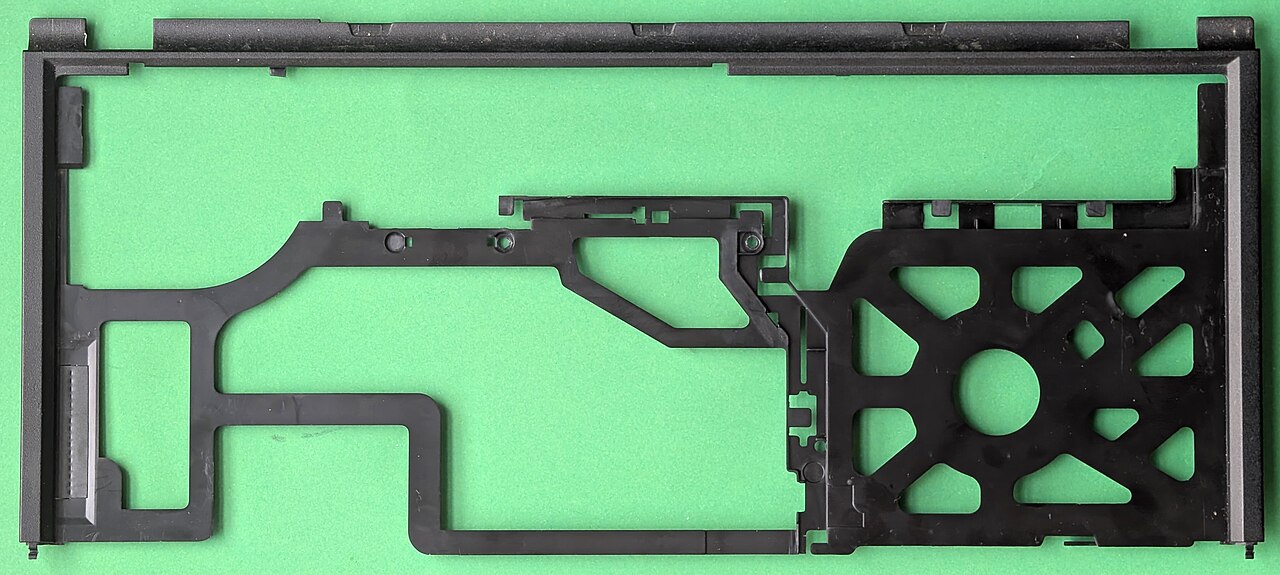 Image: Top-down view of a ThinkPad keyboard, with the power button at the upper right. Every step of the ritual happens within this palm-sized area — not even a screwdriver is needed. Source: Wikimedia Commons
The sequence has two phases, each with its own job. The 10 short presses act like a series of pulses delivered to the power circuitry; the 30-second hold drains residual charge from the motherboard while forcing the chip that governs power into a reset. Every laptop contains a small chip that starts work before the operating system ever does — the Embedded Controller, or EC. It handles power button response, battery charging and discharging, and fan speed, and it stays on duty even after shutdown. A machine that “dies so completely that even the lights go dark” is usually this chip getting stuck: the EC is the very component responsible for reporting errors, and when it hangs, the machine loses its ability to speak.
A sequence of key presses read out over a phone line operates at a layer invisible to the operating system and unreachable by diagnostic tools. The user has no logs, no error messages — only steps passed from mouth to mouth. This is the rawest form of factory reset in consumer electronics.
All Support Could Offer Was Four Words: Static Discharge
When Masnick asked why it worked, the answer came back as four words: static discharge. He pressed further, and the agent admitted the truth — you know as much as I do, but your machine works now.
That admission draws a clear line of information stratification: the procedure lives in the support knowledge base; the explanation doesn’t. Frontline agents can recite the steps but can’t explain them; users get the operation but not the reasoning. Eighteen years later, that boundary hasn’t moved.
The vendor may have its own accounting for leaving the docs unwritten: explain the mechanism clearly, and you owe the obligation to justify it; fail to explain it, and you invite the doubt. A four-word “static discharge” sits neatly in between — sounding like an explanation while saying nothing at all.
18 Years, a Dozen Models, the Same Key Presses
The blog’s comment section later became a public test bed. The earliest confirmation came in January 2008; the most recent batch stopped in 2015. In between, more than a dozen models checked out: z61t, T41, T43, T60, T61, T500, T430, X41, X200 Tablet, plus a few non-ThinkPad laptops. One commenter followed the steps and revived a Lenovo laptop that had been dropped and never booted since.
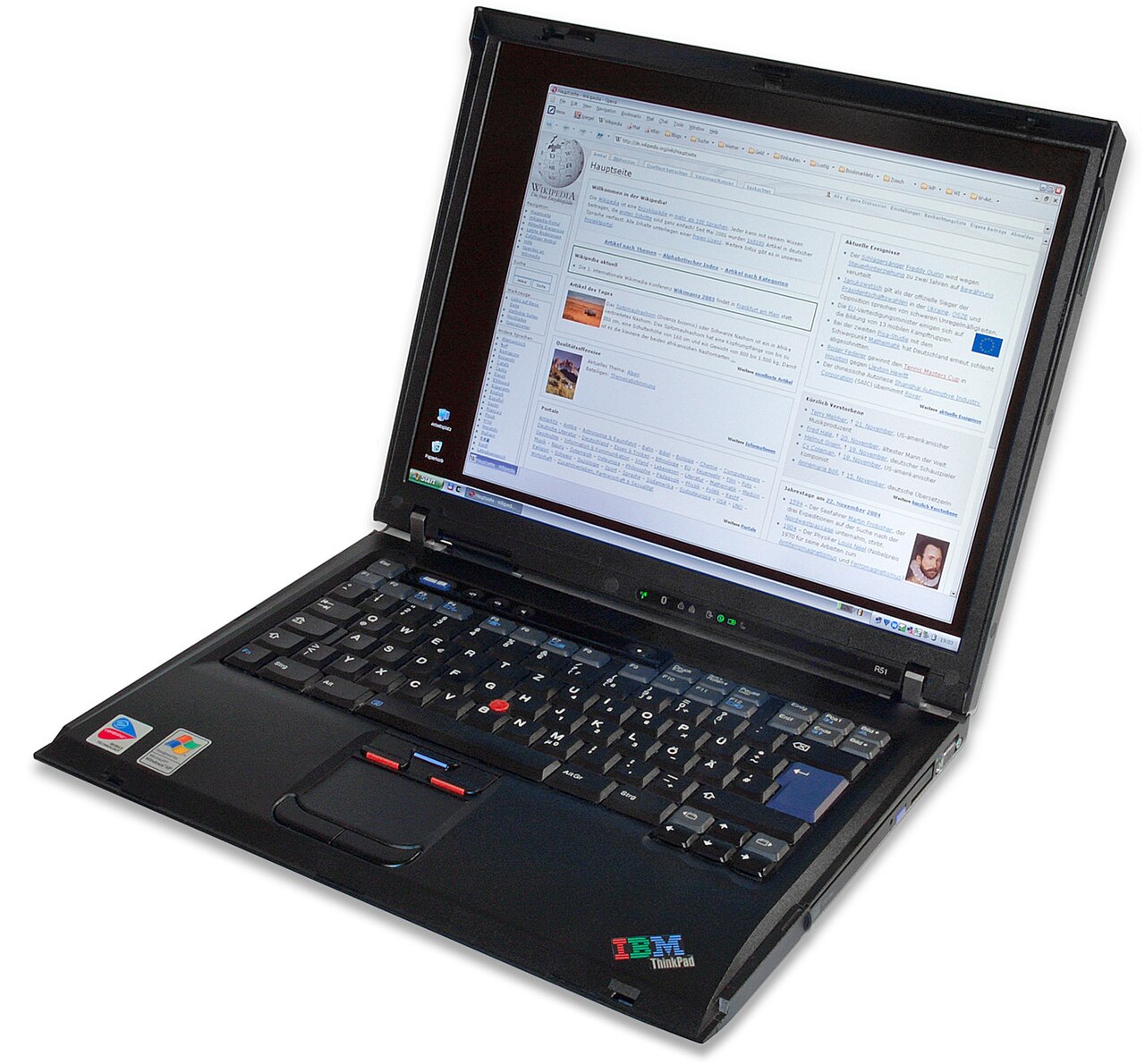 Image: A ThinkPad R51 from the IBM era. The T41, the earliest model confirmed to respond in the comments, shipped still wearing the IBM badge — this ritual predates Lenovo’s takeover of ThinkPad by years. Source: Wikimedia Commons
The T41 shipped around 2004; the T430 around 2012. The two generations share almost no parts — different motherboards, batteries, firmware — yet the same sequence worked on both. The reset mechanism for this state machine didn’t change in a decade — it’s too old to need changing, and too deep for anyone to want to touch it. No official announcement, no documentation update; the sequence spread along a single channel: support calls and reader comments.
When the Incantation Fails, Go One Layer Deeper
The comment section also records failures. One T60p and one T410 each had a case where the sequence did nothing: in one, the fix was finally pulling the coin-cell battery on the motherboard — the CMOS battery, which keeps the clock and BIOS settings alive — cutting the very last power path before the machine came back; in the other, reseating the memory got it booting again.
Those two failures lay the machine’s layers bare: the operating system, the BIOS (the firmware that runs before the OS), the embedded controller, the physical power rails — one wrapped inside another. The incantation reaches the EC and the main capacitors; the CMOS circuit holds one last independent power source, requiring a teardown to cut; a stuck memory module has nothing to do with power, and needs its contacts touched up again. Each layer down, there are fewer logs, fewer tools, and the operation drifts further from language. At the very bottom, the only diagnostic instrument left is a screwdriver.
The 30-Second Hold Exists Because You Can’t Count Seconds on a Phone
A community discussion surfaced an explanation that has nothing to do with circuitry: the generous hold duration is mainly slack for the person on the other end of the line. Under stress, people count seconds far too fast — if support says “hold for 3 seconds,” most people let go after about 1. Write “10 seconds” or “30 seconds” into the instructions, and the odds that users actually hold past 3 seconds become high enough.
The timings in the incantation are half circuit parameters, half support scripting. The vendor knows the distortion rate of phone-based guidance and simply built the redundancy into the ritual. Later, when batteries were sealed into the chassis and the pull-the-battery step became impossible, Lenovo cut a pinhole reset opening — poke it with a paperclip and hold for ten-plus seconds. The same state machine, through a smaller door.
Recite it and it works; nobody can say exactly why. The vendor hasn’t added a single line of explanation in 18 years, yet the incantation keeps passing down, generation after generation. For a machine that can’t speak, “it fixed the problem” is its only documentation — and the incantation will circulate for as long as that documentation stays blank.
References:
- Techdirt: Mike Masnick’s original blog post (September 7, 2007)
- Blog comments: reader confirmations and failure reports, 2008–2015