
“I wrote the Internet Pizza Server in 1994, and I’m genuinely impressed by the state of simulated web food thirty years later.” In a tech discussion thread, Beej Jorgensen, author of the legendary network programming tutorials, left this reflection. What prompted his visit and admiration was a German web toy entirely devoid of commercial intent.
When the webpage loads, a German prompt appears: “Brot wird geschnitten …” — your bread is being sliced. Moments later, a virtual butter knife hovers above a slice of sourdough rye. The page provides only minimal guidance: push the blade, spread the toppings.
This playful experiment, dubbed Stullensimulator, carries no conversion metrics or corporate OKRs. Instead, it pours serious fluid drag and soft-body collision physics into a classic German open-faced sandwich. Its true adversary: the ubiquitous utilitarianism dominating modern software engineering.
Spreading Butter with Physics Engines: A Playful Pushback Against Utilitarianism
Along the bottom panel sit two neat rows of hand-drawn ingredients. One row offers five spreads: butter, strawberry jam, hazelnut chocolate spread, quark, and liverwurst. The other displays four solid toppings: salami slices, hard cheese, cooked ham, and fresh cucumber rounds.
Clicking a jar coats the tip of the knife in thick spread, requiring another dip once the blade runs dry. Holding the handle and dragging across the dark bread slice leaves behind translucent swatches that track your brushstroke. The spread thickness dynamically calculates from mouse velocity—a sharp departure from traditional web texture swapping.
Drag a slice of salami onto the loaf, and the physics engine takes full control. Users can freely rotate the cold cut using a handle or fine-tune angles with the desktop scroll wheel. If a topping is still wobbling when released, gravity nudges it off balance, causing it to slide smoothly onto the table below. Dragging ingredients off the screen edge registers naturally as discarding them.
Open the site on an aging mobile phone, and a dry warning pops up: this device cannot spread butter; perhaps try another. Spreading, rotating, and soft-body tumbling are calculated live within the browser. Spending scarce device FLOPs to simulate viscous butter knife resistance is, in itself, a delightful provocation against conventional performance optimization dogma.
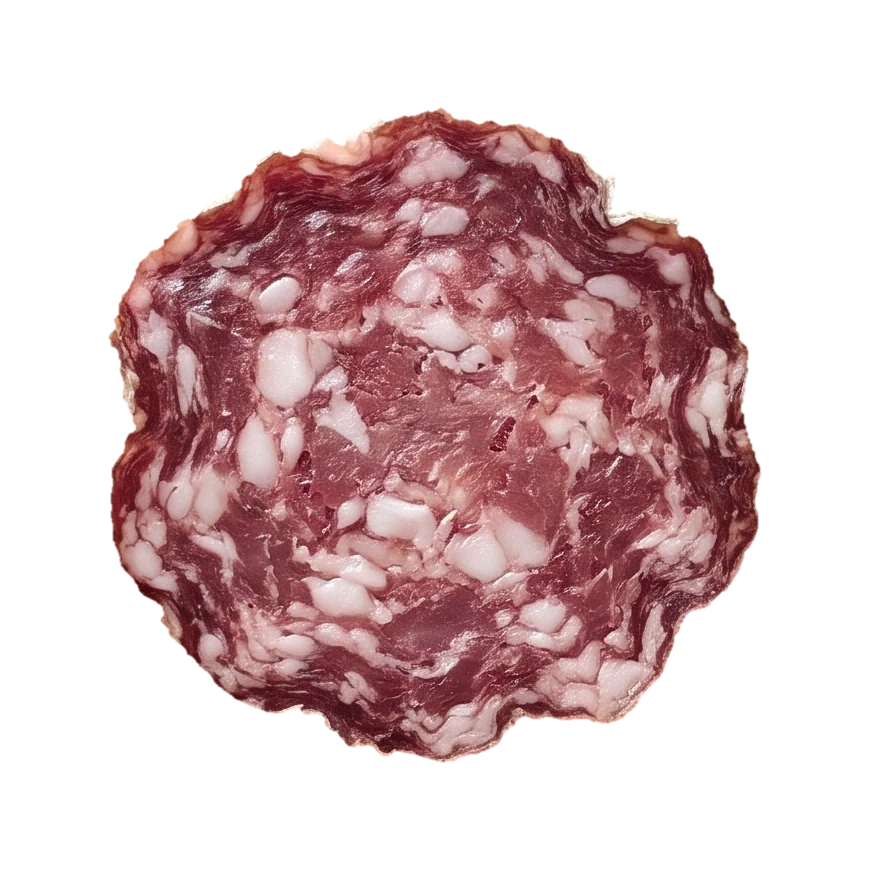 Ingredients inside the simulator (salami). Source: Stullensimulator
Echoes Across 32 Years: The 1994 Pizza Server Finds Its True Heir
Back in 1994, Beej Jorgensen leveraged early CGI specifications to launch the famous Internet Pizza Server. In the dial-up era of Netscape Navigator, web surfers could tick checkboxes for onions and pepperoni in an HTML form for the very first time. Clicking submit triggered backend scripts that composited low-resolution GIF slices onto a pie.
Thirty years later, Stullensimulator pulls that entire pipeline inside client-side browser memory. Thirty years ago, form interactions were single-shot transactions. Today, spreading and layering form a continuous mechanical continuum. What once took seconds of remote batch rendering now rerenders locally at a crisp 60 frames per second.
The community quickly leaned into classic internet lore. In 2007, an infamous Domino’s online glitch gave birth to the enduring “None Pizza with Left Beef” meme. One software engineer diligently recreated the masterwork in the sandwich simulator: a bare bread slice, piled on the left with sliced meats, immortalized at permalink stulle.app/32681.
The snapshot architecture is remarkably lightweight. Hitting the camera icon packages the tabletop arrangement into a shareable JSON state. While the 1994 server had to compile an image on a remote server before sending it down the wire, modern web capabilities allow a single hashed link to recreate the identical physical sandbox on another machine.
Is an Open-Faced Bread a Sandwich? Code Ignites a Cultural Skirmish
As traffic surged, discussion threads fractured into two passionate culinary factions. The debate had little to do with JavaScript frontend frameworks and everything to do with taxonomy: without a second slice of bread capping the top, does this creation truly earn the title of “sandwich”? A serious technical forum spontaneously transformed into a heated debate over dining traditions.
Traditionalists defended the cultural boundaries of German cold cuisine. In German foodways, this single slice is a Stulle—the unshakeable foundation of Abendbrot. Under local convention, a single slice dressed in butter or Leberwurst is strictly an open-faced construct. Without a top lid, it remains simply “Brot mit …” (bread with toppings), entirely distinct from the Anglo-American sandwich construct.
Pragmatists dismissed these rigid classifications out of hand. To them, unconstrained play and digital deconstruction form the very core of web toys. Commenters submitted sprawling feature request lists, petitioning the creator for mashed avocado, French Camembert, and Sriracha—along with urgent demands for a second bread slice to close the lid.
The two camps traded banter without once nitpicking bundle sizes or rendering speed. The author preserved the single-slice baseline, leaving space for diverse cultural preferences to unfold on canvas. The closer a digital interaction mirrors everyday physical nuances, the more resonance it sparks beyond mere technology.
 Spread jars in the simulator (hazelnut cream). Source: Stullensimulator
Stacking Twelve Slices of Ham: Physical Realism Meets Frame Drops
Sophisticated soft-body dynamics produce delightful tactile sensations, but they also strain mobile hardware. Several mobile visitors uncovered the limits: stacking twelve overlapping ham slices across double bread bases sent frame rates tumbling. Long after releasing a touch gesture, top slices continued to slide and settle under lingering inertial forces for up to 20 seconds.
Faced with performance bottlenecks, community comments responded with playful wit. Fellow engineers joked that the sluggish response felt remarkably true to life: a hyper-realistic simulation of digestion, mimicking a human stomach coping with two thick bread slices and an excessive heap of cold cuts. An engineering constraint was cheekily reframed as biological accuracy.
The creator soon joined the thread to clarify runtime constraints. The author acknowledged candidly that multi-layer rigid bodies cause computational overhead on mobile chipsets. When overlapping bounding meshes produce constant micro-displacements, the physics solver must repeatedly execute deep contact traversals. Contact detection algorithms on low-power devices certainly have room for optimization.
Resolving complex multi-body kinematics within a single-threaded mobile browser loop is notoriously unforgiving on 60 FPS targets. Yet these dropped frames represent the honest engineering cost of uncompromised simulation. Rather than cutting corners with static image swaps, the creator insisted that every slice of ham actively participate in live physics.
In a Web Obsessed with Monetization, Playful Uselessness Triumphs
Modern web engineering is almost entirely subjugated to commercial monetization metrics. Tracking pixels, analytics funnels, and marketing scripts bloat modern bundles as engineering teams labor to shave milliseconds off checkout workflows and maximize modal retention. Utility reigns supreme.
Stullensimulator enters like a traveler from a forgotten digital era. There are no banner advertisements, no telemetry trackers, and no onboarding walls demanding account registration. Every line of code exists purely to lend grease a lifelike sheen and give falling salami natural bounce.
Thirty years ago, early web hackers built pizza servers out of raw fascination with the World Wide Web. Three decades later, crafting sandwiches inside the browser carries that same joyful spirit forward. In an ecosystem dominated by utility, this delightful toy reclaims the web’s founding innocence.
Reference Links:
- Stullensimulator
- Hacker News Discussion