In August 2026, the People’s Court of Xinmi City in Henan Province sentenced seven defendants to prison terms ranging from one to four years for contract fraud. Behind the operation was an ad-hoc syndicate with zero qualifications in lithium-ion battery manufacturing. Beginning in March 2025, the group defrauded 64 victims of more than 1.3 million RMB in under a year and a half.
A Green-Tech Gold Rush Packaged for Social Media
The operation kicked off with targeted franchise advertisements on short-video platforms. Pitches promising “low investment, quick startup, and work-from-home earnings exceeding 10,000 RMB a month” resonated powerfully with people seeking supplemental income. Ordinary manual assembly labor was deliberately rebranded as cutting-edge “OEM manufacturing for green energy lithium batteries.”
After visiting on-site facilities, prospective victims were persuaded to put down deposits ranging from several thousand to tens of thousands of yuan. In one case disclosed by police, a single victim handed over more than 19,000 RMB. The steep deposit threshold effectively filtered for individuals with savings but little domain knowledge in battery manufacturing.
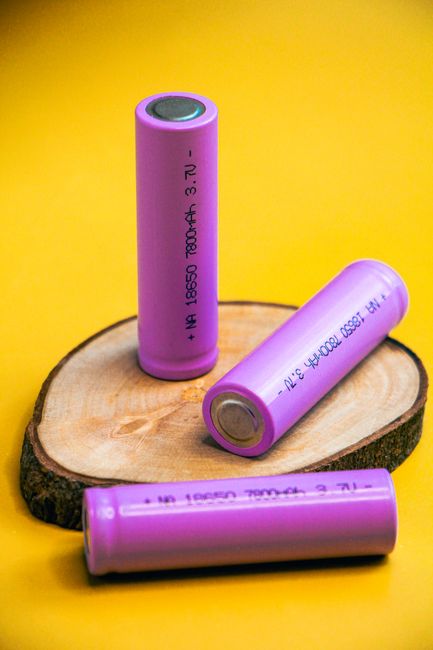 Image: Promotional tactics used in the lithium battery assembly scam. Source: CCTV Finance (Broadcast screenshot)
Rigged Inspections and the Deposit Trap
The scam operated on a foundation of one-sided contract clauses designed to eliminate recourse. After receiving raw materials and following the assembly steps taught during training, victims submitted their finished packs for inspection, only to have every single unit rejected.
The company invariably cited microscopic dimensional variances or inadequate sealing. The contracts granted the company absolute discretion over inspection standards, wiping out the value of the victims’ labor with a stroke of a pen. After months of tedious assembly work, victims received zero compensation for processing fees. Worse, their substantial initial deposits were forfeited under the pretext of “breach of contract.”
Unqualified Workshops Exploiting the Knowledge Gap
The police investigation exposed the reality behind the high-tech facade. None of the seven syndicate members possessed any legal credentials for battery production. The materials supplied to victims were scrap leftovers and low-grade fillers meant solely to add weight.
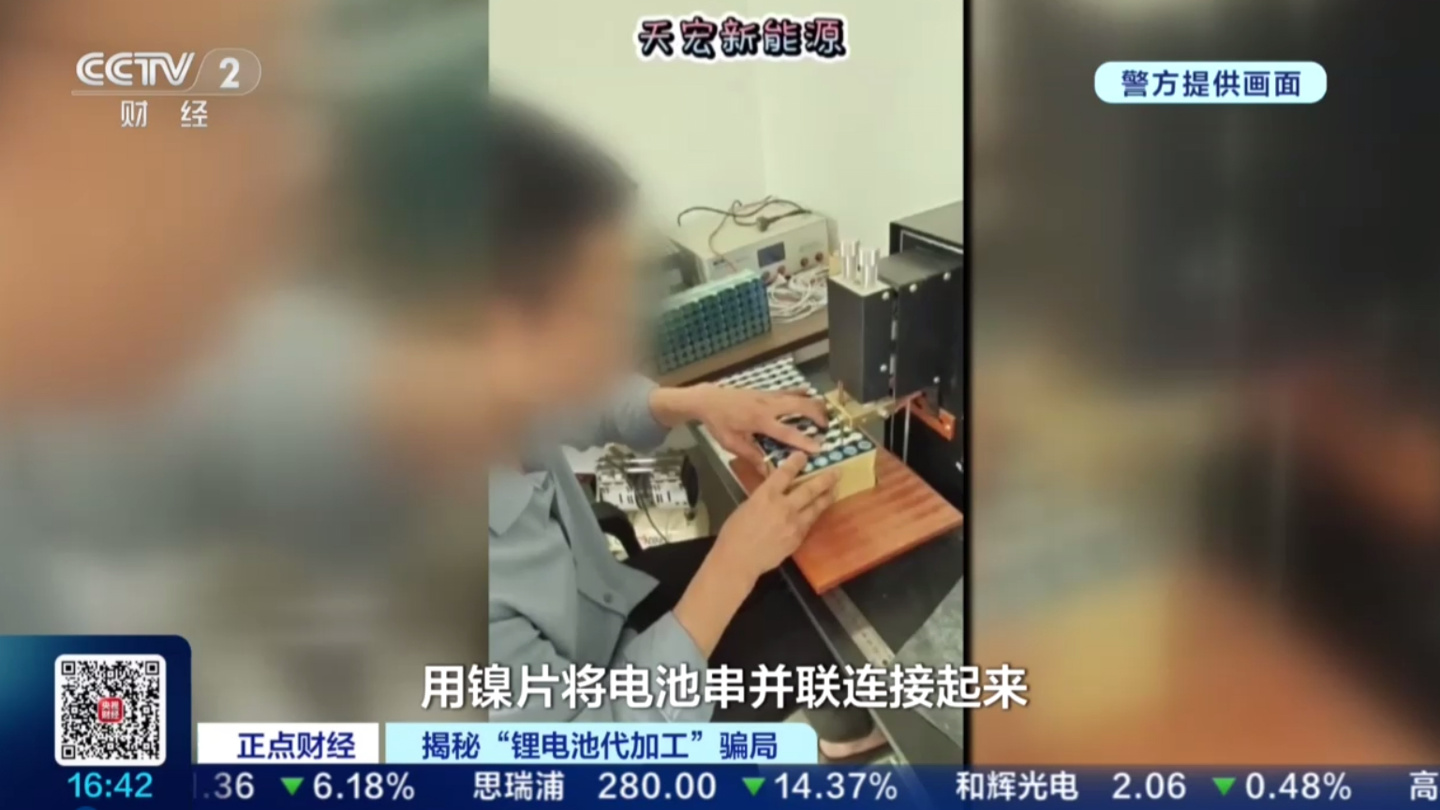 Image: The alleged finished battery packs assembled by victims. Source: CCTV Finance (Broadcast screenshot)
The fraudsters fabricated an entire supply-chain narrative to siphon off deposits. The general public’s unfamiliarity with complex technical jargon created an ideal smokescreen for outright fraud. By draping itself in the mantle of high-tech manufacturing, an age-old franchise trap found a new wave of vulnerable targets.
Legal Crackdown on the Grey-Market Blind Spot
The ruling by the Xinmi People’s Court drew a clear legal boundary between ordinary commercial disputes and criminal contract fraud. Prison sentences of one to four years signal a concerted effort by the judiciary to penalize fraudulent schemes cloaked in legitimate-looking contracts.
While the legitimate battery industry advances toward high-voltage fast charging and greater energy density, illicit operations are repurposing hazardous scrap materials, creating serious safety risks. The court’s verdict eliminates one route through which substandard batteries infiltrate lower-tier markets.
The proliferation of battery assembly scams highlights the vulnerability of regional markets during industrial booms. When legitimate public interest in green energy is weaponized through technical jargon, the information asymmetry enables brazen wealth extraction. Strip away the high-tech veneer, and the scheme is revealed for what it has always been: a classic deposit trap.
Reference links:
- CCTV Finance coverage
- Public ruling of Xinmi People’s Court, Henan Province