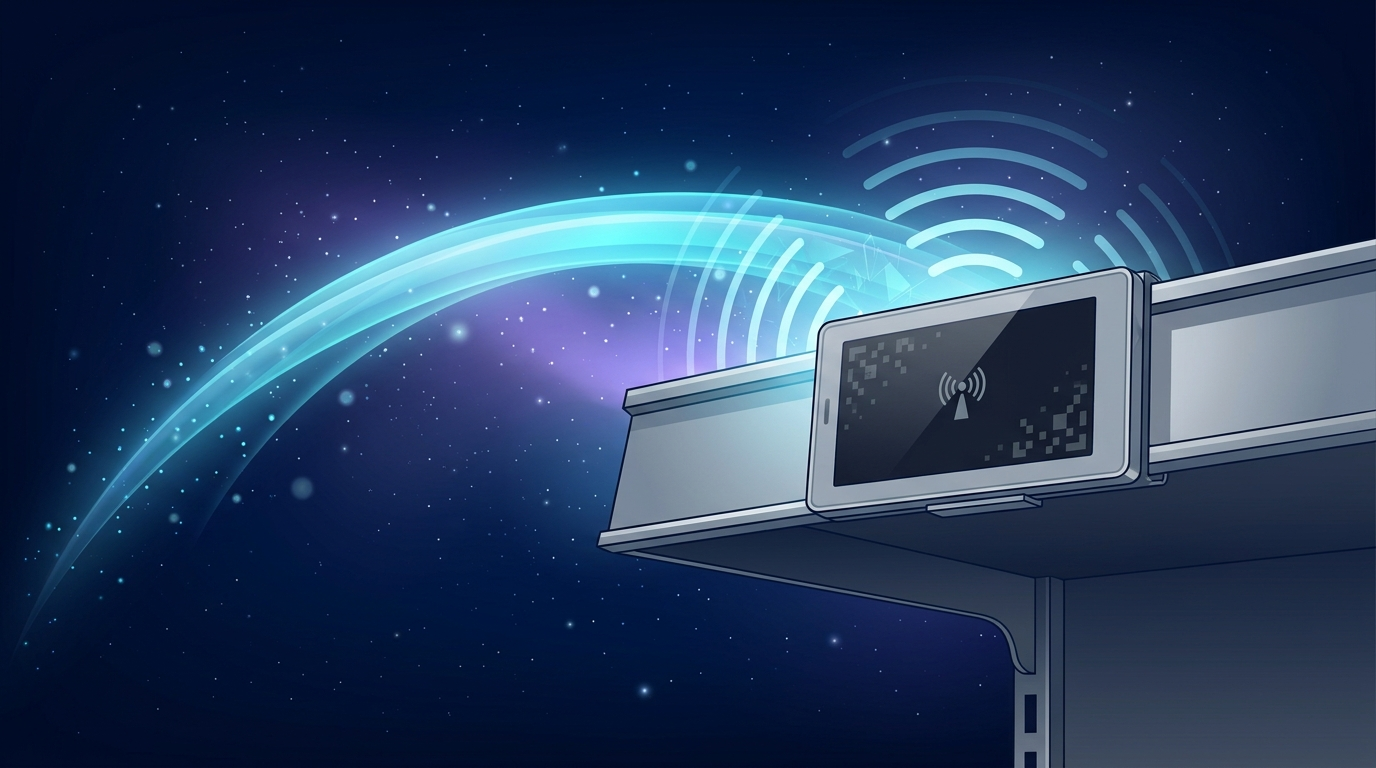
From October 22 to 24, 2026, the 2nd Consumer Electronics Innovation Conference (CEIC 2026) and the International SparkLink Alliance Industry Summit opened at the Shenzhen Futian Convention and Exhibition Center. Within the official Hall 9 floor plan and three-day program agenda, a new air interface specification emerged: NearLink 3.0 Passive SLZ. Sharing the stage were SparkLink electronic paper, NearLink unstaffed retail solutions, the release of the SparkLink SLE 3.0 Technical Standard Evolution White Paper, and digital key architectures for two-wheeled vehicles.
Over the past three years, public awareness of SparkLink (NearLink) has largely centered around 4K-polling-rate gaming mice, styluses, and automotive digital keys. Regardless of how low their power consumption is, each terminal still requires a lithium or coin-cell battery. With NearLink 3.0 introducing the Passive SLZ air interface alongside electronic paper systems, this domestic wireless short-range standard is expanding beyond active consumer peripherals into zero-battery industrial and retail IoT infrastructure.
 Figure: The main visual of CEIC 2026 and the SparkLink Industry Summit, themed “SparkLink AI: Connecting Everything Intelligently.” Source: International SparkLink Wireless Short-Range Communication Alliance.
Completing the Fourth Air Interface: NearLink Targets Zero-Power Tags
Reviewing current technical specifications published by the International SparkLink Alliance, the NearLink access layer originally comprised three distinct air interface modes. Synchronous Low Latency Broadband (SLB) operates in the 2.4 GHz and 5.8 GHz bands, utilizing orthogonal multi-carrier CP-OFDM waveforms that support up to 16 carriers with a combined 320 MHz bandwidth and 1024-QAM modulation. SLB achieves one-way transmission latency below 20.833 microseconds and group ranging accuracy within 30 centimeters. It primarily serves in-vehicle active noise cancellation requiring sub-100 μs latency, 4K/8K wireless video casting, and 360-degree wireless panoramic surround view for commercial vehicles.
The second piece is Synchronous Low Energy (SLE), complying with the T/XS 10002-2022 standard. SLE supports 1 MHz, 2 MHz, and 4 MHz bandwidths with Polar channel coding, maintaining air interface latency within 125 microseconds and reaching peak throughput of 12 Mbps. Compared with legacy low-power short-range standards, SLE cuts energy-per-bit by 40% and improves interference resilience by 7 dB, enabling a single node to manage hundreds of concurrent connections. The third mode, Synchronous Link Positioning (SLP), leverages Ultra-Wideband (UWB) signaling combined with SLE or SLB assistance for dual-band ranging. SLP brings distance measurement errors down to ±10 cm and angular accuracy within ±5 degrees, finding deployment in pointing remotes for smart displays.
Yet all three legacy modes share a fundamental prerequisite: the managed Terminal (T-node) must carry its own power source. From miniature lithium cells in wireless earbuds and direct traction pack tapping in automotive wireless battery management systems (wBMS) to digital car keys with sub-0.2-meter precision, every client requires an onboard power module. Passive SLZ, introduced as NearLink 3.0’s fourth air interface mode, eliminates device batteries entirely. Relying on RF energy harvesting for contactless communication, it directly challenges the multibillion-tag market dominated by legacy Radio Frequency Identification (RFID).
| Air Interface | Core Technical Specifications | Power Supply | Typical Deployment Scenarios |
|---|---|---|---|
| Synchronous Low Latency Broadband (SLB) | One-way latency < 20.833 μs, 320 MHz bandwidth. | Active power (in-vehicle power / high-capacity battery). | In-vehicle active noise cancellation, 6-channel 1080p wireless surround view. |
| Synchronous Low Energy (SLE) | 125 μs latency, 12 Mbps peak rate, 40% energy reduction. | Low-power active source (coin-cell / small Li-ion battery). | Lossless audio headsets, 4K gaming peripherals, digital car keys. |
| Synchronous Link Positioning (SLP) | Dual-band UWB ranging, ±10 cm accuracy. | Active power (shared RF assist with SLE/SLB). | Pointing remotes, indoor spatial positioning and tracking. |
| Passive SLZ (NearLink 3.0) | Passive RF communication, contactless ID and ambient sensing. | Fully passive (zero batteries, RF harvesting / ambient energy). | Smart retail electronic shelf labels, smart warehousing, asset tracking. |
Freeing Electronic Shelf Labels from Coin Cells: A Year of Joint Preparation
The co-location of Passive SLZ and SparkLink electronic paper across the exhibition floor reflects an intentional timeline. On August 20, 2025, joint R&D teams successfully validated the first wireless image-rendering test combining SparkLink with electronic paper displays in Shenzhen. Seven days later, on August 27, 2025, the 3rd Electronic Paper Industry Conference (ePIC 2025) convened in Shenzhen. SparkLink Alliance Chairman Shi Jinglin and Electronic Paper Industry Alliance Executive Chairman Chen Rengui signed a strategic collaboration agreement, bringing together over 1,200 SparkLink members and more than 200 e-paper enterprises to establish an interdisciplinary working group.
Alliance Industry Advisor Liang Xingang detailed the engineering economics during that summit. Electronic paper displays rely on bistable electrophoretic ink, consuming zero electricity while static and drawing power exclusively during wireless screen refreshes. When deploying tens of thousands of electronic shelf labels (ESLs) across a supermarket, traditional wireless protocols frequently bottleneck on channel contention and wake-up energy draw, forcing store operators to manually replace coin-cell batteries every few years. NearLink initially addressed network congestion through SLE’s -110 dBm receiver sensitivity, 250 μs round-trip latency, and 256 concurrent client capacity per gateway; NearLink 3.0 pushes the paradigm to its logical conclusion with zero-power SLZ ambient IoT standards.
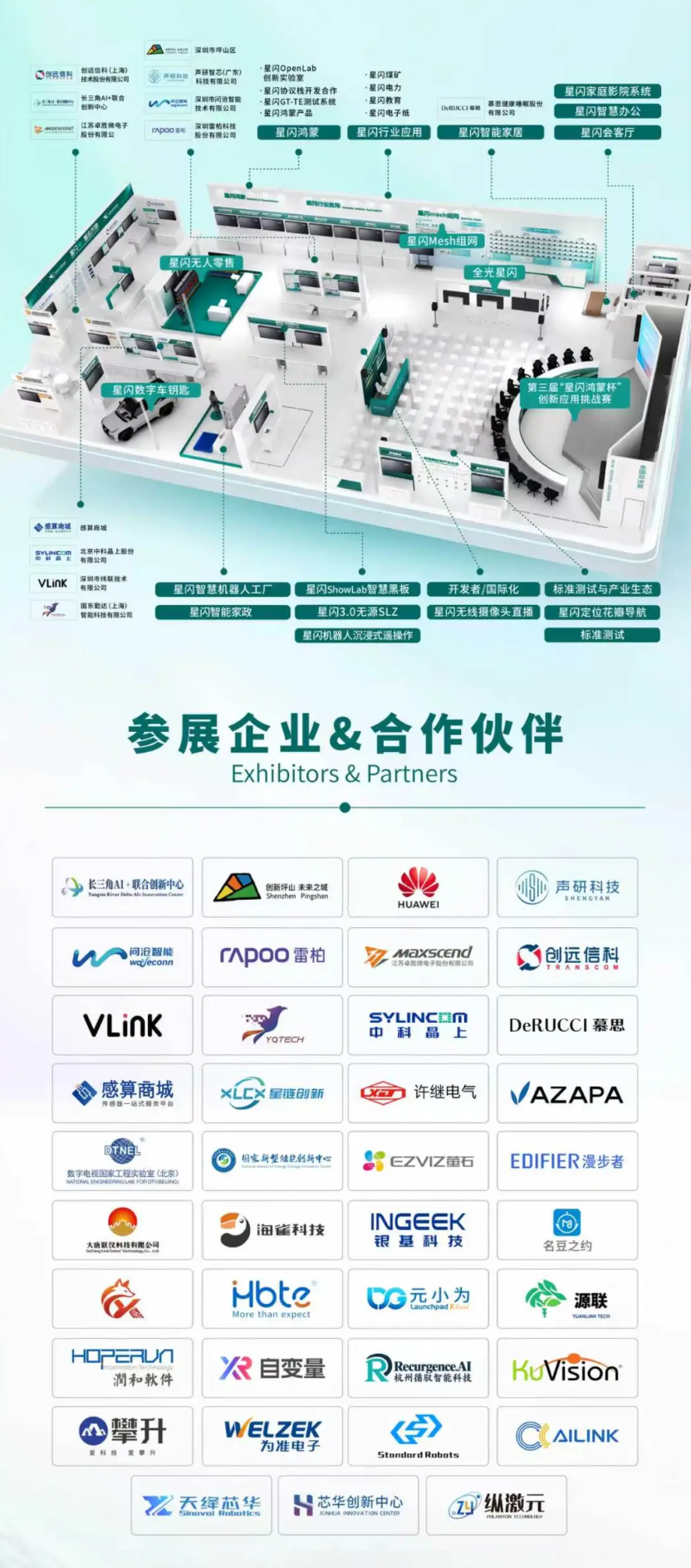 Figure: Floor map of Hall 9 at Shenzhen Convention and Exhibition Center. “SparkLink 3.0 Passive SLZ” is highlighted in the lower-middle zone, flanked by “SparkLink Electronic Paper” and “SparkLink Unstaffed Retail” demonstrations. Source: International SparkLink Wireless Short-Range Communication Alliance.
Floor layouts indicate this technology pairing has moved beyond laboratory proof-of-concept stages. At Booth 9D01 in Hall 9, SparkLink e-paper is showcased alongside specialized industrial tracks—SparkLink Coal Mining, SparkLink Power Grids, and SparkLink Education—adjacent to SparkLink Unstaffed Retail and SparkLink Mesh networking zones. On October 24 at 11:05 AM, the SparkLink Industry Promotion Working Group will convene at Shenzhen-Hong Kong International Science and Technology Park Building A to officially release the SparkLink & Electronic Paper Technology Industrial Application Collaborative Achievements and Trends Report. By marrying bi-stable zero-idle-power screens with battery-free SLZ RF energy harvesting, electronic shelf labels, reusable logistics consignment notes, and hospital patient bedside cards finally shed their last power cables.
Embodied AI Meets Light EV Keys: 35 Exhibitors Validate Full-Stack Foundation
Beyond pushing downward into ambient IoT tags, NearLink 3.0’s other core vector is expanding upward into embodied AI and high-frequency consumer hardware. Alliance Secretary-General Zeng Guosong revealed at the CEIC 2026 press preview that this summit marks the public unveiling of SparkLink’s strategic architecture for the AI era, including dedicated SparkLink connection suites tailored for autonomous agents and embodied robotics. In industrial automation, official benchmark specifications highlight robotic arm motion-control transmission reliability ranging from 99.999% to 99.999999%, collaborative robot one-way latency between 100 and 500 microseconds, and microsecond-level clock synchronization.
The exhibitor roster underscores this strategic evolution. Among the 35 featured enterprises are core chip and module providers like Huawei, CICT Mobile (C-Data), Maxscend, Transcom, and HopeRun Software; consumer peripheral manufacturers including Rapoo, Edifier, Ezviz, and DeRUCCI; alongside robotics pioneers such as X Square, Hangzhou Xunshu Intelligence, and Standard Robots. Dedicated interactive demo zones feature live “SparkLink Smart Robot Factory” setups and immersive teleoperation cells.
 Figure: Three-day conference schedule spanning October 22–24, covering embodied robotics tracks, SLE 3.0 White Paper analysis, and collaborative e-paper rollouts. Source: International SparkLink Wireless Short-Range Communication Alliance.
On the afternoon of October 23 during the SparkLink Application Forum, Alliance Vice Chairwoman and Huawei Fellow Wan Lei will deliver a keynote titled “AI Foundation: Steering Embodied Intelligence.” Research teams from the Institute of Computing Technology (CAS), DORA-RS, Huawei Cloud, and Tsinghua University will subsequently deconstruct embodied communication protocols. On October 24, the Industry Promotion Group will detail the SparkLink SLE 3.0 Technical Standard Evolution White Paper from 10:05 to 10:35 AM, followed immediately by digital key architectures for electric two-wheelers. Supplying deterministic broadband to embodied robotics, low-power narrowband to light electric mobility, and battery-free RF to ambient tags, NearLink 3.0 aims to address everything from multi-axis robotic joints to sub-dollar tags under a single unified protocol stack.
Challenging the Massive RFID Legacy Base: Unit Economics and Ecosystem Readiness
Positioning Passive SLZ to challenge and eventually displace traditional RFID has prompted two distinct industry perspectives. Advocates of NearLink 3.0’s unified architecture emphasize that conventional Ultra-High Frequency (UHF) and High Frequency (HF) RFID protocols were architected decades ago, historically relegated to identification silos disconnected from interactive network layers. Today, a modern smart factory or hypermarket ceiling is often cluttered with Wi-Fi access points, Bluetooth ESL base stations, UWB positioning anchors, and dedicated RFID reader antennas—four independent hardware layers that compete for spectrum and create RF interference. Incorporating Passive SLZ directly into the NearLink stack allows Gateway (G-nodes) to double as multi-mode readers inside existing SparkLink routers, harmonizing broadband, narrowband, positioning, and ambient tags within a single radio domain.
Conversely, hardware architects and supply chain veterans point out the steep hurdles of incumbent migration. Over two decades of hyper-scale manufacturing have driven standard passive UHF RFID tags (such as ISO/IEC 18000-6C) down to RMB 0.20–0.50 (around $0.03–$0.07 USD) for integrated IC-plus-antenna packages. Apparel tagging, airline baggage handling, and logistics container seals consume tens of billions of tags annually, supported globally by entrenched fixed portal gates and ruggedized handheld scanners. Unless NearLink SLZ tag silicon can reach price parity in the single-digit cent range and demonstrate decisive anti-collision performance around dense liquids and metals, cost-sensitive logistics operators have little incentive to replace functioning RFID fleets.
From its founding in September 2020 by 80 organizations to its formal recognition as an international industrial body in May 2023, SparkLink has scaled past 1,200 corporate members while coordinating with over 3,000 enterprises across Hetao’s “6+1” international innovation cluster at CEIC 2026. The debut of Passive SLZ in Shenzhen signals an ambitious push into ambient wireless terrain. While raw air interface metrics secure a seat at the table, whether NearLink passive tags can truly blanket supermarket shelves and parcel containers will ultimately depend on whether silicon vendors can smash through the half-yuan unit cost threshold.
References:
- International SparkLink Wireless Short-Range Communication Alliance: Technical Architecture & Standards Specification.
- Shenzhen Comentropy Innovation Service Center: SparkLink Injects New Momentum into the E-Paper Industry as Joint Working Group Takes Flight.
- Southern Metropolis Daily: CEIC 2026 Opens in Shenzhen on Oct 22: SparkLink 3.0 Core Technical Layout Unveiled.
- ITHome: NearLink 3.0 Poised for Debut: RFID Replacement Passive SLZ Showcased Alongside SparkLink Electronic Paper.