Your Body Is Not a Worn-Out Machine
Many people experience a sudden drop in stamina or energy at some point in their thirties or forties. Catching your breath after climbing a few flights of stairs or noticing unusual flags on a medical checkup report—people often attribute these changes to physical wear and tear on organs. The belief that the human body functions like an old automobile, where components naturally break down over time, has long been widely accepted.
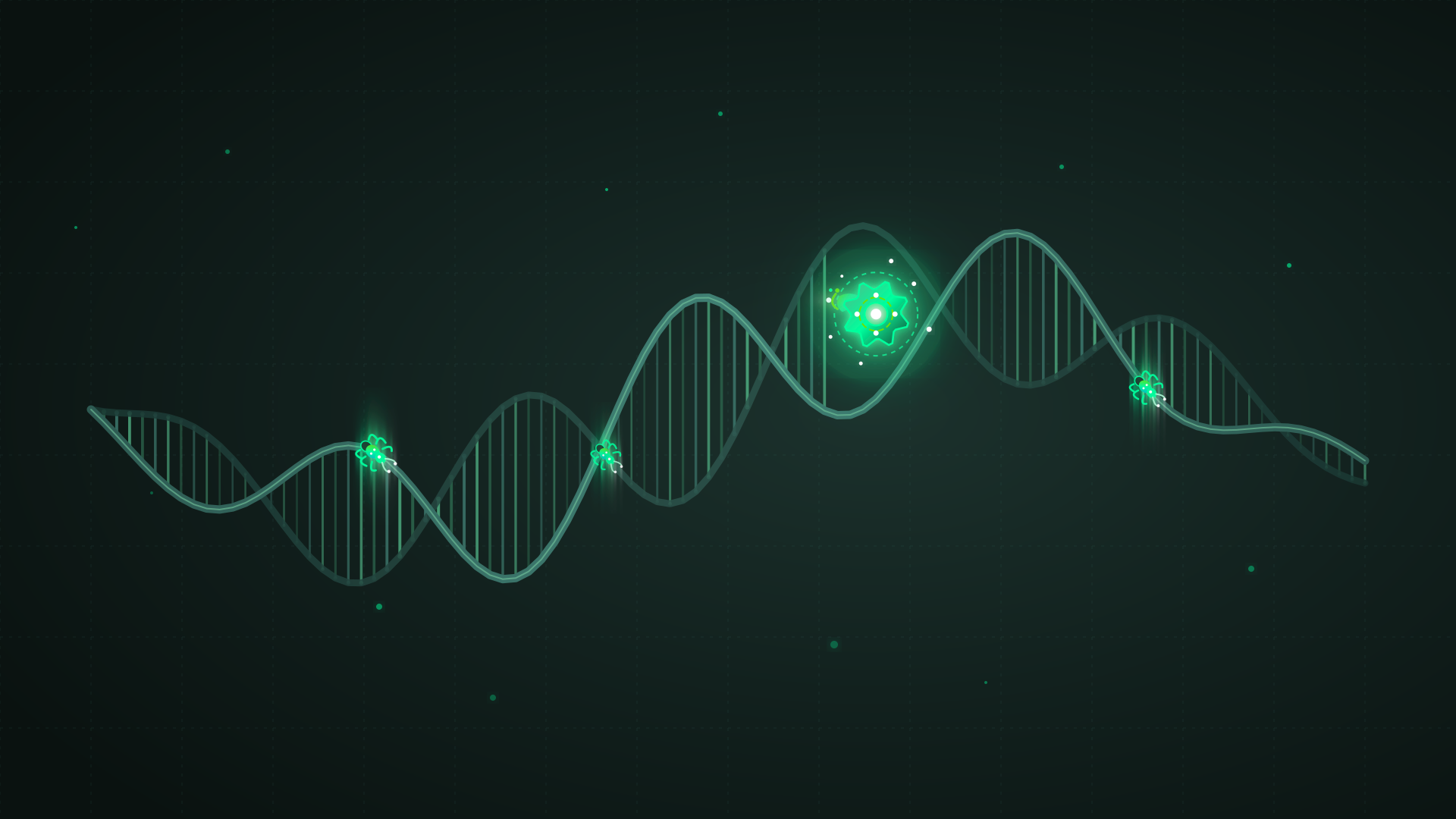
A groundbreaking study published in Science offers a completely new paradigm. Led by Junyue Cao, head of the Laboratory of Single-Cell Genomics and Population Dynamics at Rockefeller University, researchers argue that biological aging follows a predetermined script written into our molecular code, with the end of life and functional decline governed by an orderly molecular program.
From High School in Hebei to 21 Million Single Cells
Junyue Cao’s drive to unravel the mysteries of aging originated during his high school years in Hebei, China, where watching his grandparents weaken and pass away planted the seed for investigating why we age. He later pursued advanced studies at Peking University, embarking on a research career at the cutting edge of single-cell genomics.
To decipher how this aging program operates, Cao’s laboratory designed a massive experimental workflow. They tracked nearly 50 mice across different age groups, spanning 14 major organs and 5 distinct stages of life. These 5 stages ranged from 3 to 23 months of age in mice, corresponding to human milestones from early adulthood (20s), prime adulthood (30s), middle age (50s), up to late adulthood (60s and 75 years old).
The research team performed single-cell sequencing on 21 million individual cells, measuring the activity of 20,000 gene expressions in each cell. Analyzing 21 million cells represents a colossal data footprint—equivalent to surveying the detailed employment records of every single resident in a major metropolis. From this massive dataset, the researchers mapped 536 major cell types and 1,828 distinct cell subtypes (specialized functional roles within broader cell categories).
 Image: Junyue Cao, head of the Laboratory of Single-Cell Genomics and Population Dynamics at Rockefeller University. Source: Quanta Magazine / Karen Dias
The Four-Act Aging Process and Abrupt Jumps
The single-cell atlas uncovered a striking revelation: much like embryonic development, nearly three-quarters of cell subtypes remain stable throughout lifespan, while dramatic alterations occur in only about one-quarter of cell populations. Physical decline unfolds in distinct, structured phases rather than through immediate, global systemic failure.
In the first phase, corresponding to 3 to 6 months in mice (equivalent to humans in their 20s and early 30s), the aging code is quietly initiated. During this period, specific fat and muscle cell populations decline rapidly, alongside a reduction in two populations of immature, regenerative brain cells. While individuals appear to be at their physical peak, the underlying molecular timer has already started counting down.
Entering the second phase (corresponding to humans in their 30s and 40s), tissue maintenance cells experience sharp depletion. Tenocytes (tendon cells), colonic smooth muscle cells, and pericytes (cells wrapped around microvessels that maintain capillary structure and nutrient delivery) drop significantly, leading to a decline in routine tissue repair efficiency. This phase explains why many people notice slower wound healing and delayed muscle recovery after age thirty.
By the third and fourth phases (corresponding to humans from their late 40s, 50s, and beyond), the hallmark of aging shifts from cellular depletion to the massive expansion of specific cell types. Immune cells lead the initial wave of expansion, followed by the heavy accumulation of senescence-associated immune cells that trigger systemic chronic inflammation. This restructuring of the cellular society directly drives the surging incidence of age-related chronic diseases, including cardiovascular disease, arthritis, and cancer.
Human physiological data reinforces these findings. Human blood plasma proteomic profiles exhibit two sharp, steep shifts—one in the mid-40s and another in the late 50s—mirroring the phased transitions observed in the mouse study. Cao likens these shifts to autumn leaves: leaves do not fall uniformly day by day throughout the season; rather, they drop en masse within a two-week window triggered by seasonal light signals. Mammalian aging is similarly driven by distinct internal signals, manifesting as abrupt, step-like transitions at fixed developmental nodes.
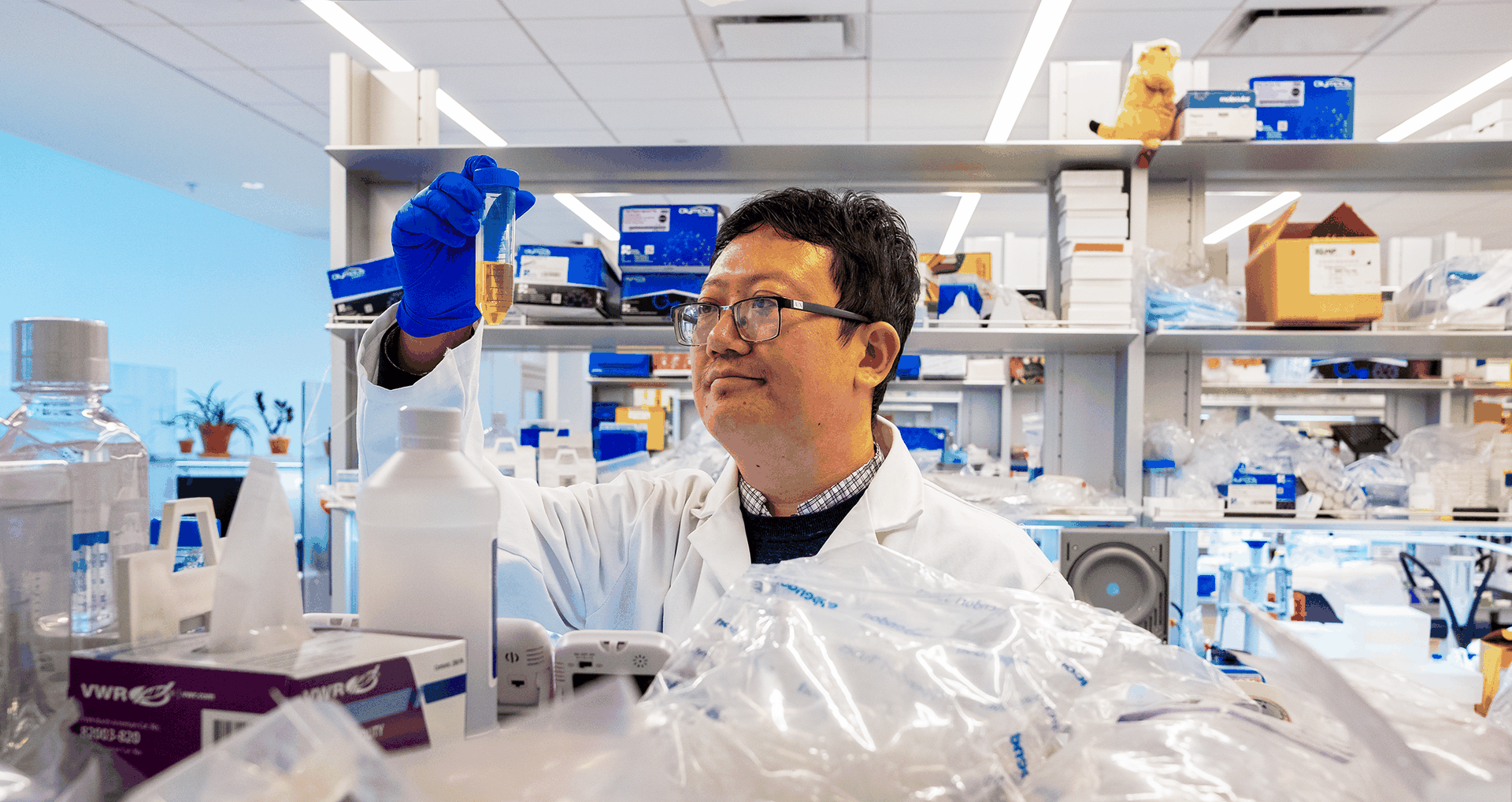 Image: Junyue Cao observing cell samples in his laboratory. Source: Quanta Magazine / Karen Dias
Preset Code in Epigenetic Switches
If aging were merely random physical wear and tear, cellular gene alterations would appear chaotic and scattered across the genome. However, when examining the epigenome—the molecular tagging system that controls gene activation without altering the underlying DNA sequence—researchers identified 280,000 specific genomic regions that predictably open or close during aging.
At precise age milestones, the exact same sets of genomic regions are consistently activated or silenced, indicating that the control script for systemic decline is written early in life. This precise switching mechanism recurs reliably in both mice and humans. Biological aging, at its core, is a programmed reorganization of the entire cellular society.
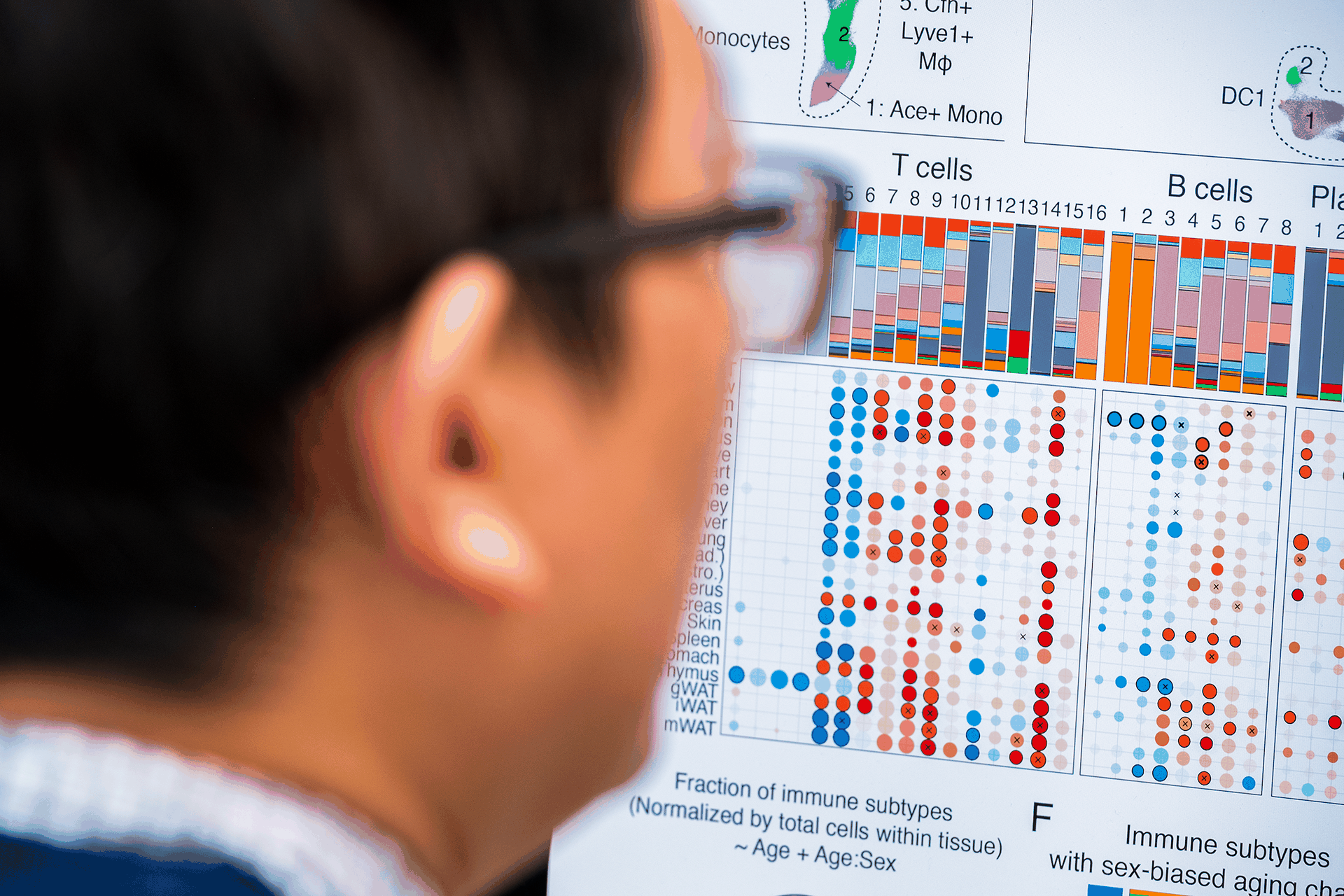 Image: Researchers analyzing large-scale single-cell genomic data via computational platforms. Source: Quanta Magazine / Karen Dias
Rewriting the Biological Countdown
Recognizing aging as a programmed molecular process opens entirely new avenues for therapeutic intervention. Because aging is driven by specific genetic scripts and cellular shifts, targeted interventions could potentially manipulate key switches to rejuvenate the cellular ecosystem. Cao’s team has already identified several highly vulnerable rare cell subtypes and is working to decode the exact molecular drivers behind these shifts.
Crucially, the study reveals that cellular maintenance and regenerative capacities begin declining well before age 30. To effectively prevent or reverse age-related degeneration, therapeutic interventions must be applied much earlier in life, long before middle age. Aging is not an inevitable, irreversible rusting of the biological machine. By cracking and reprogramming this orderly molecular code, maintaining a youthful cellular ecosystem may well become reality.
Reference:
- Quanta Magazine