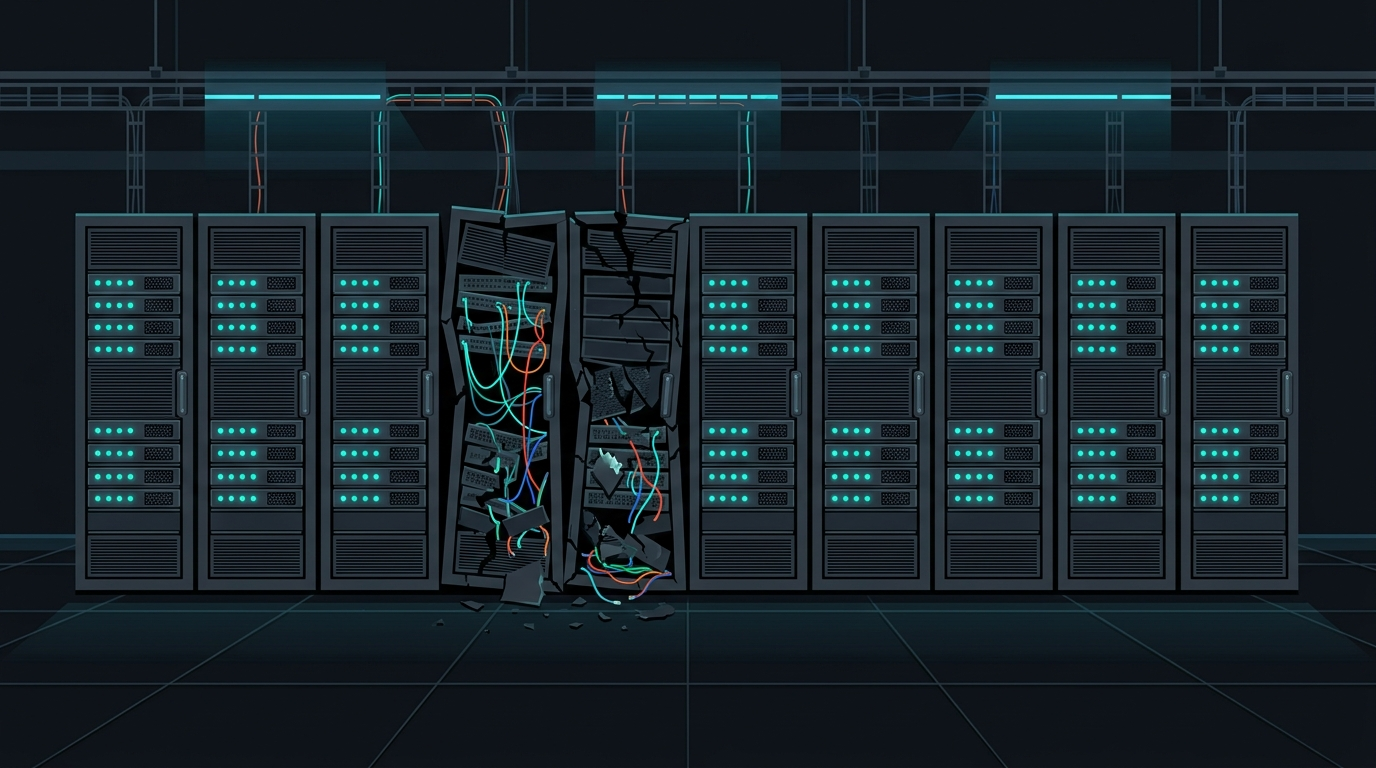
On September 15, 2026, Amazon Web Services updated its service health dashboard. After six months of assessing war damage, AWS officially confirmed that customer data hosted in Availability Zone mec1-az2 in the United Arab Emirates and across all three Availability Zones in Bahrain has been permanently lost. This marks the first time in the history of public cloud computing that a hyperscaler has formally acknowledged irreversible data loss caused by military weapon strikes. The disclosure has fundamentally upended industry assumptions, forcing systems architects and engineers to recalculate the survivability boundaries of cloud infrastructure. High-availability architectures long regarded as gospel now face a brutal reality check.
Missiles Shatter the Multi-AZ High Availability Assumption
Warfare reached Middle Eastern digital infrastructure on March 1 of this year, when Iranian drones launched precision strikes against Amazon facilities in Bahrain and the United Arab Emirates. Two structures in the UAE were directly hit, while a facility in Bahrain suffered heavy damage from near-miss impacts. In subsequent rounds of strikes across April and July, missiles fired by Iran’s Islamic Revolutionary Guard Corps (IRGC) systematically wiped out Amazon’s remaining infrastructure in Bahrain. Independent satellite imagery confirmed that these critical facilities suffered catastrophic, irreversible physical destruction.
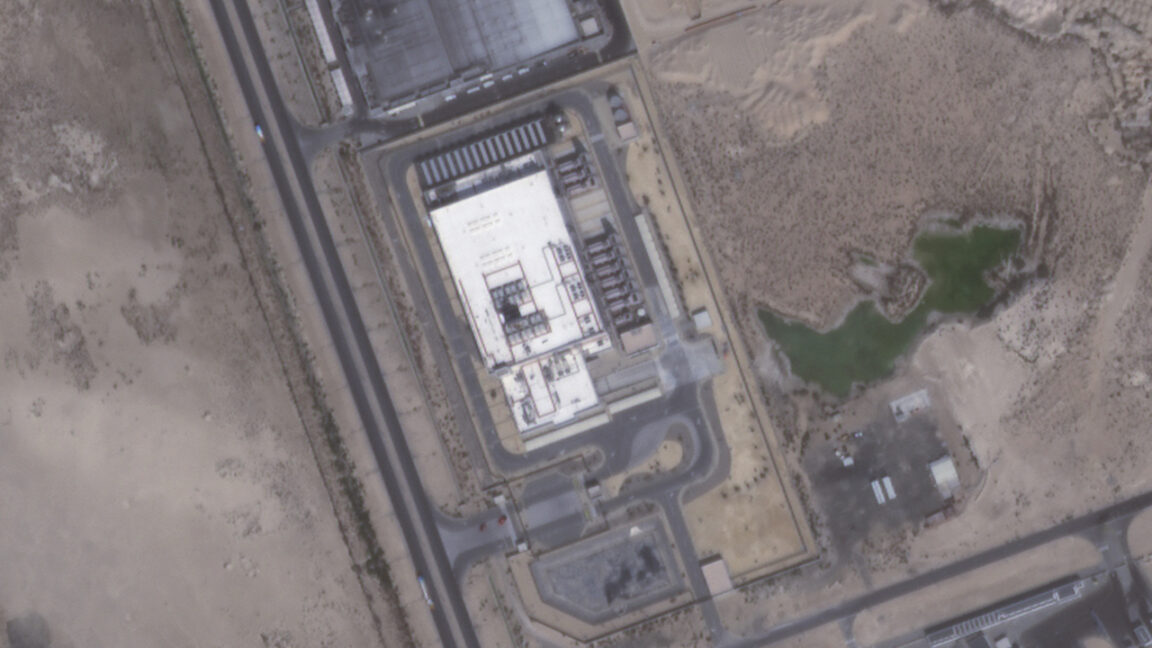 Image: Satellite imagery of the Amazon data center in Abu Dhabi, UAE, struck by drones on March 1. Source: Planet Labs PBC / Ars Technica
An AWS executive once famously remarked in an interview, “If one of these unmarked buildings blew up, you probably wouldn’t notice.” Saturated kinetic strikes have thoroughly shattered that narrative. An isolation distance of several dozen kilometers within the same metropolitan area offers zero protection against modern long-range precision munitions. Under sustained heavy fire, the practical protection afforded by intra-city physical separation collapses entirely.
Both Middle Eastern regions suffered total physical obliteration in geographic space. When reinforced concrete structures and dense server clusters are reduced to rubble, the software-defined high-availability mechanisms that depend on that local hardware vanish instantly. Kinetic devastation bypassed redundant software orchestration entirely, reducing cutting-edge cloud infrastructure back to melted silicon. Deprived of a physical substrate, all logical redundancy proved to be nothing more than a castle in the air.
Architecture Assumed Multiple Facilities Wouldn’t Fall Together
The multi-Availability Zone disaster recovery models marketed by cloud providers have always rested on a foundational premise: that disasters are local, sporadic, and isolated. AWS’s official post-incident statement acknowledged this directly, stating that damage to infrastructure “spanned multiple Availability Zones and exceeded what our regional and multi-AZ services are designed to withstand.” The cloud provider admitted the ultimate limitations of its own defensive designs.
A standard multi-AZ deployment typically distributes three large data centers across a metropolitan radius separated by several tens of kilometers, linked via dedicated dark fiber for synchronous data replication. Sub-millisecond latency allows applications to fail over transparently without disrupting business workloads. However, to balance real-time performance against operating costs, this architecture deliberately sacrifices geographic dispersion.
| Date | Impact & Official AWS Actions |
|---|---|
| 2026-03-01 | Iranian drones directly strike two UAE data centers; one Bahrain facility damaged by nearby strikes |
| 2026-04-01 | A second strike disrupts another previously undamaged Availability Zone in Bahrain |
| 2026-07-24 | Missiles destroy remaining data center infrastructure in Bahrain, confirmed ruined by satellite imagery |
| 2026-09-15 | AWS confirms permanent loss of customer data across all Bahrain AZs and UAE mec1-az2 |
Metropolitan fiber rings effortlessly handle municipal power outages, fiber cuts, or single-node network failures, but they fail completely in the face of coordinated regional bombardment. A separation of thirty or forty kilometers is effectively zero under strategic military targeting. When all nodes in a given region are pinpointed and destroyed in succession, synchronously replicating data to an adjacent data center becomes meaningless. Multi-AZ is a shield against hardware faults and software glitches, not a bunker against missile barrages.
Data Residency Regulations Trap Customers in the Blast Zone
Beyond architectural vulnerabilities, regulatory constraints dramatically compounded the catastrophe. Countries like the UAE have enacted stringent data localization laws in recent years, mandating that sensitive workloads in finance, healthcare, and public sectors remain strictly within national borders. Prohibiting cross-border data transfer was a mandatory prerequisite for operating legally in the region.
While designed to safeguard national digital sovereignty, these compliance boundaries turned into a trap when geopolitical conflict erupted. Bound by legal statutes, affected enterprises could not legally evacuate their primary workloads and databases to safe data centers in Europe or the United States following the initial strikes in March. They had no choice but to leave their data stranded in place, awaiting the next barrage.
When paper compliance requirements take precedence over disaster recovery and business survival, enterprises surrender control over their own destiny. Forcing critical assets into a single geopolitical basket has yielded irreversible consequences. In wartime conditions, data protection laws drafted for peacetime failed to protect data—instead, they accelerated its destruction.
$150 Million in Cloud Credits Cannot Buy Back Lost Data
Facing immense customer losses, AWS initiated remedial compensation. Since hostilities broke out in March, AWS suspended normal billing for affected regions and issued approximately $150 million in service credits to affected accounts. AWS pledged to continue rebuilding damaged facilities and promised a progress update in early 2027. Yet for most impacted enterprises, financial credits after the fact provide cold comfort.
 Image: Keynote presentation at AWS re:Invent detailing infrastructure disaster recovery architecture. Source: DatacenterDynamics
Standard Service Level Agreements (SLAs) compensate only for paper charges incurred during service unavailability. In a trending Hacker News discussion scoring over 145 points, developers pointed out that cloud credits are utterly worthless when it comes to reconstructing core business operations. The intrinsic value of business data dwarfs the rental fee of compute capacity.
Lost production databases, customer records, and financial ledgers represent the lifeblood of an enterprise. No amount of complimentary cloud compute can reconstruct three years of historical transaction logs from crushed solid-state drives. Financial offsets cannot conceal the collapse of fundamental enterprise value. Physical data centers can be rebuilt with capital, but lost proprietary data cannot. Enterprises stripped of their historical data have effectively forfeited their ticket to compete in the market.
Cross-Region Disaster Recovery Emerges as the Final Line of Defense
The destruction of Amazon’s Middle Eastern data centers has delivered an unvarnished lesson to organizations worldwide: writing data to a backup system and successfully restoring it after a catastrophe are two entirely different realities. A second data center located thirty kilometers away shares the same regional geopolitical fate as the primary node; it provides no genuine immunity against macro-level disasters. Without hundreds or thousands of kilometers of separation, regional-scale physical destruction cannot be mitigated.
A truly resilient disaster recovery architecture must span continents. Replicating massive datasets across regions incurs substantial egress bandwidth fees and forces systems to tolerate latency measured in hundreds of milliseconds. Yet this expenditure secures an enterprise’s right to survive on the brink of war. In an increasingly volatile geopolitical climate, cross-region disaster recovery is an unavoidable security insurance premium.
The leveling of AWS’s Middle Eastern infrastructure proves that software-defined high availability assumptions crumble before physical warfare. When intra-metro redundancy lines are breached, cold backups hosted on another continent remain the only dependable safeguard. Cross-region disaster recovery is no longer an optional architectural enhancement—it is the indispensable baseline for enterprise survivability.
References:
- Ars Technica Coverage
- CNBC Coverage
- Reuters Initial Report
- AWS Health Dashboard Update
- Hacker News Discussion (item?id=49719249)