Walk into any florist shop around Valentine’s Day and you are likely to spot exorbitantly priced blue roses. Yet touch the stems or glance inside the display vase, and the illusion fades: the water is tinted pale blue, and uneven blue blotches stain the green leaves.
Virtually every blue rose sold on the market is a white rose artificially dyed post-harvest. The rose gene pool simply lacks the biological machinery to produce blue blooms. For decades, physical dyeing remained the only viable commercial substitute.
Now, researchers at Suntory Global Innovation Center have unveiled genuinely genetically engineered blue roses at the 32nd International Horticultural Congress in Kyoto. On standard horticultural color charts, the blooms achieve violet blue—a defining benchmark for high-purity blue flowers in plant science.
Valentine’s Blue Roses Are Just Soaked in Dye
In the plant kingdom, true blue flowers are an evolutionary rarity. While morning glories and hydrangeas produce dazzling azure blossoms, roses, lilies, and tulips have always been genetically barred from blue.
Rose petal cells lack the critical enzyme needed to synthesize delphinidin—the primary anthocyanin pigment responsible for blue and violet coloration. Despite plant breeders testing thousands of hybrid crosses over centuries, traditional breeding hit a biological wall, producing at best pale mauves or purplish pinks.
To satisfy consumer demand, growers submerge freshly cut stems in concentrated dye solutions, allowing vascular channels to draw blue pigment up to the petal edges. This artificial treatment accelerates petal dehydration, shortens vase life, and frequently leaves a pungent chemical odor.
Why Adding Blue Pigment Alone Only Made Lavender
At first glance, genetic modification seemed simple enough: clip the blue pigment genes from other blue flowers and splice them into the rose genome. Suntory’s research team set out to engineer a naturally blue rose as far back as 1990.
In 2004, scientists successfully inserted a blue pigment gene from Canterbury bells (Campanula medium) into a pale pink rose, producing what was heralded as the world’s first transgenic “blue” rose. Yet when the petals unfurled, their coloration was a gentle lavender-mauve, falling well short of true blue.
Suntory brought this lavender rose to market in 2009 under the brand name APPLAUSE. The commercial release delivered a humbling lesson to plant biologists: introducing blue pigment precursors alone was far from sufficient to turn rose petals blue.
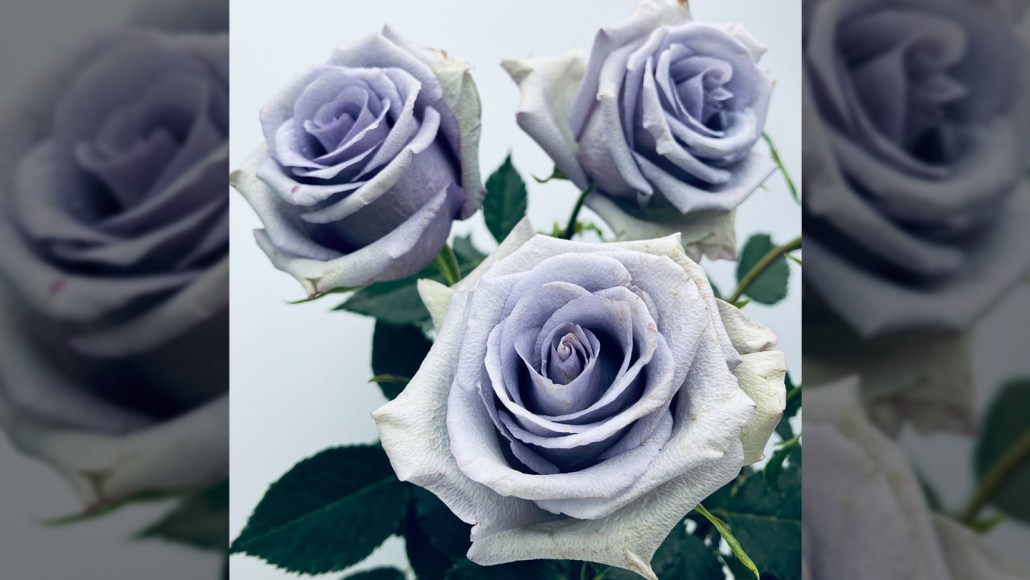 Figure: A close-up of the violet-blue rose cultivated in a Kyoto greenhouse. Source: Science News
Colorless Helper Molecules: The Secret to Shifting the Palette
The researchers shifted their focus from raw pigments to the chemical microenvironment inside petal cells. In the naturally acidic vacuoles of rose petals, delphinidin is structurally unstable, quickly turning a reddish purple.
Beyond missing pigment enzymes, roses also lack the genes to produce flavone C-glycosides—essentially colorless helper molecules scientifically termed “co-pigments.” While colorless on their own, co-pigments act as molecular scaffolds. They bind tightly with pigment molecules, stabilizing them in acidic vacuoles and altering how they refract and absorb light.
Introducing these near-colorless helper molecules transformed floral engineering from merely “swapping pigments” into “tuning the molecular recipe.” Because the depth and purity of blue depend on interactions between pigments and neighboring molecules, adding blue pigment alone inevitably yields purple. In their latest approach, scientists simultaneously transferred four foreign genes into light pink roses: one from Canterbury bells to produce malvidin (a more stable blue anthocyanin), and three genes from wishbone flowers (Torenia x hybrida) and clustered gentian (Gentiana triflora) to synthesize the co-pigment isoorientin.
A Four-Gene Cocktail Survives Three Years of Field Trials in Colombia
In laboratory assays, researchers observed a direct correlation: the higher the concentration of the co-pigment isoorientin in petal cells, the closer the floral hue shifted toward rich azure. This finding confirmed that molecular co-pigmentation dictates the final perceived color.
The breakthrough did not remain confined to petri dishes. In Kyoto greenhouses, Suntory monitored the engineered bushes for seven continuous years, proving that the coloration did not degrade or fade across changing seasons.
To evaluate commercial viability, the team transported the plants to Colombia, a global leader in cut-flower exports. Cultivated in open-air fields under real-world weather conditions for three consecutive years, the roses reliably produced stable violet-blue blooms while demonstrating strong disease resistance.
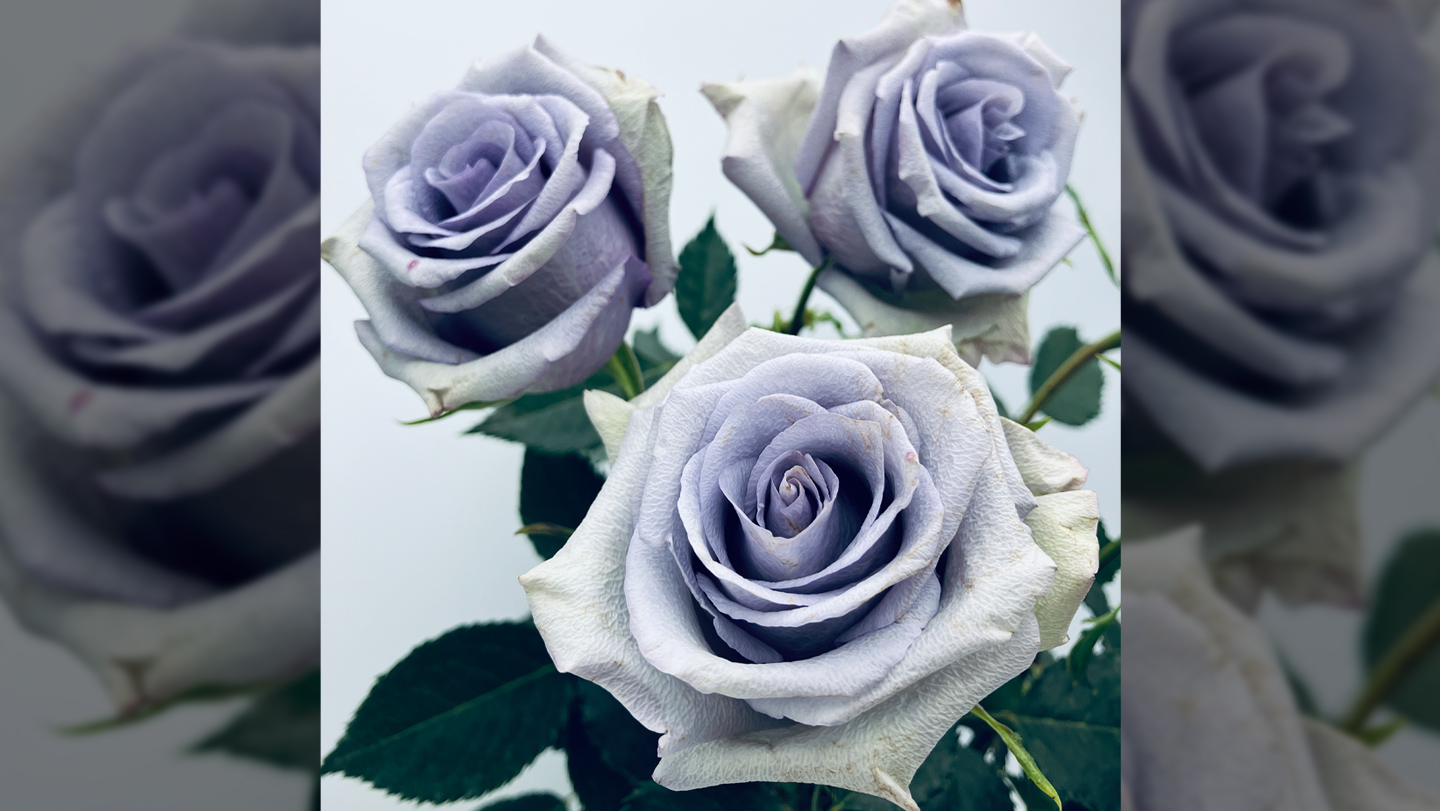 Figure: The open-field rose cultivation trial site in Colombia. Source: Science News
From Single-Gene Fixes to Multi-Molecular Choreography
From the project’s inception in 1990 to this announcement in 2026, a 36-year quest has fundamentally redirected how science engineers floral color. That 36-year timeline represents an entire professional lifetime for a generation of horticulturists.
For decades, floral biotechnology operated under the single-gene paradigm, attempting to alter bloom color by introducing a lone pigment gene. As lead researcher Seitaro Ito noted, the true breakthrough came from pivoting attention to how pigments interact with surrounding molecular partners.
Blooming blue in roses depends on a precise recipe pairing pigments with colorless co-pigment molecules. When molecular interactions are designed with precision, color combinations once deemed impossible in nature can finally blossom with the help of genetic tools.
References:
- Finally, a true blue rose exists — Science News
- Beyond the “World First”: Opening Up New Possibilities for “Blue” in Roses — Suntory Global Innovation Center