The browser opens to a simulated Windows 95 desktop. You have to double-click an icon labeled “Triple-A Minesweeper.” A heavy, cinematic bass drop rumbles as splash logos illuminate the pitch-black screen: Nvidia, Unreal Engine, and Audiokinetic Wwise appear in dramatic succession.
This isn’t a new tentpole release from a major studio. Programmer and writer Mike Lacher took the quintessential retro puzzle game and encased it in Hollywood-tier production theater. While Minesweeper originally surfaced in 1990 as part of the Microsoft Entertainment Pack for Windows 3.1, the iconic Windows 95 build introduced it to mainstream audiences—making it 31 years old today. The absurdly bloated industrial veneer juxtaposed against the primitive grid of tile-clicking creates immediate comedic whiplash.
Wrapping a Vintage Classic in Blockbuster Packaging
Lacher assembled an exhaustive checklist of high-end production credentials to give this browser game the swagger of a multi-million-dollar production. Beyond slap-on splash logos for Unreal Engine and Wwise, the game features dedicated cinematic subtitle files (subtitles.js), along with formal scripts for an opening sequence (intro.js) and ending roll (ending.js).
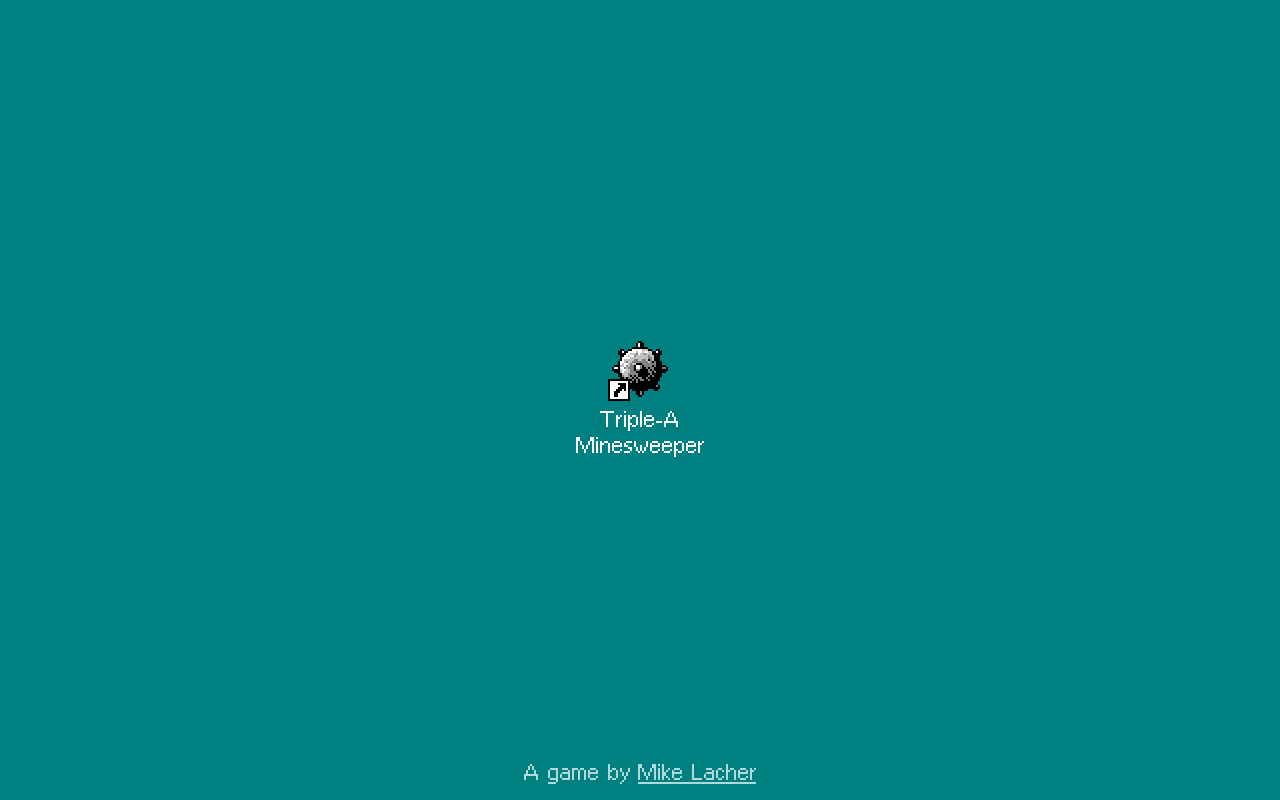 Figure: The simulated Windows 95 desktop before launch, featuring the shortcut for Triple-A Minesweeper. Source: Screenshot from Triple-A Minesweeper site.
The middleware logos of high-budget releases have been turned into satirical bumper stickers. Originally conceived to signal astronomical capital investments—Unreal Engine for top-tier visual fidelity, Wwise for dynamic acoustic design, and Bink Video for cinematic cutscene pipelines—they serve here to deceive. The desktop even prominently features an auteur vanity card: “A game by Mike Lacher.” With this tech stack flaunted upfront, a featherweight browser pastime instantly adopts the aura of a nine-figure budget.
Turning an Entry Barrier into an Unlocked Achievement
Over on Hacker News, one commenter confessed to spending an hour trying to get the game to run—switching browsers, toggling VPNs, and disabling uBlock Origin—before finally realizing they simply needed to double-click the desktop shortcut. Another reader quickly spun the blunder into a gaming trope: “Did you mean ‘Achievement Unlocked: Launch the Game for the first time’?” A reply promptly mimicked platform achievement telemetry: “Only 7.89% of players have unlocked this.”
The project turned a standard 1995 desktop convention into an obstacle that modern web users struggled to navigate. Yet players instinctively rationalized the clunky barrier through the grammar of contemporary game design. Only gamers conditioned by decades of industrial UX would translate basic friction into an achievement unlock.
When achievement pop-ups become an involuntary reflex, even double-clicking an icon gets reconstructed as intentional ludic design. Modern players have been trained to expect every barrier to yield a micro-reward.
Budget as an Infallible Shield
The gag resonated deeply across gaming communities because it pierced an industry fatigue players have quietly endured for years. In modern AAA releases, industrial polish has largely detached from core gameplay. Flashy shaders, elaborate audio suites, and engagement-loop achievements originally served as proof of expenditure; today, they function as an interchangeable shell draped over whatever mechanics lie beneath.
When these prestige badges are lined up in order, players automatically project unearned quality onto the product. Even if the underlying mechanics are completely stagnant, audiences assume the title possesses intrinsic worth commensurate with its cost. It is the video game equivalent of serving street-cart street food on a Michelin-starred silver platter: the craftsmanship of the platter overshadows the flavor of the food.
Once packaging becomes synonymous with quality, relying on massive budgets as a guarantee of artistic merit becomes an open joke. Wrapping the oldest, most rudimentary mechanics in the most expensive digital varnish exposes how hollow those industry benchmarks can truly be.
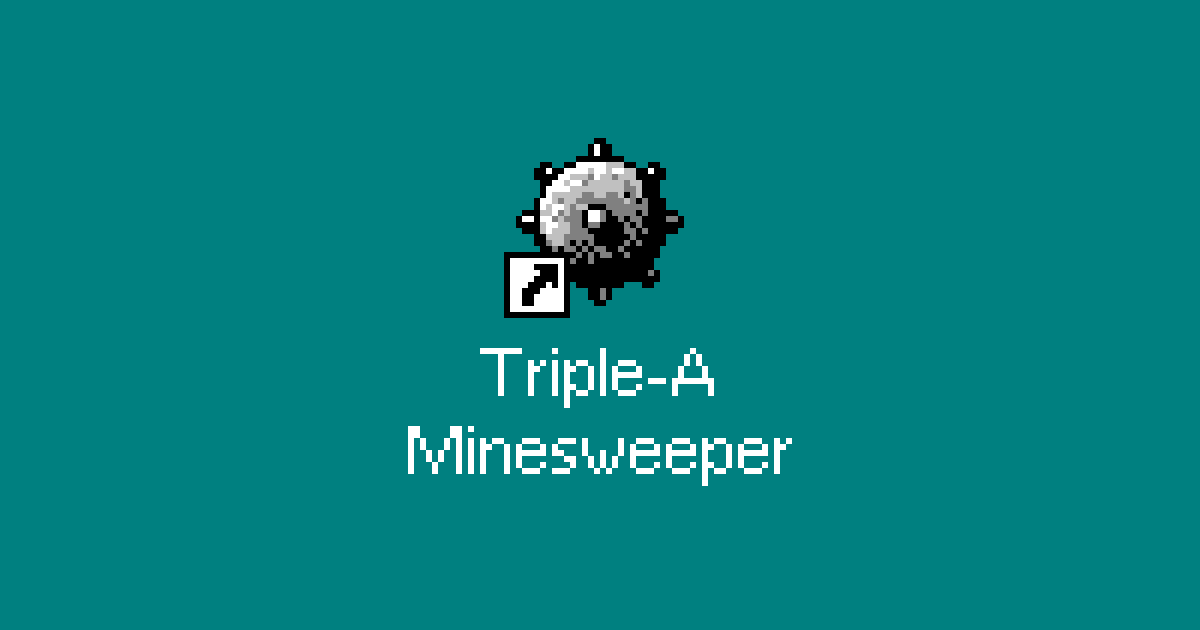 Figure: The Windows 95 desktop environment showcasing the Triple-A Minesweeper shortcut. Source: Triple-A Minesweeper official promo.
Leaning into the Satire: Players Complete the Parody
Lacher kept the bit going on social media, cheekily announcing that loot boxes and branded cross-promotional partnerships were slated for Q1 next year. The community immediately matched his cadence, crowdsourcing further industry parodies in the comments. Some solemnly debated the meager achievement roster, urging him to introduce side quests like “Defuse 10 Mines.”
Others complained about the lack of hand-holding tutorials, demanding yellow paint and glowing scent trails leading to hidden diamonds. One commenter suggested charging $70 for motion-capture mine animations starring Hollywood actor Jack Quaid. Another questioned why an Unreal Engine game lacked agonizingly long shader-compilation loading bars and wildly unstable dynamic resolution scaling. Every absurd suggestion corresponded precisely to real complaints plaguing current big-budget releases.
On the same day, Hacker News was fiercely debating Oxide’s nine-hour technical interview gauntlet and whether Deno could maintain its identity after Cloudflare’s acquisition. Across the industry, people were asking what actually defines a legitimate product. This satirical version of Minesweeper delivered the crispest rebuttal: treating sheer expenditure as an index of value is inherently absurd, and players were only too happy to ride the joke to its logical extreme.
References:
- GameSpot coverage
- The A.V. Club coverage
- Mike Lacher on social media