Opening at $2 Trillion, Closing at $1.3 Trillion
On November 19, 2026, Anthropic officially went public on Nasdaq. Across financial media on the same day, four starkly different market capitalizations were reported. At the opening bell, headlines trumpeted a $2 trillion milestone. By the close, calculated on circulating shares, the company’s valuation sat at just $1.3 trillion—a staggering $700 billion discrepancy.
Anthropic opened trading at $111.50 per share, up 34% from its $83 IPO price. CNBC immediately pushed a breaking alert claiming the company’s market cap had crossed $2.01 trillion. By the end of regular trading, the stock retreated to $97.17, paring gains to 17%. Total trading volume for the day reached 846 million shares, shattering the debut record of 522 million shares set by SpaceX that June.
Selling 980 million shares at the $83 offer price raised $81.34 billion, making it the largest initial public offering in global history—a figure that does not even include the 147-million-share greenshoe overallotment. The massive capital influx drove immense excitement while leaving behind widespread valuation confusion: CNBC reported $1.8 trillion at the bell, while The Guardian calculated only $1.3 trillion based on outstanding circulating shares.
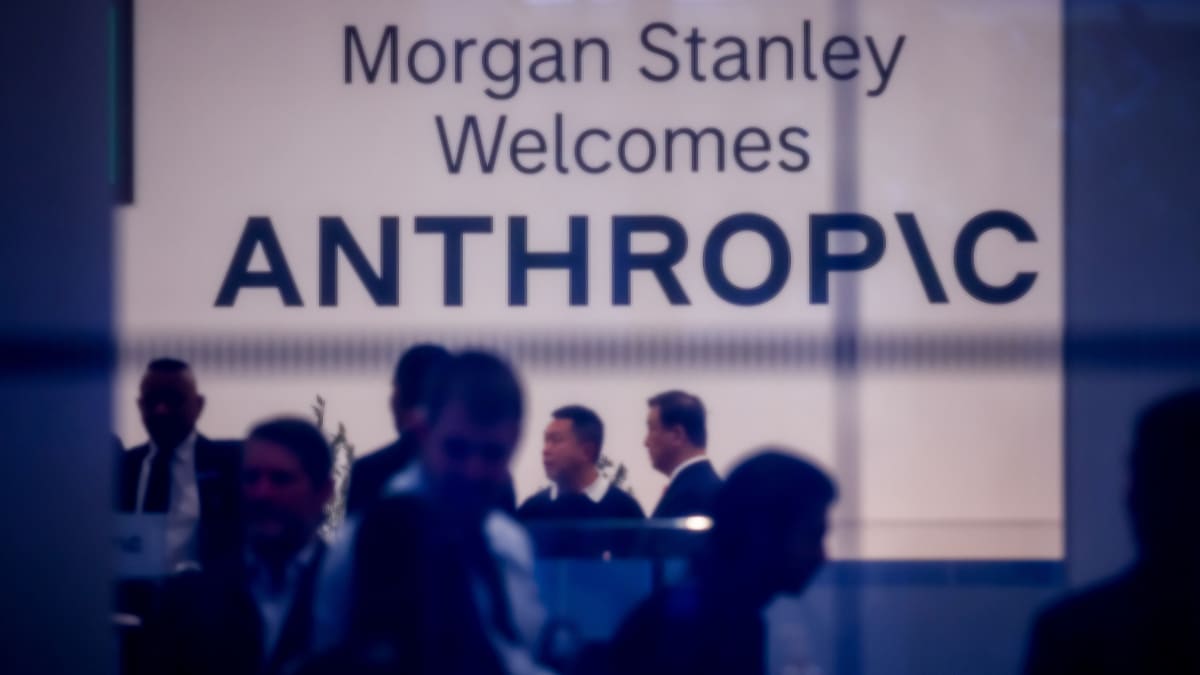 Figure: Anthropic IPO debut on the Nasdaq floor. Source: CNBC / Getty Images
For the exact same stock on the exact same trading day, media outlets reported closing figures that diverged by $500 billion. The root cause lay on the other side of the multiplication equation. While the price ticking across Nasdaq screens was singular, different institutions plugged four completely different share counts into their math.
4.4 Billion Phantom Shares: All Tied to Employee Grants
According to the prospectus, Anthropic had 13.22 billion circulating shares outstanding post-offering. This total includes 7.583 billion publicly traded Class A shares and 5.637 billion unlisted Class N shares. The only ticker trading openly on Nasdaq is ANT. Multiplying the $97.17 closing price by these circulating shares yields an actual market cap of roughly $1.28 trillion.
The headline-grabbing $2 trillion figure, however, was derived using fully diluted shares. A breakdown of the S-1 shows that fully diluted share count reaches 17.6 billion. Multiplying 17.6 billion shares by the intraday high of $111.50 totals $1.96 trillion—flirting with the $2 trillion psychological threshold. That fully diluted count exceeds actual circulating stock by nearly 4.4 billion shares.
Those extra 4.4 billion shares account for a full quarter of the company’s total equity. The filing spells out the details: 1.774 billion employee stock options, 1.074 billion restricted stock units (RSUs), and 1.564 billion shares reserved for convertible debt. None of these shares have actually been delivered into employees’ brokerage accounts today. They form an incentive pool designed to retain elite engineering talent over the coming years.
Marking unvested future options at today’s market price effectively borrows future payroll expenses and capitalizes them as present-day enterprise value. Technical community discussions immediately cut to the heart of the matter: promising more long-dated options does not magically make the underlying business worth more today. On paper, more than 400 Anthropic employees now hold equity worth over $100 million. To actually pocket that wealth, however, they must remain at the company for another three to four years.
Hyperscaler Compute Ties Fuel a 12x Revenue Spike
Methodological debates over share counts aside, Anthropic’s underlying top-line trajectory remains staggering. For the nine months ending September 30, 2026, total revenue reached $33.24 billion—a roughly 1,200% year-over-year surge. By late October, the company’s annualized revenue run-rate had climbed to $81 billion.
Behind this runaway growth stands deep structural integration with cloud hyperscalers. Amazon owns approximately 14.7% of Anthropic, while Alphabet holds around 13.7%—giving the two tech giants combined ownership close to 28%. They serve simultaneously as anchor shareholders, core compute infrastructure providers, and primary enterprise distribution channels. Hyperscalers provide access to compute clusters while Anthropic supplies frontier models, teaming up to dramatically scale commercial adoption.
Yet that massive top line comes with staggering cash burn. An $81 billion annualized run-rate requires enormous capital outlays for compute infrastructure, accelerator capacity, and power contracts. Dario Amodei stated that going public helps the company stay true to its mission and expressed hope of achieving an investment-grade credit rating down the road. The $81.34 billion IPO proceeds provide ample runway, even as monumental future R&D costs loom large.
Founders Lock Down 60% Voting Control: Wall Street Left Without the Wheel
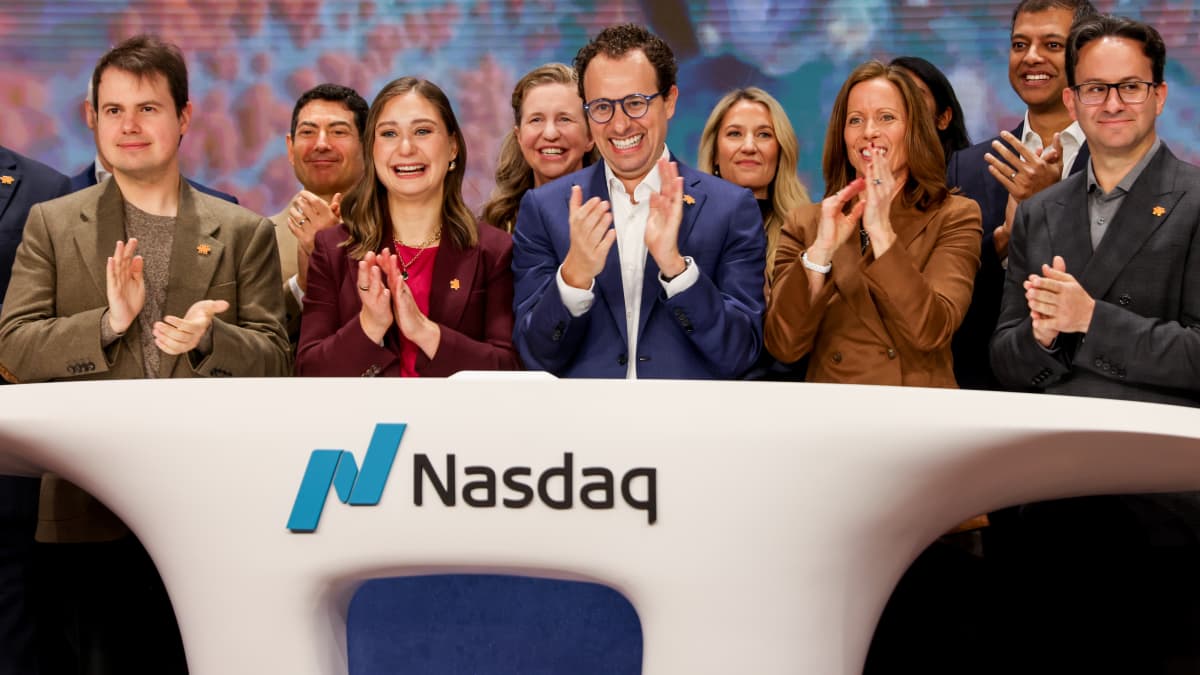 Figure: Co-founders Dario and Daniela Amodei at the Nasdaq opening bell ceremony. Source: Brendan McDermid / Reuters
Following its first day of trading, Anthropic ranked as the seventh-largest publicly traded company in the United States, trailing only Apple, Microsoft, Nvidia, Alphabet, Amazon, and SpaceX. Yet while secondary market investors poured tens of billions of dollars into the debut, they hold zero leverage over the company’s governance core.
The prospectus reveals a tightly defended multi-class voting architecture. The seven co-founders directly control 50.1% of voting power through a dedicated Founder LLC entity. When combined with individual founder holdings, the core leadership team wields 61.3% of total voting rights. Class A common shares bought by retail and institutional investors on Nasdaq carry no meaningful voting counterweight.
This governance moat intentionally insulates leadership from external pressure. Executives aim to sidestep Wall Street’s short-term quarterly demands to pursue AI safety and frontier research on their own terms. Public shareholders enjoy the financial upside of equity appreciation, but have no real say in guiding corporate strategy. The capital markets supplied an unprecedented war chest, but the steering wheel remains firmly in the founders’ hands.
One Price on the Screen, Four Share Counts in the Books
Reviewing opening-day trading dynamics reveals that each reported valuation captured a different slice of reality. Offer price multiplied by circulating shares yielded $1.10 trillion. Offer price multiplied by fully diluted shares produced $1.46 trillion. The closing price against circulating shares settled at $1.3 trillion, while the opening peak against fully diluted shares briefly broke $2.01 trillion.
Financial media inevitably gravitated toward the largest possible figure. The $2 trillion banner generated irresistible headlines, providing early venture backers and lead underwriters with a prestigious milestone. Under sound accounting logic, however, the extra 4.4 billion shares represent an obligation: future compensation that must be earned over time. Granting additional long-term options does not enhance a business’s current operating assets.
Capitalizing future compensation liabilities into present-day market cap is a classic market magnifier. While the price on the trading screen was singular, the share counts selected by different institutions varied widely. Amid the euphoria of trillion-dollar headlines, investors must look beneath the grand narrative: only by accounting for unvested and deferred equity can one see the true weight of today’s frontier AI giants.
References:
- CNBC Nasdaq IPO Live Coverage
- The Guardian Technology Public Offering Analysis
- Phoenix S-1 Fully Diluted Share Count Breakdown
- Hacker News Community Discussion