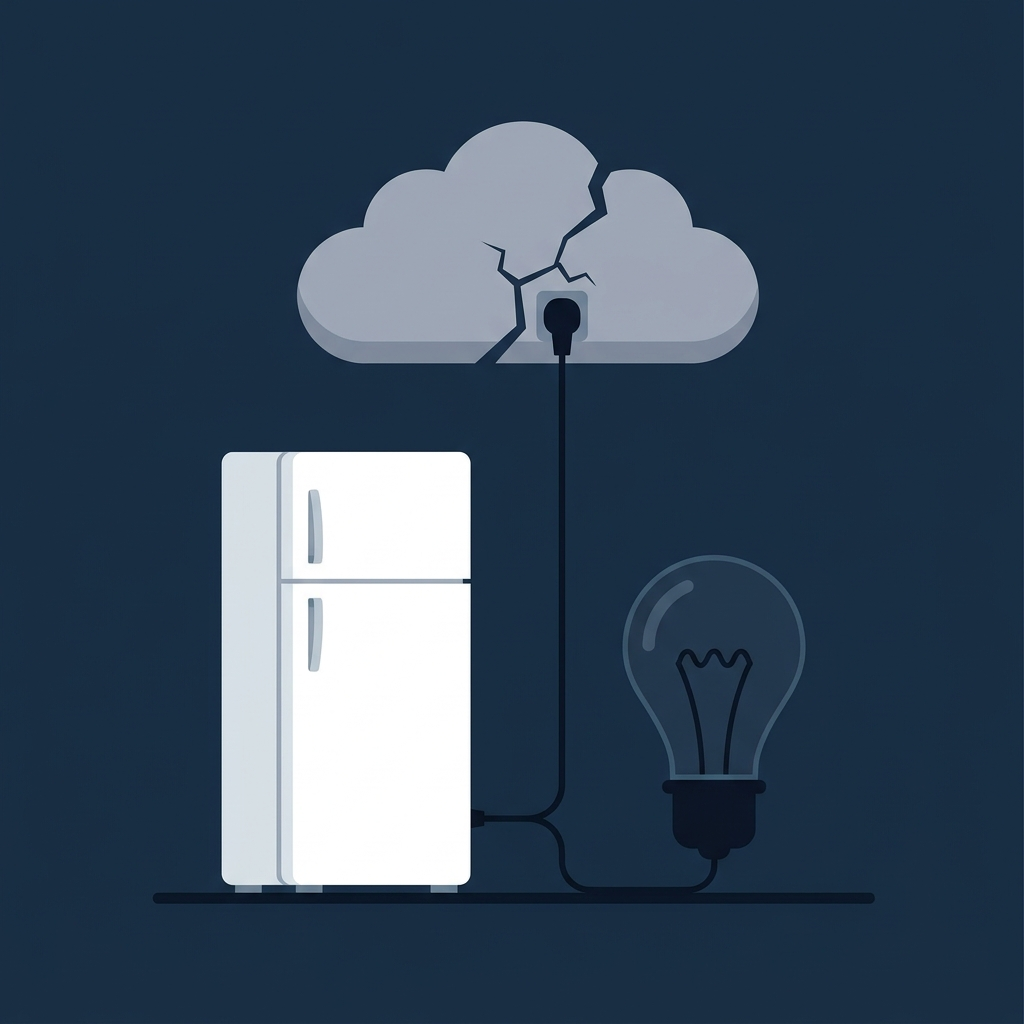
In October 2026, software engineer Harrison Page glanced at his phone for an incoming garage door alert. Right in the middle of the notification sat a commercial advertisement. He had long tolerated in-app banners just to keep essential push notifications alive. But once ads breached the critical notification stream, the device’s fundamental utility was compromised.
A garage door is a primary physical security boundary for any home. A traditional garage door opener is merely a motor suspended from the ceiling—energize it to lift, cut power to close and lock. Once wired into the vendor’s cloud ecosystem, however, this purchased piece of machinery effectively turns into a billboard for remote marketing. The homeowner bought the hardware, but a server thousands of miles away dictates the terms.
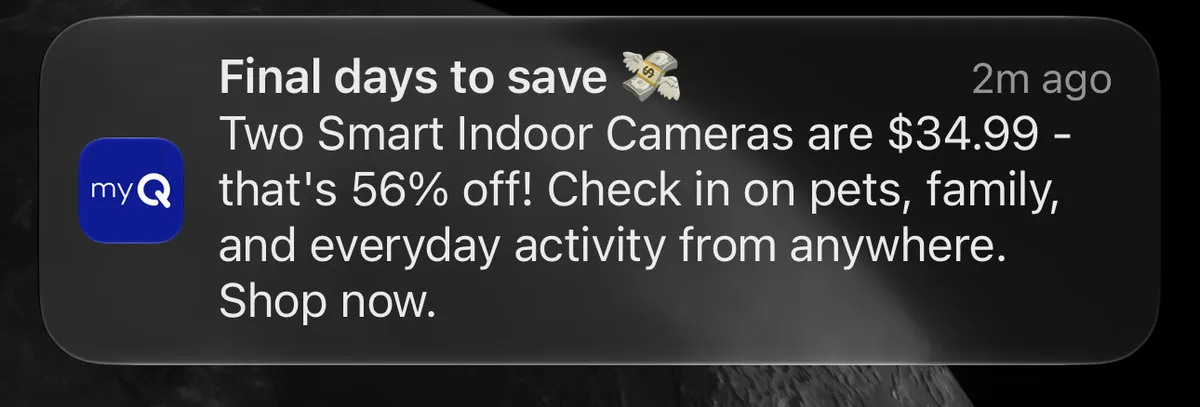 Figure: myQ app injecting commercial ads into garage door opening/closing push notifications. Source: blog.harrison.page
Notifications Held Hostage: Vendors Weaponize Security Alerts
Smart home technology suffers from a widespread misconception: many fixate on flashy dashboards and elaborate routines. Yet for perimeter entryways, remote state awareness is the single non-negotiable requirement. If a smart bulb loses its internet connection, you can still flip the wall switch. If a garage door remains wide open in the dead of night, the entire household faces immediate physical risk.
Chamberlain’s myQ platform commands massive market share across North America. Users endure cluttered user interfaces and promotional clutter solely because they depend on reliable open/close alerts. Knowing homeowners are reluctant to disable push notifications, the vendor boldly channeled advertisements straight into the notification pipeline. When security alerts become advertising real estate, the service degenerates into hostage-taking.
Security notifications derive their value from low noise and immediacy. Diluting alerts with promotions erodes urgency. Homeowners glancing at their screens must pause to distinguish genuine alerts from spam—a hesitation that invites critical misjudgments. Leveraging safety alerts as monetization levers trades physical security for corporate ad revenue.
Shutting APIs Before Dropping Popups: Turning Ownership into a Rental
The arrival of push ads was hardly an accident; it followed a calculated ecosystem lockdown. In late 2023, Chamberlain aggressively terminated third-party API access to myQ. Open-source home automation hubs like Home Assistant were instantly severed. The vendor claimed this protected system stability and eased server loads.
The fallout landed directly on customers. Cutting external integrations blocked local communication, forcing all commands through proprietary cloud servers. Users who spent hundreds of dollars on physical hardware were demoted to software tenants. Stripped of local controls, they were left defenseless against subsequent pop-up promotions and banners.
Hardware manufacturers are using locked-down firmware to hollow out ownership. A conventional garage motor reliably lasts two decades. Cloud-tethered models grant vendors unilateral authority to alter the user experience at will. Inserting promotions into push alerts today paves the way for turning essential door operation into a monthly subscription tomorrow.
Reclaiming Terminals for $62: Local Control Without the Vendor Cloud
Replacing a functioning motor with a dumb unit costs hundreds of dollars in parts and labor. Engineer Harrison Page chose a far cleaner approach: severing the cloud link directly at the physical hardware layer. He spent approximately $62 on an open-source microcontroller board called ratgdo32. Measuring barely the size of a palm, the board requires no mechanical motor teardown—connecting via three wires directly into the opener’s existing screw terminals.
The breakthrough behind ratgdo32 lies in its reverse engineering of LiftMaster’s proprietary Security+ 2.0 protocol. Most legacy retrofit hacks merely simulated dry-contact button presses, unable to report true travel position or error states. ratgdo32 communicates directly with the motor’s onboard microcontroller over the physical signal line, parsing distinct opening, closing, and obstructed states. Bridging the protocol at the terminal level ensures all control packets stay strictly within the local home network.
Following installation, the home router assigned static IP addresses—192.168.0.192 and 192.168.0.245—to the two boards. Running ESPHome firmware, the devices paired directly with Apple HomeKit, enabling voice control via Siri. Commands that previously traversed overseas cloud servers shrank to sub-100ms local network packets. Hardware response became instantaneous, without a single byte sent to the manufacturer’s cloud.
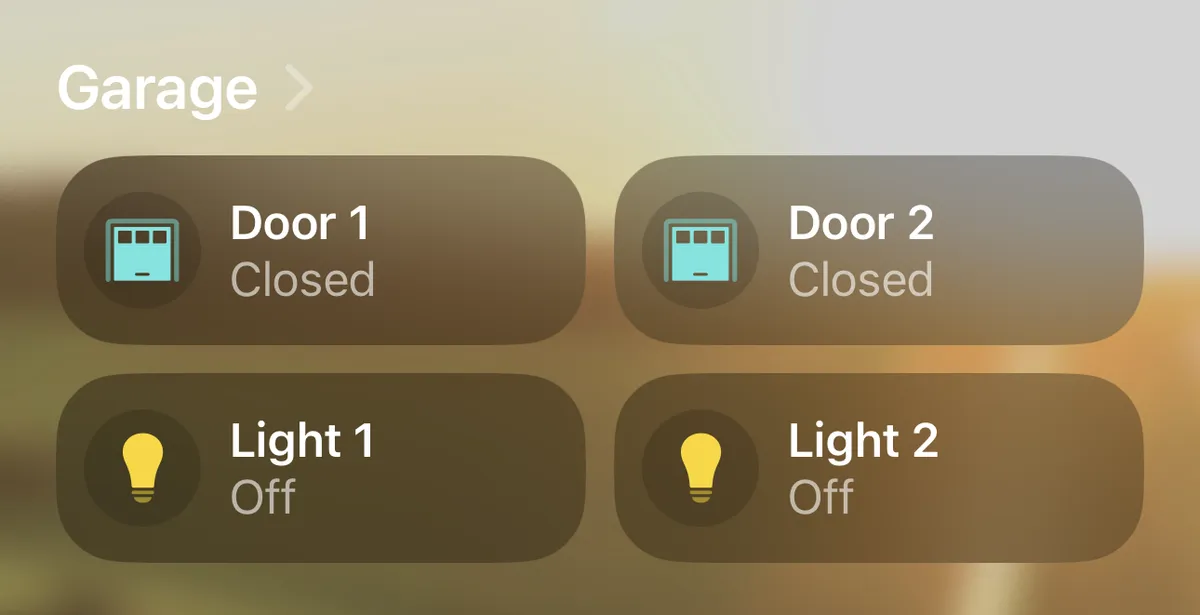 Figure: Local garage door control interface integrated into HomeKit via ratgdo32. Source: blog.harrison.page
From Mercury Switches to Local Daemons: Notifications That Know Who Opened the Door
Securing the physical terminals was only the foundation; engineering a dependable offline alert mechanism was the true objective. In designing the software, Harrison drew inspiration from a childhood memory of his father’s craftsmanship. Decades earlier, his father had wired a mercury switch on the garage door to a hallway light bulb. If the door was left cracked open, the mercury completed the circuit and lit the bulb, reminding the family before bedtime.
Harrison modernized that physical fail-safe into local monitoring logic. Leveraging the microcontroller’s onboard JSON status endpoint, he wrote a monitoring script called garage-watch. Driven by a cron schedule, the script polls door states every 10 minutes between 21:00 and 05:00. If an anomaly occurs, it dispatches an immediate Slack notification, resurrecting his father’s hallway indicator lamp in digital form.
To ensure resilient remote management without opening port forwards, both boards joined a private Tailscale tailnet. The router configured subnet routing for the dedicated IPs, enabling external monitoring via a /healthcheck endpoint. Within this custom architecture, the local system surfaced data the vendor’s cloud never exposed: parsing the remote transmitter ID from Security+ 2.0 frames allowed notifications to identify precisely which family member triggered the door.
While polishing the setup, Harrison submitted a small refinement patch to the upstream open-source repository. The project maintainer merged it promptly, commenting: “Simple and useful. Happy to merge this. Thank you.” That agile, collaborative ethos contrasts sharply with artificial barriers erected by closed commercial platforms. Technology should serve everyday convenience, not treat paying hardware owners as captive audiences.
Stop Renting Your Hardware: Solder Control Back Into Your Own Hands
The trajectory of Chamberlain and myQ epitomizes what plagues consumer IoT. Vendors initially dangle free cloud features to capture market share, only to close ecosystems and cut third-party access once growth plateaus. When hardware sales peak, every physical door cycle becomes inventory for advertising impressions. Durable goods bought outright are converted into captive billboards.
The $62 retrofit offers an inspiring engineering blueprint. Resisting cloud encroachers does not require unbolting heavy motors from garage rafters. As long as physical terminals remain accessible, dropping an open-source microcontroller into the protocol path liberates hardware from cloud hostage situations. The local setup responds faster, preserves internal data, and delivers an unequivocally superior user experience.
The security perimeter of a smart home belongs within the household walls. Electric pulses commanding a heavy garage door have no business circling remote cloud servers across the globe. Spending $62 bought Harrison a clean, clutter-free door opener, but more importantly, it reclaimed sovereign ownership. When you rewire data lines back to your local network, that hundred-pound steel door is truly yours again.
Reference Links:
- blog.harrison.page Technical Post
- Hacker News Community Discussion
- ratgdo Open-Source Firmware Project