Tearing Down $10 Hardware: A 360×360 Touchscreen Paired with 4MB Flash
On November 19, 2026, the open-source hardware community Hackaday featured a compelling reverse-engineering achievement. Researchers from the Electronic Cats team successfully hacked a circular digital badge retailing for just $10. The entire modification required zero shell disassembly and zero soldering. Relying strictly on standard Bluetooth wireless communication, the researchers flashed custom open-source firmware onto the device. What originally served as a cheap gadget for displaying anime artwork or conference name tags was transformed into a full-fledged, touch-enabled interactive micro-terminal.
Researchers Andrés Sabas and Heikki Perea began by physically tearing down the mass-produced badge. Prying apart the ultrasonically welded plastic casing revealed an astonishingly integrated PCB. The board bears the silk-screen marking qx7613_v1.3, with computing duties handled by the AC707N chip manufactured by Zhuhai JieLi Technology. Believed to belong to JieLi’s BR35 family, this SoC packs a proprietary 32-bit RISC architecture optimized for low-power Bluetooth communication and lightweight multimedia processing.
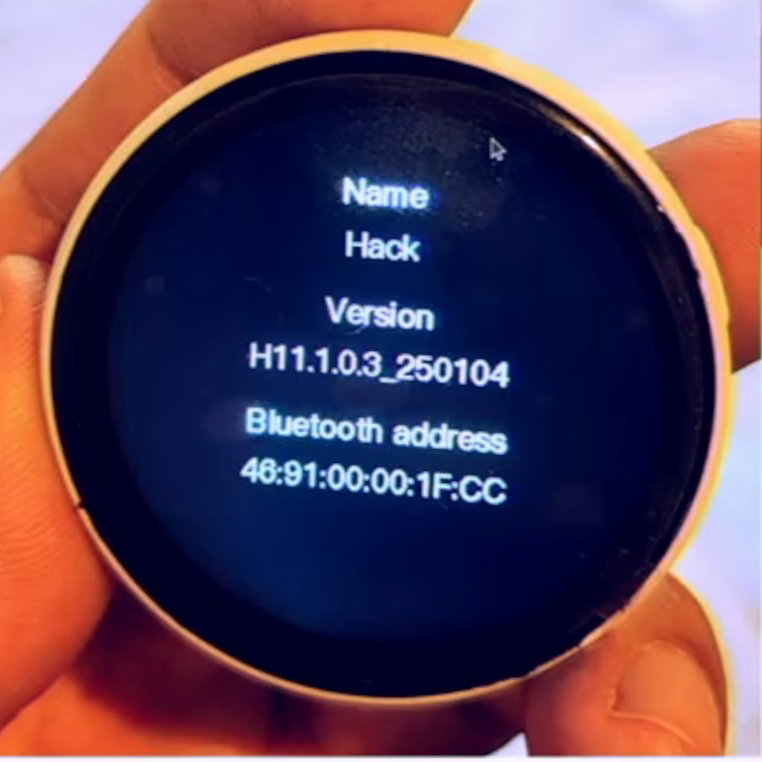 Figure: Hardware appearance and display of the torn-down and reverse-engineered $10 circular touchscreen digital badge. Source: Hackaday.
The circular PCB is packed with tightly arranged components. On the front sits a 360×360 pixel circular LCD display connected directly to the host processor via a 4-line QSPI interface, rendering in RGB565 color format. A capacitive touch panel is laminated over the glass, driven by an AXS5106L touch controller from Corechip. Storage is backed by a 4MB SPI NOR flash memory chip. Two ADKEY physical buttons are routed along the edge for standard user interaction and input triggering.
At retail, the entire kit sells for a mere $10—complete with a sharp circular screen, Bluetooth radio, lithium battery, and 4MB of flash. Under conventional maker supply chains, sourcing an equivalent bare serial display module alone would typically run between $12 and $15. The aggressive cost engineering of consumer electronics manufacturing has inadvertently delivered an exquisitely modular, ready-to-hack development vehicle.
Packet Inspection on ZRun: Decompiling to Expose an Unauthenticated Upgrade Channel
Once the hardware bill of materials was confirmed, taking control of the software stack became the pivotal challenge. JieLi chips are notorious in hacker circles for being locked-down black boxes. Their toolchain relies on pi32v2, an obscure compiler fork derived from early LLVM branches, with official SDKs and register documentation kept strictly under wraps. In the past, running custom code on these devices generally meant soldering probes directly onto microscopic test points.
The team bypassed physical intrusion altogether by auditing the companion mobile app, ZRun. Using Ghidra and Jadx, the researchers decompiled the Android APK and methodically mapped its Bluetooth communication layer. Their scrutiny soon paid off: the badge exposes a proprietary, unauthenticated firmware upgrade service over standard BLE advertisements with a fixed UUID of 0xFD00.
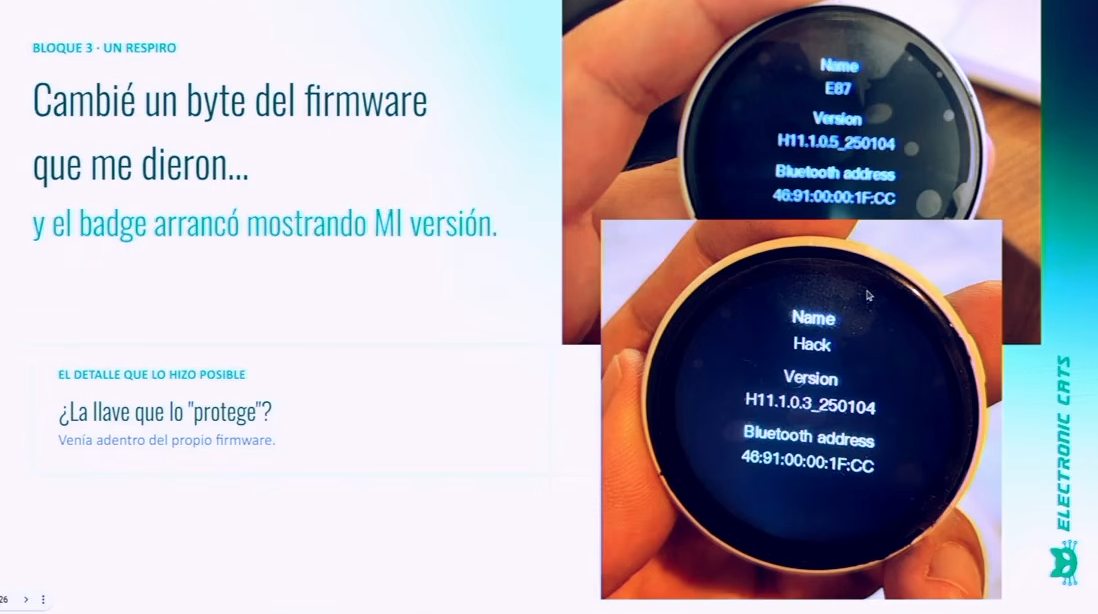
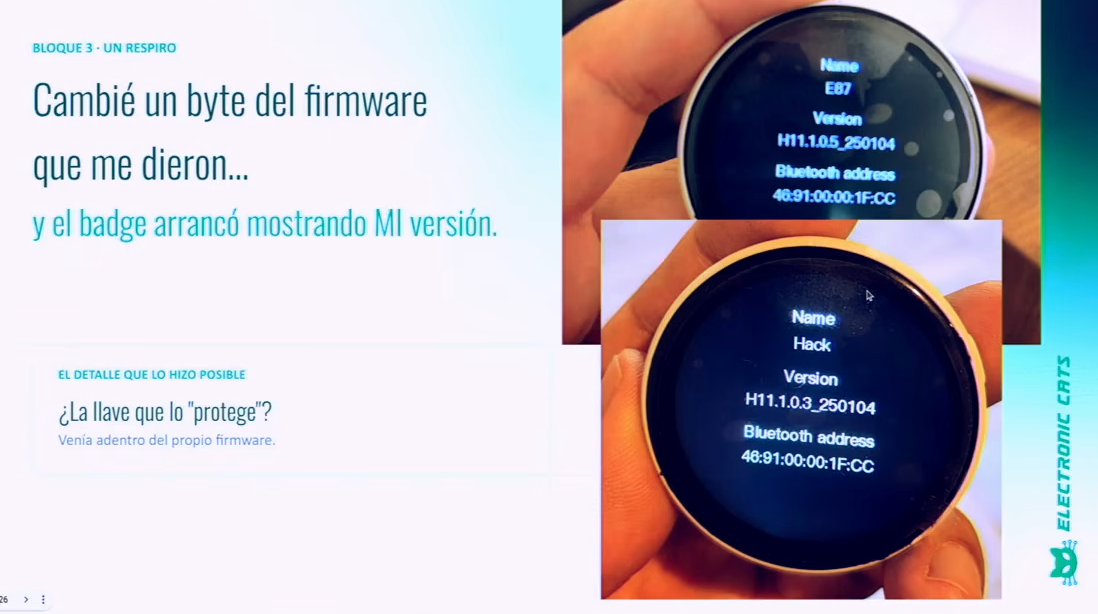 Figure: Andrés Sabas explaining how they bypassed chip protection keys and modified firmware bytes during a technical talk. Source: Hackaday.
When the mobile app initiates an update, it simply writes a 0xC0 command byte to the 0xFD00 service. Upon receiving this command, the badge immediately drops into an Over-the-Air (OTA) bootloader mode. The update pipeline lacks even elementary cryptographic safeguards: there is no asymmetric signature verification, nor is there any mutual authentication handshake. Flooding the target characteristic with properly structured packets is all it takes for the bootloader to execute the incoming payload without objection.
The firmware packaging scheme proved equally brittle. JieLi devices wrap updates in a proprietary .ufw container. Inspecting the header structures extracted from app update files revealed that AC707N series devices share a universal static key: 0x9847. Factory engineers had hardcoded this static key directly into the configuration to simplify high-volume assembly line testing. Any third party capable of assembling packets according to the protocol can craft an authentic-looking payload accepted by the bootloader.
Splicing the Native Bootloader: Flashing Custom Firmware Purely Over Bluetooth
With the OTA pipe unlocked, the true engineering hurdle was booting a custom system reliably. Flashing raw binaries compiled from vendor SDKs almost invariably bricked the unit. JieLi silicon relies on a two-stage boot sequence: an on-chip Mask ROM handles baseline hardware init, after which a secondary bootloader (uboot) residing at the start of flash validates, decompresses, and runs the application payload.
Wiping out the front of the flash broke this native chain of trust, locking up the CPU permanently. Sabas’s team devised an elegant binary splicing workflow. They extracted the pristine factory uboot image byte-for-byte, leaving its internal structure completely intact. Then, using custom Python scripts, they injected their newly compiled open-source payload app.bin into the application partition of the .ufw container, creating a drop-in fw-custom package.
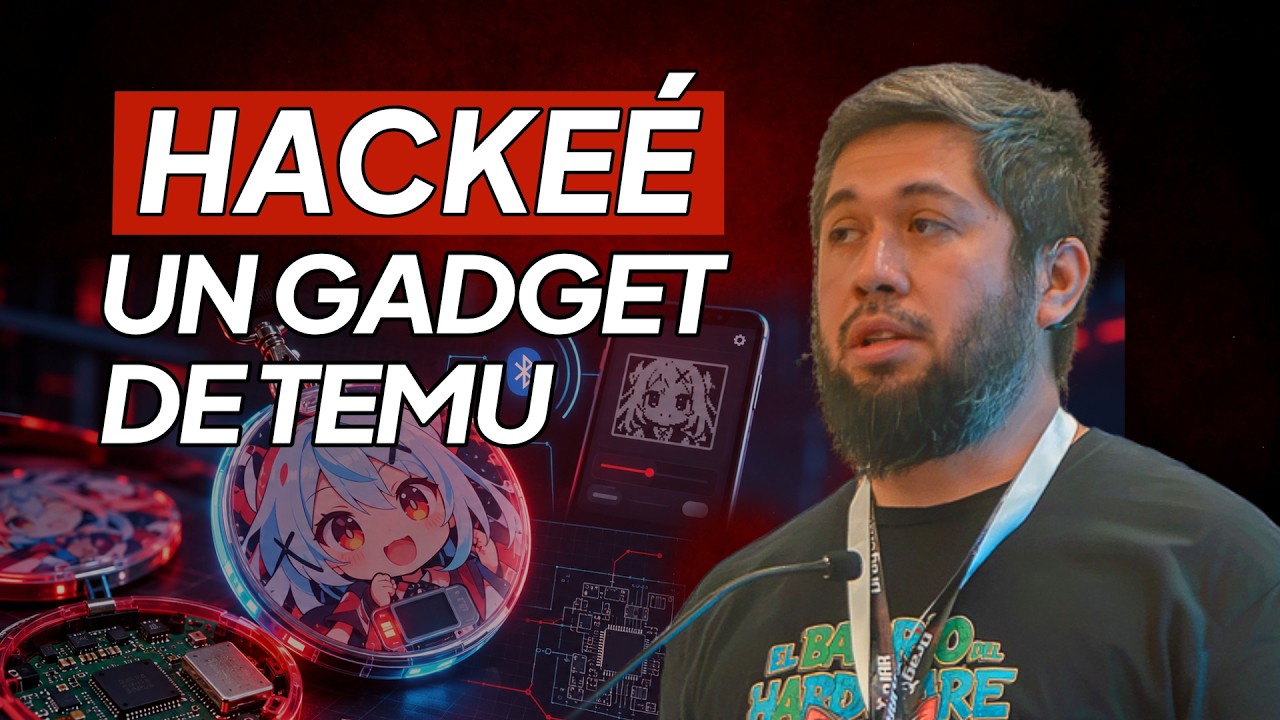 Figure: Electronic Cats publicly demonstrating their reverse-engineering workflow and open-source SDK architecture for the $10 badge. Source: YouTube (Andrés Sabas).
To orchestrate the wireless flashing process, the team built a dedicated Python utility dubbed qix. Running a single command—qix flash --oem—establishes a Bluetooth session and streams the spliced firmware chunks to the badge. The resident OEM bootloader validates the payload structure, commits the new code partition into flash, and reboots. The entire flash cycle completes in under two minutes—no teardown, no soldering iron required.
Following a reboot, the badge advertises under the new name EC-BADGE. The team successfully ported LVGL version 8 onto the hardware, delivering buttery-smooth touch menus. Users can set custom 144×144 lockscreen wallpapers, pair the badge as a wireless BLE mouse, or run packet-sniffing tools. The humble $10 novelty item is effectively reborn as a programmable touch peripheral and wearable RF analyzer.
Low-Cost IoT Supply Chains Empower Hackers: $10 Consumer Tech as a Maker Playground
The cracking of the JieLi badge reflects a broader shift across the hardware hacking landscape. For years, hackers defaulted to platforms like Arduino, Raspberry Pi, or ESP32 modules. While blessed with rich documentation and active communities, standalone developer boards still hover in the $5 to $35 range. Once you tack on a color display, lithium-ion battery, and custom enclosure, total build costs can easily surge past $50 to $100.
The white-label supply chain operating out of Zhuhai, China operates under an entirely different economic reality. Domestic chipmakers like JieLi and Bluetrum ship silicon by the hundreds of millions, fueling a massive ecosystem of unbranded TWS earbuds, smart speakers, and fitness bands. Surviving on fractions of a cent in profit margins requires hyper-aggressive component optimization. On these PCBs, you will scarcely find a single redundant passive component.
When these finished products make their way onto global retail platforms, they trigger a fascinating dynamic. Makers no longer need to design custom PCBs, wait on fab runs, solder SMD parts, or 3D-print rough plastic shells. For $10, an off-the-shelf commercial gadget delivers precision tooling, battery management, high-resolution optics, and wireless connectivity in a pocketable package. Once the open-source community cracks the proprietary protocols, industrial-scale mass manufacturing becomes free R&D leverage for hackers everywhere.
Balancing Convenience and Security: Wireless Flashing Leaves an Open Backdoor
Yet this hard-won freedom underscores how fragile physical security remains on low-cost connected devices. For hackers and tinkerers, zero-disassembly wireless flashing is a dream feature. Enthusiasts can repurpose hardware right out of the box and seamlessly roll back to stock firmware whenever desired, reclaiming commercial hardware for personal sovereignty.
Out in the wild, however, unauthenticated OTA channels present undeniable physical attack vectors. Smart badges are meant to be worn prominently at tech summits, corporate expos, and developer conferences. An attacker within Bluetooth range could transmit crafted packets to silently hijack and overwrite the badge’s screen content without the wearer’s knowledge—or even weaponize the badge with malicious keystroke-injection scripts.
This complete absence of cryptographic defense is the direct byproduct of shaving every penny off Bill-of-Materials costs. Slashing unit costs meant eliminating dedicated cryptographic accelerators, skipping asymmetric signature verification, and dropping secure boot mechanisms. Extreme cost pressure reduced the security perimeter to a single hardcoded key. As commercial hardware becomes infinitely more accessible for tinkerers, its attack surface expands in direct proportion. This breakthrough will likely push manufacturers to mandate cryptographically signed updates in future revisions.
Reference Links:
- Hackaday Article (Digital Badge Gets Reverse Engineered)
- GitHub Repository (ElectronicCats/jieli-ble-badge-research)
- Andrés Sabas Presentation (Compré un e-badge de 10 dólares y terminé liberando su SDK)