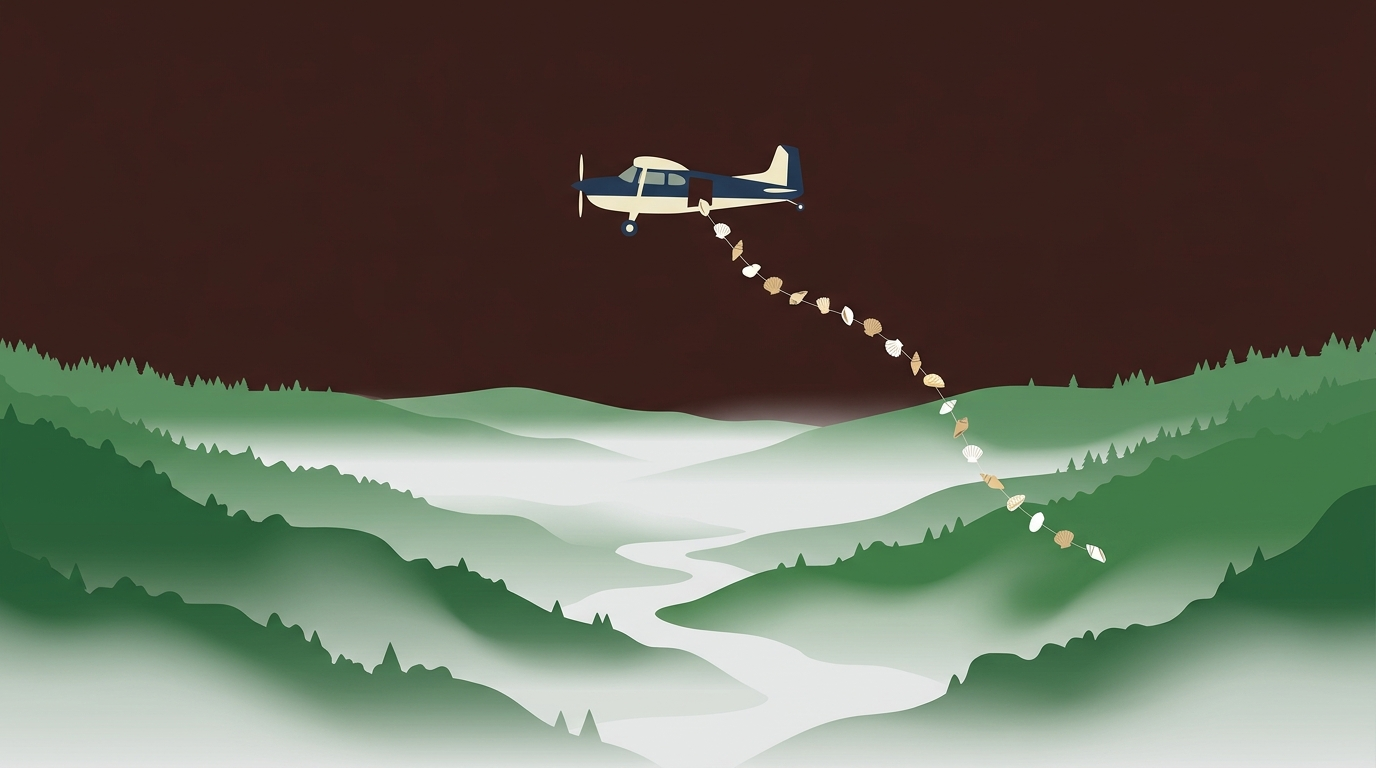
In 1930, Australian gold prospector Mick Leahy crossed the perennially cloud-shrouded peaks of New Guinea. His intention was to find gold mines in the interior, but he unexpectedly stumbled into a malaria-free green valley, encountering a million people who had been isolated from the rest of the world for 10,000 years. This population had independently invented agriculture, possessed their own currency, and in the years that followed, personally experienced a hyperinflation triggered by outsiders using airplanes.
Taro Can’t Be Stored, So Standing Armies Can’t Be Built
Humans arrived in New Guinea as early as 50,000 years ago and took root in the highlands about 10,000 years ago. While Middle Easterners across the Pacific were domesticating wheat, New Guineans were draining swamps and independently learning to cultivate taro and bananas. Today, major banana varieties and a significant amount of sugarcane worldwide carry the genetic imprint of this land. Under specific geographic isolation, a small group of people can also independently unlock the agriculture skill tree.
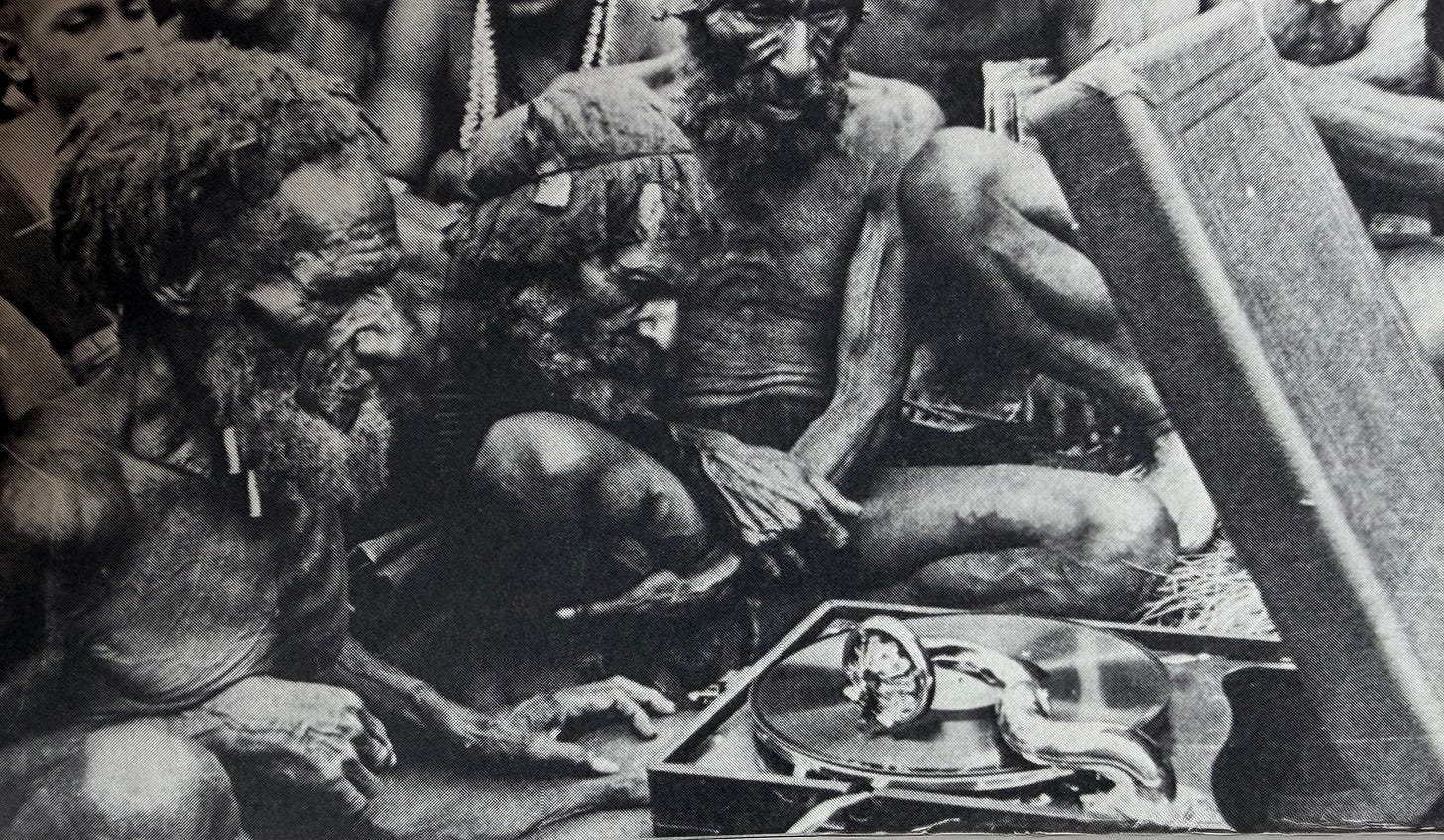 Image: Historical footage of New Guinea highlanders in the 1930s. Source: not not Talmud
However, independently developed agriculture did not evolve into a centralized society here. Taro, as the staple crop, rots within a few weeks of being dug up and cannot be stored long-term. Without hard currency rations that can be kept for years, it is impossible to levy taxes based on them, let alone support standing organizations detached from agricultural production. The physical half-life of materials directly locked down the upper limit of social structure complexity.
To Verify White Men Were Human, They Watched Them Defecate
Leahy brought a camera and film to record the footage of hundreds of thousands of people making their first contact with the outside world. The highlanders initially viewed these white men as the ghosts of deceased relatives. To verify this hypothesis, they sneaked over to watch the white men defecate and smelled the odor, ultimately confirming that the other party was also a biological creature that ate, drank, and relieved itself. Using the simplest laws of physics to verify the unknown is a debugging logic common to all humanity.
Later, the Australians began demonstrating various artifacts in front of entire villages. They shot pigs, played vinyl records, and gave dolls to children. Most highlanders interpreted these industrial products as miracles, even wearing a Kellogg’s cereal wrapper on their heads as precious jewelry. When a massive generational gap in cognitive systems exists, industrial waste can become a holy relic in another system.
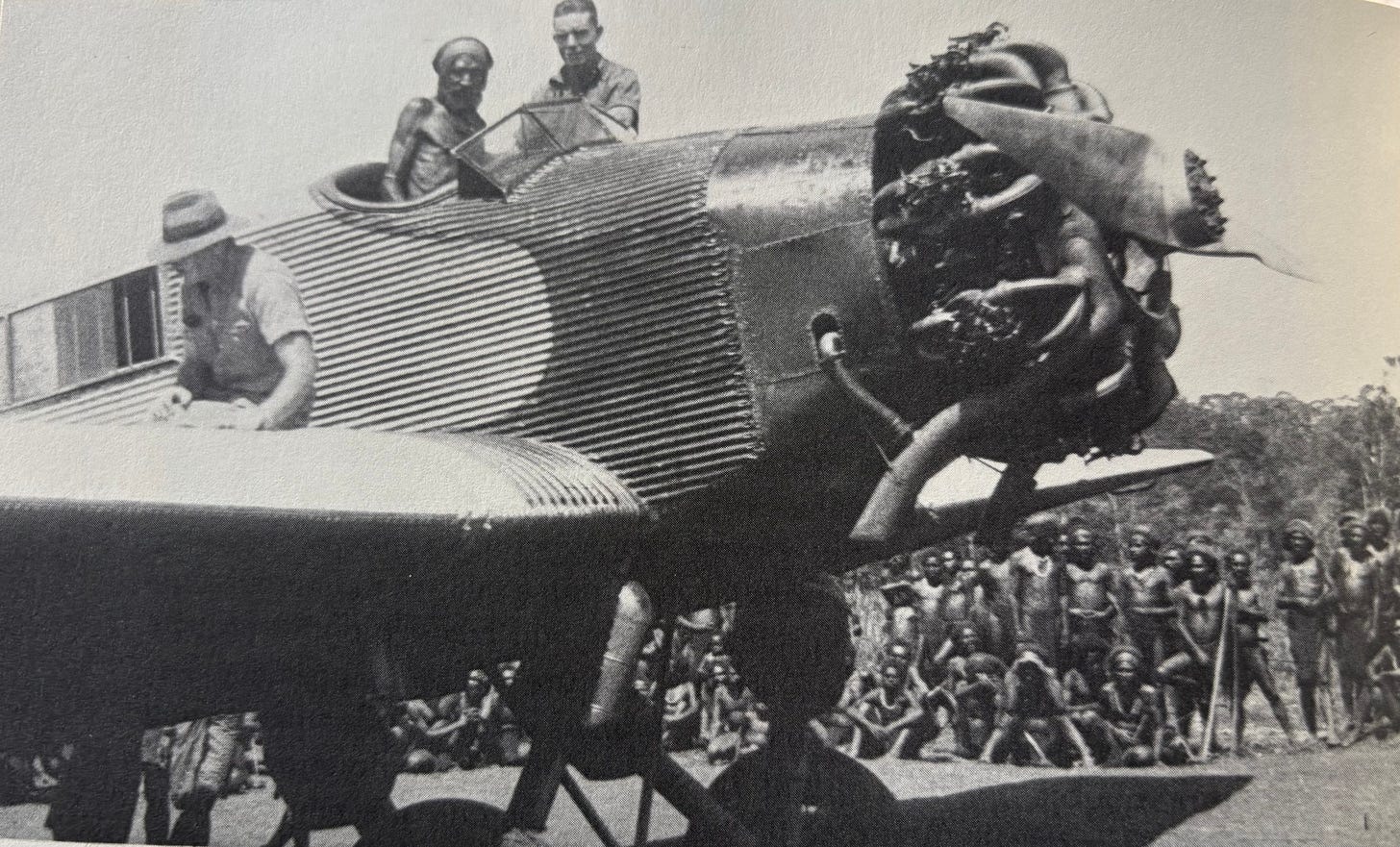 Image: Historical footage of highland communities during their contact with the outside world. Source: not not Talmud
Airplane-Delivered Shells Crushed the Tribe’s Wealth Defenses
What truly shattered the balance of this million-population society was shells. In the highlands, shells were once the items closest to currency, worn only by chiefs and the most powerful individuals. Once the Australians figured out this rule, they began flying shells into the mountains in batches, initially to trade for food and later to hire labor. For a population that had not yet established modern financial concepts, exchanging labor for tangible currency was an unshakable iron law.
But the transport capacity of airplanes was beyond the tribe’s comprehension. With the unlimited influx of shells from the outside world, everything priced in shells skyrocketed. Originally, a single shell could earn one the status of a chief, but eventually, even village children were draped in hundreds of shells, rendering the former hard currency worthless. The financial defenses of a closed system were thus crushed by massive external supply.
Five Donkeys Bridged a 10,000-Year Time Gap
The aftermath of this encounter continues to ripple today. Papua New Guinea still has nearly 1,000 languages, accounting for 12% of the world’s total, and even the exact population figure remains unknown. In the Hacker News discussion forum, a reader recalled that when his father entered the highlands as a missionary in 1960, to bypass the bottleneck of human transport, he spent four months coordinating sea and air transport to buy five donkeys, hiring two teenage boys who had never left their village as helpers.
Fifty-seven years later, this reader accompanied his parents back to the region, and they were greeted by the eldest sons of those very same teenagers. In a place where bow-and-arrow wars were still being fought in 1963, two generations leaped across 10,000 years of the outside world’s evolutionary path. The transition of social forms does not require lengthy accumulation; external intervention can complete the switch in an instant.
The true discovery of the highland society exposed the fragility of currency. Shells were valuable because they were inherently scarce; when the outside world could supply them infinitely by plane, a person’s entire net worth could drop to zero within a single generation. If a 5,000-meter-high massive wall cannot block airplanes transporting shells, then any wealth consensus based on local scarcity is no match for the shock of an external supply curve.
References:
- HN Discussion (item?id=49708431)
- not not Talmud: Why am I always thinking about Papua New Guinea
- First Contact: New Guinea’s Highlanders Encounter the Outside World