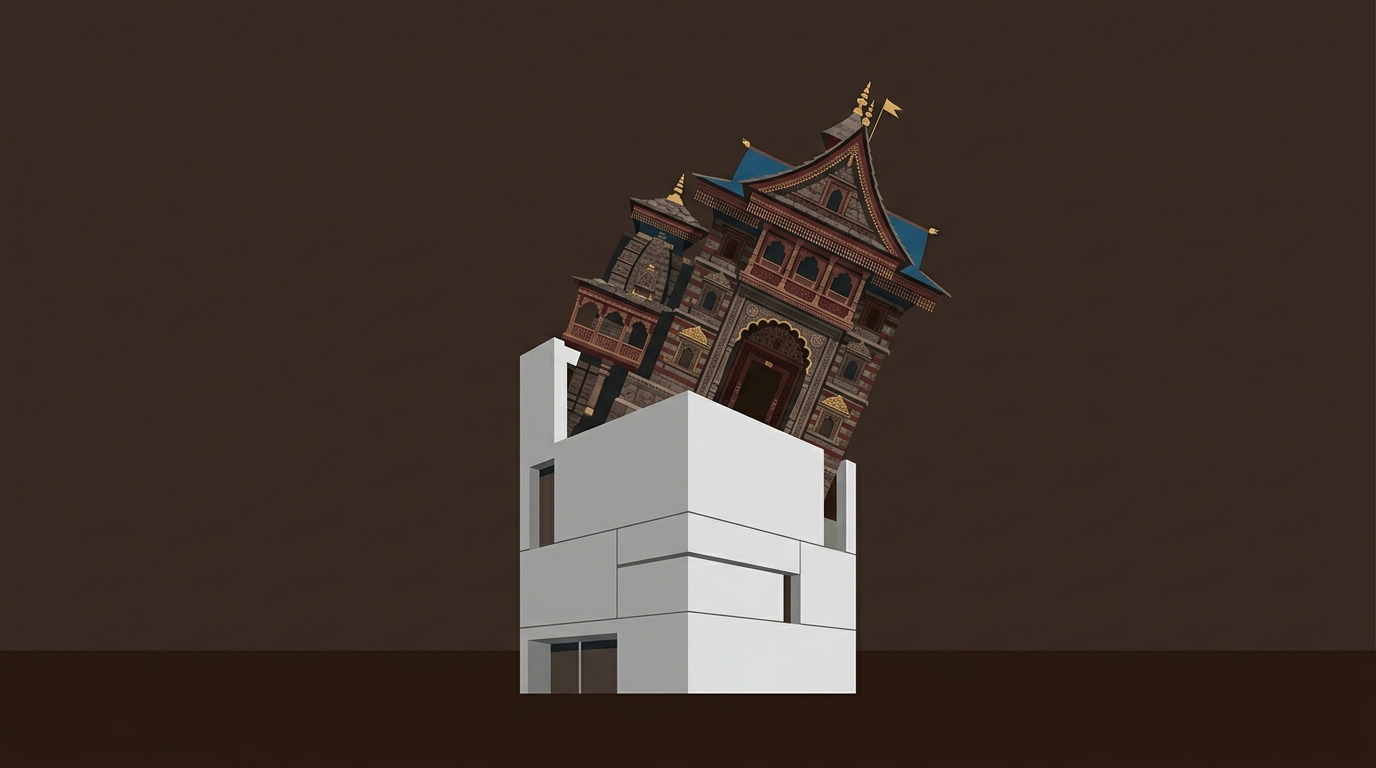
The exact same building was rated as the worst by non-architecture students, while architecture students ranked it as their second favorite. This was a 1987 face and architecture rating comparison experiment conducted by David Halpern, an undergraduate at Cambridge University. People showed high agreement on which faces were attractive; only in buildings did professional training push architects to the opposite side of public perception.
Twenty Surveys Yield the Same Result
Since the 1990s, around twenty visually oriented preference surveys with rigorous sampling designs have been conducted globally. The UK, the US, Canada, and even Chile have replicated similar tests. In every survey, respondents who preferred traditional architecture exceeded 60%, with multiple data points even breaking 85%. This data cuts across the boundaries of age, gender, and social class, demonstrating a stable commonality in human visual preference.
The city of Bath in the UK once proposed two schemes for a stadium. The classical design garnered a 74% approval rating, while the modernist scheme only received 26%. In a set of comparison images from the National Civic Art Society, the traditional design on the left took away 81% of the votes.
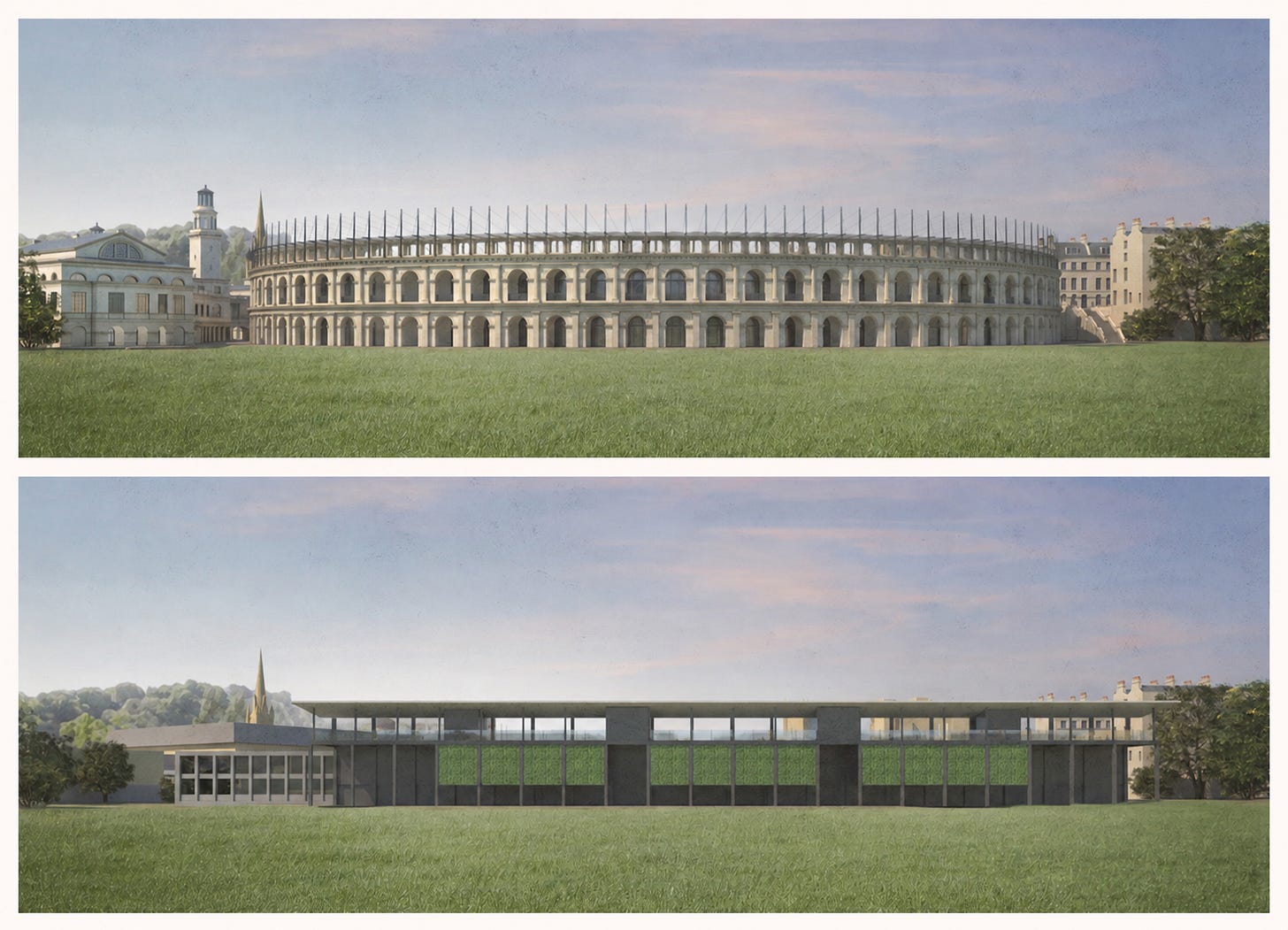 Figure: Two proposals for the same stadium in Bath, UK, with the classical design overwhelmingly defeating the modernist one. Source: Apollodorus Architecture / Works in Progress
Blank Facades Drove Away Neighborhood Strollers
This divergence did not just appear today. Modernism arose in the 1920s, advocating for the abandonment of ornamentation and the exposure of reinforced concrete. By the 1950s, it dominated global architectural styles. But both supporters and critics acknowledge that the general public never liked it. In 1977, architecture critic Wolf von Eckardt went as far as to assert that it had never been popular.
In 1979, the small town of Metuchen in New Jersey commissioned Rutgers University to conduct a rating test on hundreds of photos. Residents gave traditional town streets the highest score of +5.07, while wide roadways and blank, featureless buildings received a low score of -4.19. Human micro-perception requires details and scale; flat concrete boxes deprive pedestrians of the means to receive environmental feedback.
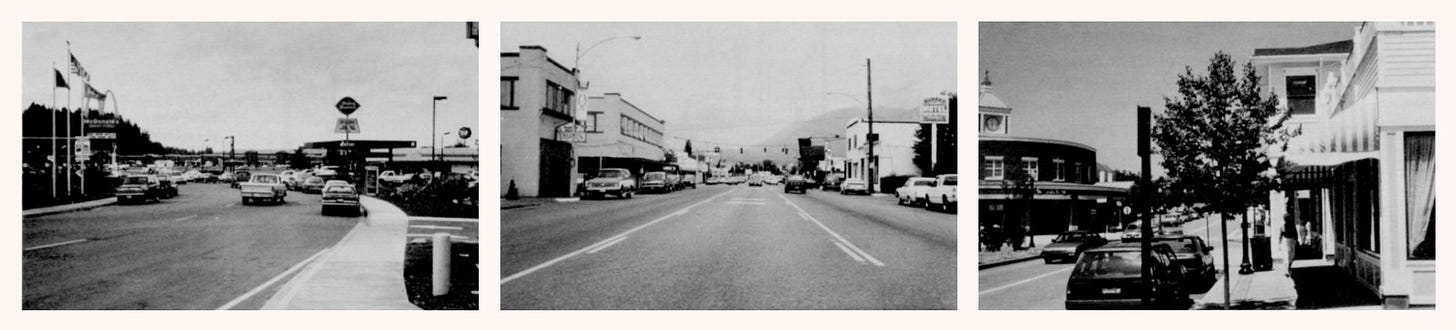 Figure: Three streets from the 1979 Metuchen survey, where the richness of detail dictated the scoring trend. Source: Anton C Nelessen / Works in Progress
This set of surveys directly became the basis for local town design codes. Today, AI has drastically lowered the cost of generating comparable contrast images, making scaled visual preference surveys much easier. Once-ambiguous aesthetic debates are being quantified into cold, hard data by new technologies.
Photos Can’t Measure Real Living Experiences
In the Hacker News discussion thread, which scored a massive 409 points, the debate was equally fierce. Some cited pre-war buildings in New York as examples, but were pointed out for survivorship bias—only the highest-quality old buildings have survived to this day. Others emphasized that modern materials can simultaneously satisfy form and function, and that the fault lies in the design circle treating “form equals function” as an absolute dogma.
The most direct rebuttal targeted the survey format itself. Buildings that people “like the look of” and buildings that are “comfortable to live in” are two different evaluation systems. Asking people to choose based on photos is essentially like picking a phone case. Visual slices solidify the exterior facade of a building but exclude the functional flow of interior spaces from the scoring system.
However, some comments also brought the focus back to the ground. Urban experience often depends on the human-scale details of the bottommost few floors; what a tower dozens of stories high looks like is actually of little consequence. Modernism originally abandoned decoration for cheap materials and standardized production, and ugliness is merely a byproduct of this industrial motive.
The architectural aesthetic divide is not generational; it lies stably between those with professional training and everyone else. Eighty percent of people stubbornly choose traditional facades when faced with photos, but photos cannot measure the living experience—this boundary only shows that the public knows what looks good, but hasn’t answered what lives well. Design can be defined by blueprints, but streets always belong to the pedestrians.
References:
- HN Discussion (item?id=49697496)
- Works in Progress