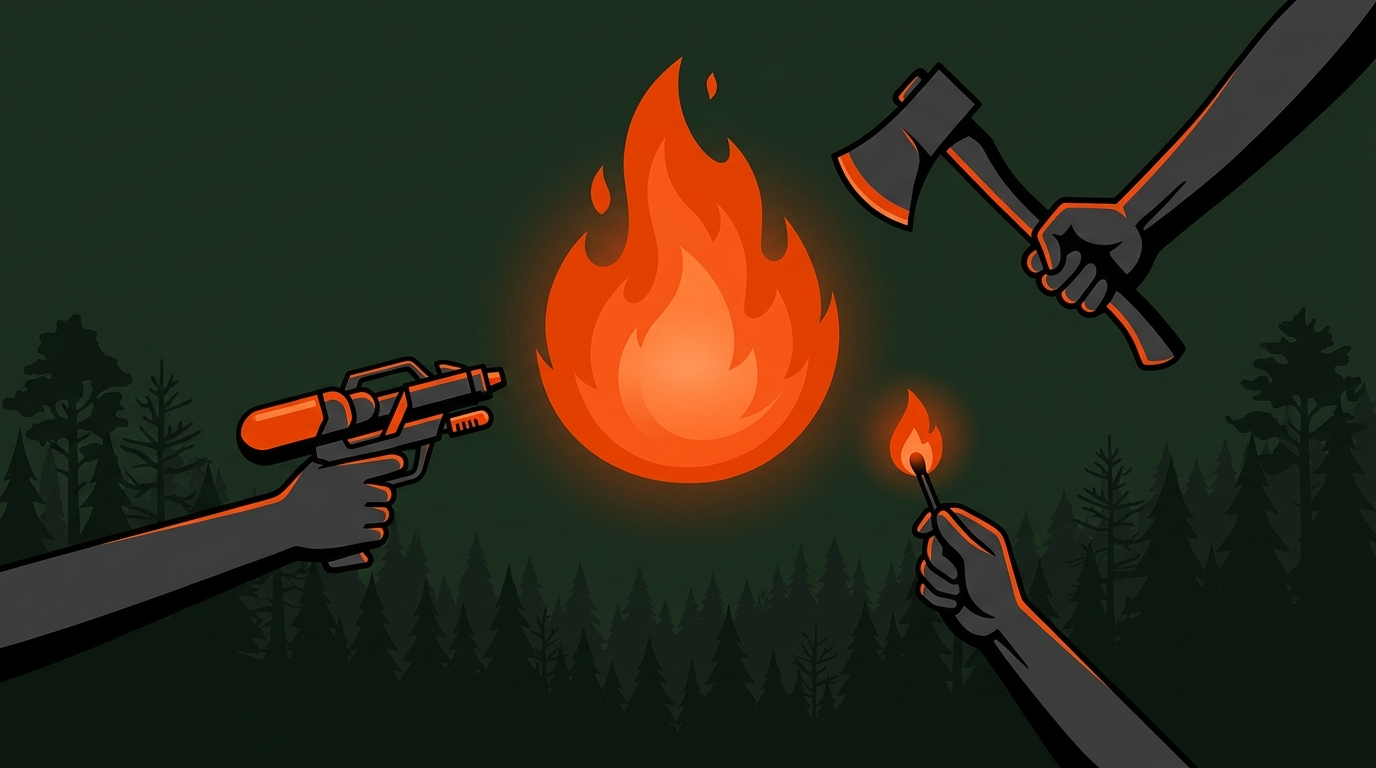
A Sixfold Surge in Burned Area Over 40 Years
Checking the morning weather app, many are finding the air quality index suddenly flashing red. In the distance, the sky is dyed a murky yellow by wildfire smoke. For a long time, people were accustomed to viewing wildfires as occasional natural disasters. However, official US statistics reveal a different reality.
The National Interagency Fire Center (NIFC) has been tracking wildfire data since 1983. Back then, the nationwide burned area was 1.32 million acres. By 2024, that figure had skyrocketed to 8.92 million acres. In 2020, it even surpassed the 10 million-acre mark.
Forest fire ecologist Jim Menakis and his team analyzed 40 years of data. Their research indicates that the total area burned by wildfires in the US has increased nearly sixfold over four decades. The frequency of high-intensity fires is also consistently rising. In the face of this escalating threat, the US wildfire management system remains deeply fragmented.
The First Camp: Suppressing Every Fire
The first camp in wildfire management focuses on suppression. This group advocates for rapidly deploying personnel and equipment to extinguish fires as soon as they are detected. Since the Great Fire of 1910, prompt detection and suppression have been the cornerstone of federal policy.
As recently as July 2026, California was still deploying monitoring satellites, with federal agencies mandating the suppression of every detected fire. The suppression camp enjoys robust financial backing and high-tech equipment. Aerial satellites and high-pressure water hoses can locate and extinguish small fires within minutes. However, relying solely on water lines to hold the defense has inadvertently laid the groundwork for a much larger crisis.
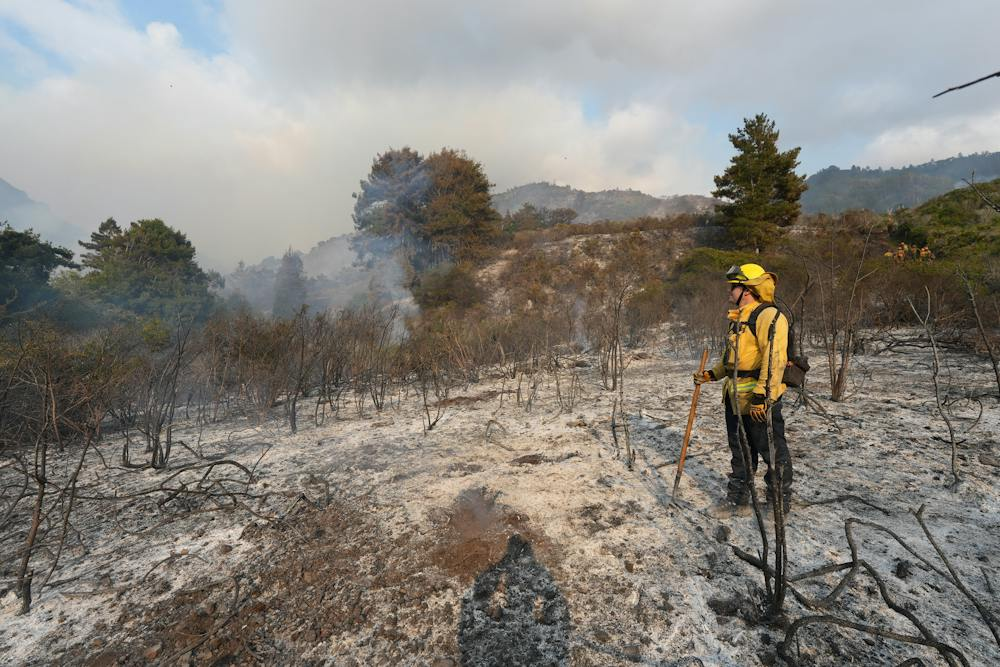 Image: Firefighters stand on burned ground in the steep terrain of Big Sur. Source: The Conversation / Wai Lee Michael Ho/SOPA Images/LightRocket via Getty Images
Accumulated Fuel Turns Forests into Tinderboxes
The second camp is known as the fuel reduction camp. In fire ecology, “fuel” specifically refers to the accumulated branches, fallen leaves, and shrubs in a forest. Researchers in this camp point out that a century of aggressively extinguishing every fire has led to a massive buildup of dry wood on the forest floor. Once sparse forests have transformed into massive, fuel-laden tinderboxes.
To clear these latent hazards that could ignite at any moment, the fuel camp advocates for human intervention. Primary methods include thinning—cutting down some of the overly dense trees to increase spacing. Another method is prescribed burning, which involves intentionally setting fires under controlled conditions to clear underbrush. Whether driven by the Wildfire Crisis Strategy or timber production executive orders, the core rationale is to prevent megafires by reducing combustible vegetation.
However, relying solely on vegetation clearance yields limited results. The sheer scale of natural forests across the US means that mechanical thinning and prescribed burns simply cannot keep pace with the rate of vegetation growth.
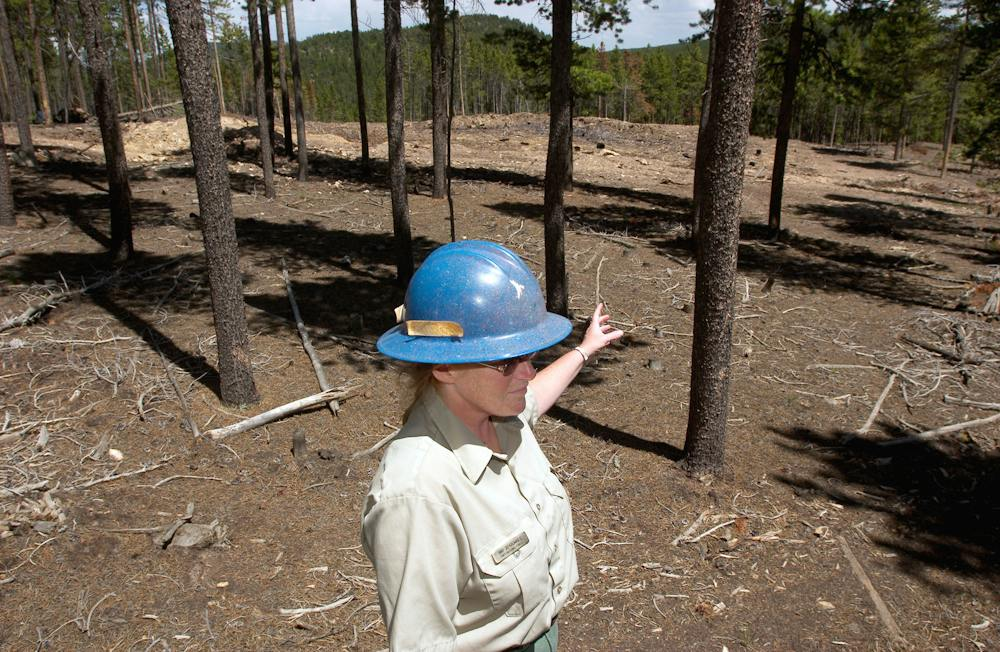 Image: A US Forest Service worker points to a thinned forest area with increased tree spacing. Source: The Conversation / Kevin Moloney/Getty Images
Establishing Safe Boundaries for Managed Fires
The third camp is the managed wildfire camp. This group advocates for allowing low-intensity natural fires to burn under safe conditions (time and location) to fulfill their ecological renewal role. They argue that fire is an inherent component of the ecosystem, and trying to eliminate it entirely is unrealistic. Rather than being constantly on the defensive, it is better to let small fires spread when it is safe to do so. Using nature’s force to burn off dry fuel can actually reduce the risk of megafires.
While all three camps make valid points, they have remained culturally and systematically siloed for a long time. Suppression crews, fuel reduction departments, and managed fire teams operate with independent budgets. This fragmentation often leads to isolated efforts. While humans expend resources arguing over strategies, persistent heat and drought are pushing wildfire intensity past the tipping point.
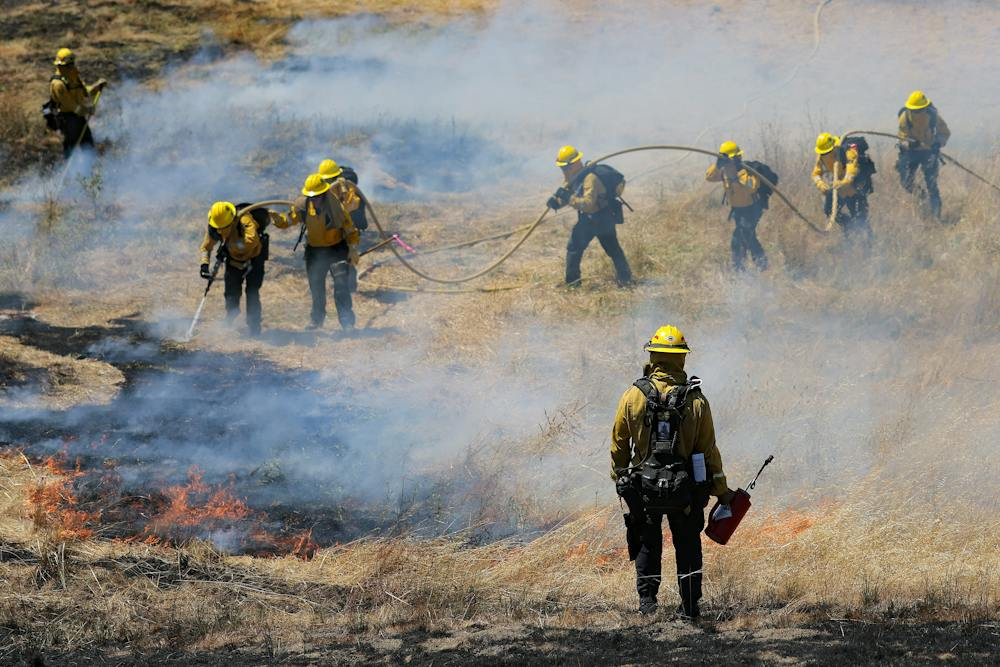 Image: Firefighters practice carrying a hose across a grassy area during a prescribed burn exercise. Source: The Conversation / Heather Diehl/Getty Images
Tearing Down Walls: Collaboration Is the Only Defense
The research by Jim Menakis’s team highlights the key to solving this crisis. Prescribed burns cannot directly stop a megafire, but they can reduce flame height, creating safer conditions for suppression efforts. Vegetation thinning can establish firebreaks, providing clear boundaries for the managed fire camp to safely let fires burn.
A cross-boundary collaborative mechanism in Northern Colorado offers a successful model. Local governments, federal agencies, and community residents broke down budget barriers. They integrated satellite monitoring, thinning clearance, and precise suppression into a cohesive system.
Tackling wildfires doesn’t require crowning a single winner. Only by integrating suppression, fuel reduction, and managed fire into a unified strategy can we protect our homes and ecosystems.
References:
- The Conversation Report
- National Interagency Fire Center (NIFC) Wildfire Statistics


