On October 30, 2026, Sunwoda disclosed on the Shenzhen Stock Exchange investor relations platform that its all-solid-state batteries have completed solution and manufacturing process validation. The company is actively conducting sample delivery and testing with automotive clients. Disclosed on the same day, another Q&A revealed the real driver behind second-tier battery makers accelerating their R&D: automakers are replacing tier-1 outsourced cells with in-house proprietary battery solutions.
On one side, 400 Wh/kg solid-state cells have advanced to client sampling. On the other, proprietary cell production lines from key automakers are closing in. The traditional contract manufacturing space once enjoyed by second-tier battery suppliers is rapidly shrinking under the wave of automaker in-house development.
Stepping into Testing at 400 Wh/kg: Sunwoda Ramps Up 0.2 GWh Pilot Line
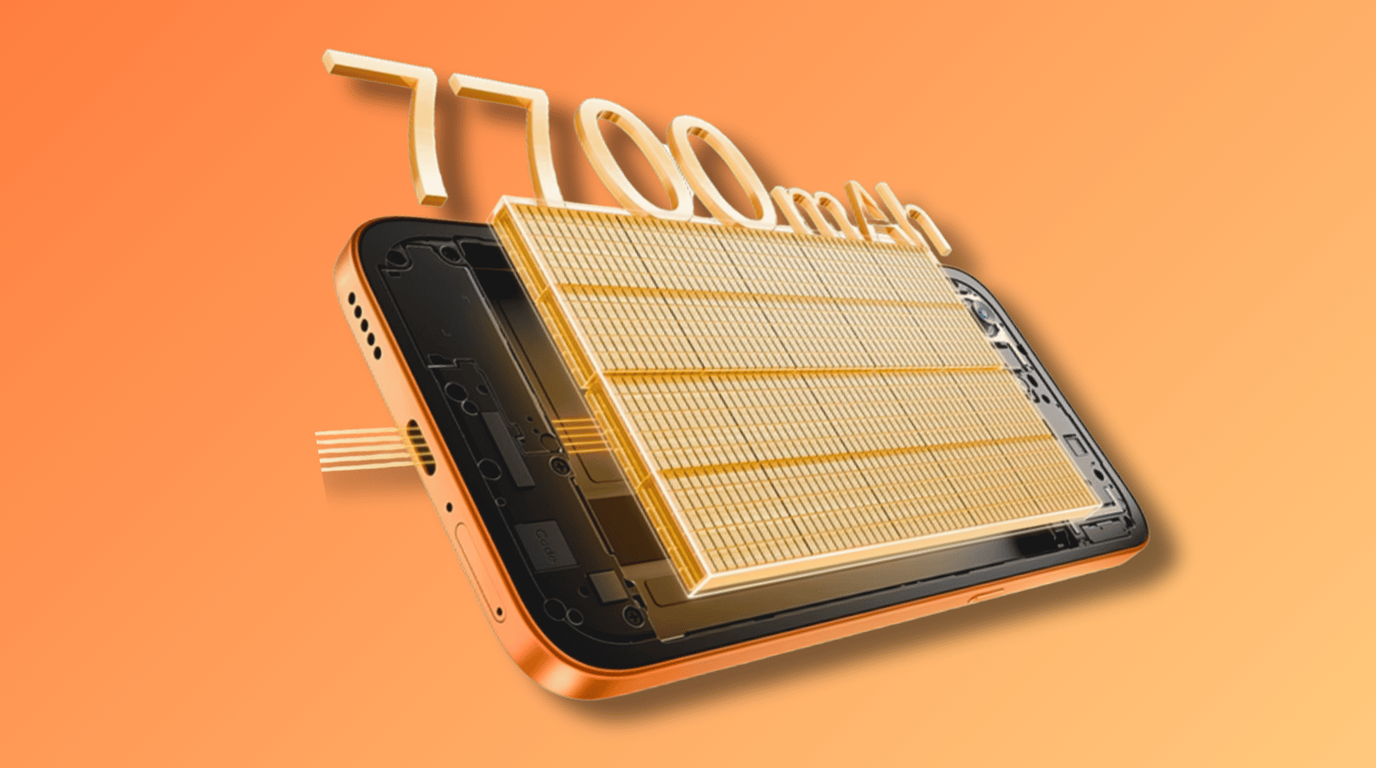
Transitioning solid-state batteries from the laboratory to real-world applications hinges on the hardest hurdle: manufacturing process validation. Sunwoda previously mapped out a phased evolutionary roadmap. Its first-generation semi-solid-state battery achieved an energy density exceeding 300 Wh/kg. The second-generation samples progressed through pilot trials. Now, its third-generation polymer composite all-solid-state battery, dubbed “Xin Bixiao” (Sunwoda Bixiao), pushes cell-level energy density directly to 400 Wh/kg.
A density of 400 Wh/kg is more than 1.3 times that of high-nickel ternary liquid lithium batteries, and roughly double that of mainstream lithium iron phosphate (LFP) cells. When integrated into mainstream C-segment passenger cars, full-electric driving range is expected to exceed 1,000 kilometers, while battery pack chassis volume can be reduced by a third.
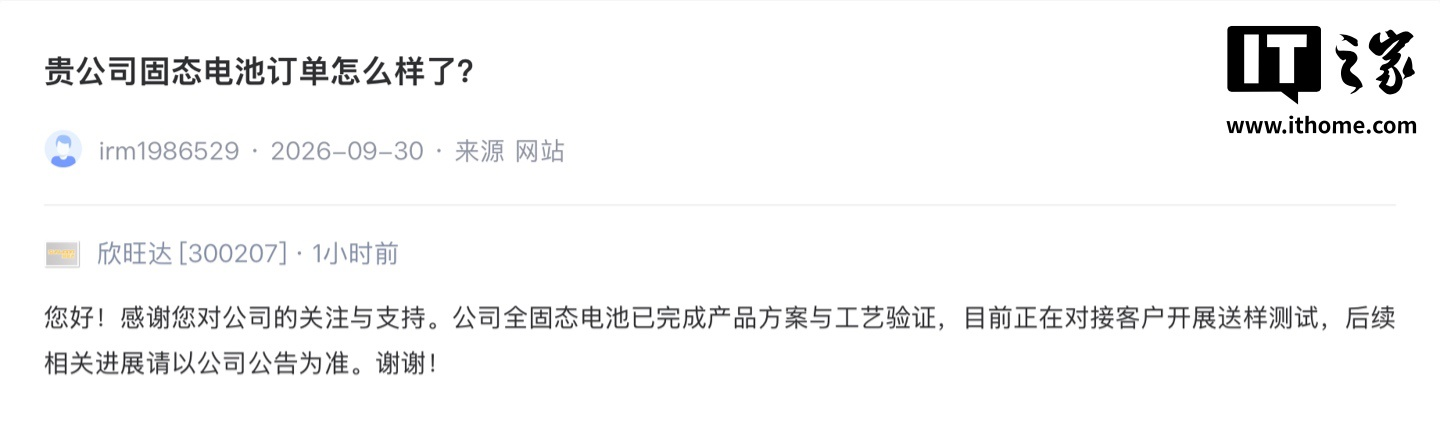 Figure: Sunwoda responds on the Shenzhen Stock Exchange investor interaction platform regarding solid-state battery progress, confirming completion of process validation and ongoing client sampling. Source: SZSE Irm (Sunwoda IR Q&A)
The all-solid-state chemistry delivered for sampling has overcome two critical physical hurdles. The solution achieves an operating lifespan of over 1,200 cycles under an ultra-low external mechanical stack pressure of less than 1 MPa. Conventional solid-state systems typically require tens of megapascals of mechanical clamping, which is virtually impossible to package within a passenger vehicle chassis. Requiring less than 1 MPa allows these solid-state cells to remain compatible with existing pack enclosures. In terms of safety, the cells passed a 200°C extreme thermal chamber test without spontaneous combustion or thermal runaway.
Backing these customer samples is an operational pilot facility. Sunwoda has brought an annual 0.2 GWh sample production line fully online. While 0.2 GWh cannot support volume vehicle production, it reliably yields consistent batches of qualified automotive cells. OEMs can use these batches for full-pack thermal runaway testing, high- and low-temperature thermal cycling, and on-road durability testing. Progressing from paper design to physical sample delivery gives the second-tier battery leader tangible leverage in defining next-generation vehicle architectures.
From Shareholders to Competitors: Li Auto and Xiaomi Push into Cell Manufacturing
The urgency driving Sunwoda’s accelerated solid-state development stems from a fundamental shift in client relationships. When an investor asked how Li Auto and Xiaomi transitioning to proprietary cells would affect this year’s earnings, Sunwoda replied that it fully respects client business decisions, pledging to maintain rigorous support while striving to grow its wallet share.
Behind that measured public response lies a deepening fracture in automotive supply chain alliances. Li Auto previously invested 2.65 billion RMB into Sunwoda EVB via Chongqing Chezhiyi, once holding an 11.17% stake. Xiaomi’s Hanxing Venture Capital also poured in 1.7 billion RMB for a 5.34% stake. In the early days of building smart EVs, emerging startups needed alliances with second-tier cell makers to hedge against dominant battery monopolies and secure essential production quotas.
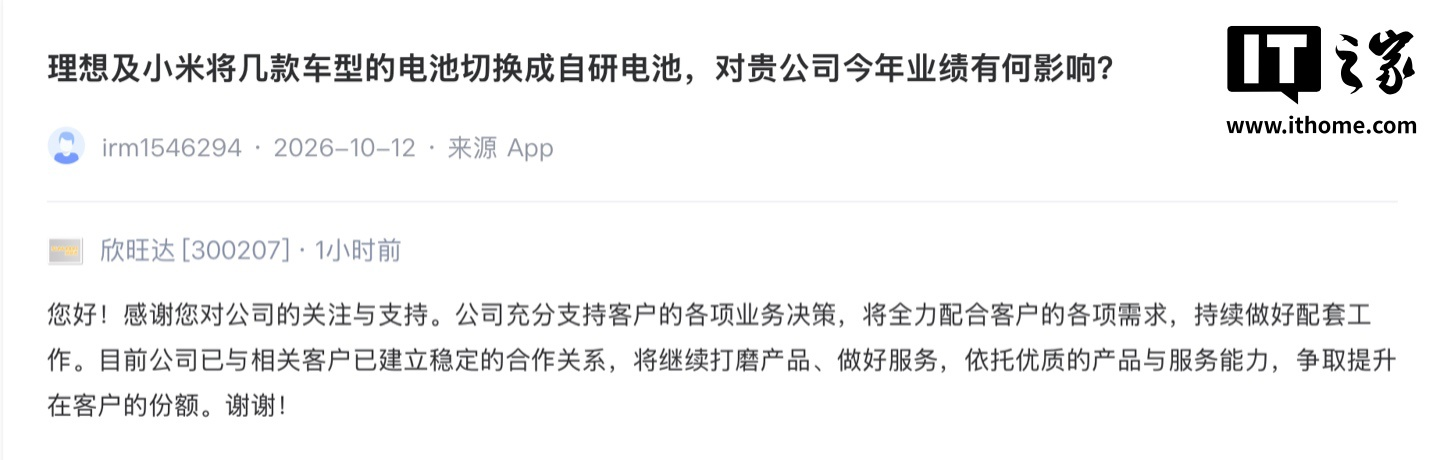 Figure: Investors ask about the supply chain impact of automakers developing in-house cells, with Sunwoda responding that it will fully support clients to defend market share. Source: SZSE Irm (Sunwoda IR Q&A)
Capital backing, however, could not halt automakers’ determination to control their own cells. Traction batteries account for 30% to 40% of an electric vehicle’s total bill of materials. Li Auto assembled a massive battery engineering team at its Shunyi R&D campus covering chemistry formulations, thermal management, and manufacturing, systematically rolling out proprietary cells across subsequent vehicle rollouts. Meanwhile, Xiaomi developed its proprietary inverted CTB (Cell-to-Body) architecture and custom formulations on the SU7 series, steadily consolidating control over foundational battery IP.
As automakers transform from component buyers into battery designers, the position of third-party battery suppliers has degraded. OEMs hand down exact chemical formulations and outsource only simple manufacturing, reducing sophisticated battery production into basic contract tolling. Automakers take full control over raw material pricing, severely eroding supplier margins. Investor concerns reflect the harsh new reality of a restructured automotive supply chain.
Squeezed Under the Duopoly: Second-Tier Suppliers Fight on Margin and Share
To understand the plight of second-tier cell makers, one must examine the broader market backdrop. Data from China’s automotive battery industry alliance shows CATL and BYD consistently holding the top two spots, collectively commanding over 70% of China’s domestic market. Second-tier players—including CALB, Gotion High-Tech, EVE Energy, and Sunwoda—are left to battle over the remaining sliver of less than 30%.
In mainstream liquid lithium-ion batteries, technological dividends have plateaued. Slurry mixing, slot-die coating, and formation processes for both LFP and high-nickel ternary chemistries are deeply commoditized. Mature manufacturing has triggered severe commoditization and price wars. Over two years, average liquid cell prices collapsed from 0.8 RMB/Wh down to roughly 0.3 RMB/Wh, squeezing manufacturing gross margins to razor-thin levels.
Compounding the pressure, carmakers’ in-house battery plants are absorbing baseline external orders. Zeekr deployed its Golden Battery, GAC launched its Inpai production lines, and Great Wall Motor built SVOLT. Automakers channel high-volume, predictable model volumes straight into their own captive factories. Second-tier battery vendors are relegated to volatile “buffer pools” used only to absorb demand surges, leaving their production utilization whipsawed by automotive seasonal swings.
With market leaders squeezing unit costs through sheer scale amortization, and automakers internalizing baseline volume, remaining a standard contract manufacturer is a losing game. Second-tier players can neither beat the market leader on cost nor stop OEMs from diverting volume. Clinging solely to defensive liquid-cell production will only watch their operating room shrink further.
Next-Gen Chemistry Resets the Ecosystem: Breaking the Siege via Manufacturing Moats
Facing pressure from both above and below, second-tier makers can only break through via generational technology leaps. Sunwoda’s aggressive push to sample solid-state batteries aims to re-establish competitive distance through materials science and industrialization barriers. Automakers managed to develop liquid cells in-house because the liquid chemistry ecosystem had matured over decades, backed by abundant academic talent and an off-the-shelf equipment supply chain.
All-solid-state batteries represent an entirely different paradigm of condensed matter physics and materials science. Solid electrolyte ion conduction, solid-solid interfacial contact impedance, and microscopic lithium metal dendrite dynamics are complex multi-disciplinary problems. While OEMs excel at software algorithms and structural integration, mastering in-house chemical synthesis, ultra-dense composite electrode calendering, and high-precision dry coating across the entire manufacturing flow remains out of reach in the short term.
Delivering samples from an annual 0.2 GWh pilot line pulls competition back to hard industrial manufacturing. Sunwoda plans to complete initial engineering validation and advance toward even higher energy densities, targeting scaled vehicle integration around 2028. Because developing next-generation vehicle architectures requires a two- to three-year lead time, automakers must co-develop and calibrate platforms early with suppliers capable of delivering physical test cells.
Boasting 400 Wh/kg energy density, 1,200-cycle durability, and sub-1 MPa operating pressure, Sunwoda’s all-solid-state cells present physical advantages liquid batteries simply cannot match. This generational tech leap forces carmakers to recalculate the economic balance between in-house R&D and specialized procurement. Only second-tier manufacturers that deliver real production samples first will transition from commoditized, price-squeezed assemblers back into strategic co-development partners on core automotive platforms.
References:
- Shenzhen Stock Exchange Irm: Sunwoda Investor Interaction Q&A Records.
- Sunwoda EVB: All-Solid-State Battery Technology Roadmap and Product Launch Materials.
- China Automotive Power Battery Industry Innovation Alliance: Monthly Power Battery Installation Reports.